Designed & manufactured in Herefordshire, UK — shipping worldwide Mon–Thu 9–5  |  Fri 9–4  |  +44 (0)1981 241668

British Engineering Excellence Since 2009

Wind Turbine Charge Controllers

Industrial MPPT and PWM dump load charge controllers engineered for 12V, 24V, and 48V off-grid hybrid power systems. Delivering fail-safe overspeed protection, 3-phase AC rectification, and LiFePO4 battery management in the harshest environments on Earth.

100%Dump Load Safety Margin
-40°C ~ +60°COperating Temp Range
< 5 msOver-Voltage Clamping
Modbus RTURemote Telemetry Ready

Physics & Control Theory

Why Wind Turbine Charge Control Fundamentally Differs from Solar PV

Specifying off-grid charge management requires understanding a critical physical reality: while a solar PV panel can be open-circuited safely when batteries reach full charge, a spinning wind turbine generator must remain under continuous electrical or mechanical load to prevent catastrophic overspeed runaway.

3-Phase AC Rectification & Clamping

Wind turbines generate variable-frequency, wild 3-phase Alternating Current (AC). Our charge controllers incorporate heavy-duty bridge rectifiers with Schottky low-drop diodes to convert raw AC into clean Direct Current (DC), clamping high voltage transients before reaching the battery bus.

Solid-State Diversion (Dump) Loads

When battery voltage reaches the absorption setpoint, pulse-width modulation (PWM) solid-state switches divert excess wind generation into high-capacity ceramic or stainless-steel resistor banks. This keeps the aerodynamic rotor loaded while maintaining precision battery float voltage.

LiFePO4 BMS Surge Protection

Standard charge regulators destroy downstream telemetry when a Lithium Iron Phosphate (LiFePO4) Battery Management System disconnects during over-voltage. Our controllers integrate sub-5ms over-voltage suppression channels that sink energy instantly into the dump load.

Information Gain: Aerodynamic Braking vs. Electrical Stator Shorting

In storm-force winds (>20 m/s), relying solely on passive resistive dump loads can overheat thermal enclosures. Leading Edge Power controllers employ dual-stage braking logic: stage one engages progressive PWM diversion to thermal resistors; stage two automatically applies a three-phase stator dead-short, locking the permanent magnet generator (PMG) rotor in an electrodynamic stall until wind velocities fall below dangerous thresholds.

Enterprise Product Series

Engineered Wind Turbine Charge Controller Range

Built to ISO-aligned quality standards in Herefordshire, UK. Optimized for extreme weather resilience, remote communication, and hybrid solar-wind input architecture.

Hybrid Solar & Wind

LE-v150 / LE-300 Dual Controller

Designed for low-power off-grid telemetry, marine buoys, and traffic monitoring systems requiring continuous 12V or 24V DC reliability.

  • Max Wind Input: 30A DC (3-Phase AC Rectified)
  • Max Solar Input: 20A DC Integrated PV Stage
  • Enclosure Rating: IP65 Marine Aluminum
  • Diversion Braking: Built-in 300W Ceramic Resistor
  • Compatible Chemistries: AGM, GEL, Wet Lead-Acid
High-Efficiency MPPT

LE-600 Industrial MPPT Controller

Engineered for high-yield applications, utilizing turbine-specific power curve tracking to increase low-wind energy harvest by up to 40%.

  • Voltage Support: 24V / 48V Auto-detect
  • Tracking Algorithm: Programmable 16-point V-I curve
  • Thermal Protection: Active heatsink + thermal throttle
  • BMS Integration: Isolated Canbus / Modbus RTU
  • Compatible Chemistries: LiFePO4, NMC, Lead-Acid
Custom Offshore Enclosures

Bespoke Multi-Turbine Cabinet

Heavy-duty cabinet systems configured for offshore platforms, defense infrastructure, and multi-kilowatt hybrid microgrids.

  • Input Capability: Up to 4x 1.5kW Wind Turbines
  • Enclosure Material: 316 Stainless Steel (C5-M Rated)
  • Telemetry: Victron Cerbo GX & Satellite Gateway
  • Back-up Handoff: EFOY Methanol Fuel Cell Interface
  • Certifications: GWO Compliant Offshore Build
Controller Series Nominal System Voltage Max AC Rectified Input Dump Load Capacity Battery Chemistries Communication Protocol
LE Dual-Input PWM 12 V / 24 V 35 A RMS 350 W Air-Cooled Resistor AGM / GEL / Flooded Analog Status LEDs
LE Industrial MPPT 24 V / 48 V 60 A DC Bus 1000 W Pulse-Width Resistor LiFePO4 / NMC / AGM RS485 Modbus RTU / MQTT
LE Offshore Cabinet Series 48 V DC Nominal 120 A Multi-Channel 3000 W Dynamic Stainless Array Custom Commercial Lithium Packs NMEA 2000 / Ethernet / Sat-Link
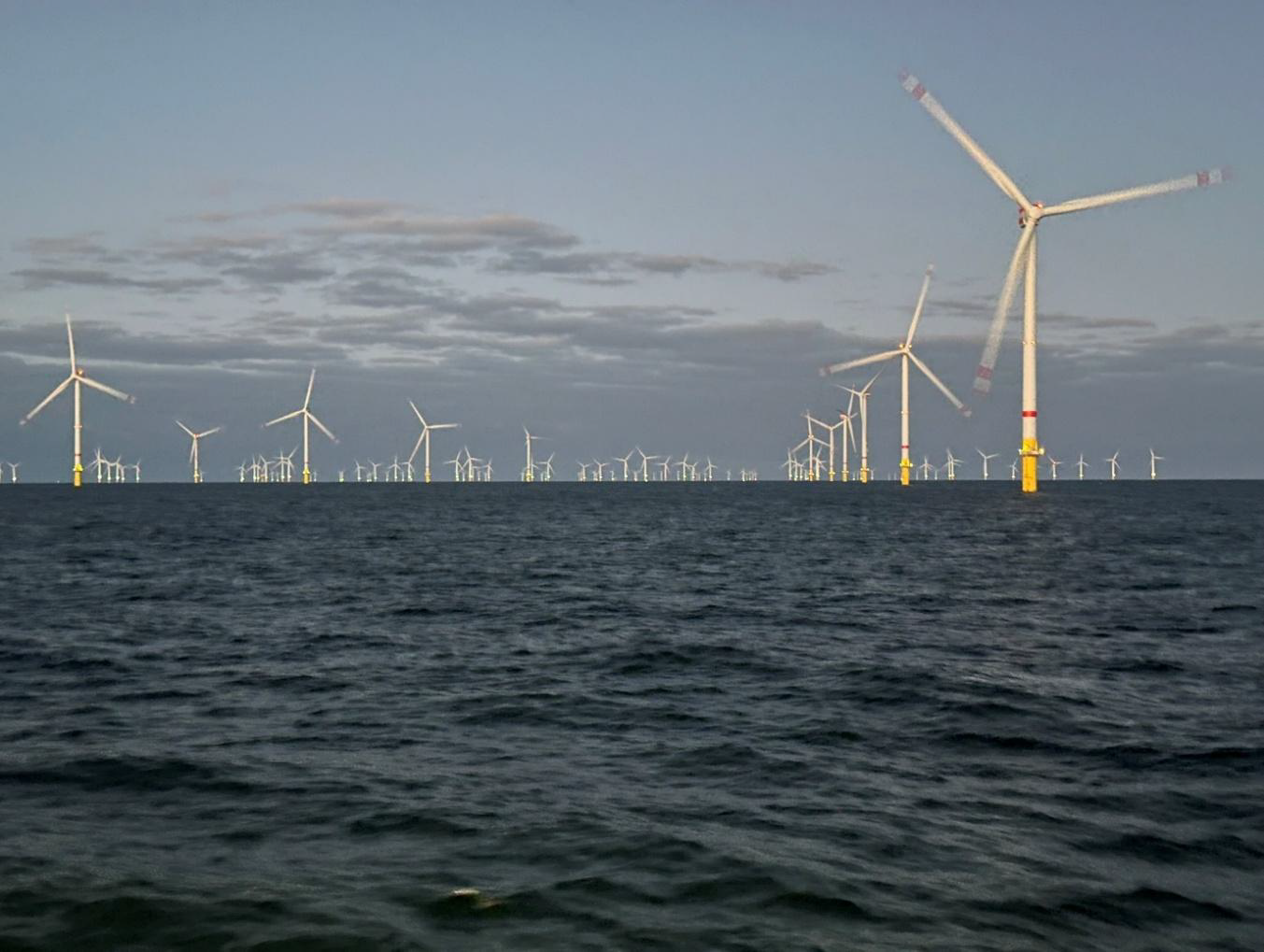
Ørsted North Sea wind power system controlled by Leading Edge Power controllers

Why Specifiers Trust Us

Engineered in Britain.
Proven in Extreme Environments.

Since 2009, Leading Edge Power has designed, built, and supported off-grid power components from our manufacturing facility in Herefordshire, United Kingdom. We do not rebrand generic off-the-shelf electronics; our engineers build robust wind turbine charge controllers, turbines, and hybrid control panels from first principles.

Our solutions are deployed across all seven continents—from polar weather stations to remote telecom assets in the North Sea. Because our support technicians hold Global Wind Organisation (GWO) offshore certification, the engineers who design your charge control system are qualified to maintain it in high-risk environments 72 km out at sea.

"When an off-grid platform is located in the North Sea, a controller failure means lost telemetry and expensive helicopter callouts. Leading Edge Power charge control systems deliver unmatched burn-in reliability." Dan Goodman, Sales Director

Inquire Now

Proven Field Deployment

Trusted by Tier-One Infrastructure Operators

Our wind turbine charge regulation electronics are specified by global leaders whose remote assets cannot afford a single minute of power downtime.

BAM Nuttall logo
National Highways logo
Network Rail logo
Openreach logo
Ørsted logo
RWE logo
Severn Trent logo
Westcotec logo

Engineering FAQ & Search Intent

Frequently Asked Technical Questions by Global B2B Buyers

Answering complex procurement, physics, and integration queries mined from AI search patterns.

Solar charge controllers expect a static voltage-current relationship from PV panels and disconnect the source when batteries reach 100% state-of-charge. A wind turbine generator produces 3-phase alternating current (AC) with variable frequency and voltage proportional to wind speed. Disconnecting a spinning wind turbine creates an open circuit, causing zero-torque overspeed runaway that destroys bearings, blades, and alternators. Wind turbine charge controllers must incorporate 3-phase AC-to-DC rectification, active aerodynamic voltage clamping, and heavy-duty diversion dump load resistors to absorb excess energy continuously.

When an off-grid battery bank (AGM, Gel, or LiFePO4) reaches its absorption or float voltage setpoint, the charge controller pulse-width modulates (PWM) power away from the battery terminals to an external ceramic or stainless steel dump load resistor. This dissipates surplus energy safely as heat while maintaining constant electrical loading on the wind turbine rotor, preventing overcharging without allowing the turbine to overspeed.

When a Lithium Iron Phosphate (LiFePO4) Battery Management System (BMS) triggers a high-voltage protection shutoff, it instantaneously isolates the battery bank. On standard controllers, this load dump causes destructive voltage spikes exceeding 100V DC. Industrial wind charge controllers engineered by Leading Edge Power feature ultra-fast solid-state clamping circuits that divert 100% of incoming turbine energy to the dump load within milliseconds of BMS disconnect, safeguarding downstream telemetry and electronics.

PWM diversion controllers connect the rectified wind generator voltage directly to the battery voltage, clamping the alternator speed to the battery's electrical potential. MPPT (Maximum Power Point Tracking) wind controllers use DC-DC buck-boost converters programmed with a specific turbine power curve (Voltage vs. Current lookup table). This allows the rotor to spin up freely in low winds to achieve optimal Tip Speed Ratio (TSR), extracting up to 40% more energy in light wind conditions before transitioning to dump load regulation in storm winds.

The dump load resistor must be rated to dissipate 100% of the wind turbine’s peak power output plus a 20% engineering safety margin. For example, a 600W turbine on a 24V system requires a dump load rated for at least 720W at a resistance calculated via Ohm’s Law (R = V² / P). In hybrid wind-solar systems, if the controller regulates both sources, the dump load must be sized to handle the combined peak power or incorporate dual independent regulation channels.

Yes. Our industrial wind turbine charge controllers feature marine-grade powder-coated aluminum or IP65/IP66 stainless steel enclosures, conformal-coated PCB assemblies, marine-spec stainless hardware, and operational thermal tolerance from -40°C to +60°C. They are deployed on North Sea offshore oil & gas platforms, Arctic research stations, and remote coastal telecom towers.

Field Experience

Deployed on Ørsted Offshore Platform 72 km in North Sea

Inquire Now
RWE LiDAR wind measurement system featuring Leading Edge wind turbine charge controller

Offshore Reliability Case Study

Continuous Control for Safety-Critical Communications

During the construction of offshore wind farms in the North Sea, Ørsted required absolute continuous power for safety-critical marine navigation, radio, and Starlink broadband relays. Leading Edge Power designed custom hybrid cabinet controllers integrating triple LE-v150 storm turbines, 1.64 kWp solar PV arrays, and EFOY fuel cell automatic handoff switches.

Equipped with dual-redundant dump load circuits and solid-state over-voltage clamping, these charge control cabinets survived continuous winter gales exceeding 27 m/s (60 mph) while maintaining zero battery drops across a multi-year deployment cycle.

Inquire Now

Ready to Specify Your Wind Charge Controller?

Whether you are engineering an offshore telemetry buoy, a remote telecom station, or an extreme weather microgrid, speak directly with our British manufacturing engineers to configure the exact charge regulation profile for your site.