Designed & manufactured in Herefordshire, UK — shipping worldwide Mon–Thu 9–5  |  Fri 9–4  |  +44 (0)1981 241668

British Engineering Excellence · ISO Quality Aligned

Offshore Wind Telecommunications Power: Autonomous 99.999% Availability Systems

Designing and manufacturing engineered hybrid power solutions—combining vertical-axis marine wind turbines, marine-grade solar arrays, deep-cycle battery banks, and automated methanol fuel cell backup—for safety-critical offshore communications, Starlink LEO satellite backhaul, metocean LiDAR, and radar infrastructure.

99.999%Target Telecom Availability
27 m/s+Storm Survival Wind Rating
72 kmNorth Sea Offshore Deployment
GWOCertified Offshore Engineers

The Engineering Challenge

Why Offshore Wind Telecommunications Power Requires Zero-Downtime Precision Architecture

Offshore wind farm construction and operational phases demand continuous, resilient connectivity. Whether powering marine VHF radio repeaters, AIS tracking receivers, Starlink high-throughput satellite terminals, or offshore metocean LiDAR buoys, a power failure in marine telecommunications creates severe safety hazards, operational delays, and regulatory penalties.

The Problem: High OPEX & Hazardous Marine Environment

Offshore infrastructure operates in some of the earth's most aggressive environments. High salt-fog salinity (C5-M ISO 12944 environments), gale-force winds exceeding 27 m/s, violent wave impacts, and protracted winter dark periods quickly degrade off-the-shelf industrial power systems.

Traditional legacy diesel generators installed on offshore transition pieces or temporary accommodation platforms suffer from high maintenance demands, rapid fuel contamination, carbon fouling under low continuous loads, and astronomical helicopter/crew transfer vessel (CTV) refueling OPEX costs.

The Solution: Autonomous Hybrid Clean Energy Power

Leading Edge Power solves this through engineered hybrid micro-power platforms built around robust, low-maintenance vertical-axis wind turbines (VAWTs), rugged monocrystalline solar modules, deep-cycle AGM storage, and intelligent Direct Methanol Fuel Cell (DMFC) back-up automation.

By blending renewable resource profiles using ERA5 meteorological reanalysis data and Global Wind Atlas micro-siting, our offshore wind telecommunications power architectures deliver continuous 24 VDC or 48 VDC power to critical equipment with up to 7 days of pure battery autonomy and automated fuel cell dispatch.

Product Architecture & System Selection

Recommended Components for Offshore Telecommunications Power

Every marine asset has a unique load profile and location risk. Below are our proven, field-tested core components engineered specifically for offshore wind telecommunications power systems.

Marine Vertical-Axis Wind

LE-v150 Marine Storm Turbine

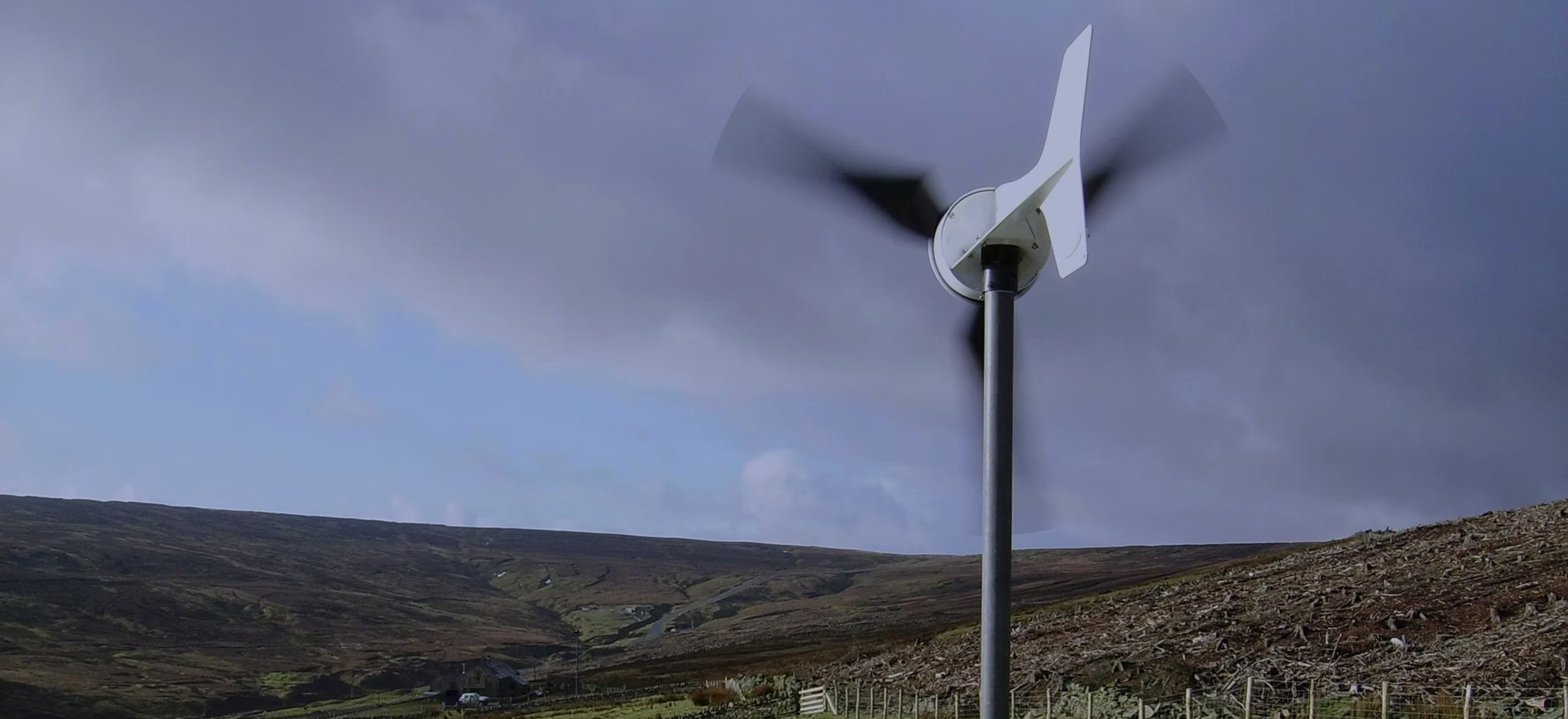
Built explicitly for extreme marine exposure, the LE-v150 is a vertical-axis wind turbine capable of surviving severe winds above 27 m/s (60 mph) without requiring mechanical braking or furling controls.

  • Continuous Output: Optimized for 12 V / 24 V trickle battery charging in harsh coastal winds
  • Corrosion Resistance: Anodized aluminum frame, stainless steel 316 fasteners, sealed IP67 bearings
  • Omnidirectional: Accepts wind from any direction with near-silent rotation—ideal for platform mounting

C5-M Solar Panels

Offshore Monocrystalline Solar Arrays

High-translucency tempered glass with heavy-duty anodized marine frames designed to withstand continuous saltwater splash, UV degradation, and heavy wind loadings on offshore structures.

  • Efficiency: Premium monocrystalline cells delivering maximum Wp per square meter
  • Bypass Diodes: Integrated anti-shading protection against platform rigging, railings, and bird drop interference
  • Mounting: Heavy-gauge stainless 316 adjustable angle brackets tailored for transition piece installation
Zero-Emission Backup

EFOY Methanol Fuel Cell Integration

Provides fully automated back-up power during prolonged calm, overcast winter periods. Operates silently and cleanly, delivering 24/7 power without maintenance interventions.

  • Autonomous Operation: Automatically triggers when battery state of charge (SoC) falls below pre-set threshold
  • Zero Particulate: Emits negligible water vapor and CO2; no soot or toxic exhaust on sensitive optical radar gear
  • Telemetry Link: Live fuel canister volume monitoring via integrated Victron Cerbo GX telemetry

Standard Offshore Telecom Power Package (50 W – 150 W Base Load)

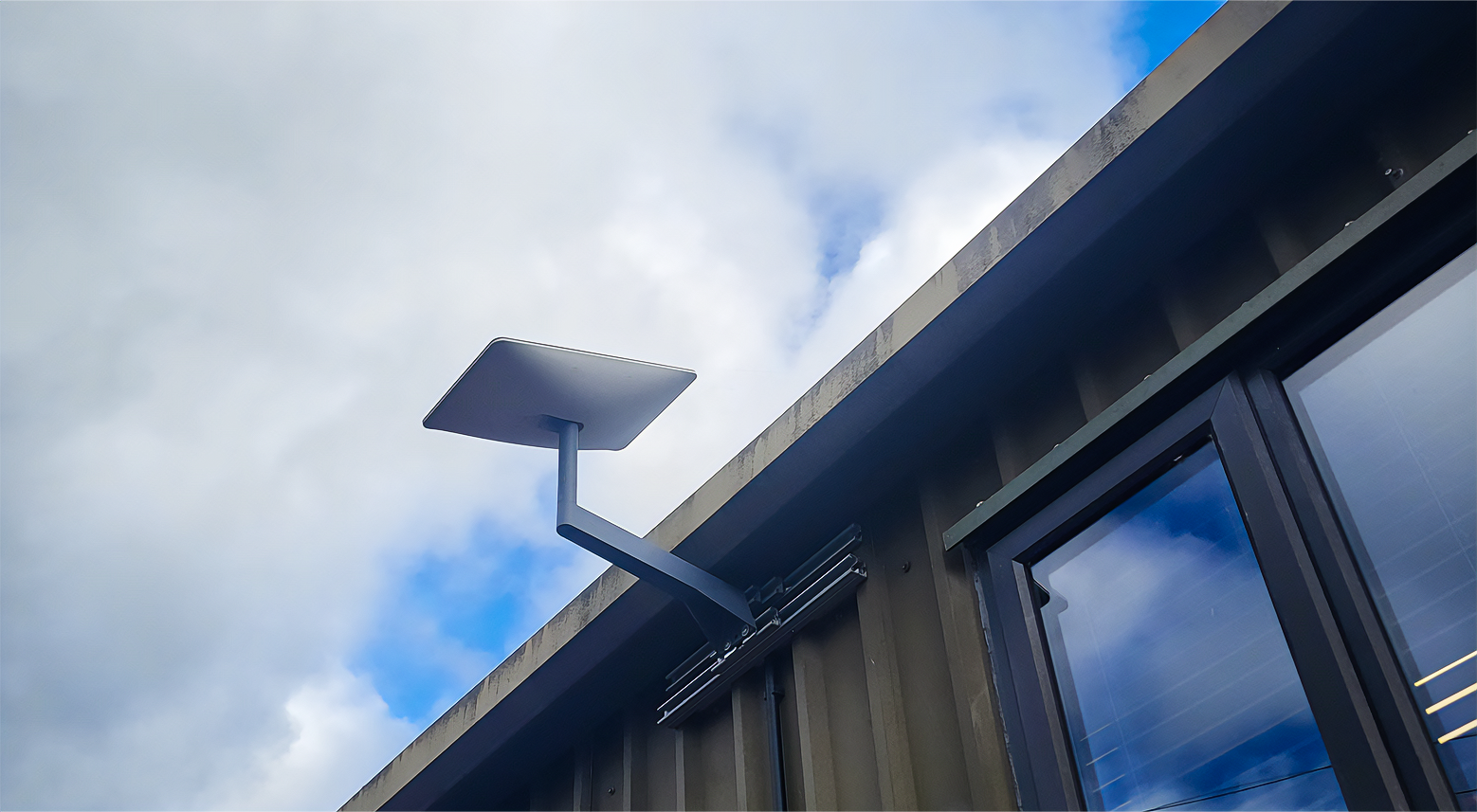
Engineered for offshore wind farm safety communications, Starlink LEO broadband receivers, marine AIS transponders, and navigational lanterns.

  • Wind Generation: 2–3 x LE-v150 Marine Storm Vertical Axis Turbines
  • Solar Generation: 1.2 kWp – 1.8 kWp C5-M Marine Monocrystalline Solar Array
  • Energy Storage: 8 x 200 Ah Marine Deep-Cycle AGM Batteries (24 VDC / 48 VDC system)
  • Automated Back-up: Integrated 80 W – 125 W Methanol Fuel Cell with 50L fuel reserve
  • Control & Telemetry: Victron Cerbo GX with 4G/Satellite remote gateway and SCADA integration

Heavy-Duty Metocean & LiDAR Power Package (200 W – 500 W Base Load)

Designed for offshore wind resource assessment campaigns, floating LiDAR buoys, multi-channel radar systems, and offshore substations.

  • Wind Generation: 2 x LE-300 / LE-600 Horizontal Marine Turbines or 4 x LE-v150 VAWTs
  • Solar Generation: 2.4 kWp – 3.6 kWp High-Output Marine Array
  • Energy Storage: 1,600 Ah – 2,400 Ah Thermal-Managed Battery Storage System
  • Automated Back-up: Dual EFOY Methanol Fuel Cells with redundant auto-changeover controllers
  • Enclosure: IP66 Stainless Steel 316 Cabinet with forced thermal management & anti-condensation heaters
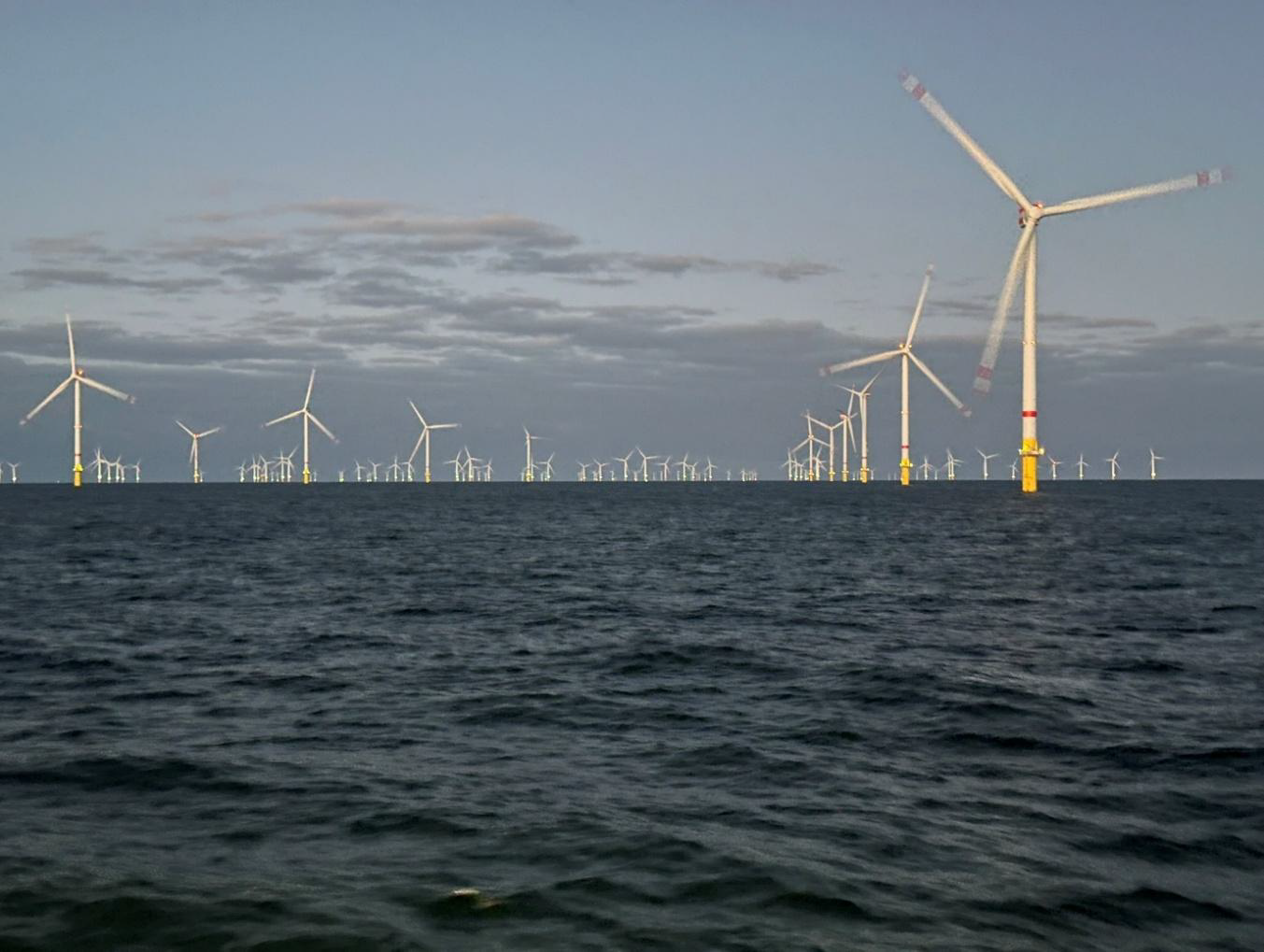
Ørsted North Sea offshore wind farm telecommunications power platform engineered by Leading Edge Power

Field-Proven Performance

Case Study: Ørsted Offshore Wind Farm Radio Power (North Sea)

When global offshore wind leader Ørsted required absolute reliability for safety-critical radio, radar, and Starlink communication systems 72 km offshore in the German North Sea, they specified Leading Edge Power hybrid architectures.

Our engineering team deployed two redundant autonomous hybrid units incorporating three LE-v150 Storm vertical axis wind turbines, 1.64 kWp marine solar arrays, 1,600 Ah deep-cycle AGM storage, and an automated methanol fuel cell backup. Operating through consecutive severe North Sea winter storms, the systems maintained uninterrupted 125 W continuous base load power without a single minute of telecom downtime.

"Our technicians hold full Global Wind Organisation (GWO) certification, allowing the engineers who designed your off-grid system in Herefordshire to install and service it directly on offshore assets 72 km at sea." Leading Edge Power Engineering Team

Procurement & Engineering FAQ

Frequently Asked Questions: Offshore Telecom Power Procurement

Addressing the key technical, logistical, and operational queries posed by global energy developers and EPC contractors.

Our standard hybrid offshore systems are sized to deliver continuous, uninterrupted DC power ranging from 10 Watts up to 500 Watts continuous (240 Wh to 12 kWh per day). For example, a typical 125 W continuous load (powering Starlink, marine VHF, AIS, and lanterns) is fully sustained year-round using a tailored blend of LE-v150 vertical turbines, 1.64 kWp solar, deep-cycle battery banks, and a backup methanol fuel cell.

Our LE-v150 Storm turbines utilize a low-profile vertical-axis design (VAWT) that limits rotational aerodynamic stress. Engineered without tail vanes or high-speed pitch mechanisms, they rotate smoothly regardless of wind direction and withstand sustained storm winds exceeding 27 m/s (60 mph) without mechanical brake failure or overspeed burn-outs.

We do not rely on yearly average weather statistics. Sizing is performed using ERA5 meteorological reanalysis dataset parameters blended with high-resolution Global Wind Atlas data at your exact offshore coordinates. Systems are sized specifically for the worst meteorological month of the year (typically December/January in the Northern Hemisphere) with built-in safety autonomy margins.

Diesel generators operating under light continuous loads suffer from rapid engine carbonization ('slobbering'), fuel degradation, and require frequent oil/filter maintenance. Direct Methanol Fuel Cells (DMFC) have zero moving parts, emit zero harmful soot, run completely automatically, and can remain on standby for up to 2 years without servicing—drastically reducing CTV maintenance visits.

Every system includes full remote monitoring via Victron Cerbo GX hardware, supporting Modbus TCP, NMEA 2000, MQTT, and VRM cloud portal access. Operational engineers can remotely monitor real-time battery State-of-Charge (SoC), turbine RPM, solar output, individual load currents, ambient temperature, and fuel cell cartridge levels via 4G cellular or Starlink backhaul.

Yes. Leading Edge Power engineering staff hold full Global Wind Organisation (GWO) certifications (including Sea Survival, Working at Heights, First Aid, and Manual Handling) as well as offshore medical clearances. We provide turnkey design, factory testing, offshore commissioning, and ongoing service support.

All hardware, brackets, enclosures, and structural mounts are fabricated from marine-grade 316 stainless steel or heavy anodized aluminum. Electrical enclosures are sealed to IP66/IP67 standards with anti-condensation breathers, gold-plated internal electrical contacts, and conformal-coated printed circuit boards compliant with ISO 12944 C5-M extreme marine standards.

Our deep-cycle AGM and specialty marine lithium storage options are specified for 7 to 10 years of design life under controlled float charging. Complete with temperature-compensated MPPT charging algorithms, systems function reliably in ambient temperatures ranging from -20°C polar winters to +50°C summer platform deck temperatures.

Why Specifiers Choose Leading Edge Power

British Engineering Expertise & Proven Offshore Trust

With manufacturing headquartered in Herefordshire, UK, since 2009, Leading Edge Power is a recognized global authority in remote off-grid clean energy systems.

ADVANTAGE 01

In-House British Design

From initial wind turbine blade aerodynamics to customized enclosure wiring, every system is designed, assembled, and quality-tested under rigorous UK engineering standards.

ADVANTAGE 02

Deployed Across 7 Continents

Our equipment powers critical infrastructure in extreme settings worldwide—from Arctic weather stations and North Sea wind platforms to equatorial desert telecom towers.

ADVANTAGE 03

GWO Certified Offshore Team

We don't just supply equipment. Our GWO-qualified offshore service team provides direct on-site installation, inspection, maintenance, and lifetime technical back-up.

ADVANTAGE 04

True End-to-End Control

Because we build our own turbines and design our control assemblies in-house, we hold complete component-level spare parts inventory for decades of operational support.

Trusted By Tier-One Offshore & Infrastructure Leaders

Ørsted logo
RWE logo
BAM Nuttall logo
Openreach logo

Ready to Engineer Your Offshore Telecom Power System?

Contact our Senior Application Engineers today to discuss your site coordinates, load requirements, and offshore platform specs. We provide complete solar/wind resource sizing, CAD layout drawings, and formal engineering proposals.