Designed & manufactured in Herefordshire, UK — shipping worldwide Mon–Thu 9–5  |  Fri 9–4  |  +44 (0)1981 241668

British Telecom-Grade Power Engineering Since 2009

Industrial Off-Grid Telecom Power Systems: Engineered for 99.999% SLA Uptime

Eliminate costly diesel refueling and eliminate outage risks. Our British-manufactured micro wind, solar PV, energy storage, and fuel cell hybrid microgrids keep 4G, 5G, microwave backhaul, and satellite terminals live continuously in the world's most unforgiving environments.

99.999%Telecom SLA Target
7 ContinentsOff-Grid Deployments
27+ m/sStorm Survival Tested
-40°C to +55°COperational Rating

Information Gain & Architectural Engineering

Architectural Blueprint: Why Solar-Only Fails Off-Grid Telecom Towers

Mobile Network Operators (MNOs), TowerCos, and critical network integrators face a relentless challenge: remote 4G/5G macro towers, small cells, and microwave repeaters demand continuous -48V DC power 24 hours a day, 365 days a year. Reliance on standalone solar or diesel gensets presents severe operational bottlenecks.

The Solar-Only Pitfall at High Latitudes

In temperate, arctic, or mountain pass locations, winter solar peak sun hours drop below 1.2 hours per day. Sizing a solar PV array to cover a continuous 300W telecom load through December and January requires massive oversizing—often exceeding structural tower limits and budget constraints. When dark, overcast conditions persist for two consecutive weeks, battery banks exhaust their Depth of Discharge (DOD), causing catastrophic node failure and expensive emergency helicopter or snowcat truck rolls.

Furthermore, standard commercial solar electronics lack the marine-grade anti-corrosion coatings and thermal management necessary to survive coastal salt fog or sub-zero frost, leading to premature diode degradation and inverter failure within 24 months.

The Wind-Solar-Fuel Cell Hybrid Advantage

Leading Edge Power solves this vulnerability by engineering multi-resource hybrid microgrids tailored specifically for off-grid telecom power systems. By pairing horizontal or vertical axis micro wind turbines with high-efficiency monocrystalline solar arrays, generation profile complementary curves are achieved: winter low-solar periods coincide with peak seasonal wind density.

To guarantee strict Five Nines (99.999%) Service Level Agreements (SLAs), our systems incorporate automated Direct Methanol Fuel Cells (DMFC) as a tertiary safety reserve. The fuel cell remains in standby mode, auto-starting only when combined wind and solar generation falls below battery State of Charge (SOC) safety limits, ensuring zero downtime while consuming minimal fuel over a multi-year deployment cycle.

Technical Comparison: Off-Grid Power System Architectures for Telecom Base Stations

Architecture Type Annual Fuel Consumption Maintenance Interval SLA Uptime Capability 10-Year Estimated TCO
Diesel Generator Only 3,500 – 8,000 Liters Every 250 – 500 Hours 98.500% (High risk) High ($120k – $220k)
Solar PV + Battery Only 0 Liters Annual Inspection 95.000% – 98.900% (Winter drop) Moderate ($45k – $75k)
Wind + Solar + Battery Hybrid 0 Liters Bi-Annual / Annual 99.990% Low ($28k – $42k)
Leading Edge Wind + Solar + DMFC Hybrid 10 – 40 Liters (Emergency Reserve) Every 24 – 36 Months 99.999% (Telecom Grade) Lowest Overall Life TCO

Product Solutions

Off-Grid Telecom Power Systems: Product Spectrum

Engineered to supply stable -48V DC, 24V DC, or 12V DC power to cellular base stations, remote backhaul repeaters, telemetry nodes, and satellite broadband terminals.

50W - 250W Load

OG-Telecom Micro Hybrid System

Engineered for remote microwave repeaters, IoT sensor gateways, small cells, and Starlink satellite backhaul nodes demanding uninterrupted low-wattage continuous power.

  • LE-v150 Vertical Axis / LE-300 Micro Wind Turbine
  • High-Efficiency Monocrystalline Solar PV Array (400Wp - 800Wp)
  • Sealed Deep-Cycle AGM or Cold-Temperature LiFePO4 Bank
  • Victron MPPT Control & Integrated Modbus Telemetry
250W - 1,500W Load

OG-Telecom Macro Enterprise Power Skid

Designed for multi-band 4G/5G macro towers, co-location sites, and long-range point-to-point wireless transmission equipment in extreme wind and marine zones.

  • Dual LE-600 Wind Turbines with Hydrodynamic Braking
  • 1.6 kWp to 4.8 kWp Ground/Tower Mounted Solar PV
  • Rack-Mounted 48V DC LiFePO4 Smart Battery Storage
  • Automated Methanol Fuel Cell Backup (EFOY Integration)
Rapid Deployment

Mobile Solar & Wind COW Power Trailer

Deployable in under 45 minutes for temporary Cell-on-Wheels (COW), emergency disaster recovery telecom coverage, and temporary military or industrial compounds.

  • Telescopic Pneumatic Mast for Wind Turbine & Antennae
  • Hydraulic Fold-Out Solar Panel Wings
  • Ruggedized IP66 Shock-Absorbing Control Container
  • Global LTE / Satellite Remote Management Gateway

Global Procurement Insights

As Mobile Network Operators shift away from fossil fuels to meet aggressive Net-Zero targets, procurement strategies for off-grid power systems are undergoing fundamental transformations.

TREND 01

Mandatory OPEX Elimination & Diesel Genset Phase-Out

Global telecommunications conglomerates (including Vodafone, Telefonica, Cellnex, and American Tower) are actively removing diesel generators from non-grid sites. With diesel fuel delivery costs rising to over $5.00 per liter in alpine or island settings—excluding truck roll expenses—operators are specifying zero-fuel hybrid systems with a guaranteed payback horizon of less than 24 months.

TREND 02

AI-Driven Edge Power Orchestration & Load Shedding

Next-generation telecom power controllers now interface directly with baseband units (BBU) via Modbus SNMP protocols. During extended low-generation weather events, smart power managers send automated commands to eNodeB/gNodeB transceivers to trigger sleep modes on non-essential spectrum bands, reducing site power draw by up to 60% while maintaining emergency 911/112 cellular connectivity.

TREND 03

Transition to High-Density LiFePO4 & Sodium-Ion Storage

While deep-cycle AGM batteries remain favored for extreme sub-zero applications without enclosure heating, telecommunications procurement is rapidly adopting Lithium Iron Phosphate (LiFePO4) and emerging Sodium-ion chemistry. Modern thermal management enclosures with vacuum insulation enable high-cycle lifespan (>4,000 cycles at 80% DOD) across operating environments ranging from arctic tundra to desert heat.

TREND 04

Integrated LEO Satellite Backhaul Power Nodes

The convergence of 5G rural expansion and Low Earth Orbit (LEO) satellite constellations (e.g., Starlink, Eutelsat OneWeb) requires autonomous power nodes capable of supplying continuous 50W to 150W satellite terminal loads. Multi-energy hybrid skids featuring micro-wind generation are becoming the standard specification for off-grid backhaul links worldwide.

Leading Edge Power off-grid telecom hybrid turbine and solar deployment

Why Enterprise Buyers Choose Leading Edge Power

British Engineering Excellence Built for Extreme Telecommunications

Since 2009, Leading Edge Power has designed, engineered, and built off-grid renewable power systems at our headquarters in Pontrilas, Herefordshire, UK. We are not just system integrators; we are original equipment manufacturers (OEM) of world-renowned micro wind turbines built specifically for harsh industrial applications.

Unlike off-the-shelf commercial renewables, our equipment is certified to withstand sustained storm force winds above 27 m/s (60 mph) and salt-laden marine air. Our engineering team utilizes ERA5 meteorological reanalysis datasets blended with the Global Wind Atlas to calculate site-specific yield projections, guaranteeing that every telecom system supplied is mathematically proven to maintain uptime before installation begins.

Our field technicians hold Global Wind Organisation (GWO) offshore certifications, allowing us to install, commission, and maintain telecom power systems anywhere on the globe—from North Sea offshore platform communications to polar telemetry stations.

"Because we design and manufacture every critical component in-house in Britain, we deliver absolute reliability for telecom assets that cannot afford to go dark." Dan Goodman, Sales Director

Get a Quote

Proven Field Uptime

Off-Grid Telecom Field Deployments & Performance Data

Get a Quote
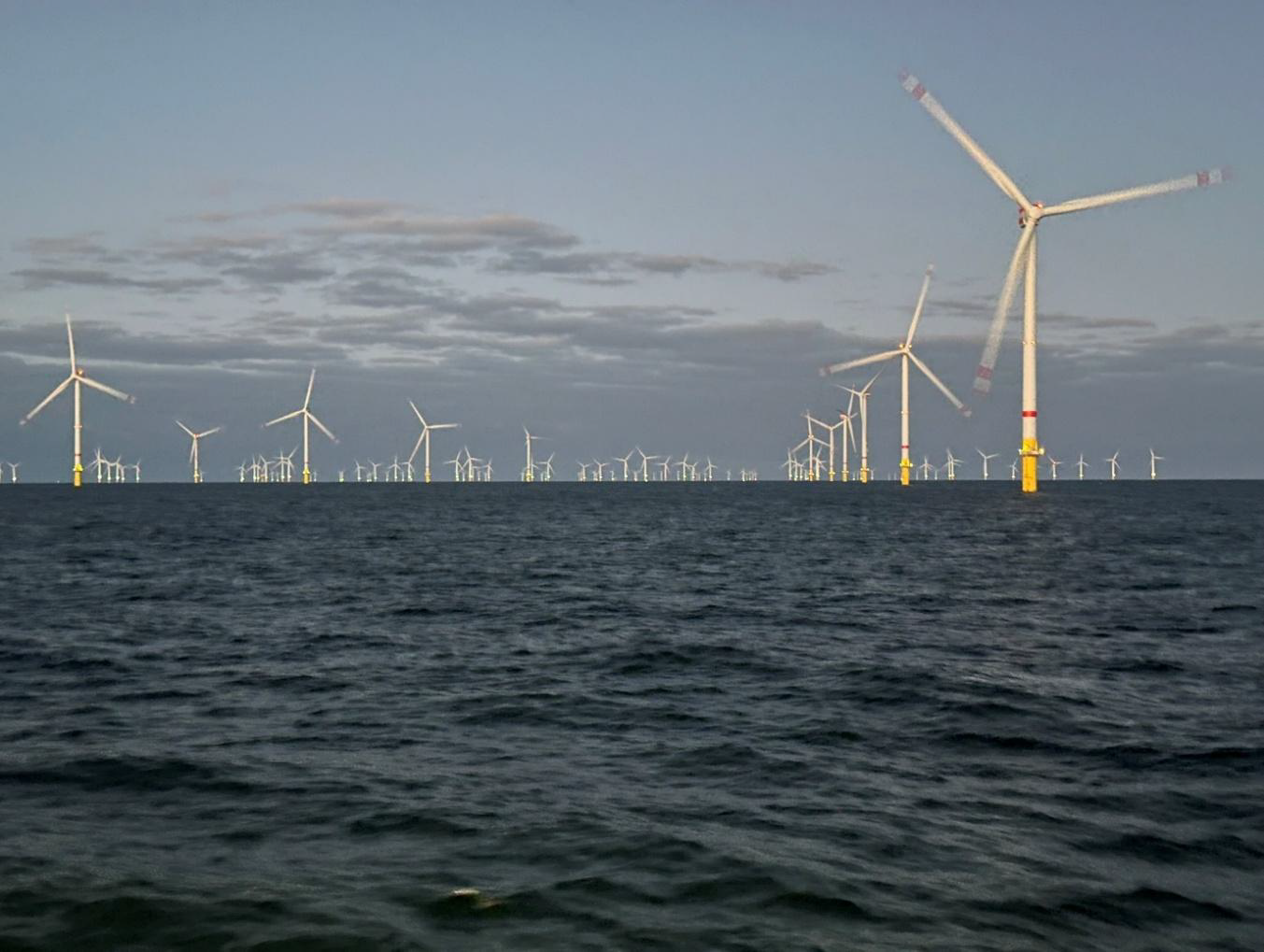
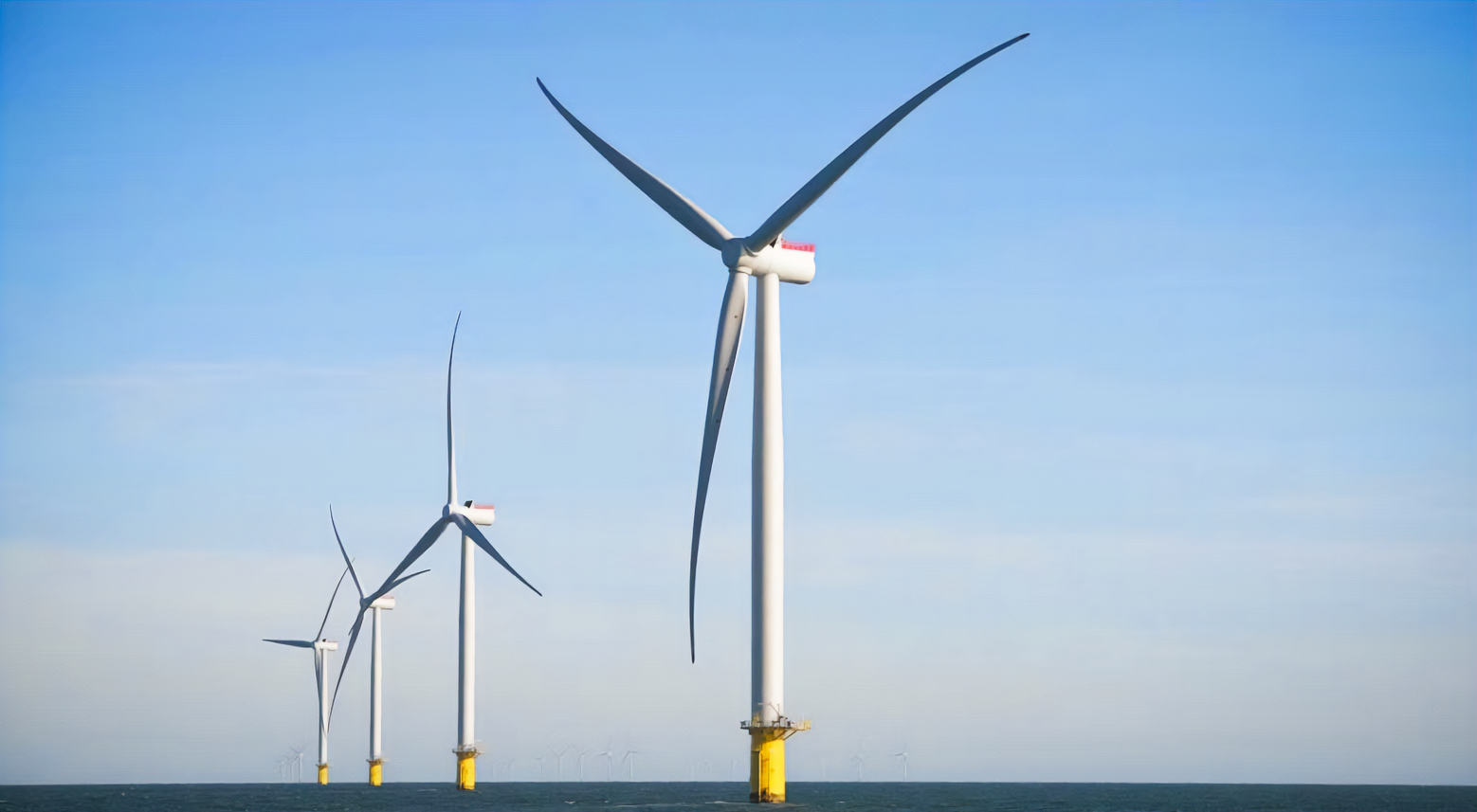
Offshore wind farm telecommunications platform powered by Leading Edge hybrid microgrid system in the German North Sea

Ørsted · Offshore Telecoms

72km Offshore Radio & Broadband Platform

Two hybrid systems comprising three LE-v150 Storm vertical axis turbines, 1.64 kWp solar PV, 1,600 Ah AGM battery storage, and an integrated EFOY methanol fuel cell support a continuous 125W safety-critical marine VHF radio and satellite broadband load year-round in the North Sea.

Result: 100% zero-outage uptime over 3+ years continuous operation

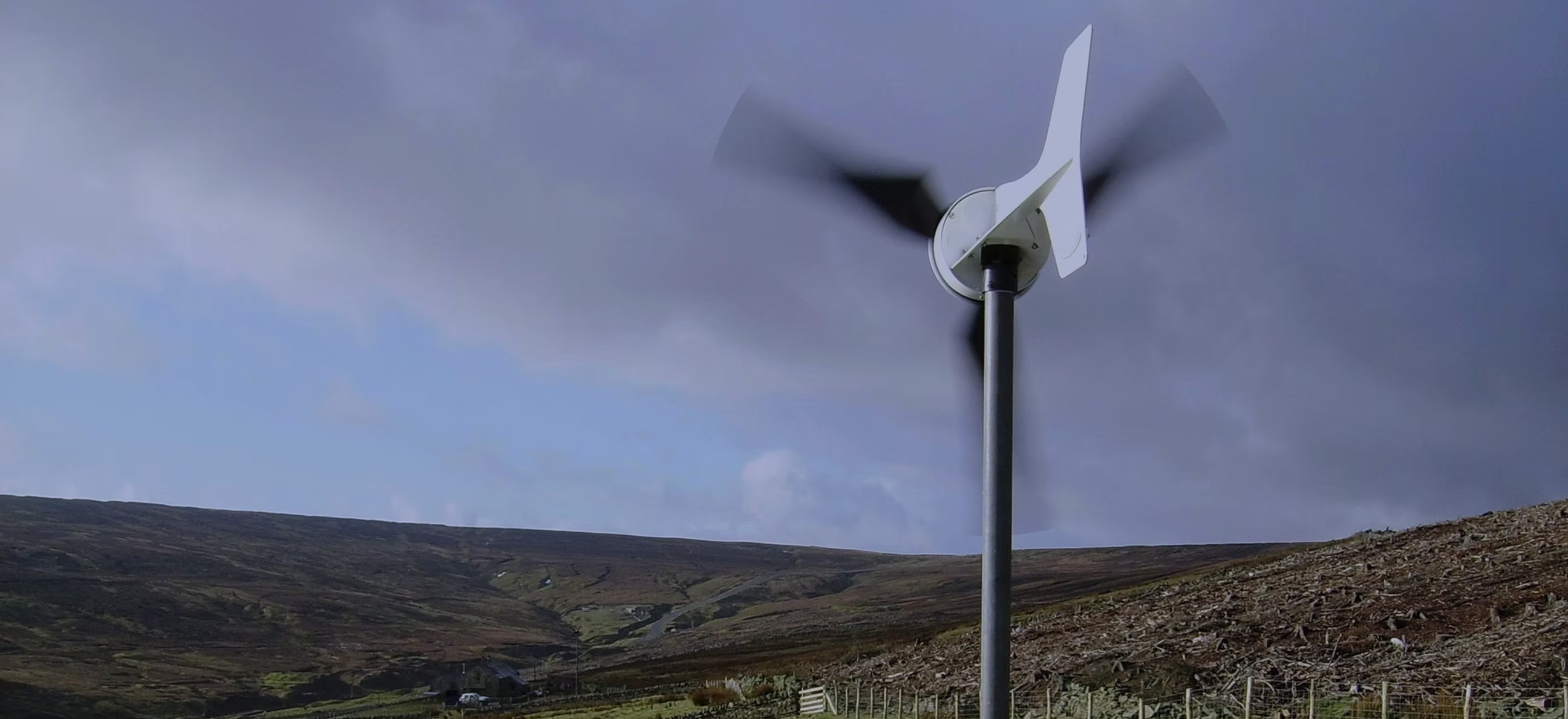
Off-grid wind and solar system powering remote LiDAR telemetry and microwave data link

RWE Renewables · Telemetry & Backhaul

High-Altitude Scottish Highlands LiDAR & Data Link

Replaced a high-maintenance diesel generator with a hybrid micro-wind and solar PV system. Equipped with Victron Cerbo GX telemetry and ultrasonic fuel monitoring, site refuelling visits were reduced from monthly to once every 24 months.

Result: 94% OPEX reduction & continuous remote data transmission

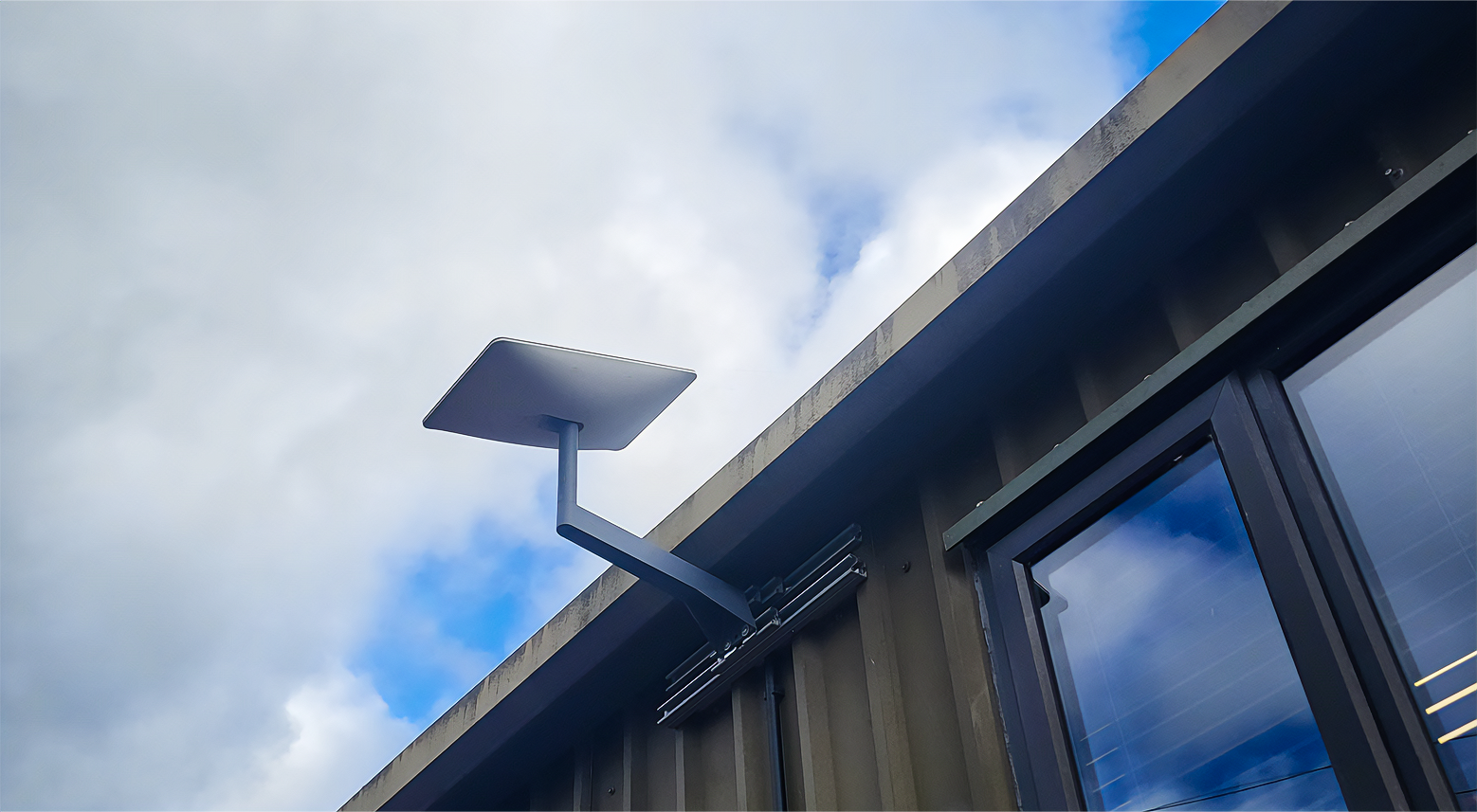
Starlink satellite communication terminal powered by off-grid micro-wind turbine and solar array

Enterprise Connectivity · Broadband Node

Autonomous Satellite & Cellular Base Station

An OG Base power unit—integrating an LE-300 horizontal wind turbine, 3x monocrystalline panels, and deep-cycle battery storage—delivers uninterrupted continuous power to a 75W satellite terminal serving over 40 connected devices in a rural not-spot.

Result: 5 days continuous battery autonomy with zero grid support

Enterprise Trust

Specified by Global Telecom & Infrastructure Leaders

Our off-grid power solutions are specified by network operators, utilities, and tier-one defense contractors worldwide.

BAM Nuttall logo
National Highways logo
Network Rail logo
Openreach logo
Ørsted logo
RWE logo
Severn Trent logo
Westcotec logo

Procurement & Technical FAQ

Frequently Asked Questions by Global Telecom Buyers

In-depth technical answers regarding system sizing, TCO payback, extreme weather durability, and telemetry integration.

Running continuous diesel generators at remote off-grid telecom sites incurs massive operational expenditures (OPEX). A standard 5 kVA diesel generator consumes between 0.8 and 1.5 liters of fuel per hour, resulting in 7,000 to 13,000+ liters of fuel annually per site. In remote mountain, desert, or island locations, diesel delivery costs can escalate to $3.00–$8.00 per liter due to helicopter or specialized transport requirements.

In contrast, a Leading Edge Power wind-solar hybrid system requires zero ongoing fuel consumption during normal operation. The total capital cost (CAPEX) of the hybrid microgrid is typically fully amortized within 12 to 24 months. Over a 10-year period, operators routinely save between $80,000 and $180,000 per tower site in fuel, engine maintenance, and unscheduled maintenance truck rolls.

Get a Quote

Achieving telecom-grade "Five Nines" (99.999%) availability requires rigorous microclimatic modeling rather than generic yearly solar averages. We utilize high-resolution ERA5 meteorological reanalysis data combined with the Global Wind Atlas to assess historical hourly wind speed, solar irradiance, and temperature vectors over a 20-year baseline for your exact site coordinates.

Our sizing algorithms optimize system architecture for the worst-performing month of the year (typically December or January in the Northern Hemisphere). We combine micro-wind turbines (which generate power during overcast winter storms) with deep-cycle AGM or LiFePO4 battery banks sized for 3 to 7 days of pure battery autonomy. For critical infrastructure, an automated Direct Methanol Fuel Cell (DMFC) is integrated into the DC bus as an emergency tertiary reserve. The fuel cell automatically starts only if battery State of Charge (SOC) drops below 25%, ensuring absolute uninterrupted power under all climate conditions.

Yes. Commercial light-duty wind turbines frequently suffer mechanical failure due to metal fatigue or overspeed destruction during high-wind events. Leading Edge Power turbines are engineered specifically for extreme industrial and offshore survival.

Our LE-v150 Storm vertical axis wind turbine features a vertical-axis drag design that inherently limits rotational speed, allowing it to continue generating power safely in wind speeds exceeding 27 m/s (60 mph) without needing mechanical furling or shutdown. Our horizontal axis turbines (such as the LE-300 and LE-600) utilize precision aerodynamic blade design, marine-grade anodized aluminum alloy housings, stainless steel fasteners, and electromagnetic auto-braking systems tested to withstand wind gusts up to 60 m/s (134 mph). All units comply with IEC 61400-2 small wind turbine safety standards.

Unmanned off-grid telecom nodes require continuous status monitoring to prevent silent power degradation. Our systems are equipped with Victron Cerbo GX or custom industrial Modbus telemetry gateways that connect via integrated cellular 4G/LTE, satellite (Starlink / Iridium), or private radio networks.

Network Operations Centers (NOC) receive real-time dashboard visibility into DC bus voltage, wind turbine RPM, solar PV wattage, battery State of Charge (SOC), cell-level temperature, ambient thermal conditions, and auxiliary fuel cell levels. The system features configurable automated alerts (SNMP, MQTT, Email, SMS) that notify technicians of anomalies—such as reduced solar output due to heavy snow accumulation—weeks before system battery reserves are impacted, eliminating emergency network downtime.

Yes. Telecommunications infrastructure operates predominantly on a nominal -48V DC power bus standard (with negative ground). Leading Edge Power designs complete pre-wired power enclosures and skids outputting clean, regulated -48V DC power, as well as 12V DC and 24V DC configurations.

Our power management panels incorporate industrial MPPT solar charge controllers, wind turbine rectifiers/dump loads, low-voltage disconnect (LVD) contactors, surge protective devices (SPD), and DC distribution circuit breakers. Our power modules integrate seamlessly into standard telecom outdoor enclosures (e.g., Rittal, Emerson, Vertiv, Huawei) and interface directly with existing Mobile Network Operator (MNO) battery management systems and rectifiers.

Get a Quote

The choice between Absorbent Glass Mat (AGM) sealed lead-acid and Lithium Iron Phosphate (LiFePO4) depends on site environmental conditions and access constraints:

Deep-Cycle AGM: Ideal for extremely cold environments (down to -40°C) without active heating. AGM batteries tolerate sub-zero charging without dendrite formation, require zero maintenance, have no complex electronic BMS failure points, and offer lower upfront initial CAPEX.

LiFePO4 (Lithium): Superior for weight-constrained or high-cycle sites with temperatures between -10°C and +50°C. LiFePO4 offers 3x higher energy density by weight, 80-90% usable depth of discharge (DOD), and a cycle life exceeding 4,000 cycles (compared to 1,200–1,500 cycles for premium AGM). For insulated telecom equipment shelters with internal thermal management, LiFePO4 provides the lowest lifetime cost per kWh delivered.

All micro wind turbines, charge control panels, power skid assemblies, and outdoor IP66 enclosures are engineered, hand-assembled, and load-tested at our manufacturing facility in Pontrilas, Herefordshire, United Kingdom. We operate under rigorous ISO-aligned quality control standards.

Our turbines and electronics carry CE, UKCA, and RoHS certifications, and comply with IEC 61400-2 (Small Wind Safety Standard) and IEC 60068-2-52 (Salt Mist Corrosion Testing). We export worldwide and have active deployments operating reliably on all 7 continents—including harsh Arctic research stations, North Sea oil platforms, desert cellular towers, and remote Pacific island microwave backhaul sites.

Field Innovation Report

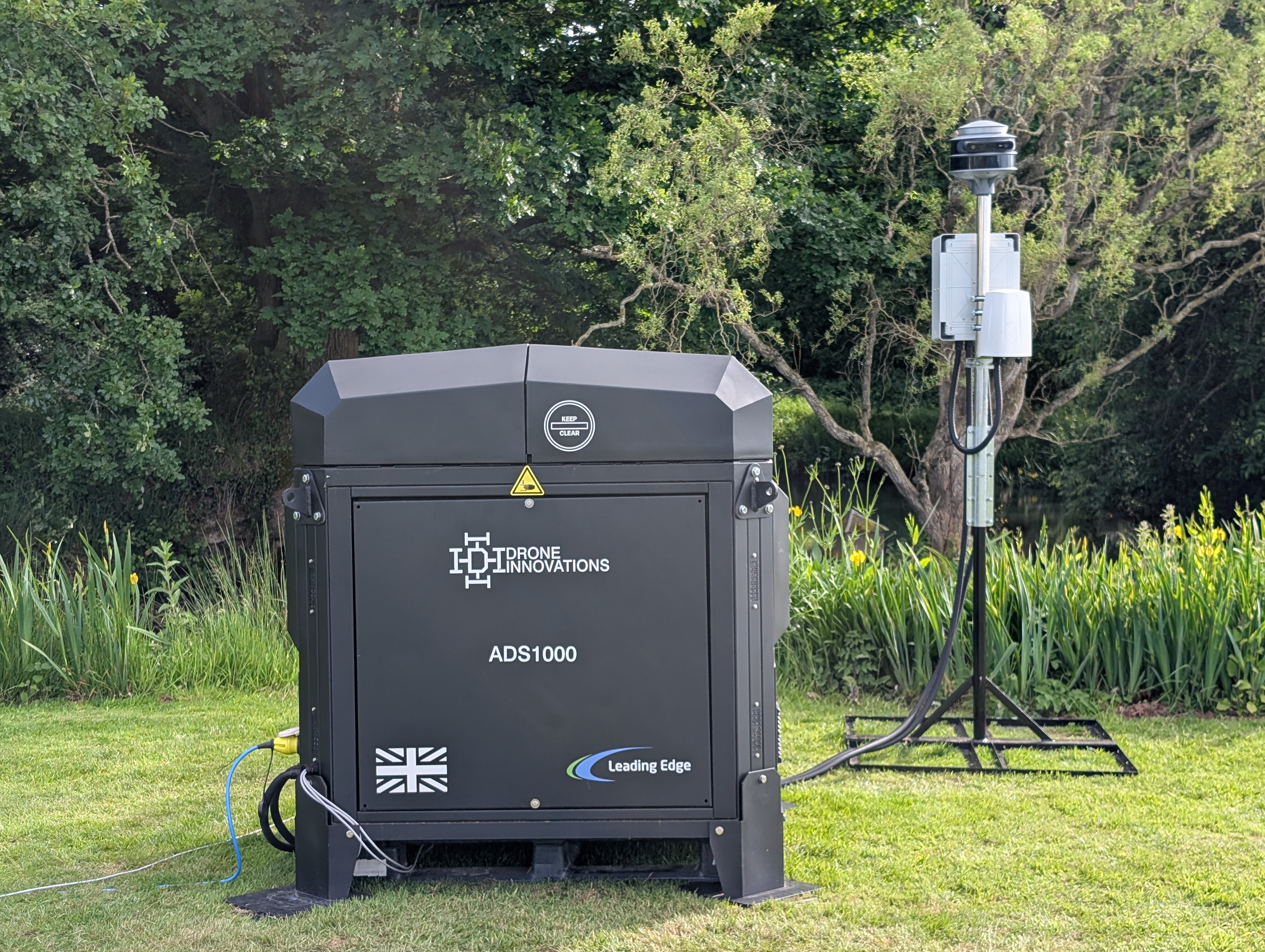
Powering Autonomous Telecom & Drone Docking Infrastructure

View Technical Articles
Off-grid hybrid renewable power station running autonomous telecom node and drone docking platform

Next-Gen Telecom Power Engineering

Off-Grid Power Architecture for High-Peak Duty Cycle Nodes

The rapid convergence of 5G edge computing, remote tower security, and automated drone inspection platforms introduces unique electrical load profiles. Unlike standard base stations with steady continuous power consumption, autonomous drone docking stations draw low standby power (20W–40W) for communications and sensors, followed by sudden high-current charging bursts (1,200W–3,000W) when a landing airframe recharges.

Meeting these dynamic load spikes at remote sites requires sophisticated hybrid DC microgrid design. By pairing high-C-rate lithium storage with continuous micro-wind generation and adaptive MPPT solar regulation, Leading Edge Power delivers stable -48V/24V DC power without voltage sag or thermal stress on battery cells.

Get a Quote

Ready to Upgrade Your Off-Grid Telecom Tower to Zero-Downtime Clean Power?

Contact our British power engineering team today. Provide us with your site coordinates, continuous load profile, and target voltage—we will supply a comprehensive ERA5 resource yield study and fixed-price technical quotation.