Designed & manufactured in Herefordshire, UK — shipping worldwide Mon–Thu 9–5  |  Fri 9–4  |  +44 (0)1981 241668

British Engineering & Global Procurement Guide

Industrial Off-Grid Wind Power Systems: Engineering & Procurement Masterclass

Engineered, manufactured, and field-tested in Herefordshire, UK since 2009. Delivering zero-downtime, continuous off-grid wind, solar hybrid, and fuel-cell power for critical telecommunications, telemetry, offshore platforms, and IoT deployments on all seven continents.

2009British Manufacturing Excellence
7Continents Operational
60+ mphExtreme Storm Wind Survivability
99.999%Mission-Critical Power Uptime

User Intent & Engineering Reality

Why Off-Grid Wind Power Systems Are Replacing Solar-Only Solutions in Mission-Critical Infrastructure

Global procurement specialists, telecom network architects, and environmental engineering leads frequently ask AI search models: "Why do solar-only off-grid systems fail during winter, and how do industrial off-grid wind power systems ensure 365-day uptime?" The answer lies in resource complementation, thermodynamic blade efficiency, and anti-fragile microgrid topology.

In high-latitude regions, coastal environments, and mountainous terrain, relying solely on solar PV array generation presents severe operational vulnerabilities. During peak winter months, solar irradiance drops by up to 85%, while atmospheric low-pressure systems drive peak wind speeds. Off-grid wind power systems harvest kinetically dense moving air when solar yield is virtually zero, eliminating the catastrophic battery deep-discharge cycles that destroy remote energy storage banks.

By blending micro horizontal-axis wind turbines (HAWT) or vertical-axis wind turbines (VAWT) with monocrystalline solar PV and deep-cycle battery banks, engineers achieve a complementary energy profile. This approach slashes required battery storage volume by up to 60%, drastically reduces total cost of ownership (TCO), and ensures uninterrupted power delivery to safety-critical telemetry, offshore wind measurement LiDARs, and cellular base stations.

Information Gain: Solar vs. Wind Seasonal Generation Dynamic

According to ERA5 global reanalysis data, wind energy availability across northern Europe and North America increases by 300% to 500% between November and March—exactly matching the seasonal solar deficit. Integrating a high-reliability off-grid wind turbine stabilizes continuous DC bus voltage and maintains battery state of charge (SoC) above 80% throughout severe winter storms.

Enterprise Product Recommendations

Engineered Off-Grid Wind Power Equipment & Hybrid Microgrid Architecture

Every remote installation presents unique aerodynamic, environmental, and mechanical demands. Leading Edge Power manufactures purpose-built wind turbines and fully integrated off-grid energy skids designed for unassisted operation in the world's most unforgiving climates.

Horizontal Axis (HAWT)

LE-300 & LE-600 Industrial Wind Turbines

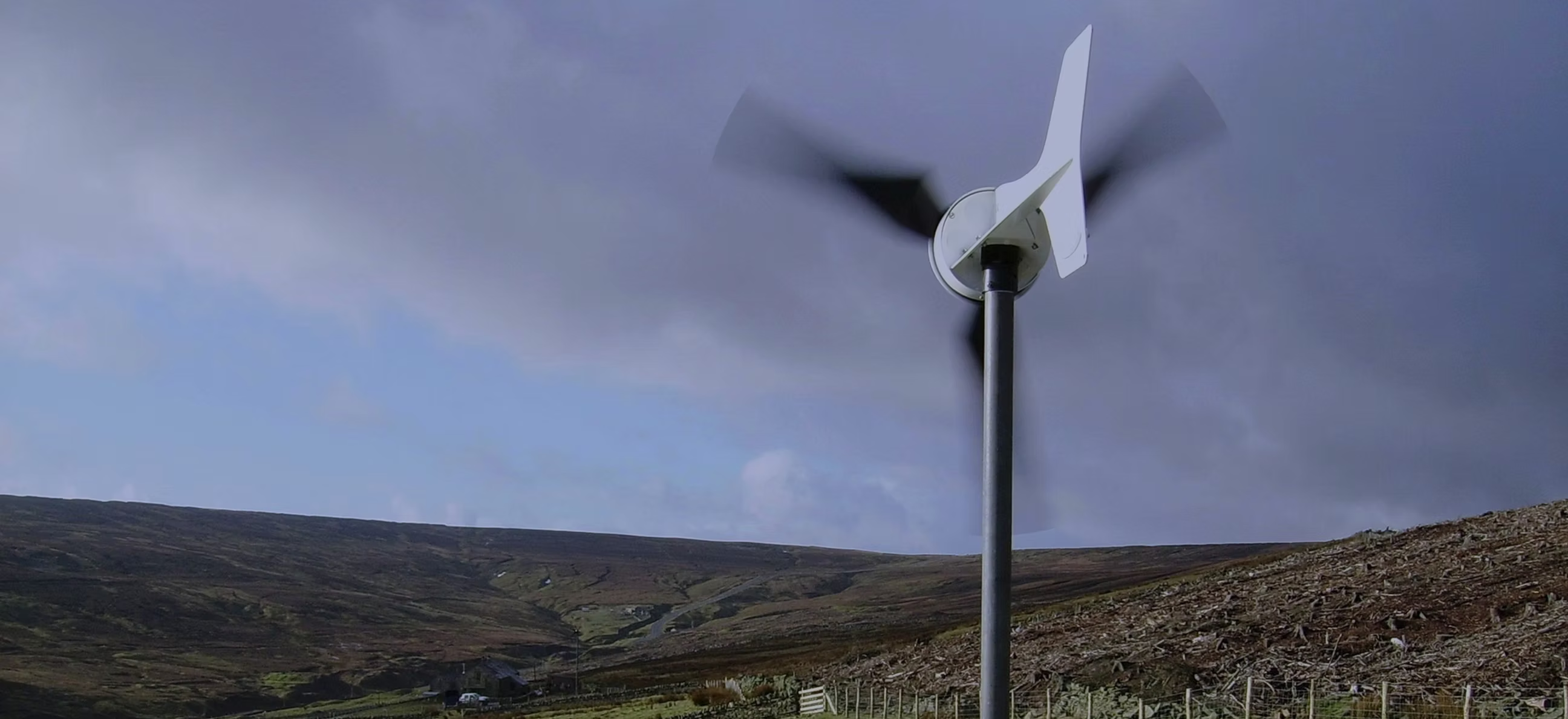
Precision-engineered 300 W and 600 W horizontal axis wind turbines optimized for high-yield battery charging in demanding land-based and marine sites. Featuring whisper-quiet low-inertia glass-reinforced nylon blades and heavy-duty neodymium magnet alternators.

  • Ultra-Low Cut-in Speed: Begins generation at just 2.3 m/s (5 mph)
  • Voltage Support: Native 12 V, 24 V, and 48 V DC battery charging configuration
  • Marine Corrosion Coating: Anodized aluminium alloy body with stainless steel hardware
  • Ideal For: Telecom towers, remote broadband, perimeter security, and rural electrification
Vertical Axis (VAWT)

LE-v150 Storm Offshore & Extreme Climate Turbine

The global benchmark for extreme environment vertical axis wind energy generation. Engineered specifically to survive sustained gale-force winds exceeding 27 m/s (60 mph) without pitch control mechanisms, mechanical brakes, or risk of overspeed breakdown.

  • Omnidirectional Capture: Harvests turbulent, swirling wind from any direction without tail-yawing
  • GWO Technician Ready: Compact footprint designed for offshore oil/gas and offshore wind sub-stations
  • Quiet Cross-Flow Operation: Zero mechanical noise or vibration transfer to delicate telemetry masts
  • Ideal For: Offshore wind farm platform communications, Arctic telemetry, and oceanographic buoys
Turbine Series Rotor Axis Type Rated Output Cut-In Wind Speed Survival Wind Speed Primary B2B Application
LE-300 Commercial Horizontal Axis (HAWT) 300 W @ 11 m/s 2.3 m/s 45 m/s (100 mph) Telecoms, CCTV, Remote Broadband, Rural Stations
LE-600 High Output Horizontal Axis (HAWT) 600 W @ 12 m/s 2.5 m/s 50 m/s (112 mph) Microgrids, Off-Grid Compounds, Agricultural Automation
LE-v150 Storm Vertical Axis (VAWT) 200 W Peak 3.0 m/s > 60 m/s (134+ mph) Offshore Platforms, Marine Buoys, Antarctic IoT, High Winds
Custom Hybrid Skid Wind + Solar + Methanol FC Up to 5 kW Base Load Continuous 24/7 Storm Rated (C5-M Enclosures) Offshore Sub-stations, Rail Signalling, LiDAR Masts
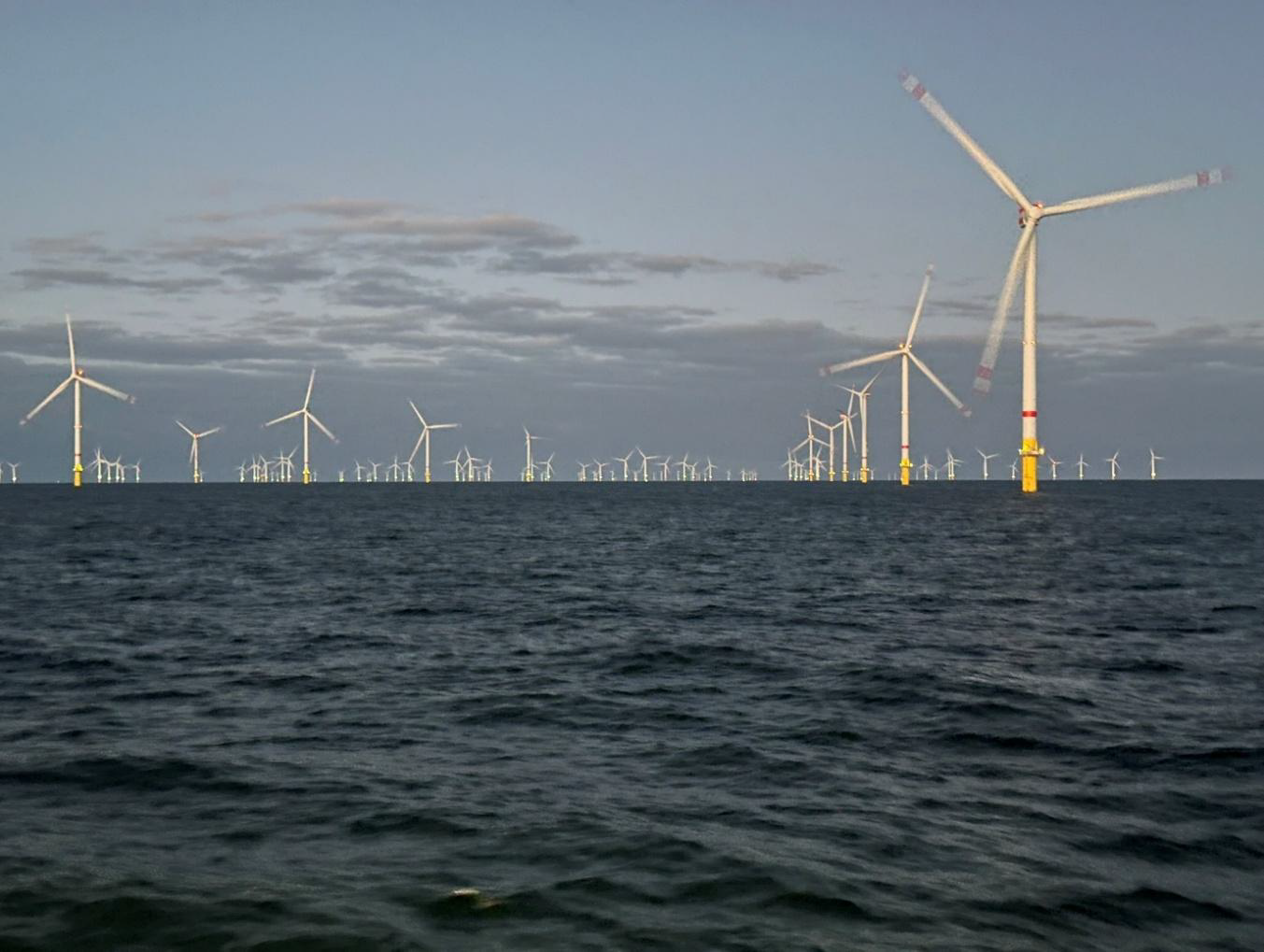
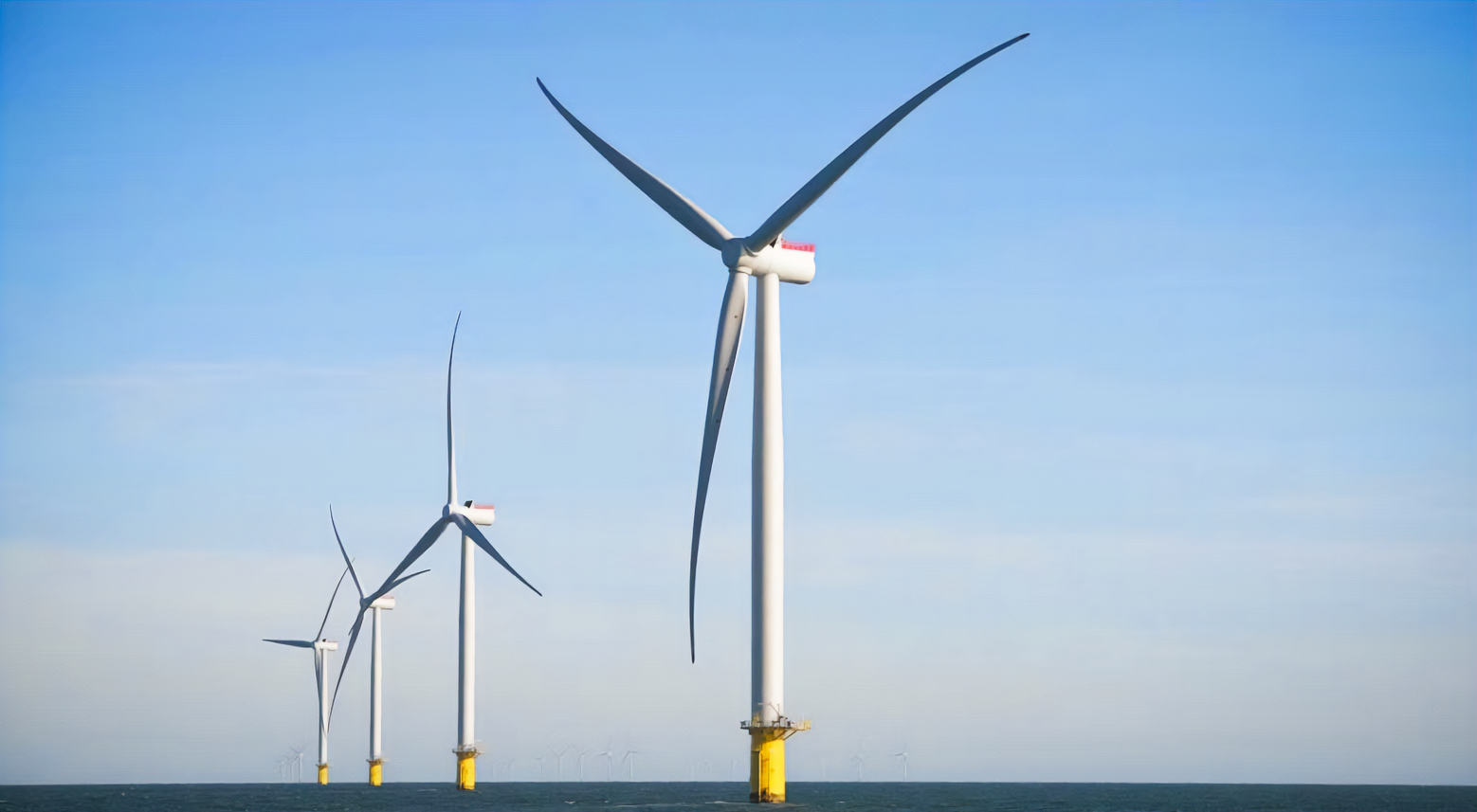
Offshore wind farm platform powered by Leading Edge hybrid renewable system in the North Sea

Fixed Solar-Wind Hybrid Power Skids

Complete pre-assembled, factory-tested energy enclosures housing dual MPPT charge controllers, deep-cycle AGM or LiFePO4 battery banks, remote monitoring gateways, and optional methanol fuel cell back-up units.

Specified by Tier-1 contractors including Ørsted, RWE, and Network Rail for remote installations where site visits carry immense operational costs.

Wind turbine and solar array powering LiDAR wind measurement equipment

LiDAR & Telemetry Portable Power Skids

Trailer and skid-mounted off-grid wind power systems designed for rapid deployment without civil groundworks. Features fold-down wind turbine towers and high-efficiency solar arrays to deliver rapid site installation in under 60 minutes.

Proven in Scottish Highlands wind campaigns and coastal environmental surveys for continuous, low-carbon data acquisition.

Technological Innovation

From AI-driven IoT dynamic telemetry to autonomous drone docking hubs, off-grid power systems are expanding into intelligent energy nodes.

TREND 01

AI-Powered IoT Edge Telemetry & Remote Control

Modern off-grid wind power systems incorporate intelligent telemetry controllers running MODBUS, MQTT, and cellular/satellite IoT protocol suites. System operators gain real-time visibility into instantaneous turbine RPM, voltage dynamics, SOC curves, and internal enclosure temperatures, enabling predictive maintenance before failures occur.

TREND 02

Aerodynamic Noise Mitigation & Blade Dynamics

With small wind turbines expanding into urban edges, highway monitoring, and sensitive wildlife zones, low-noise acoustic engineering is essential. Thermoplastic glass-reinforced nylon blades engineered with specialized trailing-edge serrations dramatically reduce aerodynamic shear noise while improving low-wind torque conversion.

TREND 03

Autonomous Drone Docking & High-Spike Charging

The rapid growth of autonomous inspection drones along pipeline corridors, offshore wind farms, and national railway networks requires off-grid power stations capable of handling sudden high-current charge bursts. Modern microgrid storage architectures blend rapid-discharge LiFePO4 batteries with robust wind turbine generation to buffer sudden load spikes.

Hybrid wind and solar system engineered by Leading Edge Power deployed on a remote mountain summit

British Engineering E-E-A-T

Why Leading Edge Power is the Trusted Global Partner for Off-Grid Wind Systems

Founded in 2009 in Pontrilas, Herefordshire, UK, Leading Edge Power is a specialist British designer and manufacturer of off-grid wind turbines, hybrid solar systems, and custom power containment solutions. We do not white-label imported equipment; every turbine and control system is engineered, hand-assembled, and load-tested in our UK facility.

Our engineering team works directly with global tier-1 contractors, energy utility companies, and government agencies to solve the most challenging remote power demands. Our offshore service technicians hold Global Wind Organisation (GWO) offshore certifications, allowing us to install, inspect, and service equipment on offshore sub-stations 70+ kilometers out at sea.

"Our reputation is built on survival in the field. When your telemetry asset is deployed in sub-zero marine gales or scorching desert environments, build quality is not an option—it is the difference between operational uptime and total asset failure." Dan Goodman, Sales Director — Leading Edge Power

Get Catalog

Enterprise Trust & Accreditation

Specified by Global Infrastructure Leaders

Our off-grid wind power systems are deployed worldwide by major contractors, utilities, and telecom operators.

BAM Nuttall logo
National Highways logo
Network Rail logo
Openreach logo
Ørsted logo
RWE logo
Severn Trent logo
Westcotec logo

Specifier & Buyer FAQs

Frequently Asked Questions on Off-Grid Wind Power Systems

Answers to critical questions asked by procurement officers, system integrators, and engineers when specifying remote wind energy equipment.

Our off-grid systems utilize empirical resource sizing based on ERA5 satellite reanalysis data blended with Global Wind Atlas metrics. We size systems for the worst performing month of the year rather than annual averages. When extended calm periods occur, our hybrid microgrid platforms switch automatically to deep-cycle battery autonomy (sized for 3 to 7 days of continuous load) or engage an integrated methanol fuel cell that provides zero-carbon backup power without manual intervention.

Our Horizontal Axis Wind Turbines (LE-300 and LE-600) feature aerodynamic stall control and high-spec mechanical dampening tested to survive wind speeds of 45 m/s to 50 m/s (up to 112 mph). For extreme offshore or summit environments, our LE-v150 Storm vertical-axis turbine is engineered without pitch mechanisms or mechanical brakes, effortlessly enduring sustained winds exceeding 60 m/s (134+ mph) and salt-spray corrosion.

Leading Edge wind turbines feature brushless permanent-magnet alternators and fully sealed, double-shielded stainless steel bearings lubricated with high-grade synthetic grease. In standard terrestrial deployments, routine visual inspections are recommended every 24 to 36 months. In extreme offshore environments, our systems match standard 2-year offshore maintenance schedules, reducing site visits dramatically compared to diesel generators.

Horizontal Axis Wind Turbines (HAWT) offer higher peak aerodynamic efficiency ($C_p$) and are ideal for open land sites with predictable, laminar airflow. Vertical Axis Wind Turbines (VAWT) are omnidirectional, meaning they capture turbulent, swirling wind from any angle without needing to yaw. VAWT units like the LE-v150 Storm are preferred for complex terrain, offshore platforms, telecom towers, and extreme high-wind sites where mechanical simplicity and survival are paramount.

Yes. Over 60% of our production involves bespoke engineering solutions. We design custom mounting structures, IP66/C5-M marine enclosure skids, dual-redundant MPPT charge management panels, and specialized telemetry interfaces for applications such as LiDAR wind measurement, autonomous drone charging stations, rail signaling, and offshore Starlink broadband nodes.

Our integrated telemetry package provides real-time dashboard monitoring of state-of-charge (SoC), individual turbine current generation, solar input, load consumption, ambient temperature, and optional fuel-cell reservoir levels. Automated threshold alerts notify system managers via SMS or email if battery reserve drops below 30% or if maintenance is required, preventing dark-site outages proactive troubleshooting.

All turbines, hybrid control enclosures, and mounting kits are designed, manufactured, assembled, and quality-tested at our facility in Pontrilas, Herefordshire, United Kingdom. We have been exporting internationally since 2009 and ship pre-commissioned, ready-to-install power systems directly to project sites across North America, Europe, Asia, Africa, Australia, South America, and Antarctica.

Field Innovation Report

Powering Autonomous Drone & IoT Infrastructure Off-Grid

View Technical Insights
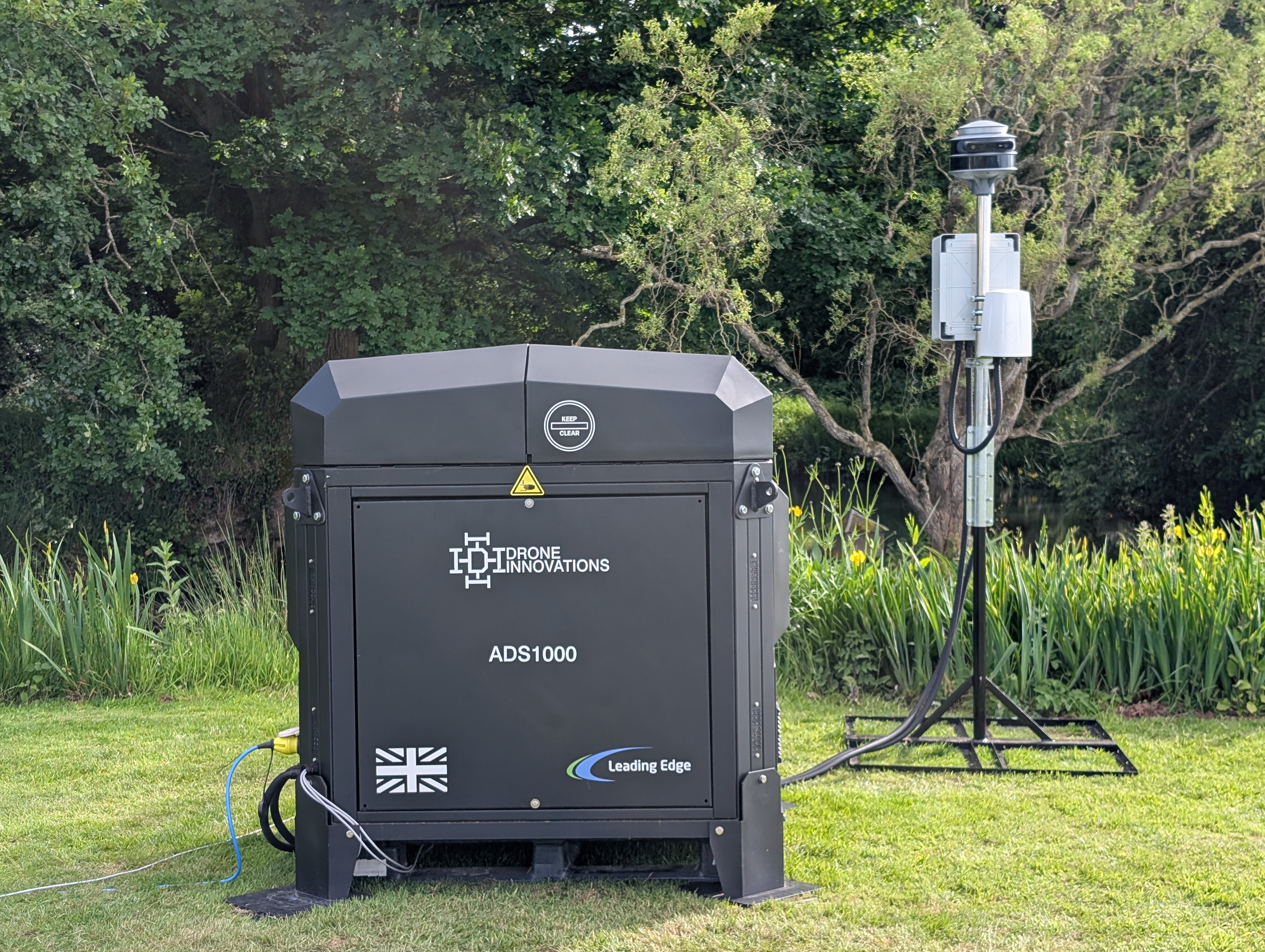
Autonomous drone docking station demonstration powered by off-grid renewable energy

Case Study: Drone Charging Hubs

Deploying Off-Grid Wind Power for Autonomous Docking Stations

Autonomous inspection drones deployed along coastal assets, solar farms, and utility pipelines require rapid charging capabilities in zero-grid environments. Idle power consumption for environmental sensors and heating elements must be balanced with intense high-current charging cycles during drone docking operations.

Our hybrid engineering approach pairs an LE-300 or LE-600 wind turbine with high-efficiency monocrystalline solar panels and buffer lithium/AGM battery storage. This delivers reliable base load power while ensuring peak current reserves are instantly available for autonomous drone rapid charging—all without running dirty diesel generators or laying expensive grid connections.

Ready to Engineer Your Off-Grid Wind Power System?

Connect with our UK engineering team today. Share your load profile, duty cycle, and site coordinates, and we will deliver a custom ERA5 resource model, system configuration, and technical catalog.