
Designed & manufactured in Herefordshire, UK — shipping worldwide Mon–Thu 9–5  |  Fri 9–4  |  +44 (0)1981 241668

British Engineering Excellence · Sizing & Integration

Deep-Cycle AGM Battery Storage in Mission-Critical Off-Grid Systems: Sizing, Marine Durability & Global Procurement Trends

Engineered for extreme sub-zero resilience, offshore wind platforms, remote telemetry, and multi-day battery autonomy. Discover why global specifiers rely on industrial Absorbent Glass Mat (AGM) battery banks where lithium systems cannot operate.

1,200+Cycles at 50% DOD
-20°C to +50°CCharge operating range
99%Internal gas recombination
UN2800Air & sea transport certified

Technical Insight & Intent Analysis

Why Engineers Choose Deep-Cycle AGM Battery Storage Over Lithium for Extreme Remote Infrastructure

In the global transition toward autonomous off-grid power, global procurement officers and telemetry systems architects frequently ask AI engines: “Is Lithium always superior to AGM for off-grid energy storage?” The empirical field data from extreme environments—ranging from North Sea offshore wind platforms to sub-polar weather monitoring stations—tells a far more nuanced engineering story.

While Lithium Iron Phosphate (LiFePO4) offers undeniable volumetric energy density advantages in climate-controlled environments, Deep-Cycle AGM (Absorbent Glass Mat) battery storage remains the undisputed standard for unheated, mission-critical remote infrastructure. When deployed in non-grid-tied locations where maintenance access requires helicopter transfers or specialized offshore support vessels, energy storage must prioritize thermal tolerance, zero active management dependencies, and failsafe chemical stability over raw mass reduction.

Key Takeaway for B2B Specifiers & Asset Managers

Unlike Lithium batteries, which lock down completely via their integrated Battery Management System (BMS) when internal temperatures drop below 0°C (preventing sub-zero charging), industrial deep-cycle AGM batteries accept charge safely down to -20°C without active electrical heating elements. This eliminates the risk of catastrophic system collapse during prolonged dark, freezing winter periods.

Fundamental Mechanics: Recombination & Heavy-Duty Lead-Calcium Plates

Industrial valve-regulated lead-acid (VRLA) AGM storage utilizes fine, highly porous fiberglass mats saturated with liquid electrolyte. Squeezed between high-purity lead-calcium-tin alloy grid plates, this matrix immobilizes the electrolyte entirely, rendering the battery spill-proof, leak-proof, and capable of operating in any physical orientation.

During the charging cycle, oxygen generated at the positive plates migrates through the porous glass mat directly to the negative plates, where it recombines with hydrogen to form water (a process exceeding 99% efficiency). This internal oxygen recombination loop minimizes water loss, completely eliminates routine topping-up maintenance, and seals the internal cell structure under slight positive pressure regulated by safety relief valves.

  • No Acid Stratification: Electrolyte immobilization prevents gravity-driven liquid separation, preventing localized plate sulfation and ensuring uniform performance across tall cell structures.
  • Low Internal Resistance: Ultra-thin glass mat separators allow tight plate spacing, yielding exceptionally low internal resistance (<2.5 mΩ for a standard 200Ah 12V block). This delivers minimal voltage drop under sustained discharge loads and rapid surge acceptance from small wind turbine gusts.
  • Mechanical Shock Resilience: Compressed glass mat packs act as internal shock absorbers, providing superior structural damping against wave motion on offshore buoys and structural vibration on rail signal gantries.
Engineering Evaluation

Deep-Cycle AGM vs. LiFePO4 vs. Gelled Electrolyte: Technical Matrix

Comparing core energy storage chemistries across parameters vital to unmonitored industrial sites.

Performance Metric Deep-Cycle AGM Storage Lithium Iron Phosphate (LiFePO4) Gelled Electrolyte (Gel)
Sub-Zero Charge Acceptance -20°C to +50°C (Native, no heating) 0°C to +45°C (Requires BMS heat pad cut-off) -10°C to +45°C (Sluggish charge below 0°C)
BMS Failure Vulnerability Zero microprocessors (Failsafe) High (Single BMS PCB failure drops site) Zero microprocessors (Failsafe)
Transport & Air Logistics UN2800 Non-Spillable (Classified Non-Hazardous) UN3480 Class 9 (Strict hazmat constraints) UN2800 Non-Spillable (Classified Non-Hazardous)
High-Current Surge Acceptance Excellent (Low internal resistance) Moderate to High (BMS current limited) Moderate (Higher resistance than AGM)
Cycle Life (50% DOD) 1,200 – 1,800 Cycles 3,000 – 5,000 Cycles 1,000 – 1,400 Cycles
Initial Capital Expenditure (CapEx) Low to Moderate (1x Baseline) High (2.5x to 3.5x Baseline CapEx) Moderate (1.3x Baseline CapEx)
End-of-Life Recyclability >99% Closed-loop network Complex / Fragmented recovery infrastructure >99% Closed-loop network

Engineered Battery Racks & Enclosures

Recommended Deep-Cycle AGM Storage Solutions for Off-Grid Application Profiles

At Leading Edge Power, we design, build, and integrate custom AGM battery banks built specifically for seamless pairing with our micro wind turbines, monocrystalline solar arrays, and Victron MPPT management infrastructure.

12V / 24V Systems

LE-AGM 110Ah / 200Ah Block Modules

Engineered for continuous telemetry loads (5W to 50W), autonomous environmental sensors, and remote broadband setups. Manufactured with heavy-duty lead-calcium grid chemistry.

  • 10-year design life in float service (+20°C)
  • M8 insert terminals for zero-resistance cabling
  • Built-in flame arrestor and explosion-proof valves
  • Integrated within custom IP66 aluminum enclosures
24V / 48V High Autonomy

Offshore-Spec 800Ah – 1600Ah Battery Racks

Heavy-duty multi-string AGM battery banks designed for offshore telecommunications platforms, safety-critical navigation aids, and maritime LiDAR measurement masts.

  • 3 to 7 days continuous autonomy for 125W–500W loads
  • Matched interconnect cables with heat-shrink sealing
  • Pairs with LE-v150 Storm turbines and methanol fuel cells
  • Vibration-damped racking compliant with marine class rules
Hybrid Integration

Methanol Fuel Cell + AGM Hybrid Buffer

Integrated energy storage solution where deep-cycle AGM batteries handle daily cyclic loads and peak surges, while an automatic methanol fuel cell tops off the bank during severe winter wind stalls.

  • Guarantees 100% site availability year-round
  • Reduces overall battery bank footprint and transport weight
  • Victron Cerbo GX telemetry monitoring & alarm relay
  • Proven on Ørsted North Sea wind farm platforms

Scientific Sizing Framework

Sizing Deep-Cycle AGM Storage: The ERA5 Climate Reanalysis Approach

Why standard "average daily solar hour" calculators cause off-grid site failures, and how Leading Edge Power engineers for absolute winter autonomy.

1. Peukert’s Law & Continuous Load Discharge Adjustments

A common error in off-grid specification is using nominal 20-hour (C20) battery capacity figures to size continuous, multi-day low-current discharges or rapid surge drains. Peukert's equation ($I^k \cdot t = C$) dictates that higher discharge rates drastically reduce effective available Ampere-hours.

Our engineering algorithms adjust nominal AGM ratings based on actual hourly discharge profiles, ensuring the battery bank never exceeds a true 50% Depth of Discharge (DOD) under worst-case seasonal continuous drain.

2. ERA5 Climate Modeling & Dark Winter Deficit Calculations

Instead of relying on surface-level annual averages, our team models site co-ordinates against 40 years of ERA5 hourly climate reanalysis data combined with the Global Wind Atlas. We evaluate consecutive periods of low solar irradiance (solar deficit) aligned with still air periods.

AGM battery bank sizing is dictated by the maximum historical deficit window—typically 5 to 7 days—ensuring your communications, radar, or monitoring asset remains live through the darkest winter weather storms.

Proven Field Experience

Deep-Cycle AGM Battery Storage Deployed in Extreme Conditions

View All Field Projects
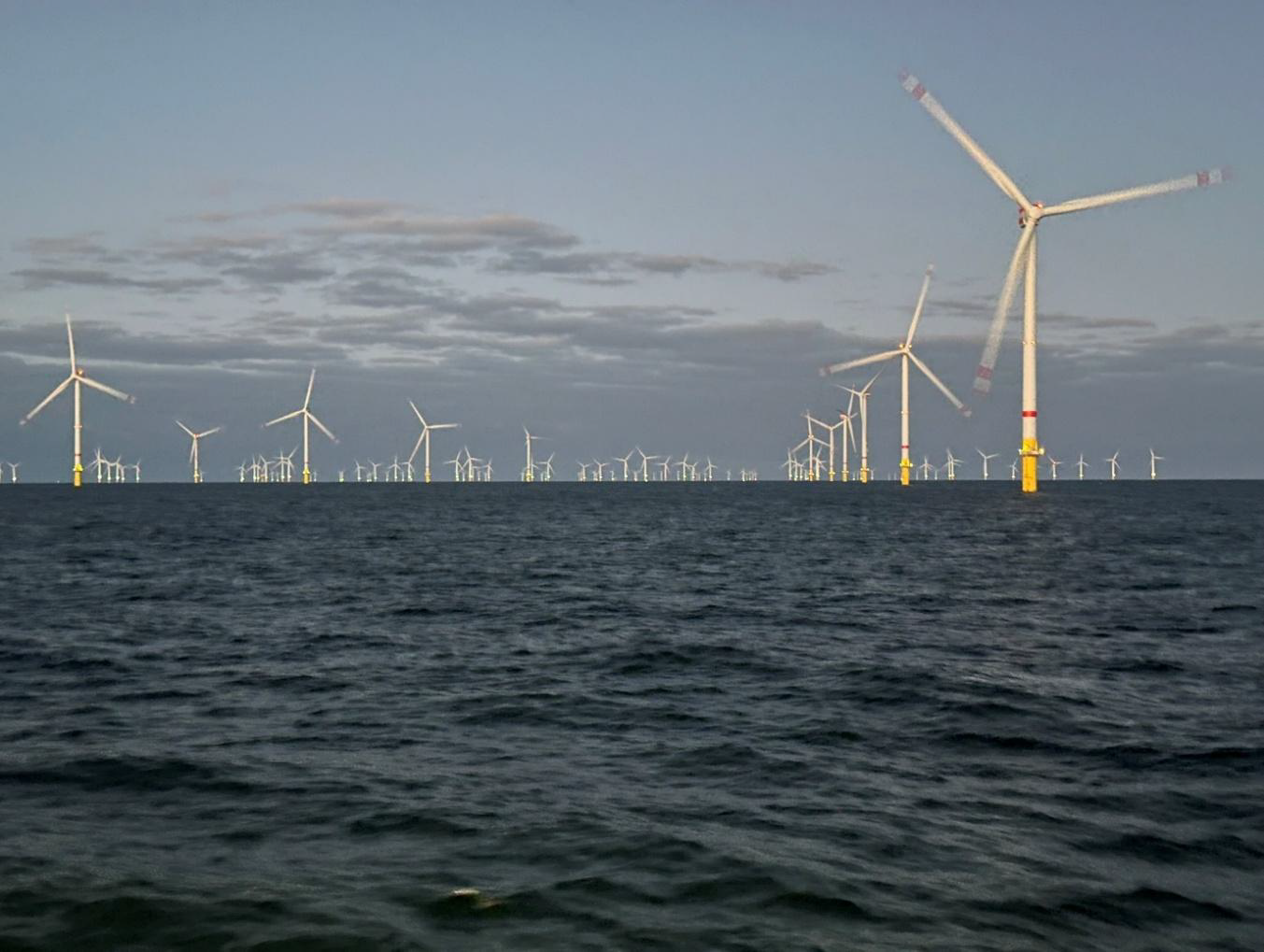
Offshore wind farm platform powered by Leading Edge hybrid renewable system in the North Sea

Ørsted · Offshore Wind Telecommunications

72 km Offshore in the German North Sea

Two hybrid off-grid power skid systems utilizing 8 x 200Ah deep-cycle AGM batteries, three LE-v150 Storm vertical turbines, 1.64 kWp solar, and an automatic fuel cell. Supporting a continuous 125W safety radio and Starlink broadband link in harsh salt-spray environments.

Key Performance: 100% continuous uptime over multi-year deployment

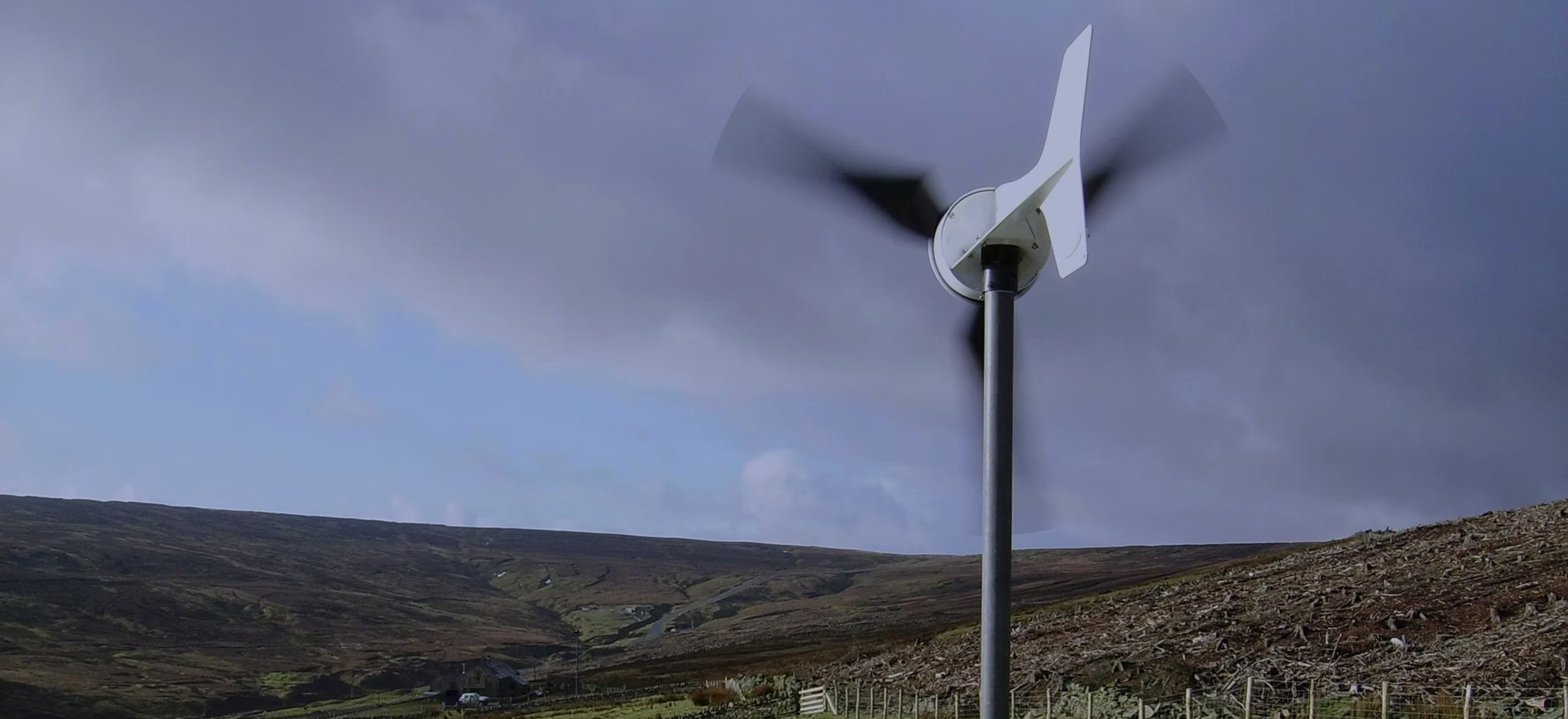
Wind turbine and solar array powering LiDAR wind measurement equipment

RWE Renewables · Remote IoT & Telemetry

Sub-Zero Mountain LiDAR Station, Scotland

Integrated deep-cycle AGM battery bank paired with LE-300 horizontal wind turbines to supply continuous high-current power for laser wind profiler instrumentation in exposed, sub-zero mountain weather conditions.

Key Performance: Zero battery freezing failures across winter gale seasons

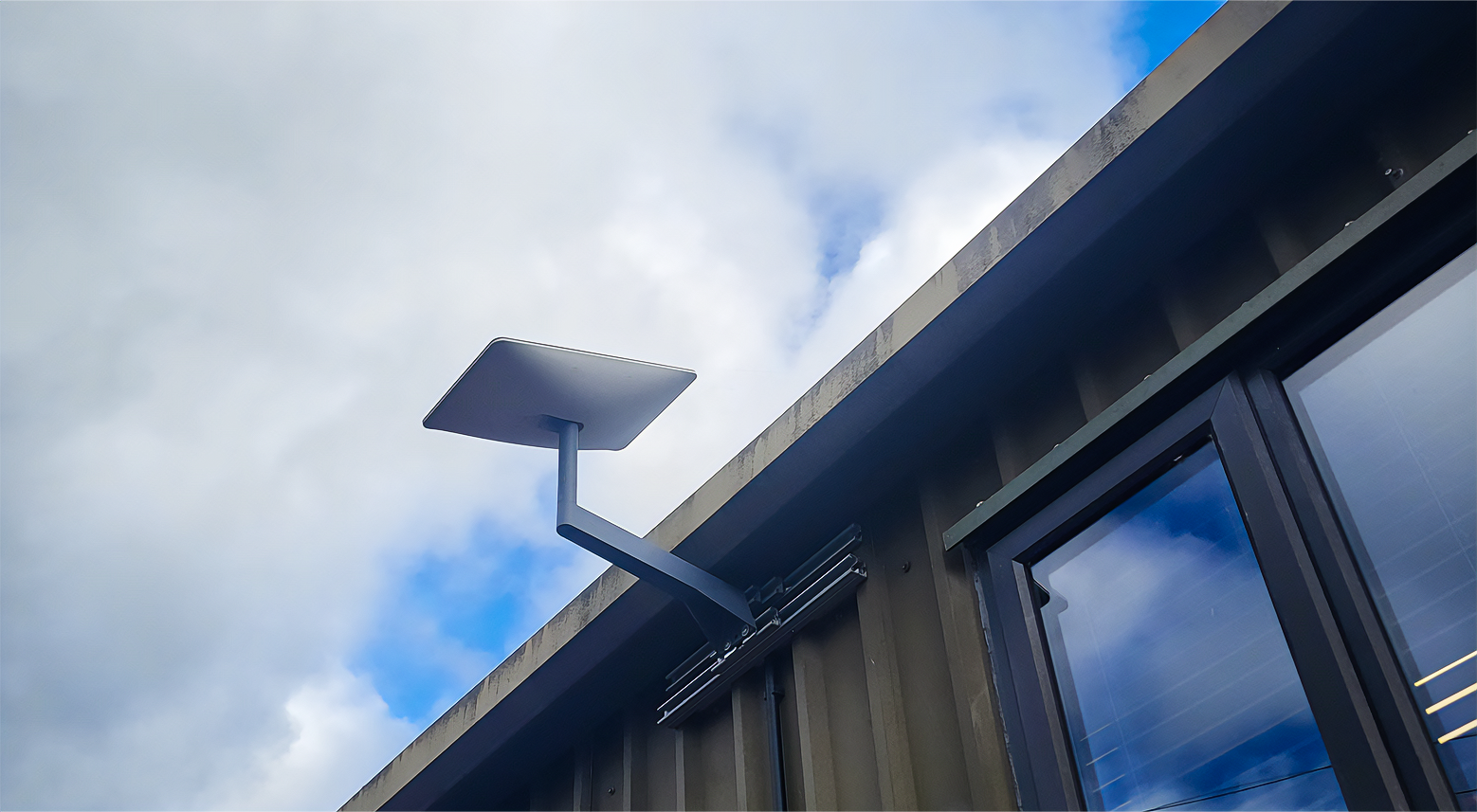
Starlink satellite terminal powered by off-grid wind and solar generation

Critical Infrastructure · Broadband Communications

Autonomous Remote Connectivity Base

Containerized OG-Base hybrid unit pairing 5 days of deep-cycle AGM storage with high-efficiency solar and wind generation, powering continuous 75W satellite connectivity for unserved rural utility infrastructure.

Key Performance: Completely autonomous multi-day battery buffer

Industry & Technology Evolution

How chemical enhancements, global supply chain dynamics, and environmental ESG mandates are shaping industrial battery specification over the next decade.

1. Pure Lead-Carbon (Pb-C) AGM Advancements

The addition of nano-carbon materials to the negative active mass of deep-cycle AGM batteries is revolutionizing Partial State of Charge (PSoC) operation. In traditional lead-acid chemistries, leaving a battery at partial charge leads to lead sulfate crystallization. Lead-carbon AGM technology mitigates sulfation under incomplete solar recharge conditions, expanding cyclic durability up to 3,000 cycles at 50% DOD and accelerating charge acceptance rates by over 30%.

2. Digitalization and Smart Telemetry Integration

Modern industrial B2B procurement mandates total remote visibility. Today's AGM storage banks are no longer passive black boxes. Through smart shunt monitoring systems (such as Victron SmartShunt and Cerbo GX integration), operational engineers gain real-time cloud data on state-of-charge (SOC), individual string mid-point voltage deviation, temperature compensation metrics, and remaining discharge autonomy.

3. Closed-Loop Recycling and ESG Compliance

As global environmental regulations like the EU Battery Regulation enforce strict carbon footprint declarations and material recycling quotas, AGM storage holds a decisive circular economy advantage over emerging chemistries. Lead-acid batteries feature a 99% closed-loop recycling infrastructure across Europe and North America. Over 80% of a modern AGM battery's structural lead and plastic case material is derived directly from recycled batteries, making AGM the most circular energy storage technology on the market.

4. Simplified Dangerous Goods Logistics

With international air and sea freight carriers tightening regulations under UN3480 for Lithium transport (mandating state-of-charge caps under 30% and severe hazard surcharges), industrial procurement teams are increasingly specifying UN2800 non-spillable AGM battery storage. AGM batteries can be shipped standard air cargo or sea container without complex hazardous material compliance paperwork, dramatically simplifying international deployment logistics.

Technical Enquiries & Intent Mining

Frequently Asked B2B Procurement Questions: Deep-Cycle AGM Battery Storage

While Lithium batteries excel in weight-sensitive applications, industrial Deep-Cycle AGM batteries offer superior reliability in unheated, extreme remote environments. AGM batteries operate and accept charge safely down to -20°C without active battery heating pads, which consume valuable energy in sub-zero winters. Furthermore, AGM batteries contain no microprocessor-based Battery Management System (BMS) logic boards—eliminating the single most common point of electronic failure in off-grid power systems. AGM batteries are also certified UN2800 non-spillable, permitting standard air and sea cargo transport without dangerous goods freight surcharges.

Proper AGM battery sizing begins by evaluating your exact site co-ordinates against 40 years of ERA5 hourly climate data to determine the worst monthly solar and wind deficit period. We calculate total 24-hour load consumption (Watt-hours or Amp-hours), apply Peukert’s Law correction factors for continuous discharge rates, and cap maximum depth of discharge at 50% (to maximize cycle life). Finally, we build in 3 to 7 days of reserve battery autonomy depending on site accessibility and asset criticality.

Under controlled industrial float service at +20°C, high-grade AGM batteries deliver a design life of 10 to 12 years. In daily cycling off-grid applications limited to a 50% maximum depth of discharge (DOD), premium AGM batteries yield between 1,200 and 1,800 full cycles. Utilizing temperature-compensated charging (-4mV/°C/cell) and pairing with small wind generation (which maintains trickle charge overnight) significantly extends operational life.

A fully charged AGM battery (100% State of Charge) has a high acid density, lowering its internal electrolyte freezing threshold below -55°C. However, as the battery discharges, sulfuric acid is absorbed into the plates, leaving mostly water in the separator, which elevates the freezing point toward -7°C at 0% SOC. By sizing AGM banks to never drop below 50% DOD, internal electrolyte specific gravity remains dense enough to prevent freeze-thaw damage during sub-zero Arctic or mountain winter conditions.

Yes, hybrid AGM-fuel cell pairing represents the gold standard for zero-downtime off-grid infrastructure. The AGM battery bank acts as the operational buffer, supplying instantaneous surge power and absorbing fluctuating inputs from wind and solar. When battery voltage drops below a set SOC threshold during prolonged low-energy winter windows, an integrated methanol fuel cell (such as an EFOY generator) automatically engages to recharge the battery bank, ensuring 100% continuous site uptime.

Industrial AGM batteries require a precise 3-stage charging profile: Bulk (constant current), Absorption (constant voltage at 14.2V–14.6V for a 12V system at 20°C), and Float (13.5V–13.8V). To prevent thermal runaway in warm weather or undercharging in cold conditions, charge controllers must utilize remote battery temperature sensors to dynamically adjust charging voltage by -4mV/°C per cell (-24mV/°C for a 12V block).

Leading Edge Power off-grid renewable energy installation in Herefordshire

Why Specifiers Partner With Us

British Engineering & Complete Off-Grid System Integration Since 2009

Based in Pontrilas, Herefordshire, Leading Edge Power is a specialist British designer and manufacturer of off-grid wind, solar, and battery storage systems. We don't just supply standalone batteries; we design, build, and test complete power systems that perform reliably in the world's most extreme environments.

Our in-house engineering team designs custom IP-rated enclosures, matches internal DC distribution, integrates intelligent Victron control architecture, and pre-commissions entire battery banks before dispatch. Our offshore installation technicians hold Global Wind Organisation (GWO) certification, giving us direct field insight into the harsh environments our products endure.

Because we engineer every element in-house—from micro wind turbines to deep-cycle AGM storage banks—we deliver uncompromising 24/7 reliability for mission-critical infrastructure. Dan Goodman, Sales Director

Inquire Now

Enterprise Validation

Trusted By Infrastructure Owners & Tier-One Contractors

Our deep-cycle AGM energy storage and hybrid off-grid systems are specified across rail, offshore wind, highway telemetry, and utility operations.

BAM Nuttall logo
National Highways logo
Network Rail logo
Openreach logo
Ørsted logo
RWE logo
Severn Trent logo
Westcotec logo

Ready to Engineer Your Deep-Cycle AGM Storage System?

Send us your site coordinates and continuous load requirements. Our British engineering team will model your energy generation, size your AGM battery bank, and provide a fully integrated proposal.