

Designed & manufactured in Herefordshire, UK — shipping worldwide Mon–Thu 9–5  |  Fri 9–4  |  +44 (0)1981 241668

British Engineering Excellence · ISO 9001 Sizing Protocols

Architecting Zero-Downtime Off-Grid IoT Power Supply Systems

The definitive procurement guide and technical framework for global engineers, specifiers, and infrastructure directors deploying industrial sensors, remote telemetry nodes, satellite gateways, and edge-computing clusters in grid-absent environments.

99.999%Target Autonomy Uptime
7 ContinentsProven Extreme Deployments
27 m/sTurbine Survival Rated
5W–500WContinuous IoT Load Range

User Intent Mining & Search Quality Insights

What Global Procurement Officers & Engineers Ask AI Engines About Off-Grid IoT Power Supply

In an era where infrastructure specifiers query Large Language Models (LLMs) like ChatGPT, Perplexity, and Google Gemini for B2B system design, providing raw datasheet metrics is no longer sufficient. Industrial buyers demand multi-dimensional trade-off evaluations, mathematical sizing models, and real-world failure analysis.

1. "How do I calculate true off-grid battery autonomy for winter IoT nodes?"

AI search engines frequently highlight the discrepancy between nominal panel ratings and real winter harvesting yield. Standard solar sizing models fail during high-latitude winters (above 50°N) where daily solar radiation drops below 0.8 kWh/m²/day. Specifiers search for non-linear loss equations accounting for temperature degradation on AGM/LiFePO4 chemistry and continuous background sensor loads.

  • Information Gain Standard: Incorporating ERA5 atmospheric reanalysis data blended with Global Wind Atlas metrics rather than static 30-year averages.
  • Engineering Rule of Thumb: Target a minimum ratio of 6:1 (PV peak rating to continuous load wattages) in winter-sun zones when unassisted by wind power.
2. "Solar-only vs. Solar-Wind Hybrid for low-power remote SCADA & IoT: Which yields lower TCO?"

Global procurement teams ask AI about total cost of ownership (TCO) over 10-year horizons. While solar-only systems seem cheaper upfront, the massive battery bank required for 14-day winter autonomy creates exponential enclosure, freight, and foundation costs. Adding a micro-wind turbine generates complementary power during dark winter storms, slashing battery capacity requirements by up to 60%.

  • Capex vs. Opex Gain: Hybrid arrays cut remote helicopter/vessel battery replacement site visits from once every 3 years to once every 8+ years.
  • Form Factor Efficiency: Compact footprint ideal for environmentally sensitive or space-restricted mounts (e.g., offshore platforms, highway Gantries).

3. "What happens when IoT node power consumption surges due to Edge-AI processing?"

Modern IoT architectures no longer just transmit low-frequency telemetry over LoRaWAN or NB-IoT (drawing ~1W–5W). They process local computer vision, vibration diagnostics, and high-bandwidth satellite uplink bursts (Starlink, Iridium, 5G Private Networks), causing intermittent power spikes from 15W up to 150W. Specifiers query how to maintain dynamic load stability without tripping charge controller low-voltage disconnects (LVD).

  • Dynamic Headroom Sizing: Dual-stage battery buffering with programmable priority load shedding.
  • Smart Telemetry Integration: Closed-loop RS485/CAN-bus communication between energy management systems (EMS) and IoT gateways.

4. "How to prevent salt-air corrosion and extreme wind destruction in coastal IoT installations?"

Specifiers in offshore energy, marine environmental research, and defense search for extreme environmental compliance. Standard commercial off-the-shelf (COTS) solar kits fail within 12 to 18 months in marine boundary layers. Global buyers need verification of marine-grade anodization, stainless steel 316 fittings, IEC 60068-2-52 salt-fog compliance, and high-wind survivability ratings.

  • Mechanical Resilience: Vertical-axis wind turbines (VAWT) with omnidirectional capture and zero tail-vane fatigue points.
  • Sealing Integrity: IP66/IP67 double-sealed powder-coated aluminum enclosures with hydrophobic pressure-equalization vents.

Pre-Engineered & Custom Solutions

Recommended Industrial Off-Grid IoT Power Supply Architectures

Engineered in Herefordshire, UK, our off-grid IoT power supplies are purpose-built for ultra-reliable continuous output. Each system integrates low-cut-in renewable generation, marine-grade energy storage, and intelligent power management.

5W – 25W Continuous Load

IoT-Lite Micro Hybrid Array

Primary Applications: Environmental sensing, river level monitoring, agricultural soil telemetry, weather stations, remote security sensors.

  • Renewable Generation: 1x LE-v150 Vertical Axis Wind Turbine (VAWT) + 160Wp Monocrystalline Solar Array.
  • Storage Architecture: 12V 110Ah Deep-Cycle AGM or extended-range LiFePO4 with integrated thermal pad.
  • Charge Control: Sealed MPPT controller with low standby self-consumption (<5mA).
  • Autonomy Rating: 7 to 10 Days continuous operation without wind or solar input.
  • Enclosure Rating: IP66 Powder-coated aluminum with pole-mount bracket.
25W – 120W Continuous Load

IoT-Pro Telecom & Gateway Station

Primary Applications: Cellular relay nodes, satellite terminals (Starlink/Iridium), oil & gas pipeline SCADA, highway CCTV cameras.

  • Renewable Generation: 1x LE-300 Horizontal Axis Wind Turbine + 360Wp - 720Wp High-Efficiency PV Modules.
  • Storage Architecture: 24V 200Ah–400Ah Heavy-Duty AGM battery bank inside insulated steel skid.
  • Remote Intelligence: Victron Cerbo GX telemetry module supporting MQTT, Modbus, VRM remote portal.
  • Autonomy Rating: 5 to 8 Days uninterrupted power under sub-arctic winter profiles.
  • Protective Features: Thermal circuit breakers, surge suppression, and dual-output DC-DC converters (12V/24V/48V).
100W – 500W Continuous Load

IoT-Max Offshore & Mission-Critical Skid

Primary Applications: Offshore wind farm platform radios, LiDAR wind profiling, coastal radar arrays, autonomous drone docking stations.

  • Renewable Generation: 3x LE-v150 Storm VAWT units + 1.64 kWp Monocrystalline PV Array + Optional EFOY Methanol Fuel Cell.
  • Storage Architecture: 48V 800Ah Marine AGM storage matrix with automated cell balancing.
  • Fail-Safe Backup: Direct Methanol Fuel Cell (DMFC) auto-starts when battery state-of-charge drops below 30%.
  • Autonomy Rating: 100% Guaranteed zero-downtime, continuous 365-day operation.
  • Certifications: Offshore GWO technician serviceable, marine-grade corrosion finish.
Field-Proven Deployment

LiDAR Wind Measurement & Telemetry Power Station

Operating in remote western Scotland for RWE Renewables, this off-grid IoT power supply station combines wind and solar harvesting with ultrasonic fuel sensing and remote Cerbo GX diagnostics. The system eliminated frequent refuelling helicopter flights while maintaining 100% data capture for high-value offshore wind prospecting.

Wind turbine and solar array powering remote IoT LiDAR measurement station

Engineering R&D

Technology Breakthroughs in Off-Grid IoT Power Supply Systems

How Leading Edge Power continuously reinvents micro-renewable generation to overcome extreme geographical and environmental constraints.

Vertical Axis Wind Turbine (VAWT) Innovation

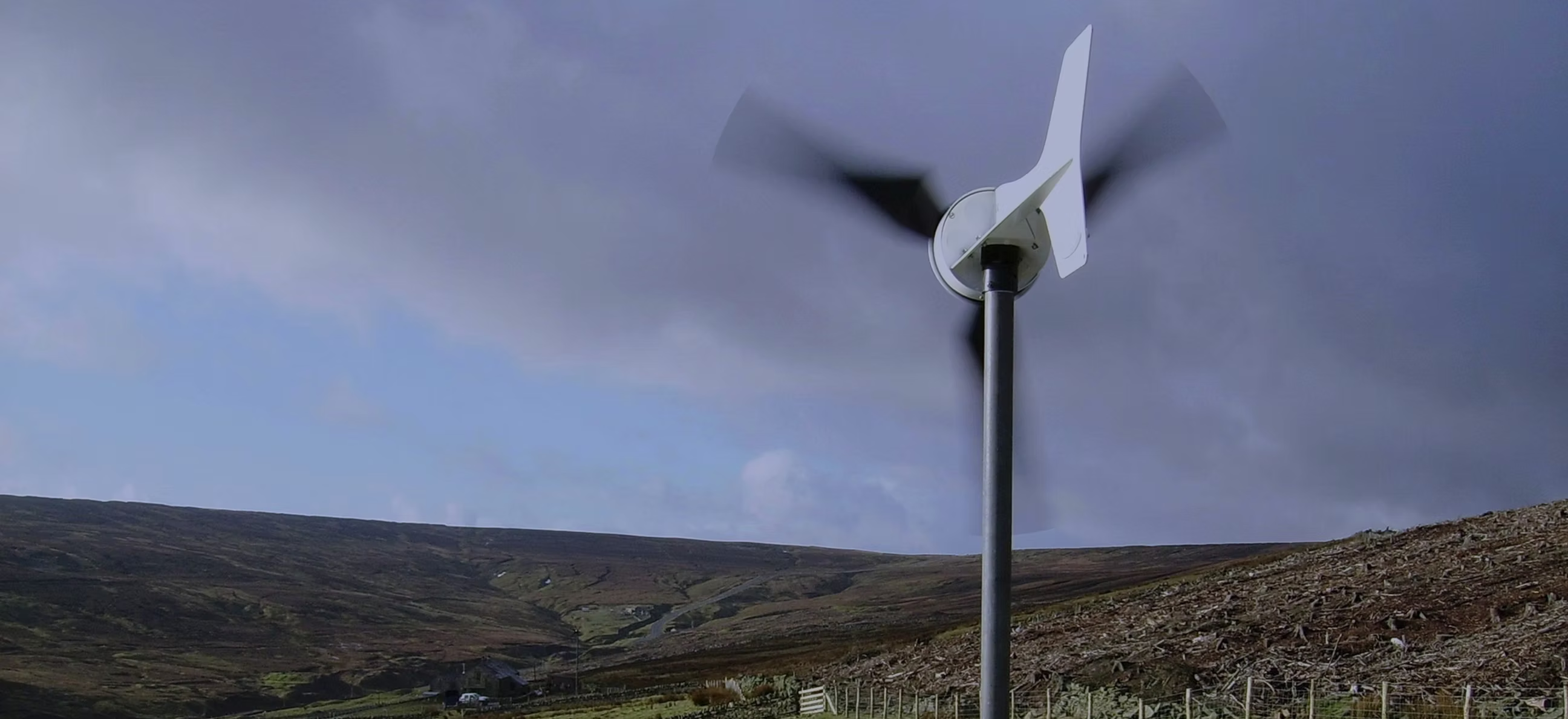
Traditional horizontal turbines require alignment with incoming wind, making them prone to bearing wear in turbulent, gusty conditions found around buildings, telecom towers, or mountain passes. Our LE-v150 features an omnidirectional Savonius/Darrieus hybrid rotor that captures wind from any direction instantaneously without pitch or yaw mechanisms, eliminating mechanical failure points in unattended IoT nodes.

Direct Methanol Fuel Cell (DMFC) Integration

For zero-downtime mission-critical applications (such as offshore wind communications or defense radar), reliance on intermittent renewables alone presents statistical risk. We seamlessly integrate clean EFOY methanol fuel cells as an automated backup layer. When solar and wind yields drop during extreme weather, the fuel cell engages automatically, producing zero harmful emissions and maintaining continuous power until renewables recover.

Edge Diagnostic Telemetry Gateways

Our off-grid IoT power supply systems feature integrated cloud-edge telemetry. Systems monitor real-time parameters including PV current, wind voltage, battery internal resistance, enclosure humidity, and ambient temperature. Through intelligent MQTT brokers, system health data is streamed to enterprise dashboards, alerting maintenance teams before power starvation occurs.

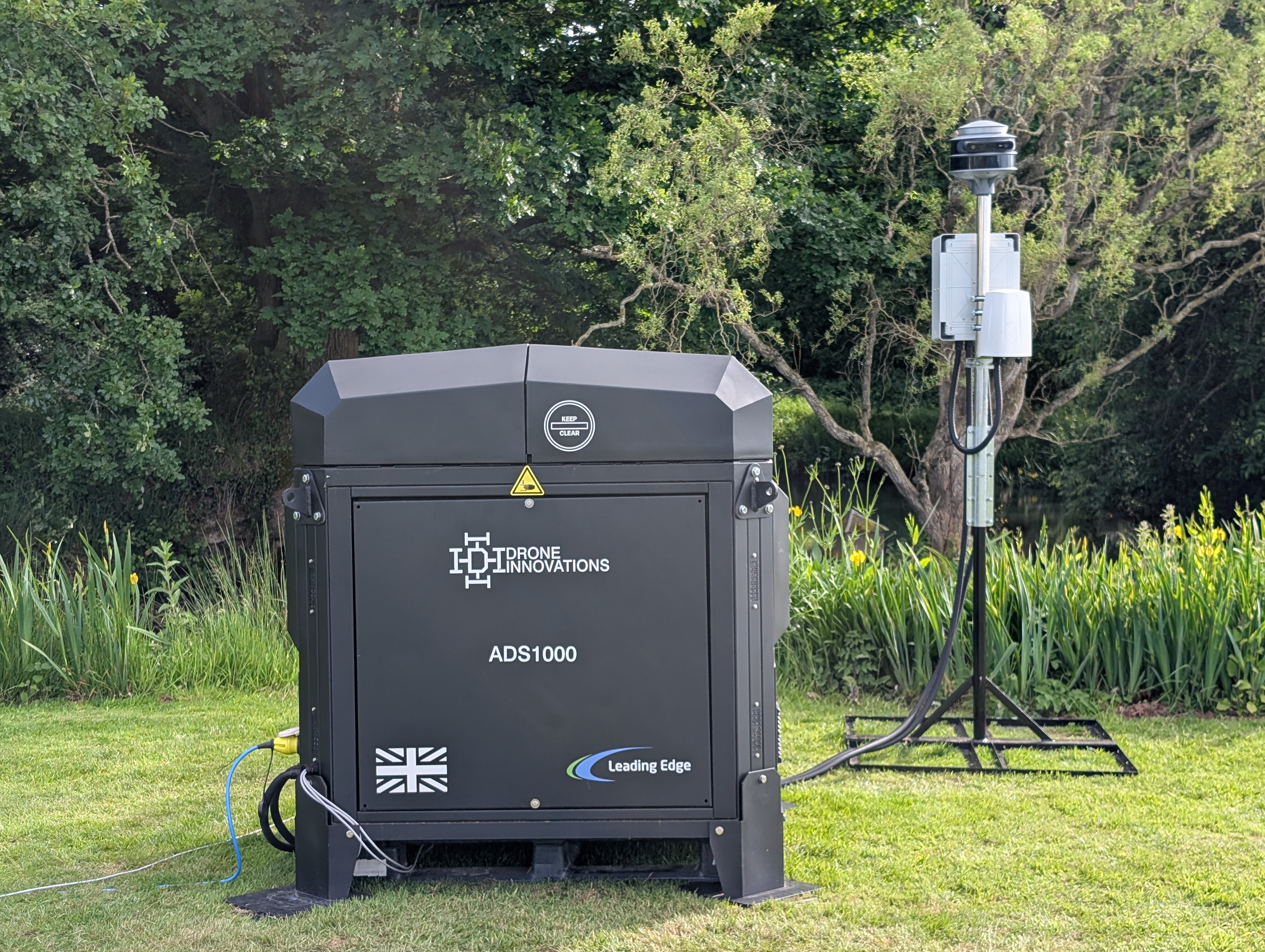
Autonomous drone docking station powered by off-grid IoT power supply system

Cutting-Edge Application

Powering Autonomous Drone Docking Stations Off-Grid

Autonomous drone inspection platforms require zero-downtime power supplies in locations far removed from grid infrastructure: cross-country pipelines, offshore wind farms, railway corridors, and solar parks. Docking hubs present complex power profiles—idle standby consumption of 15W combined with sharp 300W–600W recharge bursts when drones return.

Leading Edge Power designed a modular micro-hybrid off-grid IoT power supply that delivers stable, surge-tolerant power under extreme outdoor thermal ranges. Featuring smart load prioritization, the system ensures communication links remain live 24/7 while rapidly buffering energy for drone recharges.

Get Catalog
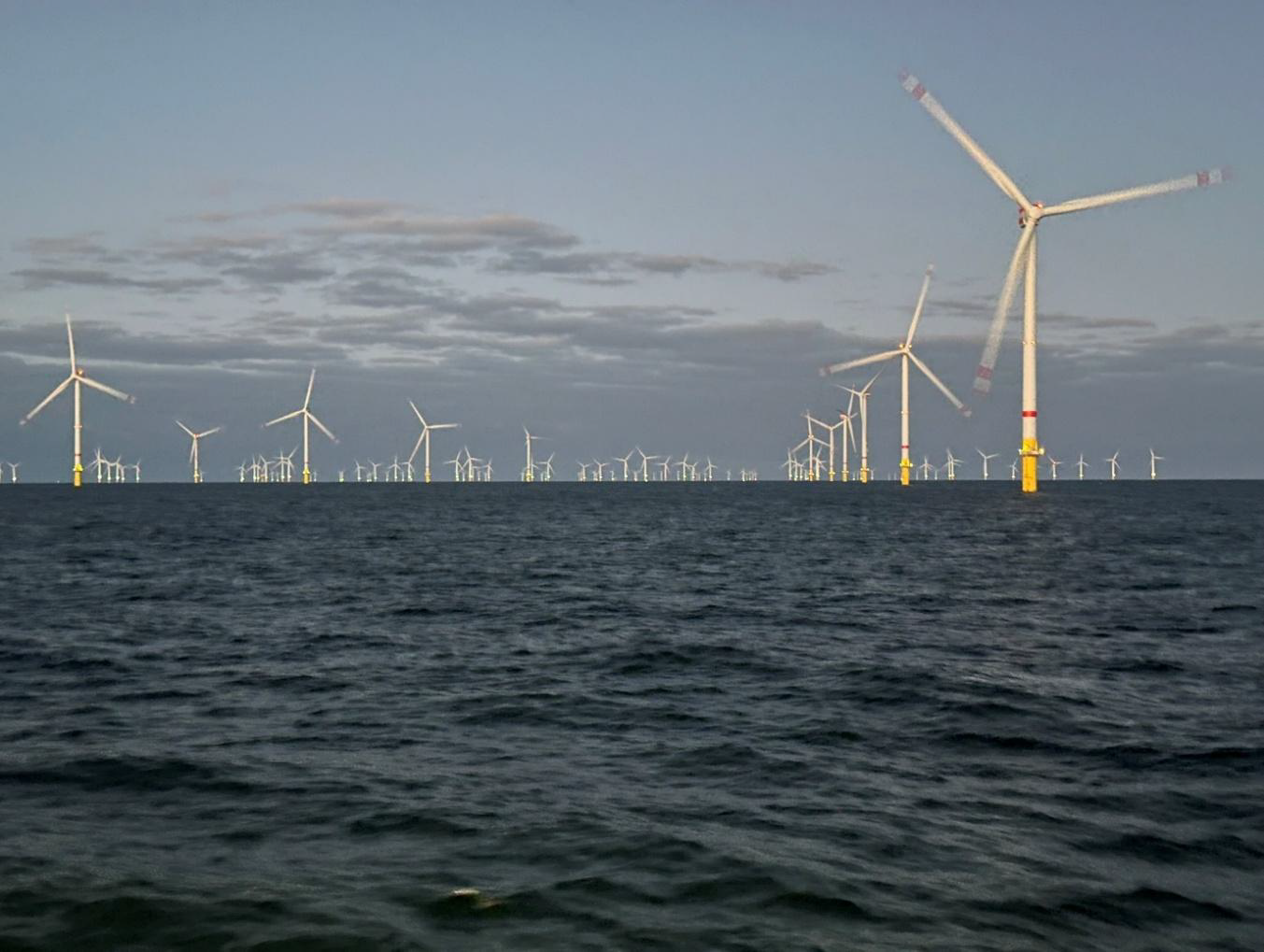
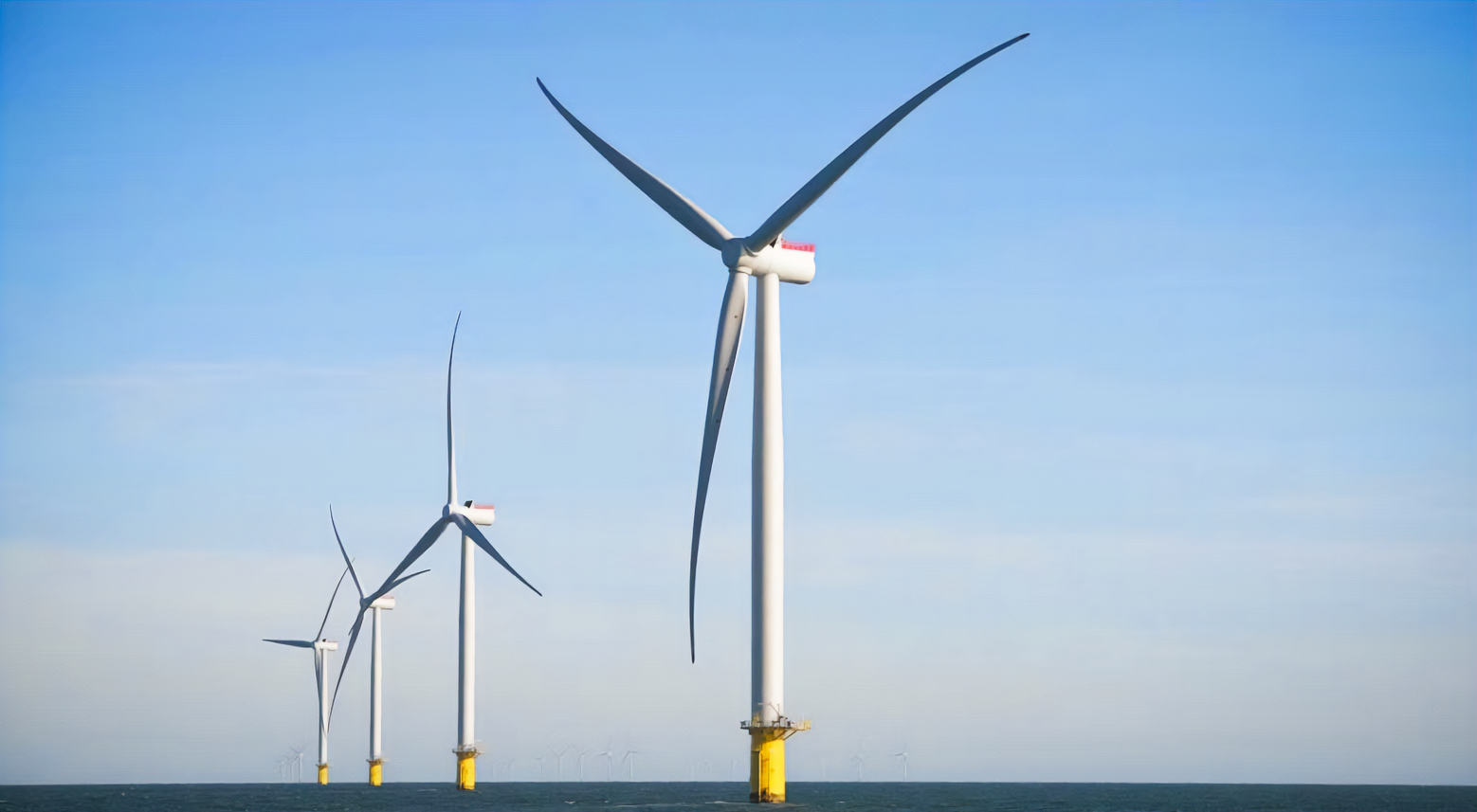
Offshore wind farm platform powered by Leading Edge Power in the North Sea

Why Specifiers Trust Leading Edge Power

Uncompromising British Engineering & Global Experience

Since 2009, Leading Edge Power has designed, engineered, and manufactured off-grid power systems at our facility in Pontrilas, Herefordshire, UK. Unlike equipment assemblers who source unverified overseas parts, we engineer our wind turbines, controller enclosures, and power management skids in-house.

Our engineering rigor is why tier-one infrastructure operators, national utilities, and offshore wind developers specify Leading Edge Power for mission-critical off-grid IoT deployments. Our field technicians hold Global Wind Organisation (GWO) offshore certifications, ensuring that the same engineers who design your IoT power supply possess hands-on expertise in extreme real-world environments—from sub-zero North Sea platforms to scorching desert sensor arrays.

"When an off-grid IoT telemetry node goes offline 70 km offshore or high in a mountain pass, the cost of sending a service vessel or helicopter dwarfs the price of the power system. We build systems that simply do not fail." Dan Goodman, Sales Director
Get Catalog

Enterprise Validation

Trusted by World Leaders in Infrastructure & Telecoms

Our off-grid IoT power supply systems keep mission-critical sensors, telemetry gateways, and emergency communications live for industry leaders across seven continents.

BAM Nuttall logo
National Highways logo
Network Rail logo
Openreach logo
Ørsted logo
RWE logo
Severn Trent logo
Westcotec logo

Engineering FAQ & Specifier Guide

Frequently Asked Questions: Off-Grid IoT Power Supply

Technical answers to complex engineering, procurement, and deployment questions encountered by global project specifiers.

Sizing an industrial off-grid power system requires breaking down the IoT node's 24-hour load profile into exact watt-hour (Wh) consumption, accounting for standby modes and peak telemetry transmission windows. Instead of using annual solar irradiation averages (which overestimate winter yield by up to 400%), our engineers use ERA5 satellite atmospheric reanalysis data blended with Global Wind Atlas velocity data for your exact GPS coordinates.

We size the renewable energy harvesting capacity (solar PV wattage plus wind turbine sweeping area) based on the worst-performing month of the year (typically December in the Northern Hemisphere).Headroom multipliers (1.3x to 1.5x) are applied to battery bank calculations to compensate for low-temperature capacity derating.

In high-latitude or stormy regions, solar generation drops dramatically during winter months due to short daylight hours and heavy cloud cover. Coincidentally, winter months produce the strongest, most continuous wind resource. Integrating a rugged micro wind turbine (such as our LE-v150 or LE-300) provides complementary power generation during night time and dark storm cycles.

This hybrid synergy drastically reduces the total battery storage capacity required to maintain continuous operation. By preventing deep battery discharge cycles, hybrid systems extend battery operational life from 3 years to 8+ years, yielding a significantly lower Total Cost of Ownership (TCO).

The choice between Deep-Cycle AGM (Absorbent Glass Mat) and Lithium Iron Phosphate (LiFePO4) depends on operating ambient conditions and maintenance accessibility:

Deep-Cycle AGM: Best suited for extreme sub-zero cold (-30°C to +50°C) and unmanned sites where battery heating systems are unfeasible. AGM batteries absorb charge safely below 0°C without lithium plating risks, making them the gold standard for polar and offshore applications.

Managed LiFePO4: Best suited for weight-restricted or space-constrained mounts (e.g., telecom poles or mobile trailers) operating in moderate climates (-10°C to +55°C). Our LiFePO4 solutions feature integrated BMS telemetry and internal low-power heating pads that activate prior to charge acceptance during freezing spells.

All Leading Edge Power systems are built with marine-grade materials. Our wind turbines utilize anodized aluminum housings, stainless steel 316 fasteners, sealed bearings, and polyurethane coated blades. Our vertical-axis LE-v150 is survival-tested in sustained winds exceeding 27 m/s (60 mph / 52 knots) without thermal overheating or blade distortion.

Control enclosures are fabricated from IP66/IP67 rated powder-coated aluminum, subjected to IEC 60068-2-52 cyclic salt-fog testing. Vents feature hydrophobic GORE-TEX membranes that equalize internal pressure while repelling salt mist and moisture ingress.

Yes. Our systems are engineered with modular internal mounting rails (DIN rail standard) and multi-voltage DC bus bars (5V, 12V, 24V, 48V). We routinely integrate third-party communications hardware—including Starlink satellite modems, Iridium transceivers, Cisco industrial routers, and customer-specific SCADA RTUs—directly inside our weatherproof enclosure skids.

Furthermore, our power management controllers export system health metrics directly to your cloud platform via MQTT, Modbus RTU/TCP, or SNMP traps over cellular or satellite bridges.

Standard pre-configured IoT power skids are typically built, pre-commissioned, and factory tested within 2 to 4 weeks. Bespoke hybrid power skids tailored to complex multi-load profiles ship within 6 to 8 weeks. We export directly from our UK facility to over 70 countries worldwide, offering full export compliance, dangerous goods battery certification (UN 3480 / UN 2800), and customized timber crate packaging built for air and ocean freight.

Power Your Remote Infrastructure with Zero Downtime

Talk directly with our British engineering team. Send us your project coordinates and continuous load profile—we will model the exact renewable yield and deliver a full technical proposal.