Industrial Ultrasonic Fuel Level Sensors: Zero-Drill Precision for Enterprise Telemetry
Engineered for mission-critical remote power generation, commercial fleets, and heavy equipment. Monitor diesel, gasoline, and bio-fuels in real-time with >99.5% accuracy—without drilling tanks or interrupting operation.
Next-Generation Ultrasonic Fuel Level Sensors for Industrial & Remote Telemetry
Global supply chain managers, telemetry engineers, and fleet directors face a persistent operational challenge: traditional mechanical floats stick, capacitive probes corrode or short out, and top-drilling submerged sensors introduce permanent tank leakage risks. Ultrasonic fuel level sensors eliminate these failure modes entirely by utilizing externally mounted, non-contact piezoelectric transceivers.
By transmitting high-frequency sound waves through the metal or plastic tank wall, our enterprise sensor line measures the exact liquid time-of-flight (ToF) back to the receiver. This non-invasive technology delivers lab-grade level tracking without breaking the integrity of hazardous fluid enclosures.
UltraSense-Standard RS485 / Modbus Sensor
The industry baseline for stationary diesel generators, auxiliary tanks, and off-grid remote power cabinets.
How Ultrasonic Sensors Overcome Real-World Operational Hazards
In lab environments, liquid level measurement is trivial. In real-world industrial deployments—such as offshore North Sea wind platforms, desert telecom towers, or vibrating heavy machinery—ultrasonic signals encounter intense environmental interference. Below is how our proprietary acoustic wave matching and signal processing protocol delivers flawless data integrity.
1. Acoustic Impedance Coupling Through Multi-Layer Tank Walls
When an ultrasonic wave travels from the piezoelectric crystal through the external tank bottom into the fuel medium, it encounters acoustic impedance changes across metal/plastic interfaces. Inferior sensors suffer severe echo dispersion and loss of signal strength (attenuation).
Our sensors incorporate dynamic acoustic matching gel combined with self-tuning frequency agility (ranging from 1.0 MHz to 2.5 MHz). The sensor automatically scans and locks onto the primary resonant frequency of your tank material—whether it is 3mm rolled steel, 8mm high-density polyethylene (HDPE), or 5mm aluminum—ensuring maximum ultrasonic penetration and clean reflection from the liquid surface.
Zero Tank Drilling: Eliminates tank modification, voids zero manufacturer warranties, and prevents fuel leakage risks.
Non-Contact Hygeine: The transducer never contacts aggressive bio-diesels, high-sulfur fuel, or corrosive additives.
2. Real-Time Dynamic Slosh & Temperature Compensation Algorithms
Fuel expands and contracts significantly with temperature variations; additionally, liquid density alters ultrasonic sound velocity (typically ~1,470 m/s in diesel at 20°C, shifting by approximately -3.6 m/s per °C rise). Mobile vehicles and floating vessels also create surface sloshing, leading to false "empty" or "theft" readings.
To eliminate these errors, our sensors feature embedded dual-digital temperature probes alongside 6-axis accelerometer motion inputs. The internal DSP (Digital Signal Processor) runs a Kalman filtering algorithm that smooths liquid surface motion while dynamically adjusting sound velocity values relative to ambient and fuel wall temperatures.
Temperature Corrected Volume: Automatically normalizes fuel level to standard 15°C volumetric equivalents.
Slosh Mitigation: Filters out transient liquid surges during transport to maintain true mean level data.
British Engineering Expertise
Why Leading Edge Power Integrated Ultrasonic Telemetry into Off-Grid Power
Since 2009, Leading Edge Power has designed, built, and deployed off-grid wind, solar, and hybrid power architecture across all seven continents. As our hybrid power platforms grew to power critical national infrastructure, offshore wind measurement masts, and sub-zero arctic telemetry, we realized that secondary back-up diesel generators and methanol fuel cells suffered a common point of vulnerability: unreliable fuel level data.
Mechanical fuel gauges failed in freeze-thaw cycles; immersion probes corroded due to water contamination in fuel; top-mounted float sensors leaked under positive pressure. By integrating zero-drill ultrasonic fuel level sensors directly into our proprietary telemetry gateways (such as Victron Cerbo GX and custom IoT controllers), we provided operators with 100% reliable visibility of remote fuel reserves.
"Unplanned site visits to check fuel levels in remote or offshore locations can cost thousands of pounds per day. Ultrasonic non-contact telemetry provides absolute fuel certainty without risking tank integrity." Dan Goodman, Sales Director — Leading Edge Power
Future Procurement & Development Trends in Ultrasonic Fuel Monitoring (2025–2030)
As global industries transition toward automated fleet telemetry, predictive maintenance, and strict environmental compliance, the procurement landscape for liquid level sensors is undergoing a fundamental shift. Specify your equipment with future-proofed technology.
TREND 01
AI-Powered Theft & Micro-Leak Edge Detection
Modern sensors no longer simply report raw height values. Next-generation ultrasonic units process echo signatures directly at the edge, using machine learning models to differentiate between legitimate engine burn rates, thermal contraction, micro-leaks, and unauthorized fuel siphoning.
Global logistics and remote power operators are moving away from local display screens toward direct-to-cloud telemetry. Integrating low-orbit satellite (Direct-to-Device) and NB-IoT protocols allows ultrasonic sensors to transmit critical level alerts from deep desert or oceanic dead zones.
TREND 03
Transition to Alternative & Synthetic Bio-Fuels
As standard diesel is increasingly blended with HVO (Hydrotreated Vegetable Oil), E-fuels, and pure methanol, internal probe materials face unprecedented chemical degradation. Non-contact ultrasonic bottom sensors remain completely insulated from changing chemical compositions.
TREND 04
Mandatory Zero-Puncture Environmental Regulations
Regulatory bodies in Europe and North America are tightening environmental containment laws for stationary standby generators. Drilling into double-walled bunded tanks is rapidly being banned—making external ultrasonic transducers the only compliant solution.
Auxiliary diesel generators situated 72 km offshore in the German North Sea were outfitted with external ATEX-rated ultrasonic fuel level sensors connected to Victron Cerbo GX telemetry. Technicians monitor back-up fuel reserves remotely without requiring offshore helicopter trips.
Result: Zero fuel downtime during multi-month winter maintenance lockouts
RWE Renewables · Wind Resource Measurement
Highland LiDAR Power & Methanol Level Telemetry
A hybrid wind-solar-methanol power trailer deployed on an exposed mountain in western Scotland utilized an ultrasonic level transducer affixed beneath the methanol cartridge enclosure, giving real-time telemetry updates via cloud dashboard.
Result: Reduced refuelling visits by 65% with precision fuel depletion alerts
Network Infrastructure · Telemetry & Telecoms
Remote Telecom Station Fuel Theft Prevention
Fitted underneath diesel storage tanks powering isolated cellular repeaters, RS485 ultrasonic sensors transmit 1-minute interval data to central telemetry hubs, instantly detecting siphoning attempts within 10 seconds.
Result: 100% fuel theft alert rate with zero false alarms from temperature expansion
Enterprise Reliability
Why Tier-One Contractors & Utilities Trust Our Systems
From national rail operators to offshore renewable developers, leading engineering groups specify our off-grid power and telemetry products.
100% In-House UK Manufacturing
All sensor enclosures, telemetry wiring harnesses, and custom mounting brackets are engineered and tested in Pontrilas, Herefordshire under strict ISO quality standards.
Our engineering team holds Global Wind Organisation (GWO) offshore certifications, ensuring our engineers can install, calibrate, and service sensors on extreme remote assets.
Out-of-the-box support for RS485 Modbus RTU, 0-5V analog, 4-20mA current loop, CANbus, and direct integration into Victron, Schneider, and custom Linux telemetry gateways.
Frequently Asked Questions by Global Engineers & Buyers
Clear, definitive technical answers to assist telemetry architects, procurement officers, and fleet managers in selecting the correct ultrasonic fuel level sensors.
Ultrasonic fuel level sensors are installed externally on the bottom of the fuel tank using acoustic coupling gel and high-strength mechanical fixtures. The transducer emits a high-frequency acoustic pulse (typically 1 MHz to 2.5 MHz) upward through the tank wall into the liquid medium. The sound wave travels through the fuel, reflects off the liquid-to-air interface (fuel surface), and echoes back down to the transducer. The sensor's microprocessor measures the exact Time-of-Flight (ToF) of the acoustic pulse and calculates the precise liquid height using sound velocity formulas adjusted for current fluid temperature.
Non-contact ultrasonic sensors work flawlessly through mild steel, stainless steel, aluminum, and high-density polyethylene (HDPE) plastic tanks. Standard wall thickness ranges from 1 mm up to 20 mm depending on sensor transducer frequency. However, double-walled (bunded) tanks with air gaps between the inner and outer shells require transducer placement on the innermost shell, or specialized acoustic wave guides, as ultrasonic signals cannot jump across empty air gaps between dual metal walls.
Fuel volume changes by approximately 0.1% per degree Celsius change in temperature (thermal expansion). Additionally, the speed of sound in diesel drops as temperature rises (approx. -3.6 m/s per °C). Our industrial ultrasonic fuel sensors incorporate embedded digital temperature sensors right at the transducer interface. The internal DSP continuously adjusts the sound-velocity calculation in real time and can normalize raw volume data to standard 15°C volumetric benchmarks before sending data over RS485 or wireless IoT telemetry networks.
Yes. Because the ultrasonic sensor provides millimeter-level height resolution (up to 0.1 mm), it can detect tiny drops in liquid volume even when the generator or vehicle engine is turned off. When integrated into a remote telemetry gateway (such as an RS485 Modbus cellular modem), the system continuously evaluates the rate-of-change (dL/dt). If a sudden liquid drop exceeds normal fuel burn parameters while the engine status input is inactive, the system triggers instant SMS, email, or cloud webhook security alerts for fuel theft.
Mobile deployments subject fuel surfaces to severe movement, causing transient wave spikes. Our dynamic ultrasonic sensors feature internal 6-axis IMU sensors (accelerometers and gyroscopes) combined with adaptive digital filtering software (Kalman filtering). The sensor detects vehicle acceleration, braking, or marine pitching, filtering out high-frequency wave noise and reporting a mathematically stable moving average of true fuel height.
Our enterprise ultrasonic sensor family supports comprehensive industrial interfacing standards: RS485 (Modbus RTU), RS232, 0-5V DC voltage output, 4-20mA current loop, CANbus (SAE J1939), as well as wireless NB-IoT, LTE-M, LoRaWAN, and Bluetooth (BLE 5.2) for quick technician smartphone calibration.
Yes. For volatile applications involving gasoline, ethanol, or high-risk chemical storage, we offer intrinsically safe, ATEX Zone 0/1 (Ex ia IIBT4 Ga) certified ultrasonic units. These models utilize 316L stainless steel explosion-proof encapsulation and operate via certified intrinsically safe galvanic isolation barriers.
Installation requires zero tank downtime or fuel draining. The exterior tank bottom surface must be cleaned of heavy rust, loose paint, or dirt scale. A specialized permanent solid epoxy acoustic coupler or high-viscosity silicone acoustic gel is applied to the transducer face. The sensor unit is then pressed against the tank bottom and permanently secured using epoxy paste, heavy-duty stainless steel mounting bands, or magnetic mounting brackets. Once cured, the sensor provides maintenance-free operation for over 10 years.
Engineering Field Note
Integrating Fuel Telemetry into Off-Grid Hybrid Power Systems
Optimizing Fuel Logistics for Unattended Telecom Nodes & Drone Bases
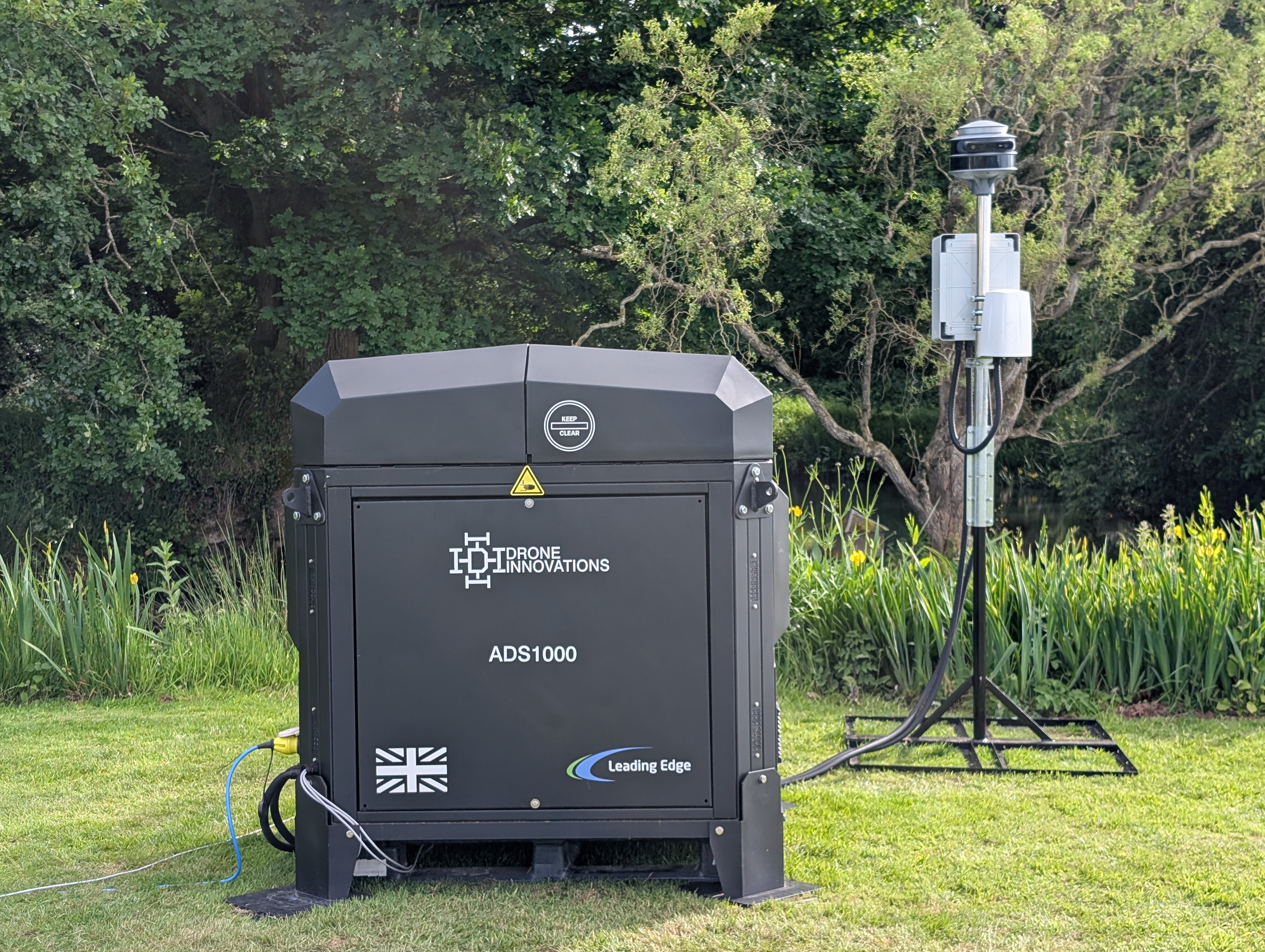
Unattended remote infrastructure—such as autonomous drone docking stations, microwave repeaters, and environmental monitoring platforms—demands rigorous energy security. When wind and solar yield dips during prolonged winter inversions, backup fuel-cell or diesel units must initialize flawlessly.
By connecting non-contact ultrasonic fuel sensors directly to central telemetry modems, operational teams shift from wasteful fixed-interval refuelling schedules to dynamic, demand-based logistics. Real-time consumption tracking prevents fuel starvation events while reducing site refuelling visits by up to 60%, delivering immense operational cost savings.
Ready to Upgrade Your Fuel Monitoring & Telemetry Infrastructure?
Whether you need a single sample unit for evaluation or complete system integration across an international fleet or generator network, our British engineering team is ready to assist.