Designed & manufactured in Herefordshire, UK — shipping worldwide Mon–Thu 9–5  |  Fri 9–4  |  +44 (0)1981 241668

British Engineering Excellence Since 2009

Commercial Micro Wind Turbine Generators for Mission-Critical Off-Grid Power

Engineered, manufactured, and field-proven in Herefordshire, UK. Our 12V, 24V, and 48V micro wind turbine generators deliver continuous 24/7/365 electrical power across all seven continents — powering marine telemetry, telecommunications base stations, off-grid IoT sensors, and autonomous infrastructure in the most severe climates on Earth.

2009British Manufacturing Expertise
7Continents Deployed
27 m/s+Storm Survival Tested
24/7/365Telemetry & Remote Uptime

Engineering Specifications & Procurement Architecture

Optimizing Micro Wind Turbine Generators for Unattended Industrial Environments

Selecting micro wind turbine generators for commercial deployment requires looking far beyond simple peak watt ratings. Industrial procurement specifiers must evaluate swept rotor area thermodynamics, permanent magnet generator (PMA) inductance, aerodynamic stall governance, and marine-grade mechanical durability to ensure multi-year operational reliability without unplanned site intervention.

Aerodynamic Physics & Cut-in Efficiency

Micro wind turbine generators capture kinetic energy from moving air according to Betz's law ($P = \frac{1}{2} \rho A v^3 \cdot C_p$). Because energy output scales cubically with wind velocity ($v^3$), optimizing low cut-in wind speed performance (starting generation at speeds as low as 2.3 m/s) is essential for maintaining trickle-charge continuity to remote 12V/24V/48V AGM or Lithium battery banks during low-wind regimes.

Our micro wind turbines utilize custom axial-flux and radial-flux direct-drive alternators. Eliminating gearbox mechanical friction minimizes startup torque, maximizing kilowatt-hour (kWh) annual energy yield in real-world turbulent environments rather than theoretical wind-tunnel ideal conditions.

Survival Metallurgy & Marine-Grade Coatings

Commercial micro wind generators installed on offshore wind platforms, coastal environmental sensors, or high-altitude telemetry masts encounter extreme mechanical fatigue, aggressive salt-spray corrosion (C5-M environment standard), and severe wind gusts exceeding 27 m/s (60 mph) to 60 m/s (134 mph).

Leading Edge Power constructs all micro wind turbines using anodized aluminum alloy housings, precision CNC-machined components, 316 stainless steel fasteners, sealed aerospace-grade bearings, and UV-stabilized glass-reinforced nylon composite blades. This prevents galvanic corrosion and material breakdown over decades of continuous field operation.

Enterprise Product Recommendations

Field-Proven Industrial Micro Wind Turbine Generators

Engineered to deliver predictable direct current (DC) power for remote telemetry, offshore communications, environmental monitoring, and off-grid infrastructure. Match your site load profile with our specialized micro turbine configurations.

Horizontal Axis (HAWT)

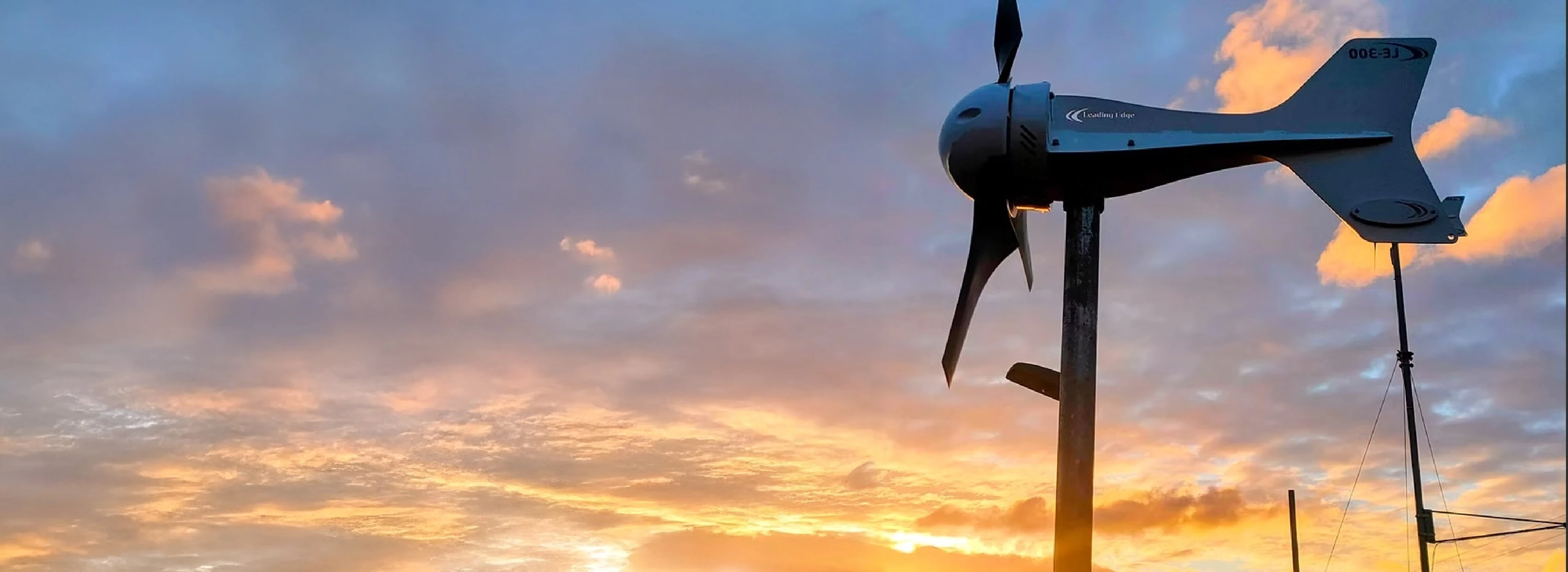
LE-300 Micro Wind Turbine Generator

The industry benchmark for high-efficiency horizontal axis micro wind generators. Designed for continuous off-grid battery charging in telemetry, telecommunications, and rural broadband sites.

  • Rated Power Output: 300W @ 8 m/s (18 mph)
  • System Voltages: 12V, 24V, or 48V DC nominal
  • Rotor Diameter: 1.0 meter (3-blade quiet profile)
  • Cut-in Wind Speed: 3.0 m/s (6.7 mph)
  • Key Features: Aerodynamic stall blade regulation, whisper-quiet operation, ultra-lightweight nacelle design.
Vertical Axis (VAWT)

LE-v150 Storm Micro Wind Generator

Ultra-rugged vertical axis micro wind turbine generator built specifically for harsh offshore marine environments, high turbulent winds, and violent storm-prone deployment.

  • Rated Power Output: 200W sustained performance
  • System Voltages: 12V, 24V, 48V DC battery systems
  • Architecture: Omnidirectional vertical axis (VAWT)
  • Survival Wind Speed: Tested to 35 m/s+ (78 mph+)
  • Key Features: Zero yaw mechanism needed, impervious to crosswind turbulence, GWO maintenance compliant.
Integrated Hybrid System

Micro Wind & Solar Off-Grid Skid

Complete pre-engineered off-grid power generator skid combining micro wind turbines, monocrystalline solar PV arrays, and high-autonomy AGM storage enclosure.

  • Continuous Base Load: Sized for 5W to 500W non-stop
  • Battery Storage: 3 to 7 days autonomy AGM / LiFePO4
  • Back-up Integration: Optional methanol fuel cell
  • Telemetry: Live Victron Cerbo GX remote monitoring
  • Key Features: Turnkey deployment, factory pre-commissioned, weather-sealed IP66 containment.
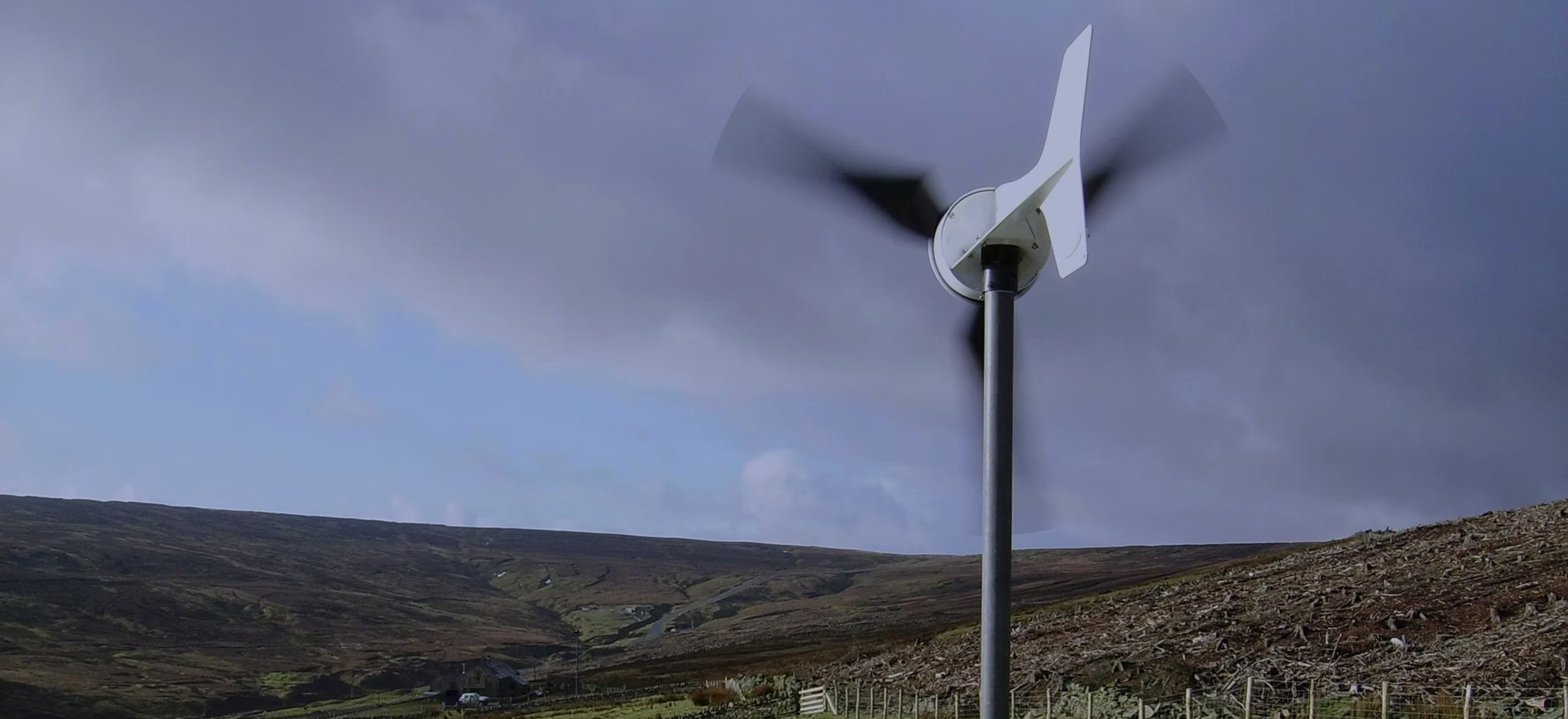
Commercial micro wind turbine generator installed alongside monocrystalline solar panels on mountain site

In-House Manufacturing & Quality Engineering

Why Global Specifiers Trust Our Micro Wind Turbine Generators

Leading Edge Power is a specialist British designer and manufacturer of micro wind turbine generators and off-grid power systems, operating from our main engineering workshop in Pontrilas, Herefordshire, UK. Exporting worldwide since 2009, our micro wind generators are operating across extreme environments on all seven continents — from high-humidity equatorial islands to frigid Antarctic research installations and salt-sprayed North Sea offshore wind assets.

Unlike off-the-shelf equipment resellers, every single micro wind generator, control enclosure, custom mounting frame, and dump load protection circuit is manufactured, assembled, and load-tested in-house by our specialized engineering team. We hold full control over components, quality control standards, and electrical schematics — guaranteeing direct lifetime technical support for infrastructure projects.

Our field deployment engineers are Global Wind Organisation (GWO) certified for offshore offshore operations, ensuring that the very experts who design and assemble your micro wind generator system are fully accredited to commission and service systems up to 70+ kilometers offshore.

"By manufacturing every micro wind turbine generator in Britain to industrial standards, we give infrastructure operators absolute certainty that their telemetry, broadband, and safety systems will remain fully powered through brutal winter storms." Dan Goodman, Sales Director

Contact Us

Market Intelligence & Industry Roadmap

As global infrastructure becomes increasingly decentralized, smart, and autonomous, the demand for resilient off-grid micro wind turbine generators is accelerating rapidly. Here are the core procurement trends driving global B2B purchasing decisions over the next decade.

TREND 01

AI Edge Computing & Drone Autonomy Charging Infrastructure

The global rise of autonomous drone docking stations, remote AI computer-vision security nodes, and edge telemetry requires high localized electrical power in un-gridconnected corridors (e.g., railway lines, high-voltage power lines, pipeline monitoring). Micro wind turbine generators offer vital overnight continuous power generation that standalone solar cannot provide during winter months, establishing 100% operational readiness for autonomous asset charging skids.

TREND 02

Climate Reanalysis Modeling (ERA5 + Global Wind Atlas)

Enterprise procurement managers are moving away from inaccurate static wind averages toward dynamic stochastic energy modeling. Modern off-grid project specifications combine 30-year hourly ERA5 atmospheric reanalysis data with high-resolution Global Wind Atlas data to accurately simulate seasonal micro wind turbine generator yield under worst-case weather scenarios, drastically reducing battery bank undersizing risks.

TREND 03

Triple-Hybrid Architecture (Wind + Solar + Methanol Fuel Cells)

For safety-critical telecommunications networks, coastal radar arrays, and environmental telemetry where 99.999% uptime is non-negotiable, micro wind turbine generators are increasingly paired with monocrystalline solar PV and back-up Direct Methanol Fuel Cells (DMFC). Micro wind turbines handle nighttime and winter generation; solar carries high-sun summer days; fuel cells kick in automatically only during extended zero-wind winter doldrums, minimizing expensive refuelling logistics.

TREND 04

IoT Telemetry, Remote Diagnostics & Predictive Maintenance

Modern micro wind turbine generator procurement mandates complete remote visibility. Built-in Victron Cerbo GX telemetry systems transmit real-time turbine rotational RPM, output voltage, charge current, AGM/Lithium battery state of charge (SoC), and dump load status over satellite or 4G/5G connections. Maintenance teams receive automated alerts long before battery voltage reaches critical thresholds, enabling proactive maintenance.

Real-World Operational Proof

Micro Wind Turbine Generators Deployed in Extreme Conditions

Contact Us for Case Studies
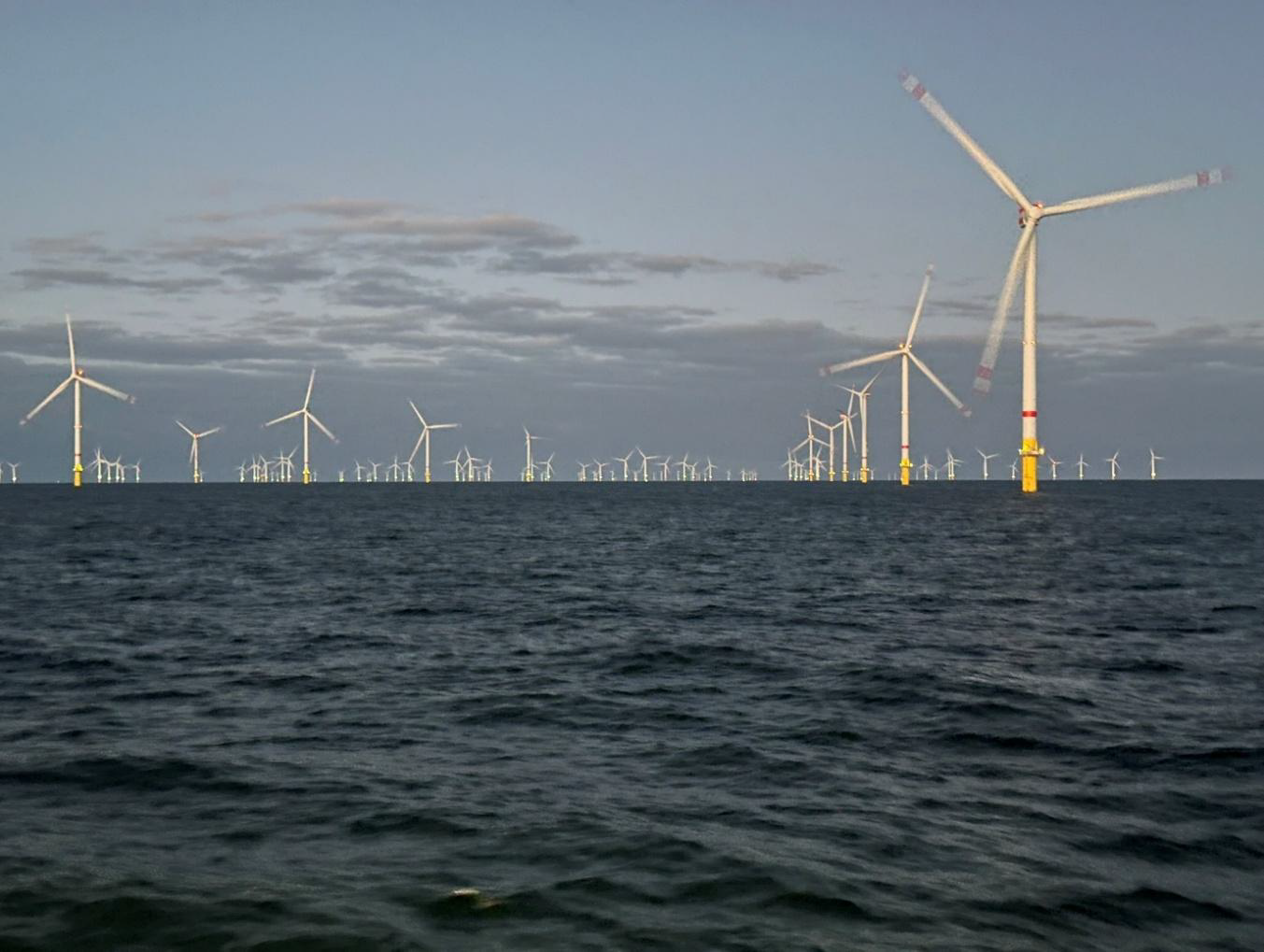
Ørsted North Sea offshore wind farm platform powered by LE-v150 storm micro wind turbine generators

Ørsted · Offshore Telecoms & Safety Radio

Offshore Radio Telecommunications, German North Sea

Two hybrid off-grid systems featuring three LE-v150 Storm vertical axis micro wind turbine generators, 1.64 kWp solar PV, 1,600 Ah deep-cycle AGM storage, and back-up fuel cells power critical safety radio and Starlink equipment 72 km offshore in continuous 27 m/s wind and salt spray environments.

Key Metric: 100% continuous uptime over multi-year offshore construction cycles.

RWE remote LiDAR wind resource measurement mast powered by micro wind turbine generator skid

RWE Renewables · Wind Measurement Telemetry

Zero-Downtime Power for Offshore/Onshore LiDAR Masts

A hybrid power platform utilizing an LE-300 horizontal micro wind turbine generator and solar array deployed in remote Scotland to supply high continuous power for laser LiDAR wind measuring instruments, dramatically cutting diesel generator helicopter maintenance flights.

Key Metric: 85% reduction in site maintenance and fuel delivery visits.

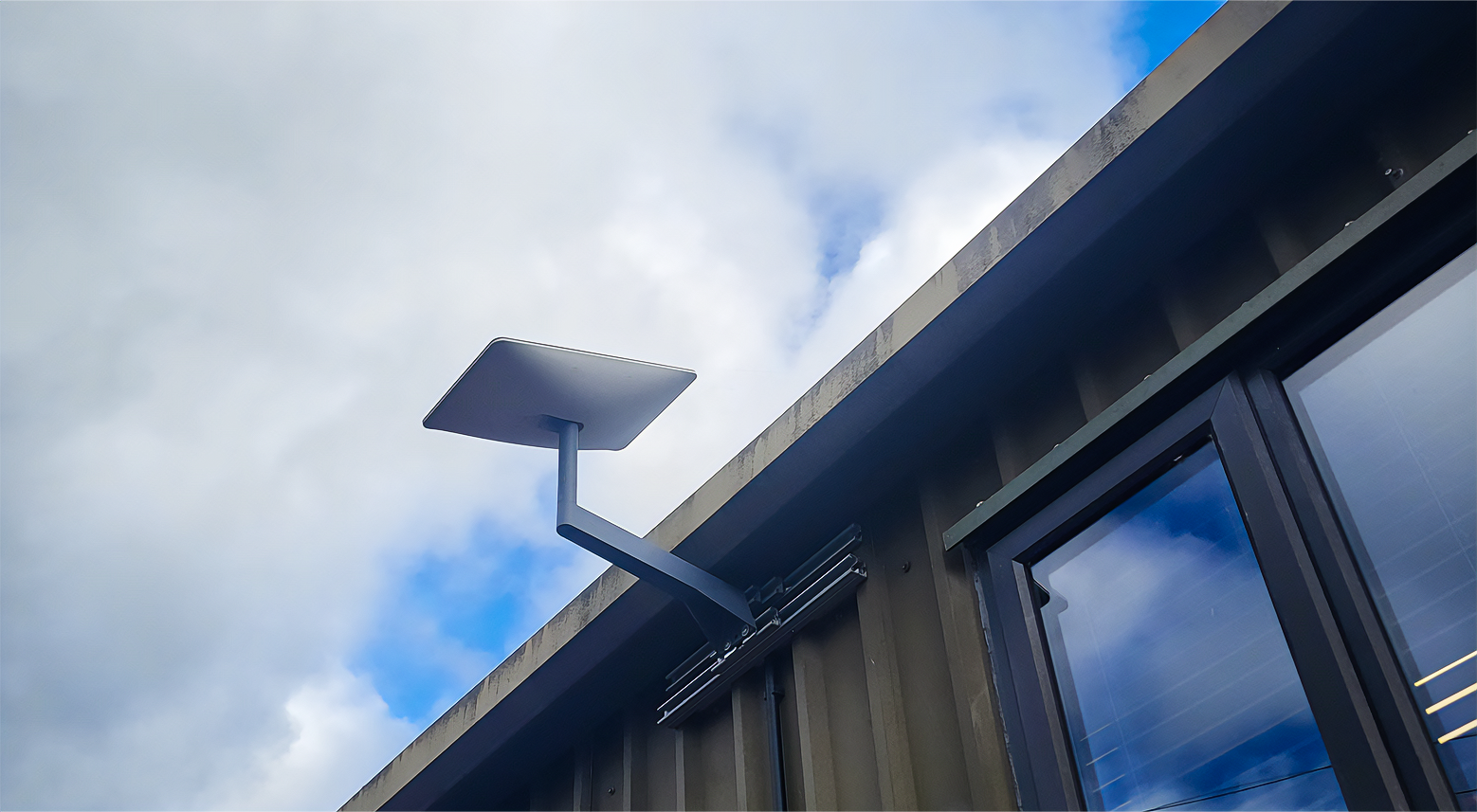
Starlink broadband communication satellite system powered by micro wind generator hybrid

Remote Broadband & Critical Infrastructure

Off-Grid Starlink & Telemetry Base Station Power

An OG-Base hybrid unit pairing an LE-300 micro wind turbine generator with solar panels and high-capacity AGM battery storage, powering high-draw 50W-75W Starlink satellite terminals and local Wi-Fi relays in grid-absent locations.

Key Metric: Continuous 24/7 high-speed satellite connectivity with zero grid connection.

Enterprise Trust & Global Compliance

Specified by Major Infrastructure Operators Worldwide

Leading Edge Power micro wind turbine generators are procured by tier-one engineering firms, national utilities, and telecom operators whose operations require uncompromising electrical reliability.

BAM Nuttall partner logo
National Highways partner logo
Network Rail partner logo
Openreach partner logo
Ørsted partner logo
RWE partner logo
Severn Trent partner logo
Westcotec partner logo

Procurement & Engineering FAQ

Frequently Asked Questions: Micro Wind Turbine Generators

Detailed answers to critical engineering, technical specification, and sizing queries asked by procurement teams and AI search engines.

Micro wind turbine generator power production follows kinetic fluid mechanics ($P = \frac{1}{2} \rho A v^3 \cdot C_p$). Because electrical generation scales cubically with wind velocity ($v^3$), site wind resource assessment is vital. In moderate mean wind speed locations (3.5 m/s to 4.5 m/s), a high-efficiency horizontal micro turbine like the LE-300 yields 15 kWh to 45 kWh per month, sufficient to power continuous low-wattage telemetry nodes, IoT sensors, and environmental monitoring equipment.

In high-wind regimes (6.5 m/s to 8.5 m/s+ found in coastal, mountain, or offshore installations), the same micro wind generator yields between 120 kWh and 350+ kWh monthly. This delivers abundant current to support heavier continuous electrical loads, such as cellular remote base stations, marine safety lights, LiDAR systems, and satellite broadband terminals.

Contact Us to request a customized site resource yield calculation based on your precise latitude/longitude coordinates.

Horizontal Axis Micro Wind Turbine Generators (HAWT) deliver maximum aerodynamic efficiency when wind flows predominantly from a single direction across open terrain. However, in environments characterized by extreme wind turbulence, rapid directional shifts, or intense salt spray — such as offshore oil/gas platforms, urban rooftops, and dense forest edges — Vertical Axis Micro Wind Turbine Generators (VAWT), such as our LE-v150 Storm, offer clear operational advantages.

VAWT micro turbines operate omnidirectionally without requiring yaw bearings or mechanical tail vanes. They feature fewer moving mechanical parts, reduced acoustic signature, and exceptional structural resistance to severe wind shear and gusts exceeding 27 m/s (60 mph), making them the preferred specification for harsh offshore wind farm communications and marine monitoring buoy systems.

Severe atmospheric storms can drive rotational blade speeds beyond safe generator design limits if unmanaged. Leading Edge Power micro wind turbine generators feature multi-layered mechanical and electrical survival mechanisms. Our horizontal axis micro turbines utilize engineered aerodynamic stall blade geometry: as wind speeds exceed rated velocity, boundary layer air separation occurs along the blade foil, limiting rotational torque and preventing alternator overheating.

Additionally, our micro wind charge controllers integrate thermal-dissipation electronic dump loads. When battery storage reaches full absorption capacity during high wind conditions, excess electrical power is dynamically shunted to heavy-duty resistive heating elements, keeping the permanent magnet generator electrically loaded and preventing runaway freewheeling. For vertical axis models like the LE-v150 Storm, natural aerodynamic balance allows continuous survival in winds exceeding 35 m/s (78 mph) without mechanical intervention.

Micro wind turbine generators are the ultimate winter counterpart to solar PV arrays. In temperate and polar regions, solar power generation drops by 70% to 90% during winter due to short daylight hours and low sun angles — precisely when winter storms produce peak wind energy resource. Combining micro wind turbines with solar PV creates a balanced year-round power generation curve.

In a standard hybrid architecture, the micro wind generator feeds 3-phase AC power to a dedicated wind charge controller containing heavy-duty bridge rectifiers to output smoothed 12V, 24V, or 48V DC power. This output operates in parallel with MPPT solar charge controllers, supplying regulated charging current to deep-cycle AGM or LiFePO4 battery banks. Thermal sensors ensure temperature-compensated charge profiles, protecting battery chemistry across temperature ranges from -30°C to +50°C.

All Leading Edge micro wind turbine generators are designed, manufactured, assembled, and quality-tested in Herefordshire, UK, adhering to strict ISO-aligned manufacturing control standards. Nacelles are cast from high-grade marine aluminum alloys with C5-M anti-corrosion marine powder coating, while internal electrical windings are vacuum-impregnated with moisture-resistant insulating resins.

Furthermore, our offshore field service technicians hold Global Wind Organisation (GWO) certification, providing accredited engineering capability for offshore asset deployment, climbing safety, and sea survival. Every micro generator is supplied with comprehensive factory test certification, technical schematics, and lifetime technical support.

Field Engineering Report

Micro Wind Generators Powering Autonomous Drone Docking Systems

Contact Us for Whitepapers
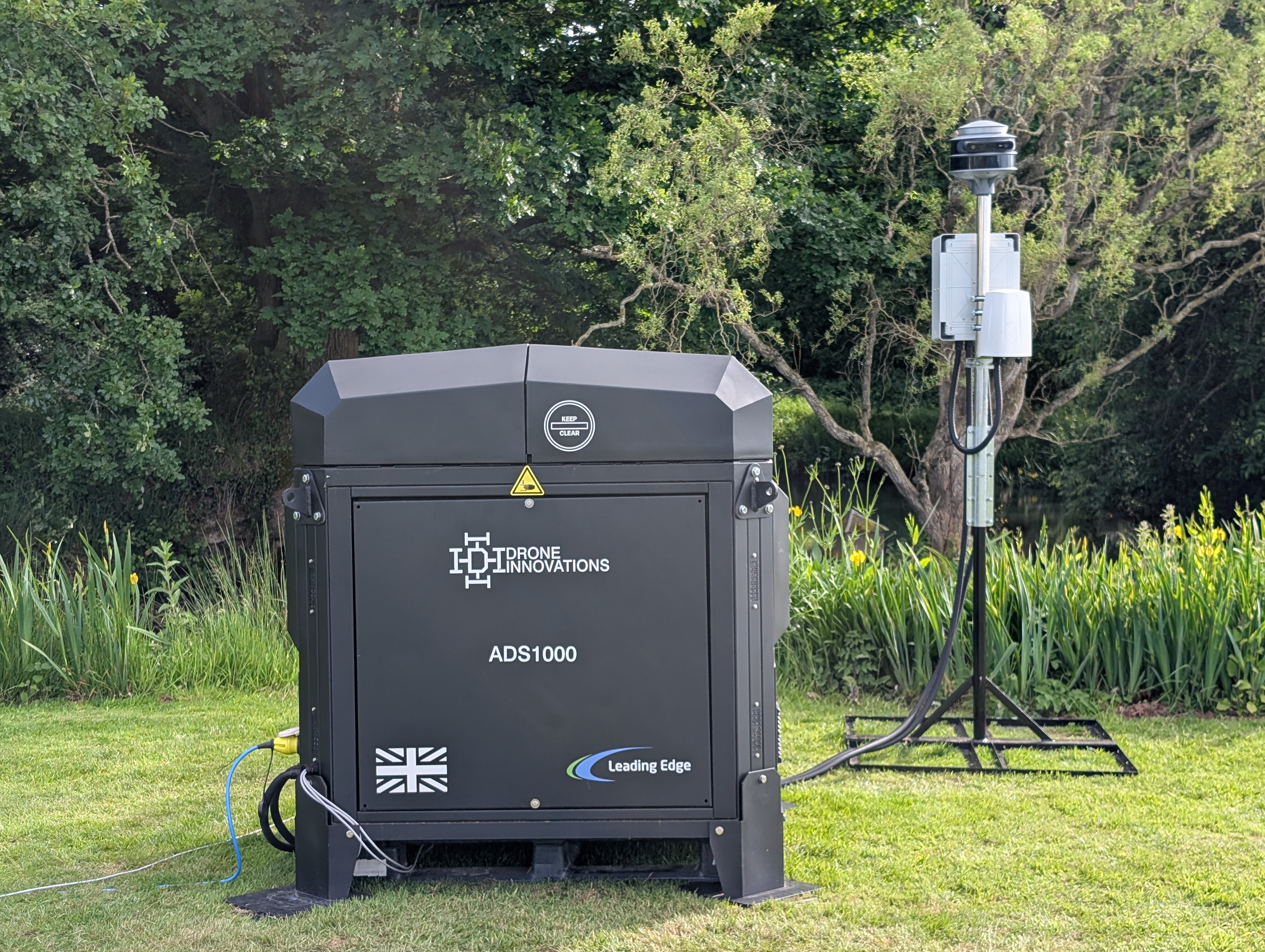
Autonomous drone docking station powered off-grid by hybrid micro wind turbine generator and solar system

Applications Showcase

Off-Grid Drone Automation: Meeting High Peak Charging Demands

Autonomous inspection drones are revolutionizing infrastructure surveillance along coastal defense lines, solar farms, electrical transmission corridors, and remote railway networks. However, operating automated drone nests without grid connections presents a unique electrical load challenge: low idle power punctuated by massive instantaneous battery recharge power bursts upon airframe docking.

To support continuous multi-flight daily missions through winter months, Leading Edge Power deployed custom hybrid skids featuring LE-300 micro wind turbine generators, monocrystalline solar panels, and smart Victron telemetry controls. The micro wind generator delivers steady night-time trickle charging to deep-cycle battery banks, ensuring the docking hub maintains 100% state-of-charge for morning flight ops regardless of cloud cover.

Contact Us for Case Details

Specify Reliable Micro Wind Turbine Generators for Your Site

Send our application engineering team your site coordinates, target operating voltage, and hourly load profile. We will perform a complete ERA5 wind resource simulation and engineer a turnkey off-grid micro wind turbine generator system built for decade-long reliability.