Designed & manufactured in Herefordshire, UK — shipping worldwide Mon–Thu 9–5  |  Fri 9–4  |  +44 (0)1981 241668

Technical B2B White Paper & Supplier Directory

Top Trusted Solar Tracker Manufacturers & Suppliers for Colombia

Unlocking Equatorial Yield Optimization, Wind Dynamics, and Grid-Tied ROI under CREG & Law 1715 Frameworks

Industrial-Grade Equipment Showcase

Verified Solar Tracking Systems for Utility & Commercial Projects in Colombia

Explore high-torque single-axis and dual-axis solar trackers, smart slewing drives, and intelligent GPS controller systems engineered for extreme equatorial irradiance and diverse microclimates.
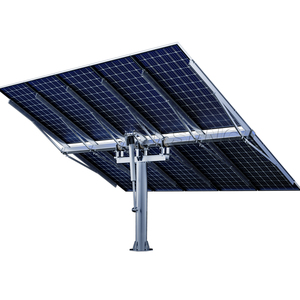
Most Efficient Dual Axis Solar Tracker System 500W
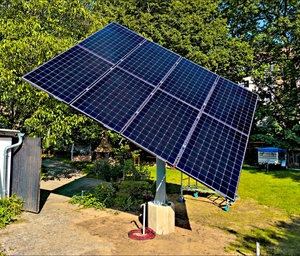
Most Efficient Solar Tracker: Double Axis Solar Tracking System 500W+
Dual-Axis Dual-Motor | 35-45% Yield Gain
Intelligent Dual Motor Solar Tracker Power Stations
Intelligent Dual Motor Solar Tracker With Full Day Sun Following Capability
Utility Station Grade | IP66 Protection
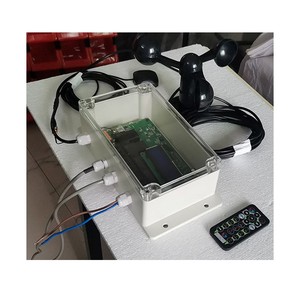
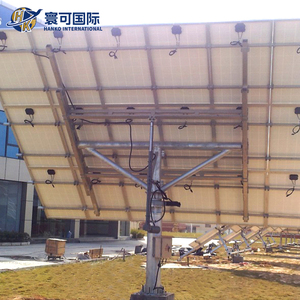
Single Post Single Axis Solar Tracker Controller System
Professional Factory Made Single Post Single Axis Solar Tracking System
30% Slope Adaptive | Quick Installation
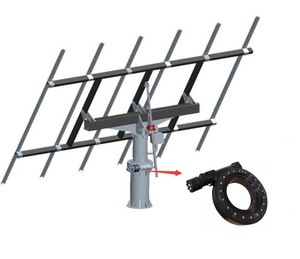
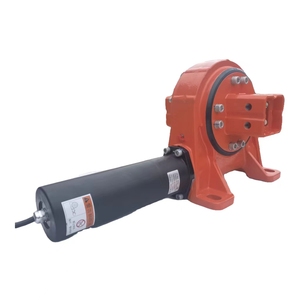
7-Inch Single Axis Tracker Slewing Drive SE7
7-Inch Single Axis Tracker System with Slewing Worm Gear Enclosed SE7 24V DC
High Torque | Enclosed Housing Gearbox
GPS Controlled Single Axis Solar Tracker 27m/s Wind Load
GPS Controlled Single Axis Solar Tracker (27m/s Wind Load Resilient)
GPS Auto Tracking | High Wind Resistance
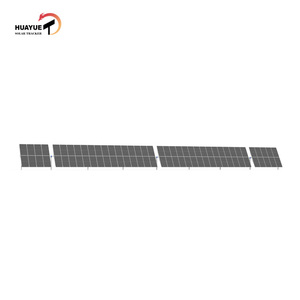
Industrial Single Axis PV Solar Tracker
Industrial Grade Single Axis Horizontal PV Tracking System with Astronomical Controller
1P / 2P Configuration | Backtracking Tech
Single Axis Solar Tracker Slew Drive Accessories
High-Efficiency Single Axis Tracker with Heavy Duty Slew Drive & Accessories
Optimal Yield | Modular Steel Framework
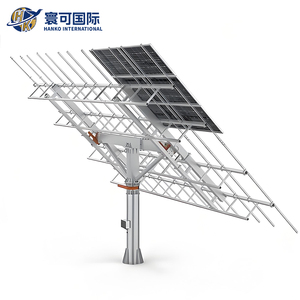
Heavy Duty Dual Axis Solar Tracker Smart Control Technology
Heavy Duty Solar Tracking Mounting Structure With Smart Control Technology
Dual Axis Heavy Duty | SCADA Compatible
27 m/s
Storm Wind Speed Resilient
+35%
Energy Yield Enhancement
25 Years
Structural Design Lifespan
IP66
Severe Weather Enclosure

The Colombian Solar Energy Transition: Engineering Requirements for Equatorial Yield Optimization

Colombia stands at the epicenter of South America's renewable energy transformation. Driven by national mandates such as Law 1715 of 2014 and updated tax incentives under Law 2099 of 2021, EPC contractors, project developers, and IPPs (Independent Power Producers) across Colombia are aggressively expanding solar photovoltaic capacity. However, designing and procuring solar tracking hardware for Colombia presents a unique set of meteorological, topographical, and mechanical challenges distinct from middle-latitude markets.

Positioned near the equator between latitude 4° South and 12° North, Colombia benefits from exceptional Direct Normal Irradiance (DNI) and Global Horizontal Irradiance (GHI)—ranging from 5.5 to 6.8 kWh/m²/day in regions like La Guajira, Cesar, and Atlántico. Unlike high-latitude installations where seasonal sun angles vary drastically, equatorial solar tracking prioritizes precision east-to-west diurnal tracking while addressing steep afternoon cloud builds, localized severe wind gusts, and complex Andean slopes.

Key Technical Insight for Colombian Procurement: Fixed-tilt solar arrays in equatorial zones experience significant clipping and thermal degradation during peak midday sun, while failing to capture valuable early-morning and late-afternoon shoulder generation. Single-axis solar trackers with 3D backtracking algorithms increase daily generation windows by 20% to 30%, drastically lowering the Levelized Cost of Energy (LCOE) to align with CREG grid compliance standards.

When selecting top-tier solar tracker manufacturers for projects in Bogotá, Medellín, Cali, Barranquilla, or coastal utility sites, procurement officers must balance structural loading dynamics, hot-dip galvanization thickness for marine corrosion resilience, and real-time remote telemetry integration via Modbus/SCADA networks.

Single-Axis vs. Dual-Axis Solar Trackers: Technical Evaluation Matrix for Colombia

Selecting the optimal motion mechanical configuration depends on regional terrain, wind dynamic loads, and plant capacity scale. Below is an engineering comparison designed to assist EPC contractors in specifying hardware for Colombian tenders.

Single-Axis Horizontal Trackers (1P / 2P)

  • Ideal Applications: Utility-scale ground-mount projects (5MW to 100MW+) in La Guajira, Cesar, and Orinoquía flat plains.
  • Yield Boost: 18% to 28% yield increase compared to fixed-tilt installations.
  • Wind Resiliency: High dynamic stability; integrated dampeners mitigate torsional flutter up to 27 m/s gust velocity.
  • Backtracking Capability: Intelligent 3D shade mitigation algorithms eliminate row-to-row shading on rolling terrains up to 30% slopes.
  • CAPEX & OPEX: Lowest capital cost per watt; minimal moving parts lead to significantly reduced lifetime maintenance costs.

Intelligent Dual-Axis Tracking Systems

  • Ideal Applications: High-yield Commercial & Industrial (C&I) projects, off-grid telemetry nodes, microgrids, and concentrated PV.
  • Yield Boost: Maximum possible generation gain of 35% to 45% by maintaining perpendicular incident light year-round.
  • Drive Mechanism: Dual-motor slewing worm drives (SE7 enclosed housing) for robust dual-axis pitch and azimuth adjustment.
  • Control Precision: Hybrid GPS astronomical positioning combined with optical closed-loop sensor feedback.
  • CAPEX & OPEX: Higher initial investment offset by maximum kWh output per panel footprint in space-constrained sites.

Localized Solar Tracker Application Scenarios in Colombia

Colombia's geographically diverse topography requires customized engineering solutions adapted to localized microclimates. Top manufacturers must supply customized structural profiles and electronic control enclosures capable of handling harsh environmental stresses.

1. High-Corrosion Coastal & Desert Arrays (La Guajira & Barranquilla)

Projects deployed near the Caribbean coast face high salinity, intense atmospheric salt spray (C4/C5 marine corrosion classes), and dust abrasion. Trackers supplied here feature HDG (Hot-Dip Galvanized) steel coatings over 85µm, enclosed SE7 slewing drives, and IP66-rated smart control units to prevent mechanical binding and electronics degradation.

2. Rolling Andean Mountain Slopes (Antioquia, Cundinamarca, Valle del Cauca)

Installs across the Colombian Andes involve uneven land contours, terraced agricultural farms, and tight parcel bounds. Single-post single-axis trackers with independent drive rows and flexible cardan joints allow up to 20°–30° north-south slope adaptation without expensive earth-clearing site civil works.

3. Off-Grid Hybrid Microgrids & Telemetry (Orinoquía & Amazonia)

Remote telecommunications towers, oil & gas pipeline monitoring stations, and rural electrification projects in the eastern plains require autonomous operation. Dual-axis trackers equipped with self-powered solar controllers and lithium battery back-ups ensure 24/7 continuous operation without reliance on grid power.

Why Partner With Our Solar Tracking Engineering Teams?

Backed by over a decade of specialized research, design, and manufacturing expertise, our solar tracking structures and smart motor controllers power extreme-environment projects across 7 continents. We deliver field-proven components tailored for Colombian contractors, combining high mechanical strength with intelligent digital control.

Certified Aeroelastic Wind Stability (Up to 27 m/s)

Our structures undergo rigorous boundary layer wind tunnel testing. Hydraulic dampeners and intelligent storm stow algorithms automatically lock arrays at safe tilt angles during sudden tropical gusts.

GPS & Astronomical Smart Controllers

Onboard microprocessors combine mathematical astronomical algorithms with real-time GPS positioning to maximize radiation capture, seamlessly managing morning tilt, afternoon stow, and 3D terrain backtracking.

SCADA & Modbus RS485 Wireless Telemetry

Full integration with industrial SCADA systems. Project operators in Colombia can monitor system health, motor load current, tilt angle feedback, and weather station telemetry in real time remotely.

Customized Pile & Foundation Engineering

Whether utilizing driven C-steel piles, concrete foundations, or ground screws for soft tropical soils, our structural engineering team delivers optimized mechanical stress calculations for every site.

Frequently Asked Questions (FAQ) for Solar Tracker Procurement in Colombia

Key technical, regulatory, and commercial considerations addressed for Colombian procurement teams, EPCs, and plant engineers.

1. How do solar trackers help projects qualify for Colombian tax incentives under Law 1715 and Law 2099?
Under Colombia's Law 1715 (updated by Law 2099), investments in non-conventional energy equipment qualify for a 50% income tax deduction, exclusion from VAT (IVA), accelerated depreciation, and duty-free equipment imports. Solar trackers directly increase capital equipment expenditure eligible for these UPME-certified tax benefits, while boosting annual revenue per MW installed to maximize project IRR.
2. What RETIE certification requirements apply to solar tracking motors and controllers imported into Colombia?
All electrical drive units, DC motors, and control enclosures must comply with Colombia's RETIE (Reglamento Técnico de Instalaciones Eléctricas) safety standards. Our electrical enclosures feature IEC/UL certifications, IP65/IP66 ingress protection, and built-in surge protection (SPD) to satisfy ONAC-accredited inspector verification during site commissioning.
3. How do single-axis trackers handle extreme wind gusts common in northern Colombia coastal zones?
Our single-axis trackers incorporate high-speed anemometer feedback linked to dynamic hydraulic shock absorbers. When wind velocities exceed preset thresholds (typically 18 m/s), the controller executes an automated high-speed stow command, moving array tables into a horizontal (0°) or flat defense angle within 45 seconds to resist survival wind speeds up to 27 m/s (97 km/h+).
4. What is the expected payback period (ROI) upgrade when switching from fixed-tilt to tracking in Colombia?
While solar tracking systems add roughly 8% to 12% to initial mechanical CAPEX, they generate between 20% and 30% additional kWh annually due to Colombia's high equatorial solar resource. In standard C&I and utility utility projects selling power under PPA contracts or CREG market spot pricing, the additional tracker CAPEX is typically recouped within 1.8 to 2.5 years.
5. Can single-axis trackers be installed on steep mountain slopes in regions like Antioquia or Santander?
Yes. Our single-post single-axis tracking systems are specifically re-engineered with flexible articulation torque cardans. This allows independent tracking rows to conform to East-West slopes up to 10% and North-South terrain variations up to 20°-30% without requiring heavy land grading, protecting topsoil stability and cutting civil engineering expenses.
6. How are shipping logistics and customs clearing managed for deliveries to Colombian ports?
We ship directly via containerized ocean freight (20GP/40HQ) to major Colombian ports including Puerto de Buenaventura (Pacific access) and Puerto de Cartagena / Barranquilla (Caribbean access). Component bundles are flat-packed in seawater-proof steel crates with clear bill-of-lading itemization to facilitate swift DIAN customs clearance under renewable tax-exempt tariffs.
7. What maintenance schedule is required for enclosed worm slewing drives in high-humidity tropical climates?
Our SE7 worm gear slewing drives utilize fully enclosed, O-ring sealed housings pre-lubricated with synthetic extreme-pressure grease. They require visual structural inspections every 12 months and grease re-injection only every 3 to 5 years, drastically minimizing maintenance overhead for remote utility installations.
8. Do tracker controllers support automated night-time cleaning or tilt adjustments for heavy tropical rain?
Yes. Controllers include programmable smart rain-wash and snow/dust stow modes. During torrential rainfall common in Colombia's rainy seasons, the system can automatically tilt panels to maximum elevation (60°) to utilize natural rainwater washing, preventing soil buildup and maintaining maximum optical efficiency.

Ready to Optimize Your Solar Yield in Colombia?

Get in touch with our solar tracking engineering specialists today for structural wind load analysis, customized CAD layout drawings, and competitive OEM factory direct quotes.

Contact Us