Designed & manufactured in Herefordshire, UK — shipping worldwide Mon–Thu 9–5 | Fri 9–4 | +44 (0)1981 241668

Featured resilient power systems engineered for continuous backup, stationary power generation, and off-grid operational autonomy in demanding urban and edge environments.
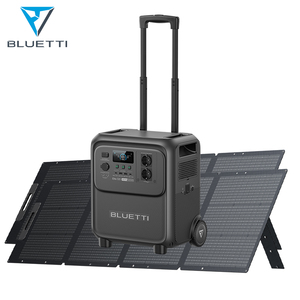
Supports solar quick-charging, dual 120V/230V AC output, integrated with LiFePO4 battery chemistry for zero-emission indoor backup.
Inquire Now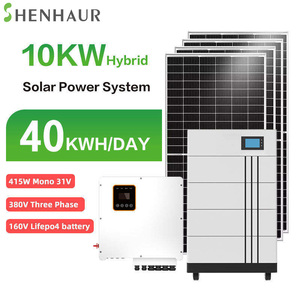
Turnkey 5kW/10kW hybrid stationary storage kit engineered for residential microgrids, commercial facilities, and fuel cell hybrid balancing.
Inquire Now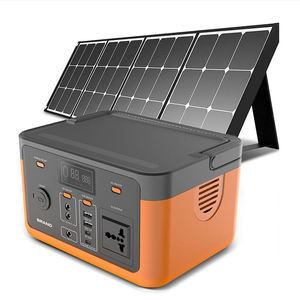
High-efficiency pure sine wave storage generator featuring long-cycle LiFePO4 cells for emergency telecom nodes and field monitoring.
Inquire Now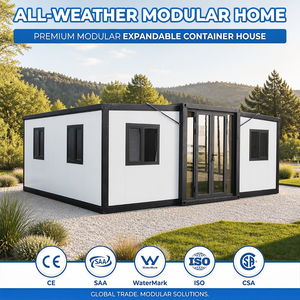
Heavy-duty weather-sealed modular shelter designed to house industrial fuel cell stacks, power conversion systems, and microgrid control units.
Inquire Now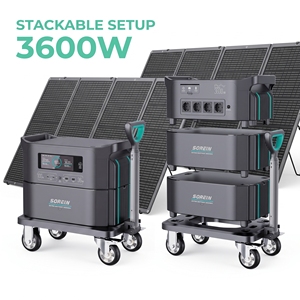
Integrated power generation and storage terminal supporting direct integration with external fuel cell power feeds and solar arrays.
Inquire Now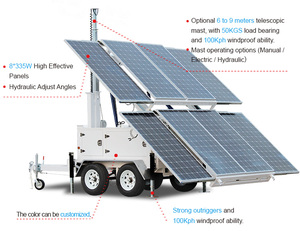
Heavy-duty mobile trailer equipped with high-mast LED floodlights, solar panels, and auxiliary fuel cell hybrid ports for infrastructure sites.
Inquire Now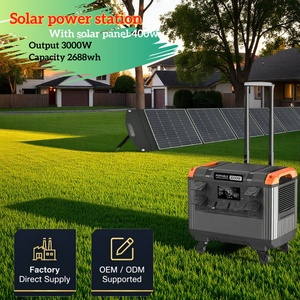
Industrial-grade uninterruptible power supply engineered for continuous data center rack protection and zero-millisecond power transfer.
Inquire Now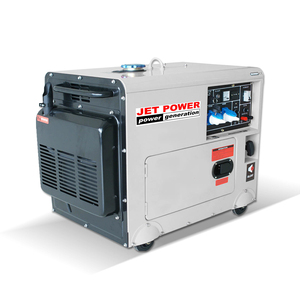
Compact soundproof backup power unit providing dual single/three-phase output for heavy industrial construction microgrids.
Inquire NowAnalysis of South Korea’s Hydrogen Economy Roadmap 2.0, Clean Hydrogen Portfolio Standard (CHPS), and urban microgrid demands in the Seoul Capital Area (SCA).
The Seoul Metropolitan Government (SMG) has emerged as one of the world's most aggressive adopters of stationary fuel cell power generation systems. Driven by intense urban land constraints, ultra-high energy density requirements in commercial districts like Gangnam, Yeouido, and Gwanghwamun, and strict environmental mandates under the Korea Clean Hydrogen Portfolio Standard (CHPS), fuel cells have shifted from an alternative energy luxury to core urban infrastructure.
Unlike intermittent renewable sources such as solar photovoltaic arrays—which require expansive horizontal land rarely available in Seoul—fuel cell power plants deliver baseline 24/7 uninterrupted power with an exceptionally small spatial footprint. A typical 1 MW Solid Oxide Fuel Cell (SOFC) or Proton Exchange Membrane Fuel Cell (PEMFC) system requires less than 150 square meters of floor space, making underground, rooftop, and basement installations feasible within high-density high-rise commercial structures, data centers, and hospital complexes across the capital area.
Exhaustive technical benchmark ranking leading OEMs, stack fabricators, and system integrators based on market share, stack efficiency, thermal cogeneration, and MOTIE certification.
A global pioneer in extreme-environment hybrid fuel cell systems, high-efficiency stack controllers, off-grid storage integration, and microgrid containment solutions operating across international and South Korean infrastructure corridors.
South Korea’s dominant stationary fuel cell manufacturer. Operating out of massive manufacturing centers in Iksan, Doosan specializes in Phosphoric Acid Fuel Cell (PAFC) and Solid Oxide Fuel Cell (SOFC) modules tailored for large-scale utility and urban power plants.
Leveraging Hyundai Motor Group’s world-renowned fuel cell stack assembly lines in Chungju, HTWO supplies heavy-duty automotive and stationary PEMFC stacks customized for commercial emergency power systems in Seoul building projects.
A strategic industrial partnership manufacturing Bloom Energy Energy Server SOFC platforms domestically in Gumi, South Korea. SK Ecoplant supplies high-efficiency baseline non-combustion SOFC generators for Seoul commercial complexes.
Operator and technology integrator of the world’s largest byproduct hydrogen fuel cell power plant. Hanwha builds custom utility-scale and industrial microgrid systems utilizing direct byproduct hydrogen feedstocks.
Specializing in residential, building-integrated (BAPV/BIPFC), and commercial PEMFC systems from 1kW to 100kW. S-FuelCell is a certified Korean supplier with deep integration into Seoul municipal housing projects.
Recognized for high-reliability marine, submarine, and stationary emergency PEMFC systems. Bumhan manufactures specialized heavy-duty fuel cell stacks capable of operating in dense urban environments and extreme conditions.
A leading South Korean developer of native Solid Oxide Fuel Cell (SOFC) stack systems. MiCo Power manufactures TUEV-certified SOFC units designed for compact building cogeneration in Seoul urban renewals.
Supplying highly standardized compact 5kW pure hydrogen fuel cell generators. Panasonic works with Seoul building developers to deliver modular multi-unit combined heat and power systems for urban housing projects.
Providing industry-standard heavy-duty FCmove™ fuel cell modules for transit buses, rail systems, and stationary emergency power generation integrated across the Greater Seoul Transit Network.
A technical guide for procurement managers selecting fuel cell topologies for Seoul building codes and power profiles.
| Fuel Cell Architecture | Electrolyte Medium | Operating Temp | Electrical Efficiency | Thermal Co-generation | Ideal Seoul Deployment Scenario |
|---|---|---|---|---|---|
| PEMFC (Proton Exchange Membrane) | Solid Polymer Membrane | 60°C - 80°C | 50% - 60% | Low-Temp Hot Water (60°C) | Emergency UPS, Rapid Backup, Mobility & Telecom Towers |
| SOFC (Solid Oxide Fuel Cell) | Non-Porous Ceramic Metal Oxide | 650°C - 850°C | 60% - 65% | High-Temp Steam / HVAC Heat | Baseline 24/7 Power for High-Rise Complexes & Data Centers |
| PAFC (Phosphoric Acid Fuel Cell) | Liquid Phosphoric Acid in Matrix | 150°C - 200°C | 42% - 47% | Medium-Temp Steam & Water | District Heating & Megawatt Commercial Utility Plants |
| DMFC / Methanol (Direct Methanol) | Polymer Membrane (Direct Liquid) | 50°C - 80°C | 38% - 45% | Low Heat Output | Off-Grid Remote Telemetry & Extreme Weather Backup Nodes |
Real-world integration models designed to satisfy South Korean structural building codes, gas safety laws, and zero-carbon grid policies.
Under Seoul’s Mandatory Zero Energy Building (ZEB) regulations, commercial towers over 10,000 m² must incorporate on-site clean power generation.
Data hubs hosting global financial networks and cloud infrastructure demand zero-millisecond power stability without diesel generator exhaust.
Severe seasonal winter freezing down to -15°C disrupts standard battery stations powering critical weather, communications, and public safety towers.
Why international project developers trust our hybrid fuel cell integration, off-grid storage engineering, and extreme-environment power systems.
Designing, manufacturing, and deploying resilient hybrid power, control electronics, and enclosure systems since 2009. Tested on all 7 continents from Arctic stations to North Sea offshore wind platforms.
We do not re-badge off-the-shelf components. Every stack interface, power management cabinet, MPPT controller, and IP67 weather enclosure is engineered and pre-commissioned in-house.
Our technical service personnel hold Global Wind Organisation (GWO) certification, ensuring system designers are directly available for complex, high-rigor commissioning and servicing across Korea.
Real-time system diagnostics provide continuous telemetry on state-of-charge, stack polarization, fuel delivery rates, and thermal balance with automated alert protocols prior to fault conditions.
System sizing models utilize ERA5 atmospheric reanalysis combined with Global Wind and Solar Atlases to guarantee 100% load autonomy during Seoul's worst weather months.
Manufactured under ISO-aligned quality standards, matching South Korean Ministry of Trade, Industry and Energy safety expectations and strict local municipal noise/emissions standards.
Essential technical, regulatory, and practical questions answered for Korean engineering procurement contractors (EPCs) and facility operators.
Send us your site load profile, installation parameters, and grid interface requirements. Our senior technical team will generate a custom technical proposal and financial sizing model.