Designed & manufactured in Herefordshire, UK — shipping worldwide Mon–Thu 9–5 | Fri 9–4 | +44 (0)1981 241668

Proven photovoltaic arrays, hybrid battery generators, and mobile power hubs designed for Swiss industrial, agricultural, and alpine operations.
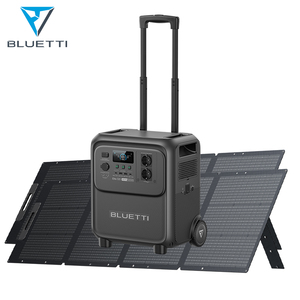
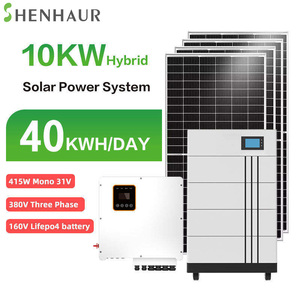
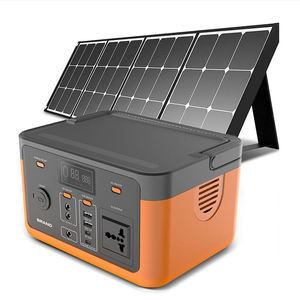
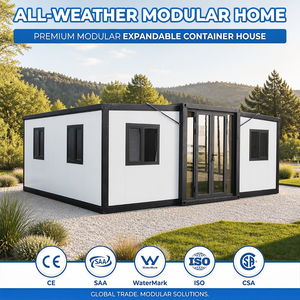
Why multi-crystalline silicon structures remain a critical component for high-altitude irradiance, snow reflectivity (Albedo effect), and cost-optimized commercial power projects in Switzerland.
Switzerland’s high-altitude regions (such as Valais, Graubünden, and Bernese Oberland) present unique atmospheric conditions. While monocrystalline panels excel under direct, perpendicular sunlight, Polycrystalline panels feature a multi-faceted crystal lattice that captures low-angle, diffuse sky radiation more effectively during overcast winter months. When combined with snow albedo—where snowpack reflects up to 85% of ambient light—poly modules capture multi-directional light bounces with minimal angular reflection losses.
Solar cell efficiency degrades as ambient temperatures rise. Standard polycrystalline modules possess a favorable temperature coefficient of Pmax (typically -0.34% to -0.38%/°C). In Swiss sub-zero environments, operating voltage increases significantly. At -15°C, polycrystalline arrays deliver an extra 8% to 12% power surge above STC (Standard Test Conditions), making them exceptionally reliable during high-demand winter peak load periods in mountain passes and alpine villages.
Under Swiss Standard SIA 261 (Actions on Structures), solar arrays installed above 1,000 meters elevation must withstand severe static snow loads up to 5.4 kPa (and up to 8.5 kPa in extreme cantonal zones). Our polycrystalline panels feature 3.2mm or 4.0mm heat-toughened anti-reflective solar glass matched with anodized aluminium frames (with corner drainage cutouts) to prevent frame deformation, water pooling, and micro-cracking caused by freeze-thaw cycles.
| Engineering Metric | Polycrystalline (Multi-Si) Modules | Monocrystalline (PERC/TOPCon) | Swiss Operating Impact |
|---|---|---|---|
| Low-Angle Irradiance Response | High (Multi-crystal diffuse absorption) | Moderate (Directional sensitivity) | Superior winter morning/evening energy harvesting in valley areas |
| Snow Albedo (Reflecting Radiation) | Multi-directional grain surface capture | Requires specialized bifacial backing | Optimized for high-altitude snowpack environments |
| Micro-Crack Susceptibility | Stress distributed across grain boundaries | Higher risk along single-crystal planes | Resists dynamic snow loads & high-altitude wind shear |
| CAPEX / Watt Installed (CHF) | Lowest CHF per installed kWp | 15% – 25% higher initial expenditure | Faster payback period for large-scale rural & commercial arrays |
| Voltage Surge at -15°C (Swiss Winter) | +10.5% VOC increase (Linear & predictable) | +12.8% VOC increase (Requires higher voltage inverters) | Easier inverter matching for standard Swiss grid-tie connections |
From remote alpine telecommunication towers in Valais to agricultural sheds in Emmental, discover how localized B2B clients leverage polycrystalline solar hardware.
Critical communications infrastructure managed by Swisscom, Swiss Army, and SAC (Swiss Alpine Club) huts operate off-grid in severe terrain. Deploying our polycrystalline arrays combined with hybrid LiFePO4 power units guarantees autonomous electricity for Starlink terminals, weather sensors, and emergency repeaters year-round. The multi-angle crystal structure ensures power generation even when panels are partially shaded by mountain peaks.
Farmers in Thurgau, Bern, and Fribourg require large-surface photovoltaic solutions to power automated milking parlors, cold storage, and ventilation systems. Polycrystalline panels present the most economically viable CHF-to-yield ratio for massive unshaded barn roof surfaces. Our modules withstand agricultural ammonia vapors, dust buildup, and heavy rainfall without power PID (Potential Induced Degradation).
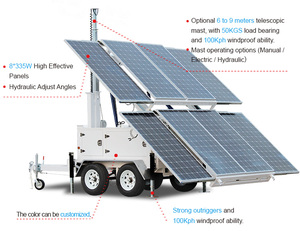
Temporary infrastructure projects along the A1 and A2 motorways or mountain tunnel works require mobile power units. Our mobile solar high-mast trailers and containerized generator sets provide zero-emission power during daytime drilling and nighttime floodlighting, reducing fuel consumption on auxiliary diesel generators by up to 75%.
Navigating federal mandates, grid injection policies, and environmental standards in the Swiss Confederation.
Following the Swiss Federal Parliament's approval of the Solaroffensive (Mandatory Solar Legislation for New Buildings and Infrastructure), cantons have accelerated subsidies (Pronovo Kleineinmalvergütung KLEIV and Grosseinmalvergütung GREIV) for commercial installations. Polycrystalline panels allow developers to maximize total surface coverage under strict budget caps while meeting municipal renewable target percentages.
All supplied polycrystalline modules and hybrid generator components strictly adhere to the Federal Inspectorate for Heavy Current Installations (ESTI) directive 233 and Electrosuisse (SEV) safety standards, guaranteeing rapid grid-connection authorization across all 26 cantons.
In compliance with Swiss environmental protection law (VREG), our module manufacturing supply chain incorporates circular economy protocols. All photovoltaic materials are pre-registered for end-of-life take-back via the SENS eRecycling foundation.
Delivering European-standard renewable systems engineered for rugged durability, zero downtime, and long service life.
We do not use generic annual radiation averages. Every custom power proposal is sized using ERA5 atmospheric reanalysis data combined with Global Wind & Solar Atlas parameters tuned to your precise Swiss canton coordinates.
Modules undergo rigorous EL (Electroluminescence) flash testing before packaging to detect micro-fractures. In-house quality control guarantees positive tolerance sorting (+0W to +5W) for consistent string performance.
Every industrial off-grid deployment can be specified with GSM/Satellite telemetry units (Victron Cerbo GX / RS485 protocol), enabling real-time monitoring of state of charge, voltage, load profiles, and fuel levels from anywhere in Switzerland.
Addressing key technical, logistical, and financial inquiries regarding polycrystalline modules and hybrid off-grid procurement.
Polycrystalline modules offer an optimal balance between CAPEX efficiency and winter diffuse light absorption. In regions with frequent fog, cloud cover, or heavy snow reflection, poly modules provide excellent kilowatt-hour energy yield per Swiss Franc invested, especially for unconstrained surface areas such as agricultural roofs and ground-mounted industrial compounds.
Our alpine-spec polycrystalline panels are built with 3.2mm or 4.0mm tempered glass and heavy-duty 40mm double-walled anodized aluminium frames rated to withstand static snow pressure up to 5,400 Pa. For severe conditions, we offer glass-glass poly modules designed for mechanical loads up to 8,500 Pa, fully complying with SIA 261 structural requirements.
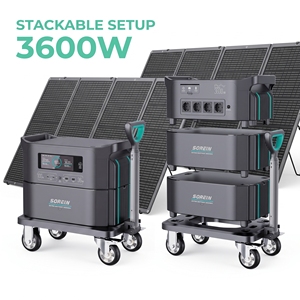
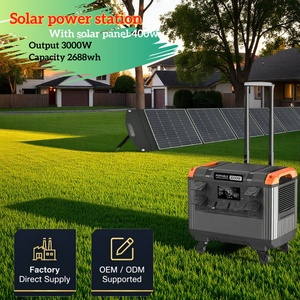
Yes. All complete solar generator systems (such as the SHENHAUR, Sorein, and OTHC-T30 series) are manufactured with pure sine wave inverters producing 230V single-phase and 400V three-phase output at exactly 50Hz, adhering strictly to Swiss grid-connection code and ESTI regulations.
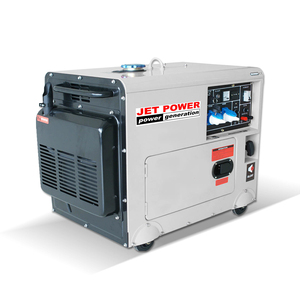
For mission-critical installations (such as remote telecom stations or highway monitoring), our systems incorporate deep-cycle LiFePO4 / AGM battery autonomy sized for 3 to 7 days of winter operation. Furthermore, our hybrid setups automatically trigger auxiliary silent diesel generators or EFOY methanol fuel cells via dry contacts when battery voltage drops below set thresholds.
We coordinate custom logistics for challenging deliveries, including compact palletizing suitable for Swiss mountain cable cars, narrow alpine roads, or helicopter transport to remote construction sites and SAC mountain huts.
Yes. Polycrystalline panels certified under IEC 61215 and IEC 61730 standards qualify for Pronovo KLEIV and GREIV one-off investment subsidies across all Swiss cantons, provided the installation is executed by a certified Swiss solar contractor (Elektroinstallateur mit Eidg. Fachausweis).
Speak directly with our renewable engineering team. We evaluate your load profiles, location coordinates, and environmental requirements to deliver a fully customized OEM solar proposal.