Designed & manufactured in Herefordshire, UK — shipping worldwide Mon–Thu 9–5 | Fri 9–4 | +44 (0)1981 241668

Explore our factory-direct monocrystalline photovoltaic solutions, high-performance LiFePO4 energy storage units, and mobile off-grid generators customized for deployment across Algerian residential, commercial, and industrial sectors.
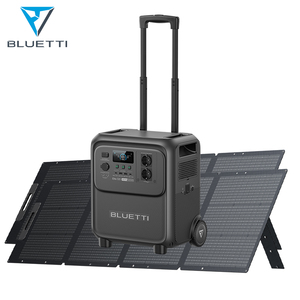
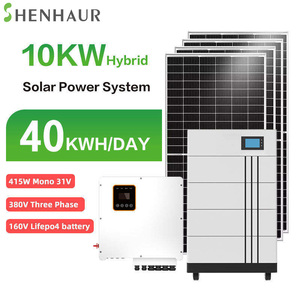
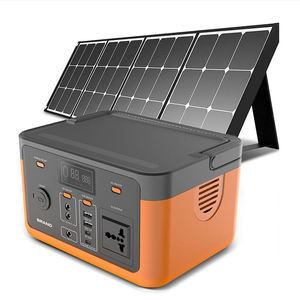
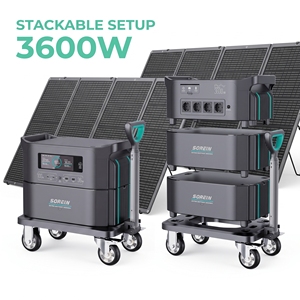
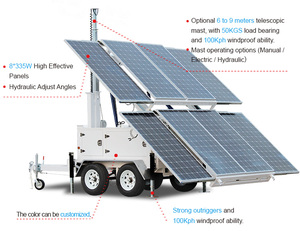
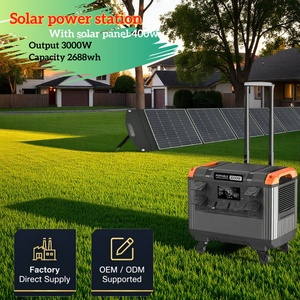
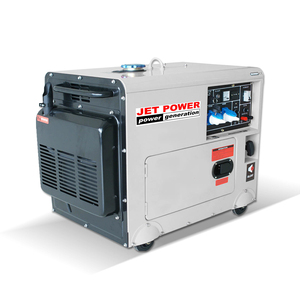
As the largest country in Africa by landmass, Algeria possesses unmatched solar energy potential. The country benefits from an exceptionally high Global Horizontal Irradiation (GHI) rate ranging between 1,900 kWh/m²/year in the northern coastal belts to over 2,650 kWh/m²/year throughout the vast Saharan desert regions. Under the Algerian government's ambitious Programme National des Énergies Renouvelables et de l’Efficacité Énergétique, spearheaded by Sonelgaz and the Ministry of Energy and Mines, the nation is accelerating its transition toward clean electrification, targeting 15,000 MW of solar PV capacity by 2030.
However, deploying high-efficiency solar infrastructure within Algeria presents rigorous operational and environmental challenges. Industrial specifiers, EPC contractors, and procurement officers face strict microclimatic conditions that rapidly degrade standard solar module technologies:
In southern Wilayas such as Adrar, Tamanghasset, Illizi, and Ouargla, summer ambient temperatures frequently exceed 48°C, pushing silicon module operating temperatures above 75°C. Standard solar panels experience heavy power losses due to poor temperature coefficients. Our monocrystalline panels feature a ultra-low temperature coefficient of -0.30%/°C (Pmax), ensuring maximum energy yields even during peak Saharan heat spikes.
Fine silica dust carried by seasonal Sirocco winds deposits a stubborn abrasive layer across PV surfaces, reducing light absorption by up to 35% and causing glass pitting. We engineer our panels with hydrophobic, anti-reflective nano-coatings and high-transmittance anti-static dual glass that actively sheds dry particulate matter and withstands sandstorm abrasion.
Coastal developments near Algiers, Oran, and Annaba face airborne salt-mist exposure, whereas inland desert basins experience high Potential Induced Degradation (PID) caused by extreme voltage stress and moisture ingress. Our panels feature POE (Polyolefin Elastomer) encapsulation and anodized aluminum frames rated for 5400 Pa mechanical snow/wind load and salt-mist corrosion per IEC 61701 standards.
As a leading international factory and direct B2B supplier, our manufacturing processes prioritize longevity, physical integrity, and levelized cost of energy (LCOE) optimization. Standard off-the-shelf panels fail prematurely under harsh North African operational regimes. Below is an engineering overview of our proprietary Monocrystalline solar module design:
We have transitioned our primary manufacturing lines from legacy P-type PERC to N-type TOPCon (Tunnel Oxide Passivated Contact) architecture. Unlike traditional cells, N-type TOPCon monocrystalline cells exhibit zero Light-Induced Degradation (LID) and offer superior weak-light performance during early mornings, late afternoons, and overcast days in coastal northern regions.
Our monocrystalline panels and integrated off-grid energy storage systems are deployed across critical infrastructure sectors in Algeria, solving energy access limitations and replacing costly, high-maintenance diesel generation.
In farming regions such as Biskra, El Oued, and Ghardaïa, deep water extraction relies heavily on stable power. Our high-voltage monocrystalline solar arrays directly power submersible AC solar water pumps without requiring grid connection, ensuring continuous crop irrigation and date palm cultivation with zero fuel expenditure.
Extensive oil and gas pipeline networks traversing Hassi Messaoud and In Amenas require autonomous, reliable off-grid monitoring. Our heavy-duty monocrystalline systems paired with LiFePO4 batteries power cathodic protection, remote RTUs, SCADA units, and satellite communications 24/7/365 without intervention.
For industrial parks, construction bases, and remote housing complexes, grid outages disrupt productivity. Combining our monocrystalline PV modules with our 10kW hybrid solar kits and mobile trailer units creates resilient microgrids that drastically reduce diesel generator operating hours and fuel logistical costs.
Below are technical and commercial answers tailored for Algerian buyers, solar integrators, EPC developers, and government tender specifiers.
Yes. All our monocrystalline solar panels are manufactured under strict ISO 9001, ISO 14001, and ISO 45001 factory conditions and hold international certification including IEC 61215 (Design qualification and type approval) and IEC 61730 (Photovoltaic module safety qualification). We provide full conformity documentation (Certificate of Origin, CoC, Test Reports) required by Algerian Customs (Douane Algérienne) and commercial banks for Letter of Credit (L/C) clearance.
We strongly recommend our N-type TOPCon Monocrystalline Bifacial Dual-Glass modules for southern Saharan sites. Dual-glass construction prevents moisture and sand ingress, eliminates micro-cracking during extreme day/night ambient temperature fluctuations (-5°C winter nights to 50°C summer days), and delivers superior performance under high ambient temperature conditions.
We support standard B2B international payment structures including Irrevocable Confirmed Letter of Credit at Sight (L/C at sight) and T/T bank transfers. For logistics, we regularly ship 20ft and 40ft HQ containers to major Algerian seaports including Algiers, Oran, Skikda, Bejaïa, and Annaba under CIF or FOB terms, complete with custom heavy-duty export packaging designed to prevent transit vibration damage.
Our portable power stations and mobile trailer generators utilize industrial-grade LiFePO4 (Lithium Iron Phosphate) battery chemistry, which is far safer and more thermally stable than conventional ternary lithium or lead-acid batteries. Integrated Smart BMS (Battery Management System) actively monitors cell voltage, balances charge cycles, and cuts off charging automatically if internal temperatures reach unsafe levels.
Yes. As a direct manufacturer, we offer complete OEM/ODM manufacturing. We can customize panel dimensions, wattage outputs (from 300W up to 700W+ per panel), junction box cable lengths, aluminum frame anodizing thickness, custom logo printing, and tailored power system enclosures to meet specific contract specs for telecom, oil & gas, or municipal lighting tenders.
Selecting the right solar module manufacturer requires verifying production reliability, material quality control, and long-term technical support. Our factory operates over 80,000 m² of modern automated manufacturing space equipped with advanced artificial intelligence optical inspection (EL testing) equipment.
From robotic cell-stringing and laser cutting to automated EVA/POE laminating, our production lines eliminate human error, ensuring uniform cell spacing, tight mechanical tolerances, and maximum electrical throughput.
Every single monocrystalline module undergoes 100% triple EL inspection—before lamination, after lamination, and prior to final packaging—guaranteeing that micro-cracks, dark spots, and cell mismatches zero-out before leaving our facility.
We stand behind our solar products with a 12-Year Workmanship & Material Warranty alongside a 30-Year Linear Power Output Performance Guarantee, assuring that panel output remains above 87.4% at Year 30.
Planning a solar project, off-grid installation, or tender bid in Algeria? Our senior engineering team is ready to provide resource calculations, customized bill of materials (BOM), and competitive containerized wholesale pricing tailored to your requirements.