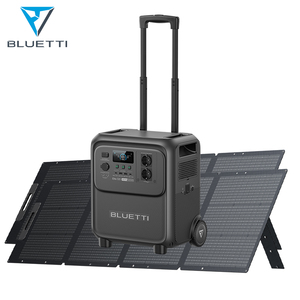
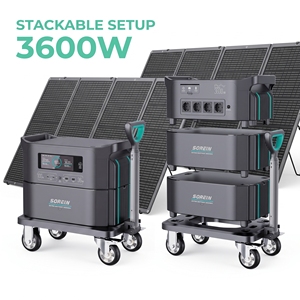
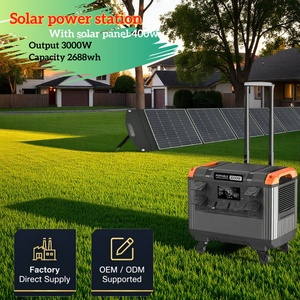
BLUETTI Large Capacity 3200Wh Portable Power Station (1800W Solar Input)
- Capacity: 3,200Wh LiFePO4 Chemistry
- Inverter: 1800W Continuous Pure Sine Wave
- Voltage: 120V / 230V Dual Output Compatible
- Application: Mobile LiDAR & Surveying Rig

Engineered for mission-critical deployments in Southeast Asia. Our power stations, solar-hybrid trailers, and deep-cycle storage units deliver continuous, low-THD pure sine wave power tailored for remote sensing, wind resource assessment, and smart urban infrastructure across Greater Bangkok.

A Technical Whitepaper on Overcoming Monsoon Volatility, High Relative Humidity, and Ambient Thermal Saturation in Greater Bangkok Infrastructure Projects.
Light Detection and Ranging (LiDAR) systems have become the gold standard for high-precision environmental monitoring, 3D urban topometry, wind speed profiling for renewable developments, and intelligent traffic management. However, a LiDAR system is fundamentally an optical-electronic sensor package requiring ultra-clean, continuous direct current (DC) or low-Total Harmonic Distortion (THD) alternating current (AC) power. In the Bangkok Metropolitan Region and surrounding industrial corridors (such as the Eastern Economic Corridor - EEC), power reliability faces severe microclimatic hurdles: tropical monsoons causing multi-day solar irradiance drops, ambient temperatures exceeding 40°C leading to thermal battery throttling, and high relative humidity (frequently exceeding 85%) inducing accelerated contact oxidation.
As a specialized manufacturer and international exporter of hybrid power architectures, we engineer turnkey solar, micro-wind, and LiFePO4 energy storage arrays designed to guarantee 24/7 continuous operation for remote LiDAR stations, ensuring zero loss of telemetry data.
Bangkok experiences heavy cloud cover during the rainy season (May through October). Our hybrid systems combine high-efficiency monocrystalline solar arrays with low cut-in micro wind turbines to capture diurnal air currents and deliver uninterrupted charging across extended low-lux periods.
High ambient thermal saturation rapidly degrades standard Lithium Cobalt Oxide or Lead-Acid cells. We utilize premium Lithium Iron Phosphate (LiFePO4) chemistry with integrated thermal management circuits, engineered to operate continuously at elevated temperatures without capacity thermal runaway.
Sensors are exceptionally sensitive to line noise and micro-outages. Our power systems feature online double-conversion architecture and ultra-low THD pure sine wave inverters, shielding LiDAR optical emitters and processing units from transient voltage spikes.
Deploying remote sensing hardware across the Bangkok basin—from the low-lying delta of the Chao Phraya River to the high-density expressways of Don Mueang and Suvarnabhumi flight corridors—presents distinct physical operating conditions:
| Environmental Vector | Standard Power Equipment Vulnerability | Our Specialized LiDAR Power Solution |
|---|---|---|
| High Ambient Heat (35°C–42°C) | Rapid capacity loss, thermal shutdown of standard lithium ion, electrolyte drying in gel batteries. | LiFePO4 Chemistry + Heat Sink Enclosures: Thermally isolated battery chambers designed for optimal heat dissipation without active power-draw refrigeration. |
| Monsoon Solar Deficit (3–7 Days Overcast) | Complete system blackout within 48 hours due to under-sized battery banks and mono-source charging. | Hybrid Micro-Wind + Dual-Array Solar: Sized for worst-month solar yield with 5–7 days of battery autonomy and optional methanol fuel cell dry-contact auto-start. |
| 90% Relative Humidity & Condensation | Circuit corrosion, short-circuiting, fogging of internal electrical interfaces, fungal degradation. | IP66/IP67 Sealed Tropicalized Hubs: Conformal coated PCB boards, marine-grade stainless hardware, and desiccated internal power distribution units. |
| High Electromagnetic & Line Noise | Data corruptions in LiDAR 3D point-cloud generation due to harmonic distortion from cheap inverters. | Pure Sine Wave Output (THD < 2%): Shielded power conversion modules delivering clean continuous power matching laboratory utility standards. |
By solving these key environmental stress factors, our exported system configurations ensure uninterrupted spatial telemetry for highway concessionaires, environmental research bodies, wind energy developers, and urban planning ministries operating throughout Thailand.
From smart urban transportation corridors to offshore wind velocity assessment in the Gulf of Thailand, discover how our customized power modules are deployed.
Deployment Zone: Bangkok Tollway System, Outer Ring Road (Kanchanaphisek), Sirat Expressway.
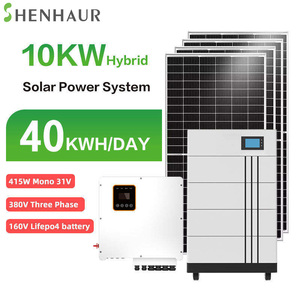
Overhead LiDAR units monitor vehicle throughput, vehicle classification, and speed detection in real-time. Power interruptions lead to severe gaps in urban traffic management data. Our OTHC-T30 Zero-Transfer UPS and SHENHAUR Modular Solar Kits ensure non-stop data capture even during utility grid load-shedding or seasonal storm outages.
Deployment Zone: Gulf of Thailand, Chonburi & Rayong Coastal Industrial Zones (EEC).
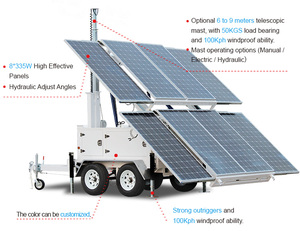
Accurate measurement of offshore and coastal wind profiles requires vertical profiling LiDAR units running continuous scanning cycles for 12–24 months. Our mobile 4KW–5KW Mast Solar Trailers and BLUETTI Heavy-Duty Stations provide a mobile, resilient power platform capable of surviving coastal salt spray and tropical storm surges.
Deployment Zone: Suvarnabhumi (BKK) and Don Mueang (DMK) Airport Monitoring Perimeter.
Scanning LiDAR systems monitor low-level wind shear and atmospheric turbulence around runway approaches. Power modules for these critical assets require absolute electrical isolation and fail-safe redundancy. Our 10kW Silent Backup Generators matched with LiFePO4 Storage Systems deliver multi-tiered operational security.
Combining UK-engineered precision design principles with agile global manufacturing scale, we deliver proven off-grid solutions built for extreme longevity.
Our power systems are engineered based on over a decade of field-proven deployment across the world's most unforgiving environments: from offshore North Sea wind farm platforms operating 72 km from land to exposed high-altitude telemetry stations. Every component—from charge controllers to IP-rated structural enclosures—undergoes rigorous thermal modeling and load testing before dispatch.
For the Bangkok market, we leverage our deep understanding of micro-grid design to supply system integrators, government contractors, and commercial LiDAR operators with equipment optimized for high energy density, low operational maintenance, and rapid field deployment.
All system components align with ISO quality management frameworks. We conduct pre-shipment burn-in testing on full inverter arrays and battery packs to eliminate infant mortality failures.
Our engineering team performs custom sizing calculations based on your specific LiDAR sensor wattage, peak transmit bursts, cellular/satellite telemetry modems, and local meteorological data.
We supply white-label power systems, customized mounting enclosures, tailored input/output voltage harnesses, and remote cloud-monitoring telemetry integrations for turnkey deployment.
Direct technical answers to common questions raised by Thai infrastructure specifiers and engineering buyers.
We do not rely on annual solar averages. Instead, we size the photovoltaic array and battery bank based on ERA5 satellite reanalysis data for the worst month of solar irradiance in Thailand (typically August/September during the peak monsoon). Systems are configured with a minimum of 3 to 5 days of complete battery autonomy without any solar input, ensuring continuous LiDAR telemetry logging.
LiFePO4 (Lithium Iron Phosphate) offers superior thermal stability, tolerating ambient temperatures up to 55°C–60°C without risk of thermal runaway. Furthermore, LiFePO4 provides 3,500 to 6,000 deep discharge cycles (80% DOD) compared to just 500–800 cycles for lead-acid/AGM batteries in tropical heat, dramatically reducing long-term maintenance and replacement costs for remote Bangkok sites.
Yes. Most modern LiDAR units (such as Leosphere, ZX Lidars, or Velodyne arrays) operate directly on 12V or 24V DC to avoid conversion losses, while auxiliary equipment (such as satellite routers or thermal cameras) may require 230V AC. Our integrated power stations feature dual regulated DC busbars alongside ultra-low THD pure sine wave AC inverters.
Our intelligent system controllers support Modbus RTU/TCP, MQTT, and SNMP protocols over integrated 4G LTE/5G cellular modems. You receive real-time cloud visibility over Battery State of Charge (SOC), PV solar generation, ambient temperature, load consumption, and dry-contact alarm triggers directly on your central management dashboard.
We maintain streamlined export protocols for shipping into Laem Chabang Port and Bangkok Port (Klong Toey). Standard catalog products ship within 7–14 days, while customized OEM/ODM engineered containers or high-mast trailers take approximately 25–35 days including full factory testing.
Need a tailored technical quotation, engineering load assessment, or complete export catalog for the Bangkok and Southeast Asian markets? Contact our technical engineering team for immediate assistance.