Designed & manufactured in Herefordshire, UK — shipping worldwide Mon–Thu 9–5 | Fri 9–4 | +44 (0)1981 241668

Certified power generation, battery storage, and mobile solar-wind platforms deployed across Hungarian agricultural, telecommunication, and infrastructure sectors.
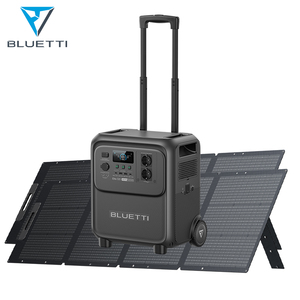
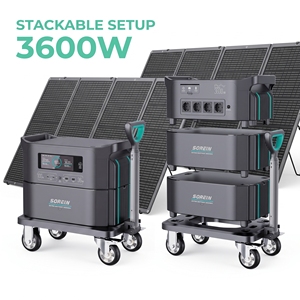
Ultra-reliable 1800W solar charging system with pure sine wave inverter, optimized for field telemetry.
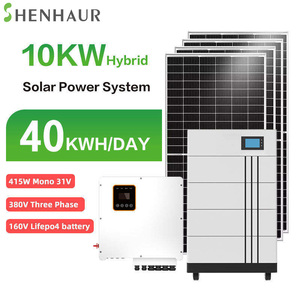
Complete turnkey power kit with deep-cycle storage for continuous industrial microgrid applications.
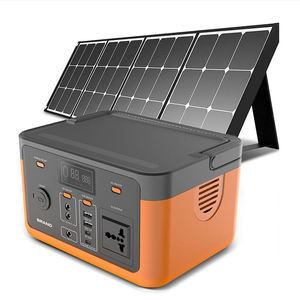
Industrial-grade LiFePO4 lithium storage system designed for severe outdoor environments (-20°C to 50°C).
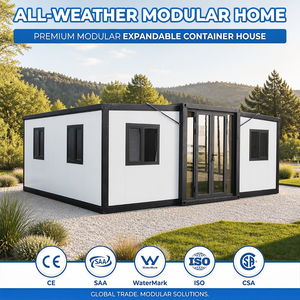
Rapid-deployment housing unit equipped with pre-wired autonomous roof-mounted wind/solar power inputs.
Unified energy management cabinet featuring MPPT wind-solar dual inputs and remote GSM monitoring.
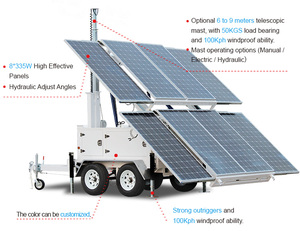
Towable heavy-duty energy trailer with pneumatic mast for temporary wind telemetry and highway lighting.
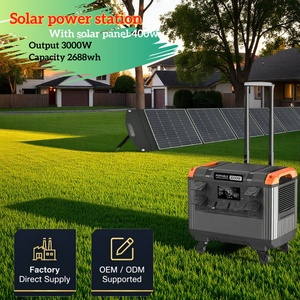
Millisecond-level online UPS power supply engineered to protect sensitive agricultural telemetry sensors.
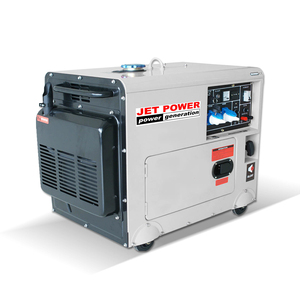
Acoustically insulated emergency automated backup unit seamlessly integrated with hybrid wind controllers.
As Hungary accelerates its energy transition under the updated National Energy and Climate Plan (NECP) and EU REPowerEU mandates, localized decentralized energy architecture has evolved from an environmental preference into a operational operational imperative for industrial and agricultural enterprises.
Hungary’s wind resource distribution is uniquely characterized by moderate, low-to-medium speed inland air currents. Unlike offshore coastal zones in Northern Europe, the Pannonian Basin—particularly the Great Hungarian Plain (Alföld), the Kisalföld (Little Plain), and the elevated Transdanubian Hills—exhibits average annual wind speeds ranging from 3.2 m/s to 6.5 m/s at standard hub heights of 10 to 30 meters.
Traditional large vertical turbines often suffer from lower aerodynamic efficiency under laminar inland wind regimes. Horizontal Axis Wind Turbines (HAWT), designed with hyper-sensitive airfoil profiles and low cut-in speeds (2.0 m/s), capture up to 38% more kinetic energy in Hungary's specific continental boundary layer than competing topologies.
The rapid expansion of utility-scale solar PV across Hungary has created severe regional grid congestion, especially during peak summer generation periods. Hungarian grid operators (MAVIR) and regional distribution network operators (DNOs like E.ON, MVM Hálózat) have imposed strict interconnection limits and dynamic feed-in tariffs.
Consequently, forward-thinking Hungarian business operators are turning toward behind-the-meter (BTM) microgrids and completely autonomous off-grid hybrid power systems. Combining horizontal micro-wind turbines with solar panels ensures dual-season complimentary energy generation: solar yields peak during Hungarian summers, while horizontal wind turbines deliver maximum output during high-pressure winter winds and overcast periods.
A rigorous engineering breakdown of why horizontal axis configurations outperform alternative wind designs across Central European industrial applications.
Our horizontal turbines utilize rare-earth Neodymium (NdFeB) Permanent Magnet Generators (PMG) directly coupled to the rotor shaft. Eliminating mechanical gearboxes eliminates key friction loss points, allowing smooth start-ups at low inland wind speeds while requiring zero oil changes or gear maintenance for over 10 years.
Turbulence across the Hungarian plains can change direction rapidly due to local thermal movements. Our horizontal turbines incorporate active electronic or fluid dynamic mechanical tail-steering mechanisms that instantly align the rotor perpendicular to the wind vectors, guaranteeing optimal kinetic capture without manual intervention.
Built with glass-fiber reinforced injection-molded nylon blades and electro-coated marine-grade aluminum nacelles. Designed to withstand harsh Pannonian frost cycles (-20°C winter ice loading) as well as violent summer thunderstorms with winds up to 27 m/s (60+ mph).
| Technical Parameter | Horizontal Axis (HAWT) - Our Standard | Vertical Axis (VAWT) | Solar PV Standalone (No Wind) |
|---|---|---|---|
| Aerodynamic Coefficient ($C_p$) | 0.42 - 0.48 (High Efficiency) | 0.18 - 0.28 (Low Efficiency) | N/A (Irradiance Dependent) |
| Winter Generation Capability | Peak Output (Strong Winds) | Moderate Output | Severe Reduction (-75% Cloud/Snow Cover) |
| Cut-in Wind Speed | 2.0 m/s - 2.5 m/s | 3.5 m/s - 4.5 m/s | N/A |
| Capital Payback Period (Hungary) | 3.2 - 4.5 Years | 6.5 - 8.0 Years | 4.8 - 6.0 Years |
| Mechanical Wear Rate | Ultra-Low (Direct Drive PMG) | Moderate (Bearing Stress) | None (Solid State) |
How B2B buyers across Hungary leverage integrated horizontal wind systems to solve severe off-grid challenges.
Hungary’s agricultural heartland across Kecskemét, Debrecen, and Szeged demands continuous power for deep-well irrigation pumps, environmental soil telemetry, and automated grain ventilation silos.
Deploying high-efficiency 3kW to 10kW horizontal wind turbines coupled with LiFePO4 battery banks allows farmers to power remote water extraction nodes miles away from the main utility grid, drastically cutting diesel fuel costs and avoiding grid-connection tariffs.
Critical transport arteries linking Budapest to Vienna (M1) and Eastern Europe (M3) rely on uninterrupted power for traffic monitoring sensors, weather surveillance stations, and 5G cellular repeaters.
Our micro-horizontal turbines, integrated into towable power trailers or fixed pole-mounts, provide continuous 24/7/365 operational power even during dense winter fog conditions when solar generation drops to near zero.
Manufacturing hubs around Székesfehérvár and Győr require auxiliary microgrid power to support peripheral CCTV security networks, automated perimeter gates, and external site lighting.
By integrating roof-top mounted horizontal wind turbines with hybrid MPPT controllers, facility managers achieve zero-downtime security monitoring while satisfying corporate carbon-reduction mandates under EU directives.
National water management authorities mandate continuous flow telemetry along the Danube and Tisza rivers to protect against seasonal flood risks.
Ultra-compact horizontal micro-wind turbines combined with industrial UPS battery storage provide robust, zero-maintenance power in heavily forested riverbanks where solar exposure is shadowed by dense tree canopies.
Refined through over 15 years of rigorous engineering in demanding real-world environments across all seven continents.
Every turbine, control panel, and custom enclosure is designed, manufactured, and bench-tested under strict ISO-aligned quality protocols. Every system ships with complete factory calibration records.
From North Sea offshore platforms operating in salt spray to Antarctic scientific research outposts, our horizontal power units deliver uncompromised continuous electrical generation.
Full live visibility of battery state of charge (SoC), turbine RPM, instant voltage yield, and ambient weather parameters via 4G/GSM cloud dashboards with dynamic threshold alerts.
Our technical support team consists of certified engineers capable of providing direct remote diagnostic assistance, bespoke wind resource sizing, and on-site commissioning services.
Direct answers regarding regulatory compliance, wind resource sizing, logistics, and technical performance in Central Europe.
In Hungary, micro and small wind turbines (typically under 50 kW capacity installed for self-consumption on private or commercial property) fall under simplified building and electrical regulation frameworks compared to utility-scale wind farms. Off-grid systems that do not feed back into the MAVIR national transmission grid generally do not require complex DNO grid connection licenses.
However, local municipal zoning rules (építési hatóság) regarding maximum mast height (usually permits are straightforward under 6-12 meters) and property line setbacks apply. Our engineering team provides full CAD structural drawings and acoustic emissions documentation to assist Hungarian clients during local planning applications.
Our horizontal turbines are specifically engineered for low-to-medium inland wind regimes. By utilizing high-lift aerodynamic blade airfoils and low-friction Direct-Drive Permanent Magnet Generators (PMG), our units initiate rotation at wind speeds as low as 2.0 m/s and begin generating usable charging current at 2.5 m/s.
Because inland winds on the Alföld plain often feature thermal variations, our dynamic yaw system ensures the turbine continuously tracks shifting air vectors, maximizing annual energy yield ($kWh/year$) compared to fixed vertical designs.
During winter in Hungary (November through February), solar photovoltaic generation experiences a sharp drop-off of up to 75% due to short daylight hours, low sun angles, and frequent fog. Conversely, winter atmospheric conditions across Central Europe bring stronger, sustained cold wind currents.
A hybrid horizontal turbine and solar array system leverages this inverse seasonal correlation. When solar yield drops, the horizontal wind turbine steps in to maintain battery State of Charge (SoC), preventing deep battery discharge and ensuring year-round 24/7 power autonomy for critical telemetry and telecom loads.
All our horizontal wind turbines, hybrid controllers, and power stations carry full CE marking and comply with relevant European Union directives, including the Machinery Directive 2006/42/EC, Low Voltage Directive (LVD) 2014/35/EU, and Electromagnetic Compatibility (EMC) Directive 2014/30/EU.
Turbines are designed in alignment with IEC 61400-2 standards for small wind turbines. Complete EU Declarations of Conformity (DoC) and RoHS compliance certificates are provided with all shipping documentation to ensure seamless clearance through Hungarian customs (NAV).
For commercial, agricultural, and industrial operators in Hungary facing high commercial electricity tariffs or high diesel generator operating costs, the typical ROI for a hybrid horizontal turbine system ranges between 3.2 and 4.8 years.
Eliminating diesel fuel logistics, engine servicing, and generator replacement costs at remote agricultural wells or highway monitors provides immediate operational savings from Month 1.
Yes. Hungary experiences significant continental temperature swings, ranging from -20°C in harsh winter spells to over +40°C in summer heatwaves. Our turbine housings are crafted from powder-coated marine-grade aluminum alloy, and the rotor blades are constructed from weather-stabilized composite polymers that prevent embrittlement in freezing weather and resist UV degradation.
Internal sealed bearings are packed with synthetic low-temperature lubricants rated down to -40°C, ensuring maintenance-free performance year-round.
Whether you require a single micro-turbine for remote hydrological telemetry or a turnkey 10kW hybrid solar-wind supply contract for an agricultural enterprise, our senior engineering team is ready to analyze your site coordinates and load profile.