Designed & manufactured in Herefordshire, UK — shipping worldwide Mon–Thu 9–5 | Fri 9–4 | +44 (0)1981 241668

Engineered for rigorous industrial applications, heavy commercial deployment, and decentralized power resilience across Istanbul's industrial corridors and coastal zones.
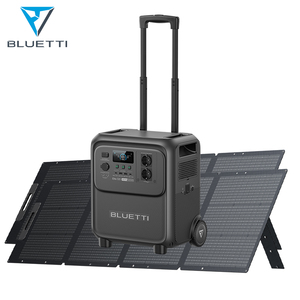
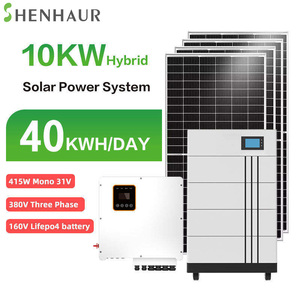
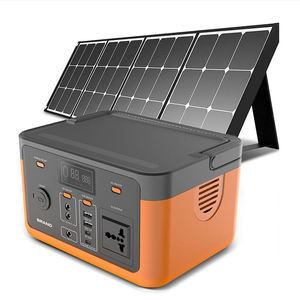
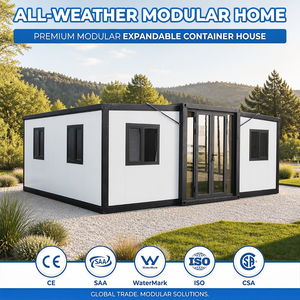
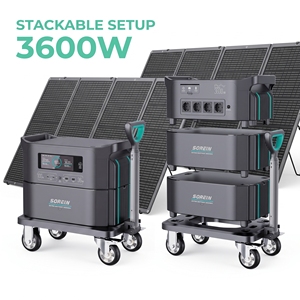

As Istanbul solidifies its position as a transcontinental industrial nexus, commercial operations, port logistics centers, and Organized Industrial Zones (OSB) across both the European and Asian sectors require scalable, resilient, and continuous power generation topologies. Horizontal Axis Wind Turbines (HAWT) remain the primary electro-mechanical standard for high-yield kinetic energy conversion, delivering aerodynamic efficiency close to the theoretical Betz Limit of 59.3%.
For B2B buyers, EPC contractors, and plant engineers evaluating HAWT manufacturing partners for installations serving Istanbul, structural durability, variable wind speed dynamic response, and seamless integration into hybrid microgrids (wind-solar-battery-diesel) represent the critical benchmarks of return on investment (ROI) and operational reliability.
Modern horizontal axis wind turbines designed for the distinct microclimates of the Marmara region utilize advanced NACA airfoil profiles optimized for both laminar and turbulent wind flows. Unlike vertical axis configurations, HAWT systems position the main rotor shaft and electrical generator directly aligned with wind vectors, maximizing swept rotor area and torque output.
Key aerodynamic features incorporated into our HAWT series engineered for Istanbul supply contracts include:
| Technical Parameter | Industrial HAWT Systems | Vertical Axis (VAWT) | Solar PV Arrays (Solar) | Hybrid Microgrid Systems |
|---|---|---|---|---|
| Aerodynamic Coefficient ($C_p$) | 0.42 – 0.50 (High) | 0.15 – 0.28 (Moderate) | N/A (Photon capture) | Optimized multi-source |
| 24/7 Continuous Yield Capability | High (Subject to wind velocity) | Moderate | Diurnal (Daylight only) | Maximum Continuous (99.99%) |
| Land Footprint per kW Output | Minimal Ground Area | Minimal Ground Area | Substantial Array Footprint | Compact Combined Footprint |
| Cut-In Wind Speed Threshold | 2.0 m/s – 2.5 m/s | 1.8 m/s – 3.0 m/s | N/A | 2.0 m/s Wind / Irradiance |
| Structural Seismic & Storm Resistance | IEC 61400-2 Class 1 Rated | Class 2 / Class 3 Rated | Wind Load Dependent | Heavy Industrial Certified |
From the industrial corridors of Gebze and İkitelli to remote offshore monitoring stations along the Black Sea coastline, tailored horizontal axis wind turbine systems deliver site-specific energy autonomy.
Major manufacturing corridors such as İkitelli OSB, Tuzla Kimya OSB, and Gebze Industrial Hubs experience substantial peak electrical tariffs and localized grid fluctuations. HAWT installations integrated alongside plant rooftops operate in peak-shaving configurations.
Direct grid-tie or hybrid DC-bus connections feed clean mechanical-to-electrical energy straight into plant distribution transformers, reducing reliance on grid energy during peak operational hours and lowering carbon footprints under EU export compliance guidelines.
Istanbul’s marine logistics infrastructure, including Ambarlı Port, Kumport, and Tuzla Shipyards, benefit from high, reliable maritime wind regimes. Coastal winds along the Sea of Marmara provide constant, high-density kinetic power.
Custom marine-spec HAWT units featuring C5-M anti-corrosion protection and IP67 sealed generator housings supply continuous power for automated gantry crane telemetry, perimeter security lighting, container reefers, and coastal navigational beacons.
The elevated ridge systems of Silivri, Çatalca, and Arnavutköy present exceptional wind resource profiles. Telecom operators and transmission system managers deploy off-grid horizontal wind turbines combined with high-capacity LiFePO4 battery banks.
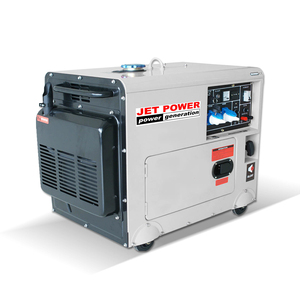
These self-sustaining hybrid power systems eliminate expensive diesel generator fuel runs, providing 99.999% uptime for cell towers, microwave repeaters, and environmental monitoring arrays located miles from the central grid utility connection.
Large infrastructure projects across the Marmara region—including highway expansion, municipal railway links, and urban regeneration sites—require rapidly deployable, heavy-duty electrical power.
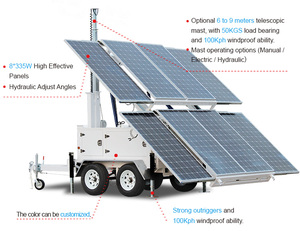
Mobile solar trailers and skid-mounted HAWT systems provide zero-emission power to 20ft modular prefabricated field offices, construction site lighting masts, power tools, and remote command centers without continuous noise or diesel exhaust pollution.
The renewable energy ecosystem in Istanbul and the broader Marmara region is undergoing rapid structural evolution. Driven by strict international decarbonization mandates, volatile fossil fuel prices, and national sustainability objectives under Turkey's National Energy Plan (YEKA framework), industrial procurement of horizontal axis wind technology has shifted from optional green initiative to core operational strategy.
Istanbul serves as Turkey's primary manufacturing and export engine to the European Union, encompassing steel, automotive, textiles, chemical, and machinery manufacturing. Under CBAM regulations, goods imported into the EU face stringent embedded-carbon tariffs.
To preserve export competitiveness, factories in Gebze, Hadımköy, and Dilovası are actively integrating direct-drive horizontal axis wind turbines and on-site microgrids. By generating zero-carbon electricity directly on facility grounds, manufacturers significantly lower their direct Scope 1 and indirect Scope 2 emissions, ensuring tariff compliance.
Unpredictable microclimatic patterns mean relying solely on single-source renewables creates energy security gaps. The prevailing trend across Istanbul’s industrial sector is the integration of Hybrid Microgrid Control Architectures.
Horizontal axis wind turbines generate maximum output during seasonal autumn/winter weather fronts and nighttime high-wind conditions—precisely when solar photovoltaic output drops to zero. Paired with advanced Lithium Iron Phosphate (LiFePO4) or AGM Battery Energy Storage Systems (BESS) and intelligent MPPT controllers, facilities achieve continuous base load stability without generator start-ups.
Given Istanbul's location near active fault lines (North Anatolian Fault), all structural infrastructure faces stringent seismic regulations under Turkish building codes. Modern industrial HAWT manufacturers serving this market must engineer self-supporting lattice or tubular steel towers capable of absorbing extreme ground acceleration while maintaining structural integrity during Class 1 hurricane-force wind loads.
Addressing technical, regulatory, logistics, and operational queries for project managers, EPC contractors, and factory procurement officers.
Since 2009, our engineering group—originating in Herefordshire, United Kingdom—has designed, built, and fielded severe-duty horizontal axis wind turbines, hybrid microgrids, and off-grid power solutions deployed across all seven continents. From North Sea offshore wind farm telemetry stations to mission-critical infrastructure in extreme climate zones, our systems are built for zero-downtime operations.
All turbines, specialized MPPT controllers, marine-grade enclosures, and monitoring nodes are designed, assembled, and endurance-tested in-house to ISO-aligned quality systems.
Our field deployment engineers hold Global Wind Organisation (GWO) offshore certifications, ensuring deep domain expertise whether servicing platform systems in ocean environments or industrial plants on land.
Every industrial build features full remote monitoring visibility. Track real-time generation metrics, battery state-of-charge, wind velocity logs, and system health alerts anywhere globally via encrypted web dashboards.
By controlling every facet of production—from aerodynamic rotor modeling using ERA5 reanalysis and Global Wind Atlas datasets to precision generator winding—we provide industrial clients in Istanbul with unmatched reliability, continuous technical backing, and factory-direct pricing.