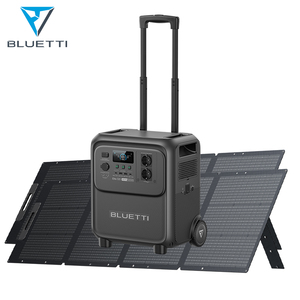
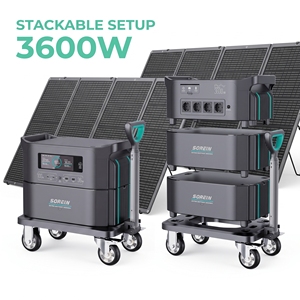
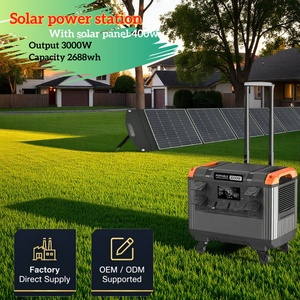
BLUETTI Large Capacity 3200Wh Solar Generator Unit
- 3,200Wh High-Safety LiFePO4 Storage Core
- Dual 120V / 230V Pure Sine Wave Output (1800W)
- Integrated MPPT High-Efficiency Solar Charging
- Rapid AC Grid Charge Capability

Engineering Tier-1 Industrial BESS, Modular Microgrids, and Heavy-Duty Solar Generators for U.S. Infrastructure, Utilities, and Commercial Resiliency.
Engineered to satisfy stringent U.S. safety standards (UL 9540, UL 1973, IEEE 1547). Explore our heavy-duty BESS systems, hybrid generators, and turnkey storage solutions engineered for North American deployment.
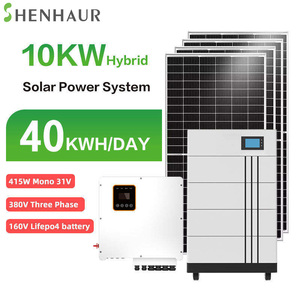
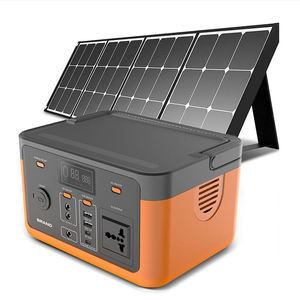
The United States clean energy sector is undergoing a massive structural transformation. Driven by grid instability, extreme weather events, and aggressive decarbonization mandates, Battery Energy Storage Systems (BESS) have transitioned from optional backup solutions to critical utility and commercial infrastructure assets. Navigating the domestic supply chain requires an authoritative understanding of technology, compliance, and strategic procurement.
Enacted under the 2022 Inflation Reduction Act, Section 48 Investment Tax Credits (ITC) allow U.S. project developers to capture up to 30% to 50% in federal tax offsets. Procuring energy storage hardware from certified manufacturers offering documented supply chain transparency is essential to qualify for the 10% Domestic Content Bonus. U.S. enterprise buyers prioritize suppliers capable of delivering UL-certified modular systems equipped with domestically compliant enclosures and power conversion systems (PCS).
Nickel Manganese Cobalt (NMC) chemistries are rapidly yielding ground to LiFePO4 (LFP) across stationary energy storage markets. LFP offers superior thermal stability, zero cobalt risk, and significantly longer cycle lives (exceeding 6,000 cycles at 80% Depth of Discharge). For commercial installations in California (CPUC Title 24), Texas (ERCOT), and the PJM interconnection, thermal runaway mitigation provided by LFP simplifies local fire marshal approvals under UL 9540A testing standards.
From desert telemetry stations in Arizona to offshore communications in the Atlantic, discover how specialized storage architectures solve localized grid and environmental challenges.
Commercial utilities in California, New York, and Illinois penalize industrial facilities with severe peak demand charges. Our high-voltage LFP energy storage containers continuously monitor building loads, discharging stored solar or off-peak power during 4 PM–9 PM peak rate windows to shave peak demand by up to 40%.
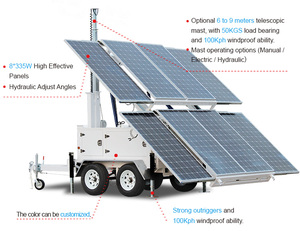
Off-grid telecommunications towers along interstate corridors and remote terrain require 100% continuous power. By combining hybrid wind turbines, solar arrays, and low-maintenance deep-cycle storage, operating costs are reduced by over 70% compared to diesel-only remote generator setups.
With hurricane risks in the Gulf Coast and winter freezing in ERCOT regions, facility engineers rely on islanded BESS microgrids. Featuring instant automatic transfer switches (ATS) and IEEE 1547 grid-interconnection compliance, our systems provide black-start recovery for hospitals, water treatment plants, and critical logistics nodes.
Combining ruggedized hardware design, stringent quality standards, and intelligent telemetry to deliver long-life energy autonomy in extreme environments.
Tested and validated for wind survival speeds exceeding 27 m/s (60 mph) and salt-spray offshore environments. Built with marine-grade hardware, IP65 enclosures, and automated internal heating for sub-zero operations.
Integrated Victron Cerbo GX and custom IoT controllers allow 24/7 remote monitoring of state-of-charge (SoC), cell voltages, temperature, and load profiles from anywhere in the world via encrypted cellular or satellite links.
We do not sell off-the-shelf guesswork. Our engineering team utilizes ERA5 weather reanalysis data blended with the Global Wind Atlas to accurately simulate year-round generation against your specific hourly load curve.
Direct answers regarding certifications, warranties, grid integration, and supply chain logistics for North American deployments.
For grid connection and commercial building permits, Authority Having Jurisdiction (AHJ) inspectors typically require system-level UL 9540 certification, battery module UL 1973 compliance, and inverter compliance with UL 1741 SA/SB (IEEE 1547-2018). Furthermore, thermal runaway fire propagation testing under UL 9540A is mandatory for high-density indoor or zero-lot-line commercial installations.
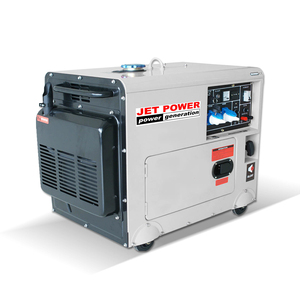
Our systems feature AC-coupled and DC-coupled hybrid inverter architectures. They interface seamlessly with existing onsite PV arrays and include programmable dry-contact generator auto-start signals. When battery SoC drops below a set threshold during extended dark periods, the system automatically fires the generator, charges the battery bank at peak fuel efficiency, and shuts the engine down once replenished.
Our Tier-1 LiFePO4 cells are rated for 6,000 continuous cycles at 80% Depth of Discharge (DoD) under nominal operating temperatures (25°C / 77°F). In a standard daily peak-shaving cycle, this translates to an operational service life of 15+ years. Standard enterprise warranties cover 10 years on battery modules and 5 years on inverter/power conversion components.
Yes. For cold-weather regions (Alaska, Northern U.S. states), our enclosures feature internal thermal insulation and automatic 24V/48V heating pads powered by incoming solar or wind generation to keep cells within safe charging parameters (above 0°C). For hot desert environments (Arizona, Texas), forced air-cooling or liquid cooling systems prevent thermal degradation up to ambient temperatures of 55°C (131°F).
Standard off-the-shelf portable units and standard 5kW–10kW systems ship from our regional fulfillment centers within 3 to 7 business days. Custom engineered enterprise solutions—such as 20ft containerized microgrid systems—require 6 to 10 weeks from final Single-Line Diagram (SLD) sign-off through factory acceptance testing (FAT) and sea/air freight delivery.
Speak directly with our senior system engineers. Send us your site coordinates, target load profile, or project specifications for a comprehensive resource analysis and budgetary quotation.