Designed & manufactured in Herefordshire, UK — shipping worldwide Mon–Thu 9–5 | Fri 9–4 | +44 (0)1981 241668

Direct Factory OEM/ODM Commercial, Industrial & Portable Power Solutions Fully Compliant with NYSERDA & FDNY Safety Standards
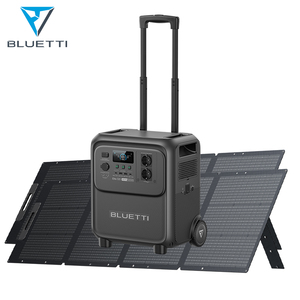
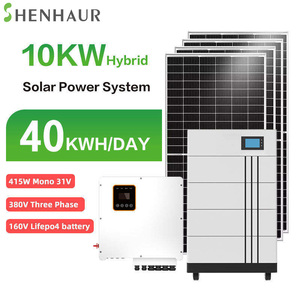
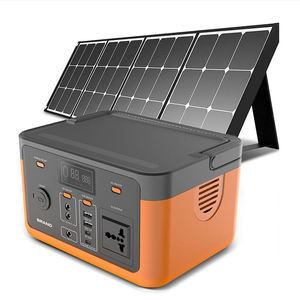
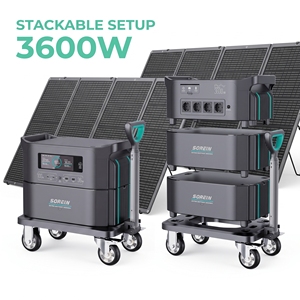
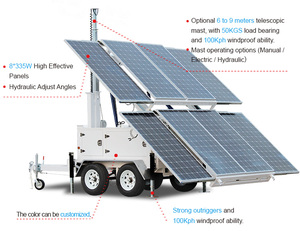
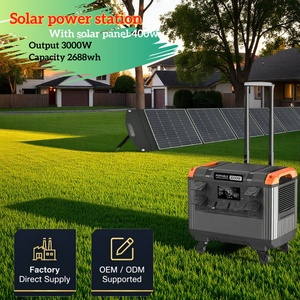
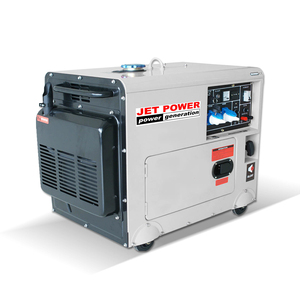
New York State is undergoing one of the most aggressive clean energy transformations in the United States. Under the statutory mandate of the Climate Leadership and Community Protection Act (CLCPA), New York is legally committed to achieving 70% renewable electricity by 2030 and a 100% zero-emission power grid by 2040. Central to achieving these goals is the expanded state energy storage target of 6 Gigawatts (GW) by 2030, overseen by the New York State Energy Research and Development Authority (NYSERDA) and the New York Public Service Commission (PSC).
For commercial facilities, industrial plant managers, utility planners, and EPC contractors operating across New York City (5 Boroughs), Long Island, the Hudson Valley, and Upstate NY, battery energy storage systems (BESS) are no longer merely backup systems. They represent vital assets for demand charge management, value of distributed energy resources (VDER) monetization, microgrid resilience, and regulatory compliance.
Information Gain Insight: Deploying energy storage within Consolidated Edison (ConEd) territory (Zone J - NYC) requires navigating specialized tariff structures like Rider Q and the Demand Management Program (DMP). Standard off-the-shelf ESS equipment frequently fails to meet local grid interconnection protocols or stringent FDNY safety mandates. Custom factory-engineered solutions bridging high-C-rate discharge capabilities with UL 9540 unit-level safety testing are imperative for commercial viability.
Engineers and procurement heads sourcing battery energy storage systems serving New York must design around three core localized market forces:
Custom Energy Storage Systems Engineered to Resolve Local Grid Vulnerabilities & Operating Conditions
Custom floor-by-floor containerized or modular indoor battery systems engineered for Manhattan and Brooklyn commercial real estate. Designed with compact physical footprints, zero off-gassing under nominal conditions, and seamless interface with building management systems (BMS) via Modbus TCP/IP for ConEd peak-load response.
High-capacity 3-phase hybrid battery systems integrated with farm-scale solar arrays in the Hudson Valley and Central NY. Facilitates VDER Value Stack optimization, allowing growers and light manufacturing plants to store excess solar generation during daytime hours and export to the NYISO grid during high-locational marginal price (LMP) intervals.
Heavy-duty, salt-fog resistant marine-grade enclosures servicing telecom towers, optical repeater sites, and offshore wind logistics bases in Montauk and Long Island Sound. Featuring IP66 enclosures, stainless steel hardware, and methanol/generator hybrid auto-start capabilities to sustain 100% uptime during winter storms.
Towable high-mast solar generator trailers and rapid-deployment 5kW-50kW power stations utilized by New York general contractors, municipal utility crews, and emergency management teams. Replaces noisy, emission-heavy diesel generators in urban noise-restricted zones across NYC.
As a global energy storage manufacturer and specialized OEM/ODM factory, our production facilities integrate precision mechanical design, thermal fluid dynamics modeling, and cell-level chemistry research. We manufacture systems purpose-built for the operational rigorousness required by North American standards.
We exclusively utilize premium Grade-A Lithium Iron Phosphate (LiFePO4) prismatic cells with automated robotic laser welding. LiFePO4 offers unmatched thermal stability, eliminating thermal runaway risks inherent to older Nickel Manganese Cobalt (NMC) formulations. Rated for >6,000 deep discharge cycles at 80% DOD.
Our proprietary Battery Management System (BMS) continuously monitors cell voltage, internal resistance, active balancing, and dual-zone temperatures. Integrated 4G/5G IoT gateways provide real-time cloud monitoring, automated system alerts, and firmware updates over-the-air (OTA).
Every industrial unit manufactured for shipment to New York undergoes rigorous quality assurance aligned with UL 1973 (cell/pack safety), UL 9540 (system safety), UL 9540A (fire propagation testing), IEEE 1547 (grid interconnection), and FCC Part 15 Class A emissions standards.
From custom 19-inch rack-mounted indoor battery units to 40ft containerized 2.5MW/5MWh utility-scale storage blocks, our engineering team provides complete CAD drawing, finite element analysis (FEA), local grid code compliance review, and white-label branding.
Technical, Regulatory, and Logistics Guidance for BESS Installations in New York State
Installing energy storage in New York City requires compliance with FDNY Fire Code RCNY §608-01, NYC Department of Buildings (DOB) approval, and ConEdison SIR (Standard Interconnection Requirements). System level listing to UL 9540 and successful completion of UL 9540A thermal runaway propagation testing are strictly mandatory for all battery installations within the five boroughs.
Commercial electricity customers under ConEdison tariffs pay significant monthly demand charges based on their single highest 15-minute load peak. Our energy storage systems utilize automated peak-shaving algorithms that detect facility load spikes and instantaneously discharge battery power, flattening the facility's demand profile and delivering up to 40% reductions in peak demand costs.
Yes. Commercial and industrial projects installed in New York qualify for the Federal Investment Tax Credit (ITC) under IRA Section 48, offering a base 30% tax credit, with potential bonuses for energy communities or domestic content. Furthermore, NYSERDA’s NY-Sun and Retail Energy Storage Incentive programs provide direct per-kWh capacity cash incentives for energy storage deployed alongside solar or stand-alone.
Our cold-weather outdoor energy storage cabinets feature liquid thermal management loops, internal silicone heating blankets, and multi-layer aerosol insulation rated for operational performance from -30°C to +55°C. The smart BMS dynamically pre-heats battery cells using incoming solar or grid energy prior to initiation of high-rate charging cycles.
Standard OEM/ODM manufacturing lead time is 15 to 25 business days depending on order customization and total megawatt-hour capacity. Freight to the Port of New York and New Jersey (PNYNJ) typically takes 18 to 22 days via ocean shipping. Express air freight options are available for urgent portable units or critical telemetry replacements.
Whether you require a single 3kW portable solar generator, a 10kW hybrid residential kit, or a containerized commercial microgrid engineered for FDNY compliance, our factory team is ready to deliver tailored solutions.