Designed & manufactured in Herefordshire, UK — shipping worldwide Mon–Thu 9–5 | Fri 9–4 | +44 (0)1981 241668

As a premier OEM/ODM drone charger factory and off-grid power manufacturer, we provide heavy-duty energy solutions engineered for unmanned aerial vehicle (UAV) docking nests, agricultural spraying drones, and remote inspection fleets operating across Egypt.
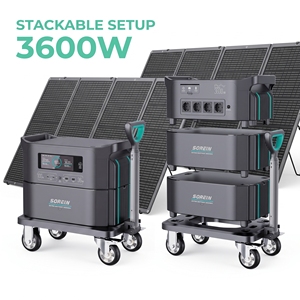
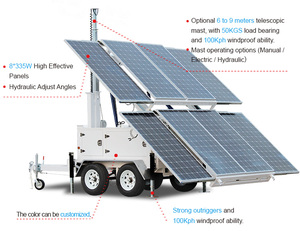
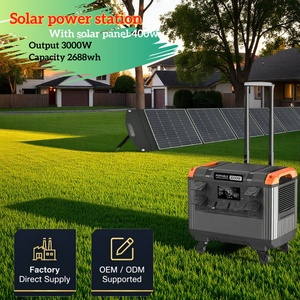
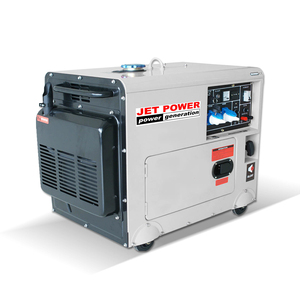
Egypt is currently undergoing a massive economic transformation driven by national modernization projects under Egypt Vision 2030. From the construction of the New Administrative Capital (NAC) to the agricultural expansion in Toshka Lakes and the continuous expansion of the Suez Canal Economic Zone (SCZONE), commercial and industrial drone adoption is accelerating at an unprecedented rate of over 34% year-over-year.
However, operating unmanned aerial vehicles (UAVs) in Egypt presents severe environmental and logistical hurdles. Standard commercial drone chargers manufactured for temperate regions fail prematurely when subjected to Egypt's ambient summer temperatures exceeding 50°C, airborne fine silica dust, and unpredictable grid power in rural development corridors.
As a specialized drone charger factory and direct B2B supplier, we manufacture enterprise-grade charging infrastructure engineered specifically to withstand northern African desert conditions. Our power architectures integrate smart thermal management, dust-proof IP65/IP67 enclosures, wide-input voltage stabilization, and direct coupling to solar energy storage systems.
Our factory customizes industrial charging stations and off-grid generator systems for key strategic sectors driving Egypt’s economic expansion.
Heavy-payload crop spraying drones (e.g., 30L-50L capacity) demand intense continuous power. Our high-output fast-charging hubs replenish giant 30,000mAh LiPo/LiFePO4 battery packs in under 12 minutes, keeping agricultural fleets operating uninterrupted across millions of feddans.
Spanning over 37 km² in Aswan, Benban is one of the world's largest solar installations. Autonomous "Drone-in-a-Box" docking stations powered by our specialized solar-hybrid chargers enable 24/7 automated thermal inspection of photovoltaic strings without manual battery changes.
Navigational monitoring and security along the Suez Canal mandate continuous UAV presence. Our marine-grade, salt-corrosion-resistant charging systems operate on shore sites and marine vessels, ensuring instant launch capability for maritime inspection drones.
With hundreds of active skyscrapers and infrastructure sites, contractors deploy survey drones for daily progress mapping. Our mobile solar trailer stations provide immediate off-grid power to site trailers before grid connectivity is established.
Monitoring vast desert borders and oil/gas pipelines in the Western Desert requires ruggedized, long-autonomy charging hubs. Our dual diesel-solar hybrid stations maintain operational readiness even in zero-light, extreme weather conditions.
Delicate heritage mapping around Luxor and Giza requires silent, zero-emission charging systems. Our silent LiFePO4 battery banks offer clean, vibration-free energy that protects delicate archaeological surrounding zones.
Choosing the right factory charger architecture dictates operational downtime, battery cycle life, and total cost of ownership (TCO) in desert environments.
| Engineering Parameter | Standard Commercial Chargers | Our Factory Industrial Systems (Egypt Spec) |
|---|---|---|
| Operating Temp Range | 0°C to 40°C (Derates heavily above 35°C) | -20°C to +60°C (Active liquid/chiller heat sink) |
| Sand & Particle Protection | Open mesh vents (Prone to sand ingress) | IP65 / IP67 Fully Sealed dual-chamber cooling |
| Battery Chemistry Support | Standard LiPo / Li-ion charging profiles | Multi-Chemistry: LiFePO4, Solid-State, High-HV LiPo |
| Input Voltage Flexibility | Strict 220V ±5% (Trip prone on bad grids) | Ultra-Wide 90V - 290V + Generator Auto-Sync |
| Telemetry & IoT Control | Basic LED lights or local LCD | 4G/5G Cloud BMS, Modbus RS485, Remote Reboot |
| Charge Turnaround (30Ah Pack) | 45 to 60 Minutes | 10 to 15 Minutes (High C-rate balanced charging) |
Founded on rigorous industrial design protocols, our engineering team designs and manufactures charging hubs, charge controllers, and battery management systems (BMS) under unified ISO9001 and CE quality management systems.
We work directly with UAV manufacturers, defense contractors, and system integrators to build custom docking station charging boards, custom voltage output profiles (12V to 100V+), and custom physical form factors.
Our power systems are field-tested in high-solar, high-dust environments across North Africa and the Middle East. Systems feature built-in lightning protection, high-humidity corrosion protection, and zero-downtime redundancy.
Our desert-spec drone chargers utilize isolated dual-chamber cooling systems and high-grade industrial-rated semiconductors. Heat is moved out of internal sealed electronics via copper heat pipes and external heat sinks, preventing thermal shutdown even under direct sun in Aswan or Toshka.
Yes. All our solar-hybrid power units and portable stations incorporate advanced Maximum Power Point Tracking (MPPT) solar charge controllers. They accept direct DC solar panel inputs up to 150V-500V, maximizing solar energy conversion efficiency during field deployment.
We provide comprehensive export documentation, including Certificate of Origin (CO), CE/RoHS test reports, MSDS, and UN38.3 transport certificates for battery systems. We regularly ship via major Egyptian maritime gateways including Alexandria Port, Port Said, and Sokhna Port.
Absolutely. As a direct manufacturer, our software team can program custom CAN-bus communication protocols, SMBus profiles, and tailored constant-current/constant-voltage (CC/CV) curves to sync perfectly with your fleet's smart battery system.
We exclusively use Grade-A Lithium Iron Phosphate (LiFePO4) cells for our energy storage hubs. LiFePO4 offers superior thermal stability in hot climates, high intrinsic safety, and over 4,000 deep discharge cycles compared to conventional ternary lithium batteries.
Yes. We supply OEM charging modules designed specifically for integration into automated drone nests, featuring contact plate charging control, battery temperature safety monitoring, and remote dry-contact relay triggers via Modbus/4G telemetry.
Speak directly with our senior power systems engineers to custom-size your drone charging infrastructure, calculate solar array autonomy, or arrange direct factory supply to Egypt.