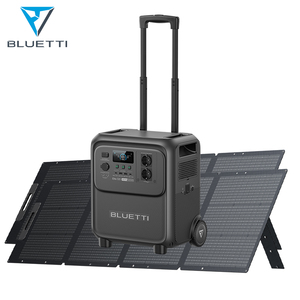
BLUETTI Large Capacity 3200 Wh Portable Power Station Supports Solar Charging 120V 230V Solar Generator 1800w Solar Power System
Capacity: 3200Wh LiFePO4
Output: 1800W Pure Sine Wave
Dual Voltage: 120V/230V Compatible

Engineered for high humidity, salt-spray resilience, and heavy tropical continuous loads. Browse our certified supply lineup available for expedited shipping across Thailand.
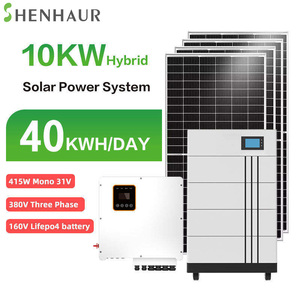
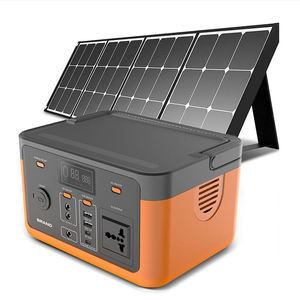
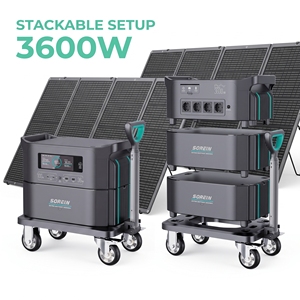
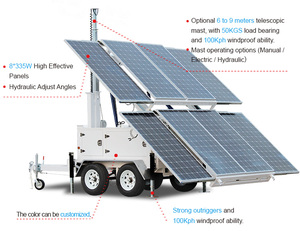
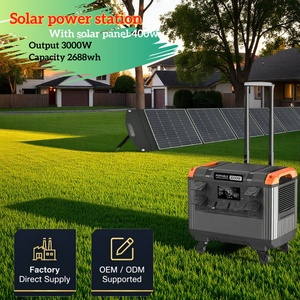
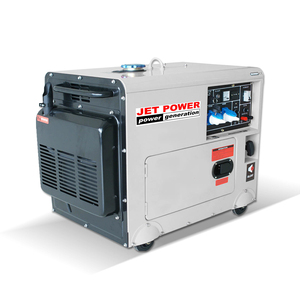
Thailand's accelerated industrialization under the Eastern Economic Corridor (EEC) initiative, combined with rapid growth in eco-tourism, telecommunications, and agricultural logistics, has driven unprecedented demand for autonomous power solutions. As grid stability outside major metropolitan hubs like Bangkok, Chiang Mai, and Chonburi fluctuates during peak monsoon seasons, enterprise specifiers turn to Chinese power unit manufacturers as their primary engineering partners.
Chinese OEM and ODM manufacturers lead the global market in integrating advanced LiFePO4 battery chemistry, high-efficiency MPPT controllers, and heavy-duty diesel back-ups into unified power platforms. Under the ASEAN-China Free Trade Area (ACFTA), Thai importers benefit from preferential tariff treatments via Form E certificates, reducing duty rates to zero on specified energy storage units, mobile solar trailers, and hybrid generators.
However, securing maximum ROI requires careful evaluation of technical specifications tailored to Southeast Asia’s extreme tropical environment—where ambient temperatures frequently exceed 40°C and relative humidity hovers above 85% year-round.
*Data sourced from regional deployment logs across Chonburi, Phuket, and Rayong industrial zones.
From coastal island resorts to high-density industrial plants, Chinese manufactured power units provide critical operational continuity across Thailand's primary economic sectors.
Primary Hubs: Koh Samui, Koh Phangan, Koh Chang, Phuket, Krabi.
Off-grid luxury resorts rely on zero-emission hybrid power systems to replace noisy, polluting diesel gensets. Deploying all-in-one solar energy storage systems (5kW–50kW) guarantees silent overnight operation, running air-conditioning and water desalination plants without disrupting guests.
Engineering Requirement: Marine-grade C5 anti-corrosion cabinet coating to withstand high ocean air salinity.
Primary Hubs: Rayong, Chonburi, Chachoengsao Industrial Estates.
High-tech electronics and automotive assembly plants in the Eastern Economic Corridor utilize large-capacity industrial UPS power stations (OTHC-T30 & custom LiFePO4 racks). These units bridge voltage sags and grid flickers during monsoon thunderstorms, safeguarding SMT manufacturing lines from costly resets.
Engineering Requirement: Sub-10ms transfer time with Modbus/RS485 interface for SCADA integration.
Primary Hubs: Chiang Rai, Mae Hong Son, Kanchanaburi Border Zones.
5G cellular repeaters and border telemetry equipment situated on rugged terrain rely on mobile solar power trailers and 10kVA silent diesel generators. Integrated dual-generator management provides continuous power autonomy even during prolonged tropical cloud cover.
Engineering Requirement: Remote IoT telemetry monitoring via 4G/Satellite for real-time fuel and SOC monitoring.
Primary Hubs: Bangkok Mass Transit Extensions, High-Speed Rail Corridors.
Nighttime construction crews working on elevated railway networks require mobile lighting and high-output tool power. Foldable high-mast solar power trailers (4KW-5KW) eliminate heavy diesel refueling logistics while offering silent operation in urban residential zones.
Engineering Requirement: Ruggedized off-road trailer suspension and hydraulic mast deployment.
Primary Hubs: Chanthaburi (Fruit Processing), Samut Sakhon (Shrimp Farming).
Temperature-sensitive tropical fruit cold storage and intensive aeration pumps in aquaculture ponds require continuous power. Loss of grid power quickly leads to inventory spoilage. Hybrid 10kW–50kW solar-diesel backup packages guarantee zero-downtime operation.
Engineering Requirement: Automatic Generator Start (AGS) triggering upon battery depth-of-discharge thresholds.
Primary Hubs: Nationwide Emergency Readiness Fleets.
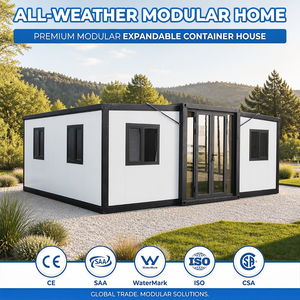
During severe flooding in central and southern provinces, fast-deployable mobile power stations (such as modular expandable container houses equipped with LiFePO4 generators) serve as tactical command centers and field medical clinics.
Engineering Requirement: Rapid plug-and-play setup without requiring specialized rigging crews.
Understanding Thailand's evolving energy regulations, ESG policies, and technical standards guarantees long-term compliance and operational efficiency.
Thai industrial specifiers are rapidly phasing out traditional flooded AGM/lead-acid batteries in favor of Lithium Iron Phosphate (LiFePO4). LFP batteries withstand heat far better, maintaining a 6,000+ cycle life at 35°C ambient temperatures without thermal runaway risk.
The Thai Industrial Standards Institute (TISI) and the Provincial Electricity Authority (PEA) have tightened grid-tie compliance. Microgrid systems must incorporate certified anti-islanding protection and rapid shutdown capabilities to gain approval for commercial operation.
Pure diesel or pure solar solutions are being replaced by integrated Solar + Storage + Genset hybrids. Smart MPPT controllers dynamically throttle diesel generators based on real-time solar irradiance, lowering fuel costs by up to 65% in off-grid facilities.
With remote projects located across isolated islands or dense jungle regions, Thai engineering teams require cloud-integrated BMS platforms. Real-time telemetry monitoring over 4G networks allows proactive maintenance long before power interruptions occur.
Manufacturing facilities exporting from Thailand to the EU or US face strict Scope 1 and Scope 2 carbon audits. Replacing fossil-fuel back-up generators with clean solar generators directly supports corporate carbon neutrality targets.
Commercial buyers increasingly request containerized, all-in-one skid-mounted power systems. Pre-wired 20ft container houses featuring integrated climate-controlled battery racks dramatically lower onsite civil installation expenses.
Combining British engineering precision standards with China's world-leading battery manufacturing scale.
Our manufacturing matrix delivers high-grade off-grid wind, solar, and diesel systems directly from certified factory facilities to Bangkok, Laem Chabang, and regional job sites. Every power unit undergoes rigorous multi-stage quality control protocols engineered specifically for tropical deployment.
From initial site load calculation to door-to-door logistics at Laem Chabang port, our dedicated engineering team works with your technical specifiers every step of the way.
We run historical solar irradiance data and load profiles tailored to your Thai facility coordinates.
Systems are assembled, factory burn-in tested for 72 hours, and tropical-proofed before packing.
DDP/FOB shipping handling complete customs clearing directly to your regional warehouse.
Essential technical, commercial, and shipping questions answered by our regional power systems engineering team.
Under the ACFTA agreement, power equipment exported from China to Thailand qualifies for duty exemptions when accompanied by a Certificate of Origin (Form E) issued by Chinese customs authorities. Our logistics department handles all documentation so your Thai customs clearance broker can clear goods at Laem Chabang port or Bangkok Port with 0% tariff rates on applicable tariff codes (HS 8507 & HS 8502).
Standard electronic gear fails prematurely under tropical ambient temperatures (above 40°C) and continuous 85%+ relative humidity. Our tropicalized builds incorporate conformal-coated PCBs, IP65/IP67 sealed battery enclosures, smart thermal management with liquid cooling or high-CFM brushless fans, and anti-corrosive powder coatings certified to withstand intense coastal salt-spray environments.
We provide a comprehensive 5-year warranty on LiFePO4 battery storage systems and a 2-year warranty on inverter electronics and diesel genset assemblies. Fast-moving spare components (BMS boards, control modules, relays) are kept in stock and can be dispatched via air freight directly to your service centers in Bangkok or regional project locations within 3-5 working days.
Yes. All hybrid power stations and all-in-one solar generators come equipped with dry-contact Automatic Generator Start (AGS) terminals. When the LiFePO4 battery bank drops below your configured State of Charge (SOC)—for example, during consecutive rainy days—the BMS automatically signals your diesel backup generator to start, run for a programmed recharge cycle, and cleanly shut down when battery levels reach 90%.
Standard lead times for customized production run between 15 to 25 calendar days, depending on unit capacity. Maritime transit from Shenzhen/Ningbo ports to Laem Chabang port takes approximately 7 to 10 days. We accept standard international commercial payment structures including T/T (Telegraphic Transfer) and 100% Confirmed Irrevocable Letters of Credit (L/C at sight) for enterprise bulk orders.
Whether you need single portable units for field operations or containerized megawatt storage for industrial facilities in Thailand, our engineering team is ready to deliver precise factory quotes within 24 hours.