Designed & manufactured in Herefordshire, UK — shipping worldwide Mon–Thu 9–5 | Fri 9–4 | +44 (0)1981 241668

Engineered specifically for heavy-payload enterprise UAVs, automated docking stations, and remote off-grid operations across Peninsular and East Malaysia.
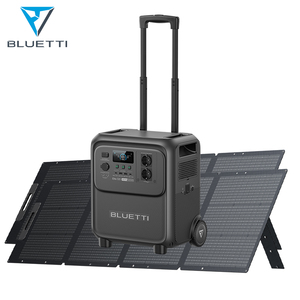
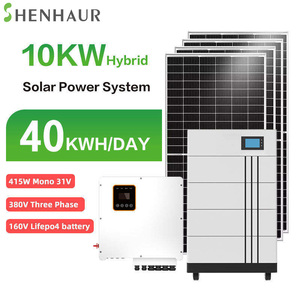
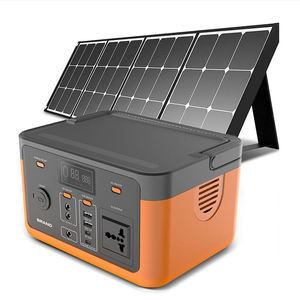

Analyzing the strategic growth drivers, regulatory imperatives, and environmental challenges shaping industrial drone charging infrastructure across Malaysia.
Malaysia’s commercial unmanned aerial vehicle (UAV) market is undergoing a rapid paradigm shift from manually piloted operations to autonomous beyond-visual-line-of-sight (BVLOS) deployments. Under directives guided by the Civil Aviation Authority of Malaysia (CAAM) Directive 6011, enterprise operators in infrastructure inspection, perimeter security, and precision agriculture are aggressively adopting autonomous "Drone-in-a-Box" (DiaB) systems.
However, continuous autonomous flight paths require robust local power networks. Standard grid connections are rarely available in remote palm oil plantations in Sabah and Sarawak, or across off-shore coastal monitoring nodes. Enterprise buyers require advanced China drone charging suppliers capable of delivering high-efficiency, solar-integrated charging stations that provide active thermal cooling, CAN-bus telemetry integration, and high cycle resilience under intense tropical stress.
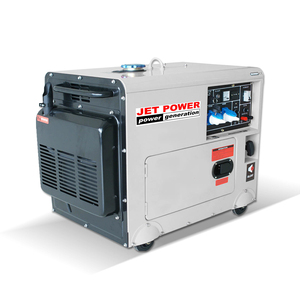
With Malaysian enterprise compliance aligning with National Energy Transition Roadmap (NETR) goals, drone fleets are transitioning away from noisy, high-emission petrol generators. High-efficiency MPPT solar drone charging hubs now supply 80%+ of daily field power requirements.
Malaysian importers face strict enforcement by the Malaysian Communications and Multimedia Commission (MCMC) and SIRIM QAS International regarding electromagnetic compatibility (EMC) and wireless telemetry frequencies used in smart battery management systems.
Malaysia’s tropical climate—characterized by ambient temperatures exceeding 35°C and relative humidity above 85%—accelerates thermal runaway risks during 2C-4C ultra-fast drone charging cycles. Active cooling infrastructure has become a non-negotiable specification.
Technical benchmarks for enterprise buyers evaluating China drone charger exporters for mission-critical deployments.
Standard consumer power stations often output static DC currents that degrade expensive high-voltage (12S/14S/18S) LiPo and LiFePO4 smart flight batteries. Our engineered industrial drone chargers incorporate dedicated CAN-Bus / SMBus telemetry link interfaces. The charging station directly negotiates voltage parameters, individual cell delta limits, and internal resistance (IR) variations with the UAV’s Battery Management System (BMS) in real-time.
| Performance Spec | Standard Commercial Generator | Industrial Solar Fast-Charger (Our System) | Impact on Enterprise UAV Fleet |
|---|---|---|---|
| 12S (44.4V) Charge Time | 60 - 80 Minutes | 18 - 25 Minutes (3C Rate) | 70% reduction in fleet downtime between flights. |
| Thermal Control | Passive Air Cooling (Risky) | Peltier / Refrigerated Liquid Ducting | Prevents cell swelling; extends battery life to 800+ cycles. |
| Power Quality | Modified Sine (THD > 5%) | Pure Sine Wave (THD < 1.5%) | Protects sensitive ground control stations & radar units. |
| Enclosure Protection | IP20 / Standard Sheet Metal | IP67 Sealed Casing / Anti-Corrosion | Survives tropical downpours & coastal salt-air exposure. |
By combining MPPT (Maximum Power Point Tracking) solar solar input efficiency of 99.2% with adaptive pulse-charging algorithms, our charging platforms allow drone inspection fleets in Malaysia to maintain near continuous airtime without overheating battery packs.
How targeted industries leverage our off-grid drone power systems to maintain operational continuity in rugged environments.
Location Challenge: Extensive palm oil plantations in Pahang, Perak, and Sabah lack grid power. Heavy-payload spraying drones (such as 30L-50L capacity UAVs) consume battery power within 10-15 minutes of flight.
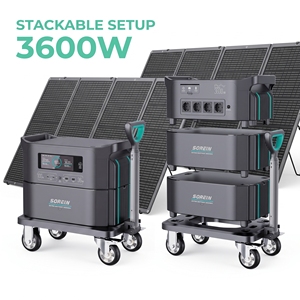
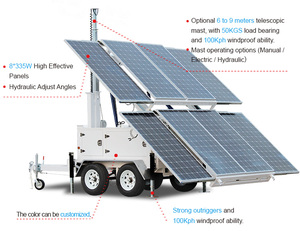
Solution Deployment: Mobile Trailer Fast-Chargers and 5KW Portable Solar Generators. Mobile service crews recharge 4 to 8 heavy-duty batteries simultaneously right at the field perimeter, sustaining non-stop crop spraying schedules.
Location Challenge: Maritime surveillance UAVs operating from coastal bases or offshore platforms face high humidity, airborne salt spray, and extreme sun exposure.
Solution Deployment: IP67 weather-sealed off-grid hybrid power systems equipped with marine-grade anti-corrosion coatings and dual-redundant UPS backup, ensuring non-stop coastal monitoring against unauthorized vessel intrusion.
Location Challenge: Transmission corridors crossing the dense Titiwangsa Mountain Range make manual grid line inspection hazardous and labor-intensive.
Solution Deployment: Autonomous Drone-in-a-Box stations fitted with remote solar-hybrid charging hubs. Inspection UAVs automatically dock, recharge via rapid contact plates, and stream thermal data directly to central engineering hubs in Kuala Lumpur.
Combining British engineering heritage and rigorous quality protocols with China's world-leading battery tech supply chain scale.
Unlike trading companies or simple assemblers, our manufacturing units operate under strict ISO 9001, ISO 14001, and OHSAS 18001 certifications. Every drone charger unit and solar generator undergoes 100% full-load burn-in testing for 72 consecutive hours inside environmental thermal chambers set to 50°C to simulate extreme Malaysian heat.
Our senior power system engineers are available to review your flight load profiles and site location coordinates.
Get CatalogAddressing common technical, customs, regulatory, and operational queries from enterprise importers in Malaysia.
Answer: Industrial drone charging stations imported into Malaysia must comply with electrical safety and radio frequency emission standards. Our products are pre-tested to IEC 62368-1 (Audio/Video and IT safety standards) and CE-EMC directives. When importing through Port Klang or Penang Port, we provide full technical documentation dossiers required by SIRIM QAS International and the Energy Commission (Suruhanjaya Tenaga) for CoA (Certificate of Approval) release.
Answer: Extreme thermal buildup is the primary cause of battery degradation in Malaysia. Our specialized industrial chargers feature dynamic thermal throttling algorithms connected to external cell temperature probes or CAN-bus BMS sensors. If cell temperatures cross 45°C, the charger automatically reduces amperage output or engages integrated high-velocity cooling fans (or optional liquid-chilled docking pads) until optimal safety thresholds are restored.
Answer: Yes. Our hybrid off-grid series features high-voltage built-in MPPT (Maximum Power Point Tracking) solar charge controllers. You can directly plug monocrystalline solar arrays (up to 1800W–5000W depending on model) into the station. The system intelligently prioritizes solar energy to charge both internal buffer batteries and fast-charge attached flight packs.
Answer: Standard LCL/FCL sea shipments from our Shenzhen or Ningbo ports to Port Klang (Kuala Lumpur) or Pasir Gudang (Johor) typically take 7 to 12 days transit time. Direct air-freight options via KLIA are available for urgent project spare parts with a lead time of 3 to 5 business days.
Answer: Absolutely. As a direct manufacturer, we provide ODM/OEM modifications. Whether your drone platform relies on standard 6S (22.2V), 12S (44.4V), 14S (51.8V), or high-voltage 18S solid-state packs, we can calibrate the output voltage range, current limits, and proprietary plug pinouts (e.g., AS150, XT90, Amphenol, or automated docking contact plates).
Answer: Under the ASEAN-China Free Trade Area (ACFTA) agreement, importing drone chargers and power stations accompanied by an official Form E Certificate of Origin qualifies Malaysian buyers for 0% to reduced import tariff duties. We issue verified Form E documentation with every export shipment.
Request our comprehensive 2026 Industrial Drone Charger & Off-Grid Solar Station Product Catalog. Get direct factory-direct pricing, full technical CAD schematics, and customized project quotes within 24 hours.