Designed & manufactured in Herefordshire, UK — shipping worldwide Mon–Thu 9–5 | Fri 9–4 | +44 (0)1981 241668

Explore our high-performance off-grid power stations, micro-wind turbines, and hybrid solar generator systems engineered for London commercial, industrial, and residential projects.
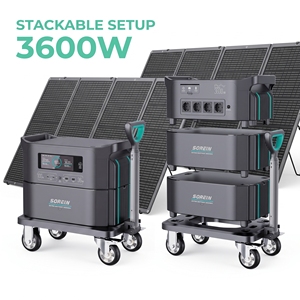
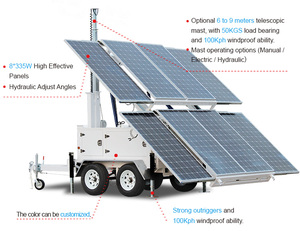
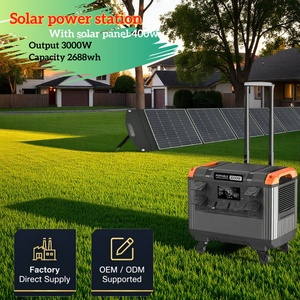
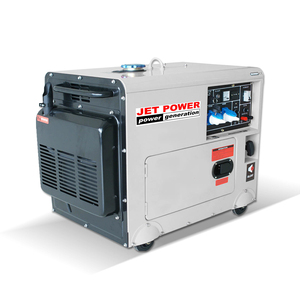
Deploying small-scale wind generators within Greater London presents a unique nexus of aerodynamic, regulatory, and mechanical challenges. Unlike open offshore locations or flat rural topographies, urban and suburban London is characterized by high surface roughness, turbulent air eddies, thermal lift variations along the Thames Corridor, and stringent municipal acoustic controls. As a primary manufacturer supplying the UK commercial, industrial, and residential sectors, our CE Certified and UKCA Compliant micro-wind turbines are custom-architected to transform turbulent urban wind streams into stable, high-efficiency electrical energy.
To successfully integrate wind power into Greater London's grid and off-grid infrastructure, micro-wind generator systems must achieve three fundamental engineering criteria: low cut-in wind speed sensitivity, structural compliance with UK BS EN 61400-2 safety standards, and active acoustic dampening to comply with strict municipal noise limits (below 37 dBA at boundary perimeters). Through advanced aerodynamic modeling and state-of-the-art manufacturing at our UK facilities, our turbines deliver unmatched energy capture efficiency even during calm, overcast winter months when solar irradiance drops across Southern England.
Turbulence intensity (TI) in central and suburban London frequently exceeds 22%, compared to less than 8% in marine environments. Traditional high-RPM horizontal-axis wind turbines (HAWT) suffer severe fatigue loads and stall phenomena when subjected to rapid wind direction shifts caused by urban obstacles. Our engineering team has addressed this structural issue through two specialized blade rotor configurations:
Selecting the optimal turbine architecture for London commercial, off-grid telemetry, and residential microgeneration applications.
| Performance Metric | Horizontal Axis (HAWT - LE Series) | Vertical Axis (VAWT - QuietWind) | Hybrid Wind-Solar System |
|---|---|---|---|
| Aerodynamic Efficiency (Cp) | High (0.40 - 0.46) | Moderate (0.28 - 0.35) | Optimized Year-Round Yield |
| Urban Turbulence Resistance | Moderate (Requires Furling) | Exceptional (360° Omnidirectional) | High (Multi-Vector Input) |
| Acoustic Footprint at 10m | 38 - 42 dBA | <32 dBA (Near Silent) | 32 - 38 dBA |
| Cut-In Wind Speed | 2.5 m/s (5.5 mph) | 1.8 m/s (4.0 mph) | Dynamic Solar/Wind Switch |
| UK Planning Permission Profile | Requires Permitted Clearance | Complies with PDR Micro-Wind | Streamlined Urban Approval |
| Primary London Application | Open Telemetry, Coastal Docklands | Rooftops, Urban Low-Emission Sites | 24/7 Off-Grid Critical Power |
Our CE-certified wind generators and hybrid power hubs power critical commercial, infrastructure, and green building assets throughout the London metropolitan area.
The Thames Estuary funnel creates a consistent wind channel blowing through East London. Commercial logistics parks and distribution hubs in Royal Docks, Barking, and Tilbury utilize our 3kW to 10kW CE-certified wind generators coupled with LiFePO4 energy storage to power 24/7 security systems, automated gate entries, and exterior high-mast LED lighting without grid draw.
For TfL traffic monitoring stations, air quality sensing networks, and Network Rail trackside telemetry points along London rail corridors, grid extensions can cost over £25,000 per site. Our micro wind generators (such as the LE-v150 storm series) provide continuous, autonomous 12V/24V power, engineered for marine-grade anti-corrosion and sub-zero operational reliability.
Architects specifying green building retrofits in Central London (BREEAM Outstanding standard) rely on our low-vibration vertical axis wind generators. Integrated directly into building energy management systems (BEMS), these generators utilize rooftop updrafts, supplying supplementary renewable energy to common area elevator pumps, HVAC sensors, and common corridor power networks.
With London’s Non-Road Mobile Machinery (NRMM) low-emission mandates, diesel generators face stiff daily penalties and operational bans. Our mobile hybrid wind-solar trailer units (4kW-5kW) provide instant, zero-emission site power for site office welfare pods, tool charging kiosks, and perimeter security mast lights without noise pollution or carbon exhaust.
Key regulatory framework shifts and decarbonization targets influencing procurement strategies across London and the South East of England.
London’s target to reach Net Zero Carbon by 2030 requires aggressive decentralization of clean energy generation. Micro-wind generators bridge the critical winter generation gap when solar irradiance drops by over 75% across the UK capital.
UK Power Networks (UKPN) grid connection delays in Greater London now extend up to 5-7 years for commercial connections. Private micro-wind hybrid systems empower commercial operators to bypass grid constraints via self-consumption.
Part L of the UK Building Regulations and MEES (Minimum Energy Efficiency Standards) require commercial property owners to improve EPC ratings. Wind microgeneration yields measurable energy offset credits for urban building owners.
Designing, assembling, and supporting high-reliability off-grid wind and hybrid systems since 2009 from our UK manufacturing center.
Every small wind generator rotor, stater coil, MPPT controller module, and weather-proof IP66 enclosure is engineered and assembled in our UK workshops under strict ISO 9001-aligned quality control protocols.
From extreme offshore wind platforms in the North Sea (operating 72 km off the coast) to remote Antarctic scientific stations, our wind systems are field-tested to withstand salt-spray corrosion and sustained 60 m/s gale winds.
All micro-wind systems carry rigorous CE certification and UKCA approval, verifying full compliance with EN 61400-2 (Small Wind Turbine Safety Standards), electromagnetic compatibility (EMC), and low-voltage directives.
Expert answers on planning permissions, acoustic compliance, urban turbulence, and system sizing for micro-wind deployments in Greater London.
In many Greater London boroughs, small stand-alone micro-wind turbines fall under Permitted Development Rights (PDR), provided they comply with specific statutory criteria (e.g., maximum height of 11.1 meters for stand-alone units, distance from boundary lines equal to system height, and strict adherence to MCS noise limits under 37 dBA). However, building-mounted units or installations within designated London Conservation Areas, historic zones, or listed building perimeters require formal planning consent from the local council. We provide full technical drawing packs and acoustic simulation reports to support planning submissions.
Urban wind flows in central and suburban London are frequently disrupted by buildings, street canyons, and tree lines, creating high atmospheric turbulence. Our systems utilize custom MPPT (Maximum Power Point Tracking) charge controllers engineered specifically for rapid wind velocity fluctuation profiles. Additionally, our Vertical Axis Wind Turbine (VAWT) models feature omnidirectional rotor geometry, eliminating time-lag yaw alignment and capturing instantaneous energy from variable urban updrafts.
Acoustic performance is critical for London installations. Our micro-wind generators feature aerodynamically tailored blade tips and precision-balanced direct-drive permanent magnet generators (PMSG) that eliminate mechanical gearbox whine. Operational noise levels remain below 35 dBA at a 10-meter radius in typical 5 m/s wind conditions—quieter than a standard residential refrigerator—ensuring complete compliance with UK BS EN 61400-11 acoustic standards.
Yes, hybrid wind-solar configurations are the gold standard for UK off-grid and self-consumption power systems. In London, solar PV output peaks during summer but drops significantly from November through February due to shortened daylight hours and overcast conditions. Wind generation peaks precisely during the winter months, offering complementary season-round power generation that maintains continuous battery bank state-of-charge (SoC).
Every generator system supplied to the London market is issued with comprehensive technical compliance files including full CE Declaration of Conformity, UKCA marking certification, EN 61400-2 structural safety validation, factory dynamic balancing certificates, and grid-tied G98/G99 inverter compliance documentation where applicable.
Engineered with marine-grade C5-M anti-corrosion coatings, sealed heavy-duty bearings, and brushless permanent magnet direct-drive generators, our wind systems have a design life exceeding 20 years. Routine inspection is recommended every 12 to 24 months, focusing on mounting bolt torque checks, rotor blade surface inspection, and electrical terminal verifications.
Consult with our UK application engineers to model your site’s wind resource, receive tailored system sizing calculations, and obtain a factory-direct quotation.
Get a Quote