Designed & manufactured in Herefordshire, UK — shipping worldwide Mon–Thu 9–5 | Fri 9–4 | +44 (0)1981 241668

Explore our CE-approved range of DC brushless submersible pumps, high-head solar surface pumps, and industrial-grade solar water heaters built for continuous duty under severe field conditions.
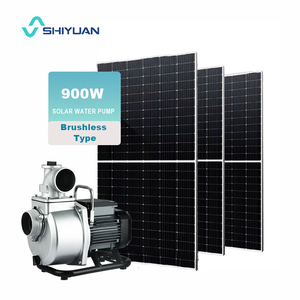
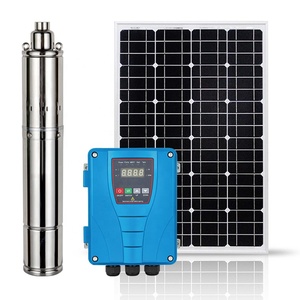
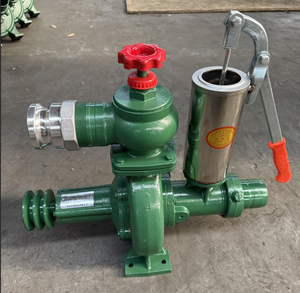
Argentina’s expansive geography—spanning the vast fertile plains of the Pampa Húmeda, the arid high-altitude deserts of the Noroeste Argentino (NOA), the grape-growing valleys of Cuyo, and the windswept steppes of Patagonia—presents a complex hydrological management challenge for agricultural producers, livestock ranches (estancias), and industrial mining operators.
Historically, Argentine farms relied heavily on traditional mechanical windmills (molinos de viento) or fossil-fuelled diesel generators (grupos electrógenos) for deep well water extraction. However, soaring diesel operational expenditures, high maintenance frequencies of mechanical gears, and volatile grid extension costs have accelerated a structural transition toward Direct-Drive Photovoltaic Solar Water Pumping Architecture.
With severe hydrologic droughts linked to La Niña oscillations affecting ground aquifers, our high-head DC solar pumps guarantee reliable, steady extraction even when water tables drop below 100 meters in Córdoba and Santa Fe.
Eliminate ongoing fuel deliveries to remote field locations. Solar pumps convert abundant solar irradiation directly into hydrostatic flow, yielding zero operational carbon emissions and complete independence from diesel price shocks.
Our solar pumping products strictly comply with European Safety Directives (Low Voltage Directive 2014/35/EU, EMC Directive 2014/30/EU), fulfilling all import standard requirements set by Argentine customs (SENASA & INTI alignment).
As an established original equipment manufacturer (OEM) and global exporter, our engineering focus centers on maximizing power conversion efficiency, thermal endurance, and anti-corrosive material longevity. Here is how our hardware achieves market-leading performance in South American terrain:
Traditional AC motor pumps incur substantial electrical conversion losses when paired with solar inverters. Our high-torque DC Brushless motors feature rare-earth neodymium-iron-boron (NdFeB) permanent magnets, achieving motor efficiencies exceeding 92%. The lack of physical carbon brushes eliminates mechanical friction wear, extending maintenance-free operation up to 10–15 years.
The core intelligence of our solar pumping systems resides in the micro-processor controlled Maximum Power Point Tracking (MPPT) system. Continuously monitoring dynamic solar irradiance, the controller optimizes voltage and current matching in real time, delivering up to 35% more water daily compared to non-MPPT systems.
Select the optimal pump architecture based on regional depth and flow rate requirements:
| Pump Category | Motor Rating | Voltage Input (DC) | Max Head (m) | Max Flow (m³/h) | Primary Argentine Application |
|---|---|---|---|---|---|
| DC Brushless Borehole Screw Pump | 120W - 900W | 24V - 150V | 30m - 120m | 1.2 - 3.5 m³/h | Deep well livestock watering (*bebideros*) in La Pampa & San Luis |
| High-Head Submersible Centrifugal | 1100W - 2200W | 110V - 300V | 80m - 160m | 5.0 - 18.0 m³/h | Large pasture cattle herds & cereal grain irrigation in Buenos Aires |
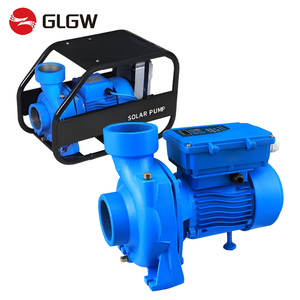
| Large Flow Self-Priming Surface Pump | 1500W - 2200W | 200V - 300V | 15m - 35m | 20.0 - 45.0 m³/h | Canal water transfer, vineyard flood irrigation in Mendoza/San Juan |
| Hybrid AC/DC High-Volume Surface Pump | 3.0kW - 7.5kW | 280V - 750V | 25m - 60m | 50.0 - 110.0 m³/h | Industrial agribusiness crop spraying & reservoir refilling |
No two provinces in Argentina share identical soil, climate, or aquifer profiles. Our engineering team custom-configures solar pump systems to match regional requirements:
Provinces: Buenos Aires, Santa Fe, Córdoba.
Cattle ranches demand autonomous, reliable 24/7 water replenishment in distributed drinking troughs (*bebederos*). Our 3-inch and 4-inch DC submersible pumps operate silently without needing fuel logistics, providing steady water delivery even during overcast winter periods.
Provinces: Mendoza, San Juan.
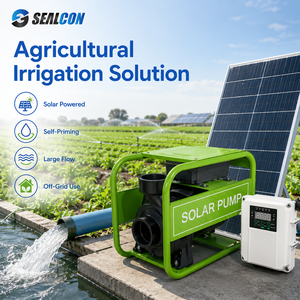
Vineyards require precise hydrostatic pressure for drip irrigation lines. Our high-flow surface pumps and 2.2kW self-priming solar pumps connect directly to pressure transducers to deliver controlled water flow from storage dams (*tranques*) to vine rows.
Provinces: Salta, Jujuy, Catamarca.
At elevations exceeding 3,500 meters above sea level, intense UV radiation and extreme day-night temperature swings test electrical equipment. Our solar pumps feature heavy-duty UV-rated cables, SS304/SS316 pump bodies, and wide-voltage MPPT controllers engineered for high altiplanos.
Provinces: Chubut, Santa Cruz, Río Negro.
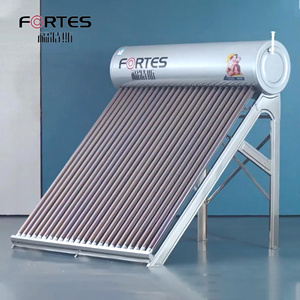
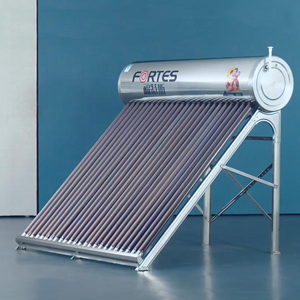
For rural homesteads and agricultural sanitary facilities in cold southern zones, our 100L-300L Calentadores de Agua Solar utilize high-absorption evacuated vacuum tubes, retaining thermal energy even in sub-zero ambient temperatures.
With domestic fuel subsidies being systematically phased out across Argentina, running a 5 HP or 10 HP diesel generator continuously incurs unsustainable ongoing expenses. Below is a real-world financial payback model comparing traditional diesel generation against a CE Certified 2.2kW Solar Water Pumping installation over a 5-year operating window:
While the initial capital expenditure (CAPEX) for a solar pumping station is moderately higher due to photovoltaic panel arrays and MPPT controllers, the operational expenditure (OPEX) drops to virtually zero immediately after commissioning.
1. Decoupling from Grid Reliability Issues: Frequent rural power outages during hot summer months threaten livestock hydration. Solar pumps operate completely off-grid.
2. ESG & Carbon Credit Eligibility: Large agricultural exporter corporations in Argentina are leveraging solar pumping infrastructure to comply with EU carbon footprint import mandates.
3. Government Incentive Programs: Alignment with renewable initiatives such as Ley 27.191 (Régimen de Fomento Nacional para el uso de Fuentes Renovables de Energía) drives tax benefits for clean energy adoption.
When sourcing solar water pumps from international manufacturers, importers and distributors in Argentina require proven engineering heritage, strict quality control, and dependable component supply chains.
From automatic copper wire stator winding and CNC dynamic rotor balancing to final stainless steel casing assembly, every manufacturing step is completed inside our ISO 9001 certified facility to guarantee zero defect rates.
Before packing, 100% of pump units undergo rigorous hydro-pneumatic testing on our simulated deep-well test rigs, checking flow rate vs. head pressure curves, electrical insulation, and dry-run sensors.
We support Argentine distributors with full OEM customization, including custom controller firmware, branded packaging, custom instruction manuals in Spanish, and flexible container loading.
Expert technical answers regarding import compliance, system selection, installation, and field operation in South America.
Yes. All our solar pumps carry official CE certification (Conformité Européenne), meeting IEC 60335-1 and IEC 60335-2-41 standards for electrical pump safety, as well as EN 61000 EMC directives. These test reports simplify customs clearance via SENASA, INTI, and SIMI/SIRA import documentation procedures in Argentina.
In regions like western Buenos Aires and parts of Chaco, groundwater can contain high concentrations of dissolved minerals and salts. Our SS304 screw and centrifugal pumps provide strong resistance against galvanic corrosion. For extreme saline or acidic mining water (e.g., lithium brines), we offer optional upgrade configurations to AISI 316 Stainless Steel.
Absolutely. Solar pumps fit directly inside the existing borehole casings previously used by mechanical windmills. Solar pumps offer significantly higher daily water yield, operate during calm windless days, and require no periodic replacement of mechanical leather valves, rods, or gearboxes.
Our smart MPPT controllers feature high efficiency even under low diffuse light conditions (down to 200 W/m² irradiance). While flow volume naturally scales with sun intensity, the pump will continue running. For critical applications, our dual AC/DC controllers allow automated backup integration with a standby generator or grid power.
Sizing depends on total dynamic head (TDH = vertical lift + pipe friction loss) and daily target volume (m³/day). For example, a 1500W DC pump at 120m depth typically requires 4 to 6 units of 450W solar panels connected in series. Our engineering department provides customized hydraulic calculation sheets for every quote request.
Yes. Our non-pressurized and pressurized evacuated glass tube solar collectors feature high-borosilicate 3.3 glass with double-layer vacuum insulation. They withstand freezing temperatures down to -15°C without cracking, providing reliable domestic hot water for agricultural estates and homes.
Standard production lead time for FCL (Full Container Load) or LCL orders is 15 to 20 days. Maritime transit time from our port to Buenos Aires or Zárate Port is typically 30 to 35 days. We provide complete sea freight assistance, including Bill of Lading, Certificate of Origin, and packing lists.
We provide a comprehensive 24-month factory warranty on pump units and MPPT controllers, along with a 25-year performance warranty on solar panels. Spare parts kits (mechanical seals, screw rotors, control boards) are provided with bulk container orders to ensure rapid local service fulfillment.
Whether you are an agricultural distributor, water project engineering contractor, or estate owner in Argentina, our technical team is ready to design and manufacture your exact solar pumping configuration.