Designed & manufactured in Herefordshire, UK — shipping worldwide Mon–Thu 9–5  |  Fri 9–4  |  +44 (0)1981 241668

Autonomous Drone Charging Power Systems Factory & Exporter for Canada

Heavy-Duty Sub-Zero Off-Grid Microgrids, Self-Heating LiFePO4 Stations & Hybrid Wind/Solar Drone Nests Engineered for Canadian Remote Operations

-40°C
Extreme Cold Operation
27 m/s
Wind Survival Rated
99.99%
BVLOS Uptime Guarantee
ISO 9001
Certified Manufacturing

Canada-Ready Off-Grid Power Solutions for Autonomous Drone Stations

Factory-direct, industrial-grade power platforms tailored for drone docking stations, remote sensing hubs, and BVLOS asset monitoring across Canadian territories.
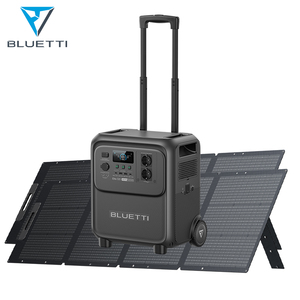
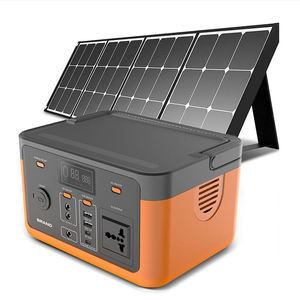
BLUETTI Large Capacity 3200 Wh Portable Power Station
High Peak Load
3200Wh Industrial Portable Power Station with Solar Charging
Engineered for quick deployment drone docking units. Delivers 1800W continuous pure sine wave output with 120V/230V dual voltage compatibility.
Contact Us
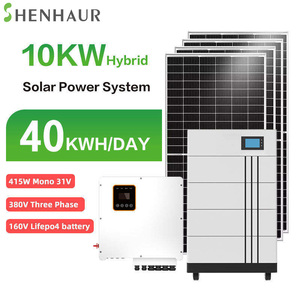
SHENHAUR Complete Kit Solar Energy System
Hybrid Microgrid
5kW / 10kW Off-Grid Hybrid Solar Power System Kit
Complete heavy-duty off-grid setup designed to support high-duty-cycle autonomous drone nesting stations in remote Canadian sites.
Contact Us
Solar Energy Storage Generator Lifepo4 Battery
Cold-Tempered LiFePO4
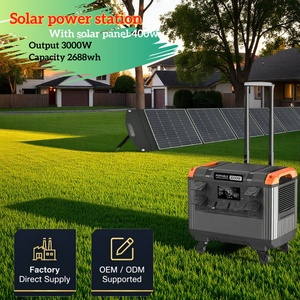
300W - 3000W LiFePO4 Remote Storage Solar Generator
Integrated lithium iron phosphate storage system featuring thermal pre-heating, designed for unmanned aerial vehicle (UAV) charging in sub-zero terrain.
Contact Us
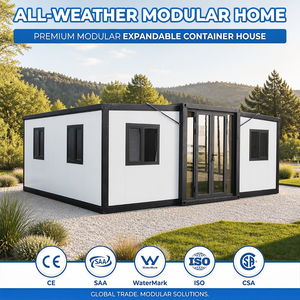
20ft Prefabricated Modular Expandable House Drone Base
All-in-One Drone Nest
20ft Modular Weatherproof Enclosure for Drone Base Stations
Expandable insulated container housing engineered to shelter power management systems, battery banks, and autonomous drone landing pads.
Contact Us
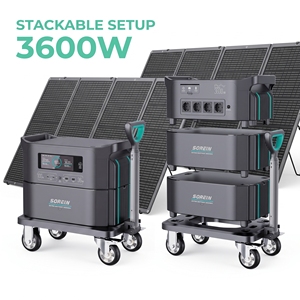
Sorein Portable Power Station 5KW All in One
Rapid Charge Hub
5KW All-in-One Multi-Channel Drone Battery Charging Station
High-output solar-compatible energy system built for multi-drone automated fleet operations with pulse charging management.
Contact Us
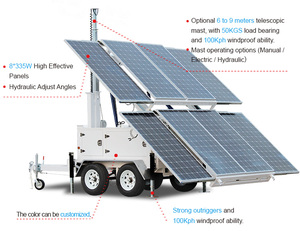
Mobile Solar Power Trailer
Rapid Deployment
4KW / 5KW Mobile Solar Power Trailer for Mobile Drone Missions
Heavy-duty off-road trailer equipped with fold-out solar array and battery storage for temporary search-and-rescue or forestry drone deployments.
Contact Us
OTHC-T30 OEM LiFePO4 Power Station
OEM/ODM Customized
Customized LiFePO4 UPS Power Unit for Drone Nest Enclosures
Industrial zero-transfer-time UPS power supply designed to prevent data corruption during primary power switching in automated drone hangars.
Contact Us
Portable Small Silent Diesel Generator
Fail-Safe Backup
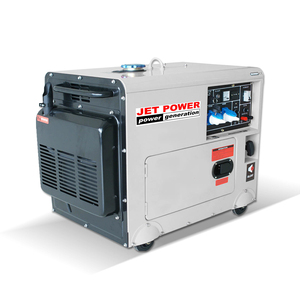
10kW Ultra-Silent Auto-Start Diesel Generator Back-Up System
Automated cold-start backup generator designed to kick in during prolonged dark winter periods across Northern Canadian latitudes.
Contact Us

White Paper: Engineering Autonomous Drone Charging Power Systems for Severe Canadian Climates

The rapid adoption of Beyond Visual Line of Sight (BVLOS) UAV operations across Canada’s vast geography—spanning oil & gas pipeline corridors, remote mining operations in Northern Ontario and Quebec, linear utility infrastructure, and wildfire monitoring—has established a critical operational requirement: uncompromising, highly reliable off-grid power systems for autonomous drone charging docks.

Deploying automated drone nests (or "Drone-in-a-Box" systems) in Canadian wilderness environments presents extreme engineering hurdles. Systems must contend with winter temperatures plunging to -40°C, high wind loads in mountainous and coastal zones, months of low solar irradiance at high latitudes, and zero on-site technical maintenance access for months at a time. As a specialized factory and exporter, we design, engineer, and integrate microgrid power systems explicitly crafted to overcome these localized environmental stresses.

Technical Insight (Information Gain): Unlike conventional off-grid telemetry loads that require constant, low-wattage power (e.g., 20W–100W continuous), autonomous drone charging pads operate under a high-peak pulse load profile. An idling nest draws 30W–50W for heating, sensors, and RTK base station communications, but requires 1,500W to 4,000W of instant power during fast-charge battery replenishment cycles. Our systems incorporate dual-stage buffer battery architectures to prevent inverter voltage sag and thermal shutdown in sub-zero environments.

1. Architecture of a Sub-Zero Autonomous Drone Power Station

To deliver guaranteed 99.99% operational uptime for BVLOS drone nests across Canada, a multi-source hybrid microgrid design is essential. Solar arrays alone are insufficient during Canadian winters (November through February), where daily solar production can drop by over 80% due to low sun angles, heavy snowfall, and short day lengths.

Hybrid Energy Generation

Integration of high-efficiency monocrystalline solar panels with steep vertical tilt angles (60°–75° to shed snow) combined with micro wind turbines (such as LE-v150 storm turbines) engineered to generate continuous power during stormy, overcast winter conditions.

Thermal Battery Management

Lithium Iron Phosphate (LiFePO4) chemistry protected by active PTC internal heating blankets. The system routes auxiliary solar/wind energy to warm battery cells above 0°C before initiating charge cycles, preventing irreversible lithium plating.

Auto-Gen Emergency Fallback

Smart auto-start low-emission diesel or methanol fuel cell generators connected via CANbus. When battery state of charge (SoC) falls below 20% during extended atmospheric inversions, the generator automatically cycles on to recharge the system and preserve drone station readiness.

2. Solving Cold-Climate Charging Dynamics for Lithium Drone Batteries

Standard industrial lithium drone batteries (such as LiPo or high-capacity Li-ion pouches) suffer severe capacity degradation and high internal resistance when cold. Charging a drone battery at temperatures below freezing causes instant cell damage or thermal failure. Our power management system utilizes a 3-tier thermal protection protocol:

  • Tier 1 - Passive Enclosure Insulation: Prefabricated modular container enclosures (such as our 20ft insulated units) fitted with polyurethane sandwich panels providing high R-value insulation.
  • Tier 2 - Waste Heat Recovery & Active Heating: Inverter and power conversion heat losses are redirected inside the docking bay. Thermostatically controlled 12V/24V heating elements maintain an internal ambient environment of +15°C even when outside ambient temperatures plummet to -40°C.
  • Tier 3 - Smart Pre-Heating Logic: Prior to the arrival of an autonomous drone, the power controller receives a telemetric trigger, ramping up dock heating to ensure target drone battery temperature is reached before fast-charging commences.

Localized Application Scenarios Across Canadian Terrains

Proven off-grid power deployment topologies customized for Canada’s most demanding industrial and environmental sectors.

Linear Pipeline Monitoring (Alberta & BC)

Autonomous drones operating BVLOS missions to detect methane leaks and structural encroachment along trans-continental oil & gas pipelines. Our hybrid wind/solar trailer units provide continuous 24/7 power at isolated mid-line valve stations without grid ties.

Mining Site Perimeter & Volumetric Surveying

Remote open-pit mines in Northern Ontario, Quebec, and Northwest Territories utilize automated drone nests powered by our 10kW hybrid solar storage systems to execute daily volumetric stockpile calculations and site security patrols.

Wildfire Early Detection & Forestry (BC Interior)

Deployed atop isolated mountainous watchtowers across British Columbia. Thermal-camera drones land, charge, and launch autonomously to scan timber tracts for spot fires. Powered by rugged wind turbines combined with vertical snow-shedding solar mounts.

Canadian Autonomous Drone & Remote Power Market Trends

The Canadian commercial drone ecosystem is undergoing rapid evolution, heavily influenced by regulatory approvals and severe weather realities:

  • Transport Canada BVLOS Mandates (CAR Standard 903): Regulatory streamlining by Transport Canada for Special Flight Operations Certificates (SFOC) has accelerated the deployment of unattended drone nests. Regulators mandate guaranteed power resilience for base station communications to prevent mid-air fail capabilities.
  • Decarbonization of Remote Resource Extraction: Canadian mining and energy firms face stringent ESG reporting requirements. Replacing continuously running 50kW diesel generators with localized 5kW–10kW solar/wind hybrid microgrids reduces diesel fuel logistics costs by up to 90% while cutting carbon emissions.
  • Iridium & Starlink Remote Telemetry Integration: Modern Canadian off-grid power systems must communicate via low-Earth-orbit (LEO) satellite networks. Our power control cabinets integrate Victron Cerbo GX monitoring linked directly to cloud telemetry, giving asset managers real-time visibility from Calgary or Toronto.

Why Canadian Engineers & System Integrators Choose Us

Over 15 years of precision manufacturing, engineering excellence, and international export expertise.

ISO 9001 & Industrial Compliance

All microgrid systems, charge controllers, and battery management enclosures are manufactured under rigorous ISO-aligned quality protocols. Components meet international electrical safety standards.

Direct OEM/ODM Factory Customization

We build tailored power systems according to your drone nest’s exact electrical specs—supporting 12V, 24V, 48V, or 120V AC input, custom enclosure footprints, and branding.

Proven Canadian & Global Logistics

Extensive experience shipping heavy-duty battery energy storage systems (BESS) and microgrid trailers to major Canadian ports (Vancouver, Montreal, Halifax) with full customs documentation.

Full Lifecycle Engineering Support

From site-specific ERA5 solar/wind data analysis to remote telemetry diagnostic support, our engineers stand behind every system exported for its operational lifetime.

Frequently Asked Questions for Canadian Buyers

Technical and procurement guidance for importing drone charging power systems into Canada.

Q: How do your off-grid drone power systems handle -40°C Canadian winters?
Our systems utilize thermally insulated NEMA 4X / IP66-rated enclosures equipped with internal heating elements and self-heating LiFePO4 battery modules. Energy from solar or wind sources is routed to pre-heat the battery core before any charging cycle commences. In severe weather, auto-start fuel backup ensures ambient enclosure temperatures remain safe for lithium chemistry.
Q: Can your microgrid systems be customized for specific drone nest manufacturers?
Yes. We provide complete OEM/ODM customized power engineering. Whether your automated docking nest requires 24V DC native power, 48V DC, or 120V/230V AC pure sine wave power with high peak surge capabilities for rapid multi-battery fast chargers, we build to your exact voltage and communication protocol requirements.
Q: What wind speeds can your hybrid wind/solar installations withstand?
Our small wind turbines (such as the LE-v150 and LE-300 series) are engineered and survivability-tested in wind tunnels for sustained gusts exceeding 27 m/s (60 mph / 100 km/h). They feature marine-grade anti-corrosion coatings and sealed bearings suitable for coastal Atlantic or Arctic conditions.
Q: How do we remotely monitor power system health across isolated Canadian sites?
Every system includes an integrated IoT telemetry module (supporting 4G LTE-M with automatic satellite fallback via Starlink or Iridium networks). Users can track battery State of Charge (SoC), solar/wind generation rates, thermal status, and load consumption via a cloud dashboard with customizable email/SMS alert thresholds.
Q: What is the lead time and shipping process for factory export to Canada?
Standard power station units ship within 2 to 3 weeks. Custom OEM hybrid systems or mobile trailer power stations take 4 to 6 weeks. We manage sea freight, air freight (for urgent projects), and full export documentation (HS code classification, commercial invoices, UN38.3 lithium battery transport certifications) to any Canadian province or territory.

Ready to Power Your Autonomous Drone Network in Canada?

Send us your site coordinates, expected drone docking charge loads, and environmental criteria. Our senior microgrid engineers will provide a site-specific solar/wind resource assessment and factory-direct system quote.

Contact Us