Designed & manufactured in Herefordshire, UK — shipping worldwide Mon–Thu 9–5 | Fri 9–4 | +44 (0)1981 241668

As a premier wind tower manufacturer and off-grid technology integrator, our factory produces high-spec structural steel towers, mobile hybrid power stations, and rugged battery storage units certified for continuous operations across all 7 continents.
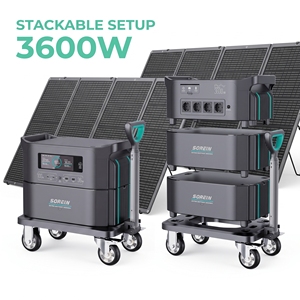
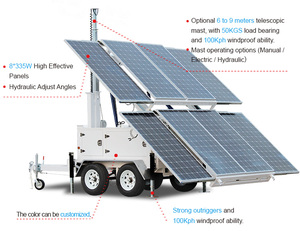
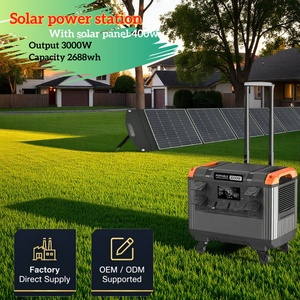
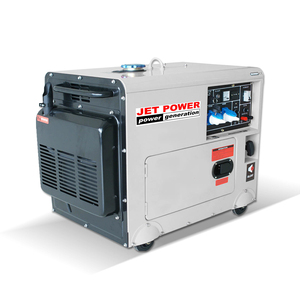
Modern utility wind turbines demand unprecedented structural integrity. As a verified wind tower manufacturer & factory, our facility operates under rigorous international heavy-engineering standards including EN 1090-2 (EXEC4), ISO 3834-2, and IEC 61400-6. The structural tower represents up to 20% of the total installed capital expenditure of a wind energy conversion system (WECS), serving as the primary load-bearing backbone that resists complex dynamic forces: aerodynamically induced fatigue, gyroscopic forces from rotor precession, extreme gust bending moments, and vortex-induced vibrations (VIV).
Our manufacturing matrix uses fine-grain structural steel plates specifically formulated for fatigue resistance and low-temperature impact toughness. Steel selection is optimized based on site-specific climate classes and turbine load profiles:
The fabrication lifecycle of a cylindrical or conical wind tower section hinges on achieving micrometric precision across plate rolling, longitudinal welding, circumferential girth welding, and flange alignment:
Plates undergo double-V or compound J-bevel milling via high-precision CNC edge planers to guarantee 100% root penetration and zero micro-void formation during heavy SAW passes.
Automated 4-roll bending machinery forms shell cans up to 5,000mm in diameter with ovality tolerances strictly controlled within ≤ 0.5% of nominal outer diameter.
Forged L-flanges and T-flanges undergo post-weld CNC facing. Flange tilt is kept within ≤ 1.0mm across the diameter to eliminate high-stress concentrations on pre-tensioned bolts.
Our wind tower manufacturing factory implements rigid quality verification stages at every step of shell assembly. Below is our baseline engineering tolerance matrix for onshore and offshore utility tower sections:
| Parameter / Specification | Onshore Tubular Steel Tower | Offshore Monopile / Substructure | Inspection Standard |
|---|---|---|---|
| Steel Material Grades | S355J2+N, S355NL, S420M | S355ML, S420ML, S460ML (Z35 Tested) | EN 10025-2/3/4, Mill Cert 3.1/3.2 |
| Section Outer Diameter | Up to 5.5 Meters (Transport Constrained) | Up to 10.0+ Meters (Monopiles) | Laser Tracker / 3D Coordinate Inspection |
| Shell Plate Thickness | 12mm to 65mm | 40mm to 110mm | Ultrasonic Thickness Gauge (UT) |
| Weld Acceptance Level | EN ISO 5817 Level B | EN ISO 5817 Level B (Offshore Severe) | 100% UT, 100% MT, 20% RT Testing |
| Flange Planarity Flatness | ≤ 0.5 mm to 1.0 mm Total Deviation | ≤ 0.3 mm Total Parallelism Deviation | Laser Flange Scanner / Dial Gauges |
| Corrosion Protection Life | 25 Years (ISO 12944 C4 / C5) | 30+ Years (ISO 12944 CX / TSA Coating) | Elcometer Dry Film Thickness (DFT) Test |
Wind towers operating in marine, coastal, or high-humidity industrial zones face aggressive chemical attack from atmospheric salt spray, high UV exposure, and cyclic mechanical stress. A critical structural vulnerability of wind turbine towers is coating degradation, which can lead to localized micro-pitting, stress corrosion cracking (SCC), and premature structural failure.
Our automated multi-stage blast cleaning shop achieves surface cleanliness of Sa 2.5 per ISO 8501-1, with a sharp anchor profile of 60–90 µm. The standard heavy marine coating stack consists of:
For offshore splash zones and submerged transition pieces, our factory deploys robotic Thermal Spray Aluminum (TSA) metallization per ISO 2063:
As global energy infrastructure transitions to ultra-large wind turbines (8MW to 15MW onshore, 15MW to 22MW offshore), wind farm developers and EPC contractors must rethink traditional tower procurement strategies. Below are the key technological and supply chain shifts reshaping the wind tower factory ecosystem:
With hub heights exceeding 160 to 180 meters to tap into stronger, less turbulent upper-atmosphere winds, standard steel tubular towers become bottlenecked by base-diameter highway transport limits (typically 4.5m to 5.0m max width). Procurement is shifting rapidly toward modular bolted split-shell towers and concrete-steel hybrid towers that assemble on site.
Modern OEM specifications require factory-installed Fiber Bragg Grating (FBG) optical sensors, tri-axial accelerometers, and digital twin telemetry embedded directly into internal tower walls. This allows real-time structural fatigue life monitoring, flange bolt pretension tracking, and predictive maintenance alerts during operation.
Driven by EU Taxonomy regulations and global ESG compliance, developers are enforcing stringent carbon-intensity limits on raw steel. Our factory partners with Electric Arc Furnace (EAF) steel mills utilizing 100% renewable energy and high recycled scrap ratios, cutting embodied carbon emissions by up to 65% compared to blast furnace routes.
Remote wind assessment sites and off-grid telecom backhauls now incorporate small-wind turbines mounted on modular telescoping towers paired with LiFePO4 energy storage and methanol fuel cells. This hybrid setup guarantees continuous 24/7 power autonomy even during long polar nights or low-wind winter doldrums.
Building upon a decades-long engineering legacy that originated with British design principles in 2009, our manufacturing network has successfully delivered custom tubular steel towers, specialized vertical-axis wind structures, and complete hybrid energy modules deployed on all 7 continents.
Our structural design team conducts finite element stress analysis (ANSYS, FAST) and micro-siting wind modeling (ERA5 blended with Global Wind Atlas) to customize every tower section for local shear forces.
Our technical support engineers hold Global Wind Organisation (GWO) certification, allowing seamless on-site commissioning, non-destructive testing, and inspection both onshore and offshore.
From raw material procurement and NDT testing to internal mechanical kit installation (ladders, platforms, lift rails, cable trays), we deliver plug-and-play tower sections ready for field erection.
Below are expert technical responses to common questions raised by EPC contractors, utility developers, and OEM wind turbine buyers during vendor audit and contract negotiations:
Our factory executes 100% Visual Inspection (VT), 100% Ultrasonic Testing (UT) on all longitudinal and circumferential load-bearing SAW welds, 100% Magnetic Particle Inspection (MT) on flange joints and attachment welds, and spot Radiographic Testing (RT) per EN ISO 5817 Level B. All NDT technicians are Level II/III certified under ISO 9712 / ASNT.
We utilize dedicated heavy-transport trailers fitted with hydraulic turning frames for overland transport. For export orders, our deep-water port facilities allow direct loading onto heavy-lift breakbulk vessels equipped with specialized wooden saddles and seaworthy lashing gear to prevent shell deformation during transit.
Yes. Our off-grid power units, micro-wind towers, and containerized energy stations are rated for temperature extremes ranging from -40°C to +60°C. Cold-climate builds feature low-temperature LT steel structural components, self-heating LiFePO4 battery enclosures, and aerodynamic heating elements to prevent ice build-up on rotor blades.
Every delivery includes a comprehensive Manufacturing Data Report (MDR): EN 10204 3.1/3.2 Mill Test Certificates for all raw steel plates and flanges, Welding Procedure Specifications (WPS), Procedure Qualification Records (PQR), 100% NDT inspection logs, Dry Film Thickness (DFT) coating reports, dimensional laser survey sheets, and Certificate of Conformance.
Standard prototype or small-batch manufacturing typically takes 6 to 8 weeks following final engineering design approval and steel mill plate delivery. Utility-scale project production (50+ tower sections) operates on rolling delivery schedules aligned with customer foundation installation and crane availability timelines.
Connect directly with our engineering and procurement team for structural FEA reviews, custom manufacturing inquiries, or technical bid proposals.