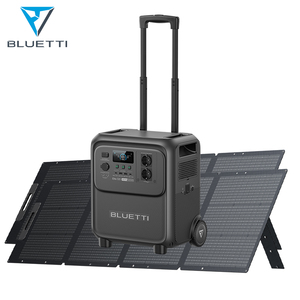
Portable Storage

Explore our Tier-1 monocrystalline panels, heavy-duty solar generators, mobile energy trailers, and modular off-grid energy storage units tested across extreme climatic environments.
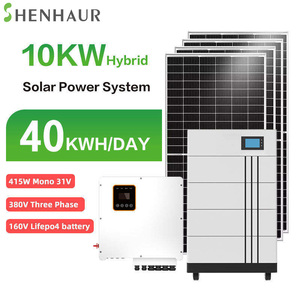
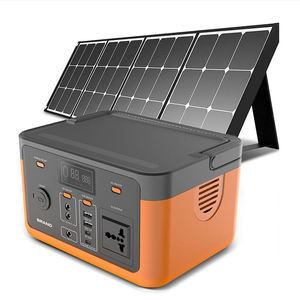

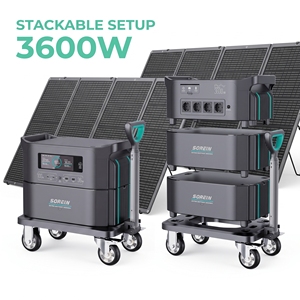
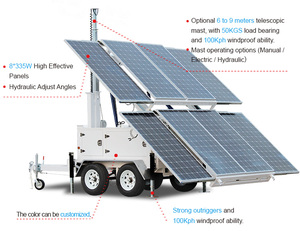
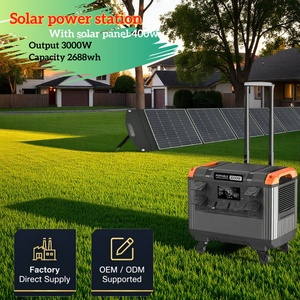
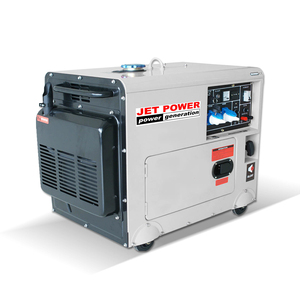
A comprehensive examination of photovoltaic cell architectures, battery storage topologies, microgrid optimization, and utility-scale procurement standards.
As global decarbonization mandates accelerate, B2B energy specifiers, utility EPC contractors, and commercial facility operators face a transformative energy landscape. Procuring solar photovoltaic (PV) modules and balance-of-system (BOS) equipment is no longer purely a matter of baseline cost-per-watt ($/Wp). Modern industrial energy deployments demand rigorous engineering validation, verified levelized cost of energy (LCOE) projections, long-term degradation resistance, and seamless integration with intelligent energy storage architectures.
This technical whitepaper outlines the structural parameters that define tier-1 solar panel manufacturing, analyzes emerging cell efficiency paradigms, details off-grid and hybrid system design considerations, and evaluates global procurement risks for large-scale utility and enterprise projects.
The photovoltaic industry has completed a decisive transition away from legacy P-type Passivated Emitter and Rear Cell (PERC) technology toward high-efficiency N-type wafer architectures. N-type silicon substrates offer inherent immunity to Light-Induced Degradation (LID) caused by boron-oxygen complex formation, enabling superior long-term energy yield.
Tunnel Oxide Passivated Contact (TOPCon) utilizes an ultra-thin silicon oxide layer combined with polycrystalline silicon to drastically minimize carrier recombination at the cell contacts, achieving commercial cell efficiencies exceeding 24.5%.
Combining crystalline silicon with amorphous silicon thin-film passivating layers, HJT delivers exceptional temperature coefficients (-0.26%/°C) and high bifaciality factors (>85%), ideal for extreme thermal environments.
Next-generation tandem architectures overlay perovskite thin-films on silicon bottom cells, breaking the theoretical Shockley-Queisser efficiency limit of single-junction silicon and promising operational lab efficiencies over 30%.
In high-ambient-temperature regions such as the Middle East, North Africa, and equatorial South America, standard operational cell temperatures (NOCT) routinely exceed 45°C. A standard module experiences power output loss governed by its maximum power temperature coefficient ($\gamma_{P_{max}}$). N-type TOPCon modules maintain a significantly lower coefficient (-0.30%/°C) relative to traditional P-type PERC panels (-0.35%/°C to -0.38%/°C). Over a 25-year operational lifecycle, this thermal stability translates to a 3.8% to 5.2% increase in cumulative yield in desert climates.
Furthermore, under low-irradiance conditions (such as morning, evening, or overcast weather at high northern latitudes), N-type modules preserve superior spectral response in the shorter wavelength range, ensuring steady power input into charge controllers and energy storage systems.
A solar panel array cannot operate in isolation when powering mission-critical remote telemetry, off-grid telecommunications, offshore wind farm assets, or remote industrial compounds. System reliability hinges on the harmonic integration of Photovoltaic Arrays, Maximum Power Point Tracking (MPPT) charge controllers, and Chemical Energy Storage Systems (ESS).
Modern commercial off-grid power systems employ multi-phase synchronous rectification MPPT controllers operating at tracking efficiencies above 99.5%. By continuously scanning the Voltage-Current ($V-I$) curve of the PV array—even under partial shading conditions caused by structural masts or environmental obstructions—the MPPT controller adjusts the duty cycle of the buck-boost conversion circuit to extract absolute peak power.
For hybrid deployments involving auxiliary diesel generators or small wind turbines (such as our horizontal and vertical axis turbine systems engineered in Herefordshire, UK), MPPT controllers must support CAN-bus or MODBUS RTU protocol integration to enable automated generator autostart signals when battery State of Charge (SOC) drops below critical thresholds.
| Solar Cell Architecture | Commercial Cell Efficiency | Temperature Coeff. (Pmax) | Bifaciality Factor | First-Year Degradation | Target Operational Lifetime |
|---|---|---|---|---|---|
| P-Type PERC | 22.5% - 23.0% | -0.37% / °C | 65% - 70% | ≤ 2.0% | 25 Years |
| N-Type TOPCon | 24.5% - 25.2% | -0.30% / °C | 80% - 85% | ≤ 1.0% | 30 Years |
| Heterojunction (HJT) | 25.0% - 25.8% | -0.26% / °C | 85% - 92% | ≤ 1.0% | 30 Years |
| Perovskite-Silicon Tandem | 28.0% - 31.5% (Field Trial) | -0.20% / °C | 75% - 80% | TBD (Testing) | 20 - 25 Years |
Choosing the correct storage chemistry is paramount to operational uptime. While Absorbent Glass Mat (AGM) sealed lead-acid batteries remain valued for freezing sub-zero environments due to their thermal tolerance and mechanical simplicity, Lithium Iron Phosphate ($\text{LiFePO}_4$) has become the gold standard for high-cycle industrial microgrids.
Navigating global supply chain dynamics, sustainability mandates, and the shift toward rapid-deployment modular solar infrastructure.
International procurement standards increasingly mandate transparent supply chain auditing. Enterprise buyers require certified proof of origin for metallurgical-grade silicon, polysilicon ingots, and solar glass to satisfy EU Corporate Sustainability Due Diligence Directives (CSDDD) and US UFLPA enforcement.
Pre-engineered containerized systems—combining solar arrays, invertors, and energy storage into deployable 20ft or 40ft ISO frames—are replacing slow, custom civil installations. These modular units drastically shorten site commissioning times for construction compounds, mining operations, and disaster relief zones.
Industrial specifiers are shifting focus toward long-term durability standards. Solar arrays deployed on offshore wind farm platforms or coastal telemetry rigs must possess IEC 61701 Level 6 Salt Mist Corrosion resistance and pass IEC 62716 Ammonia Corrosion tests, alongside structural wind load verification exceeding 27 m/s (60 mph sustained storms).
Combining UK engineering expertise with global manufacturing precision to deliver robust energy solutions worldwide.
Established as a premier designer, manufacturer, and global exporter of standalone wind, solar, and hybrid power solutions, our organization brings decades of engineering rigor to every project. From our headquarters and manufacturing facility in Pontrilas, Herefordshire, United Kingdom, we support client operations across all seven continents—powering infrastructure in environments ranging from sub-zero polar research stations to salt-laden offshore North Sea installations.
Every control system, turbine component, and customized IP-rated containment module is engineered, assembled, and systematically bench-tested under ISO-aligned quality protocols prior to export deployment.
Our field deployment and service engineers hold Global Wind Organisation (GWO) offshore certifications. The exact specialists who design your microgrids are qualified to service platforms up to 72 km offshore.
Our power engineering solutions are actively specified by leading global infrastructure managers, including Ørsted, RWE Renewables, Network Rail, National Highways, Openreach, BAM Nuttall, and Severn Trent Water.
Clear engineering answers regarding system sizing, warranty coverage, extreme environment resilience, and global delivery logistics.
Contact our technical engineering team today for custom solar resource modeling, technical datasheets, and competitive global wholesale quotes tailored to your load profile.
Get a Quote