Designed & manufactured in Herefordshire, UK — shipping worldwide Mon–Thu 9–5 | Fri 9–4 | +44 (0)1981 241668

Engineered for uncompromising duty cycles, maximum volumetric energy density, and extreme environmental resilience across telecommunications, remote microgrids, and industrial backup applications.
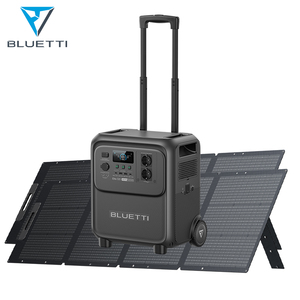
Supports dual solar charging inputs (120V/230V), pure sine wave 1800W inverter, integrated Smart BMS telemetry, and ultra-durable LiFePO4 cells for mobile telemetry & remote grid resilience.
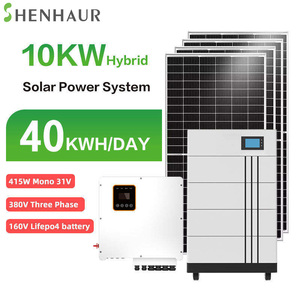
Complete turnkey off-grid hybrid power solution featuring modular rack-mount LiFePO4 battery banks, high-efficiency MPPT controllers, and seamless grid-tie failover capability.
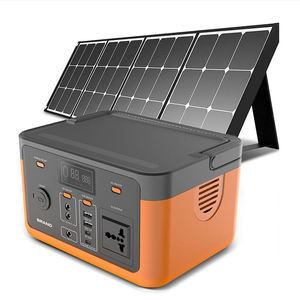
Multi-scenario energy storage generators designed for heavy field operation. Offers rapid recharge pathways, high surge tolerance, and >6,000 cycle lifespan at 80% Depth of Discharge.
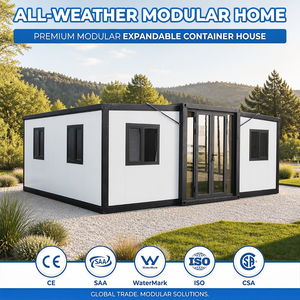
Prefabricated containerized utility hub integrating high-density lithium storage arrays, solar roof mounting, and turnkey living or control infrastructure for rapid deployment remote sites.
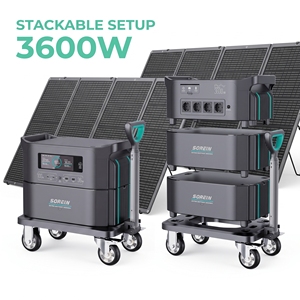
All-in-one industrial power stations featuring customized active-balancing lithium battery management systems, IP65 enclosure options, and dual-inverter output protocols.
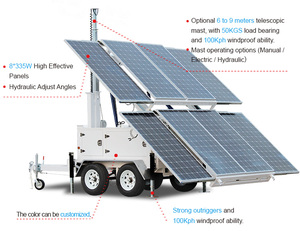
Ruggedized mobile generation platform fitted with fold-down solar arrays, high-capacity deep-cycle lithium storage banks, and high-intensity LED lighting for highway and mining operations.
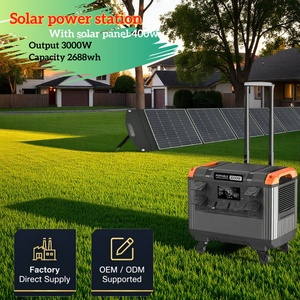
Customizable high-discharge uninterruptible power supply engineered for mission-critical infrastructure, emergency medical shelters, and zero-downtime server deployments.
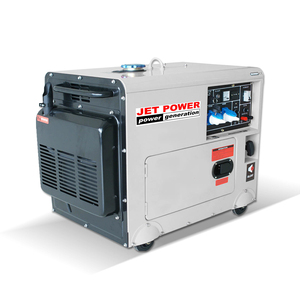
Single/Three-phase silent auxiliary generator optimized to work in auto-start hybrid synchronization with industrial lithium storage banks, minimizing fuel burn by up to 75%.
Combining British system engineering heritage established in 2009 with tier-1 international manufacturing precision, we engineer battery storage solutions built to survive the harshest environments on Earth—from offshore North Sea platforms to sub-zero polar telemetry stations.
Our battery enclosures utilize marine-grade anti-corrosion alloys, active thermistor arrays, and IP66-rated moisture sealing. Engineered to operate continuously across extreme temperature windows from -40°C to +60°C without thermal degradation.
Integrated Battery Management Systems (BMS) with Canbus, RS485, and Modbus RTU communication protocols. Provides real-time cell-level voltage balancing, state-of-charge (SoC) algorithms, and cloud telemetry for predictive maintenance.
All lithium packs undergo rigorous testing to comply with UN38.3 transport safety standards, IEC 62619 industrial security, CE, RoHS, and UL 1973 certifications, guaranteeing seamless cross-border customs clearance and site deployment.
In the high-stakes realm of industrial off-grid power, energy failure translates directly to operational downtime, lost telemetry data, and expensive emergency site dispatches. Founded in 2009 in Herefordshire, UK, our engineering lineage was forged in solving off-grid power generation challenges under extreme conditions. By assembling wind turbines, solar controllers, custom LiFePO4 battery banks, and weather-proof containment enclosures under one unified quality management framework, we retain 100% control over component interoperability.
"True reliability in remote lithium storage is achieved not by oversized chemistry alone, but by precise sizing against worst-month solar/wind resource models blended with ERA5 reanalysis data."
Our field deployment teams include Global Wind Organisation (GWO) certified offshore technicians who understand the reality of servicing power equipment 70 kilometers offshore. This real-world field experience directly informs our battery pack topology—ensuring modular serviceability, quick-connect IP-rated terminals, and redundant circuit protection built into every unit exported globally.
As global supply chains shift toward decarbonization and localized energy resilience, B2B procurement managers and EPC contractors face an evolving technological landscape. Understanding chemical shifts, degradation economics, and regulatory demands is essential for long-term project viability.
While Nickel Cobalt Manganese (NCM) chemistries dominated early electric vehicle developments due to higher initial gravimetric energy density, stationary energy storage systems (ESS) and industrial power units have decisively shifted toward Lithium Iron Phosphate (LiFePO4). The structural stability of the Fe-P-O covalent bond eliminates thermal runaway risks up to 270°C, compared to NCM’s thermal breakdown threshold at 210°C.
Furthermore, LiFePO4 delivers an unmatchable Total Cost of Ownership (TCO) profile. With operational life cycles exceeding 6,000 cycles at 80% Depth of Discharge (DoD), LFP systems yield a cost-per-kWh-cycled metric that is 45% lower than traditional lead-acid AGM arrays and 30% lower than standard NCM configurations over a 10-year period.
| Battery Chemistry | Cycle Life (80% DoD) | Thermal Runaway Threshold | Raw Material ESG Risk | 10-Year TCO Rating |
|---|---|---|---|---|
| Industrial LiFePO4 (LFP) | 6,000 - 8,000 cycles | 270°C (Ultra High) | Low (No Cobalt/Nickel) | Optimal (Industry Leader) |
| NCM (Nickel Cobalt Manganese) | 2,000 - 3,500 cycles | 210°C (Moderate) | High (Cobalt Mining Concerns) | Moderate |
| Deep-Cycle AGM Lead-Acid | 500 - 1,200 cycles | 150°C (Requires Venting) | Moderate (Lead Recyclability) | Poor (High Replacement Rate) |
| Solid-State Lithium (Emerging) | 10,000+ (Projected) | >400°C (Extreme) | Low-Moderate | High CapEx (Future Adoption) |
Forward-thinking procurement officers no longer evaluate battery suppliers solely on upfront dollar-per-amp-hour ($/Ah) metrics. Strategic purchasing decisions now incorporate holistic factors:
Modern B2B battery installations are no longer static power banks; they function as intelligent network nodes. Future-proof procurement requires advanced internal Battery Management Systems capable of reporting individual cell impedance, temperature gradient mapping, and dynamic state-of-health (SoH) calculations. By transmitting telemetry via IoT gateways (4G/5G/Starlink), operators can perform remote balancing and prevent catastrophic power loss before an outage occurs.
Preventing power failure on un-grid-connected telecommunication towers, IoT monitoring arrays, and remote civil engineering sites demands accurate mathematical modeling rather than guesswork.
To calculate required battery capacity ($C_{kWh}$), engineers must multiply continuous load ($P_L$ in Watts) by total required autonomy hours ($H_A$), divided by inverter efficiency ($\eta_{inv}$) and maximum allowable Depth of Discharge ($DoD$):
C_kWh = (P_L × H_A) / (η_inv × DoD × 1000)
For example, maintaining a 250W continuous telecom load through a 4-day winter storm period (96 hours) at 85% DoD requires a minimum 29.4 kWh usable lithium storage array.
Relying exclusively on solar PV during winter months in high-latitude regions leads to massive battery over-specifying. Integrating small wind turbines (such as horizontal or vertical axis turbines) provides complementary power generation during dark, stormy winter periods when wind velocities peak, drastically reducing the total physical battery footprint required.
Direct technical answers to common queries raised by international specifiers, EPC engineers, and supply chain managers.
Our industrial-grade LiFePO4 battery packs deliver >6,000 full charge/discharge cycles at 80% Depth of Discharge (DoD) under standard 25°C operating conditions. Under mild daily cycling regimes, these battery arrays comfortably achieve a 12 to 15-year operational service life before capacity degrades to 70% of initial rating.
Standard lithium batteries cannot accept charge below 0°C without risking lithium plating damage. Our extreme-environment models feature integrated internal BMS-controlled PTC thermal heating jackets. When incoming solar or wind power is detected at sub-zero temperatures, the BMS routes power to the heating elements first, raising internal cell temperatures to +5°C before initiating cell charging automatically.
All exported lithium batteries are fully certified under UN38.3 (Safe Transport of Lithium Batteries), MSDS, and dangerous goods air/sea freight standards (Class 9 Miscellaneous Dangerous Goods). Packs are shipped in certified hazardous materials packaging with integrated shock and tilt indicators to ensure safe international transit.
Yes. We specialize in custom B2B engineering. We provide bespoke voltage configurations (12V, 24V, 48V, up to 700V High-Voltage ESS arrays), custom steel or aluminum IP66/NEMA 4X enclosures, customized BMS firmware, private-label branding, and targeted communication protocols tailored to match your specific inverter platform.
In traditional setups, diesel generators run continuously at low, inefficient loads (often 10-20% capacity), causing fuel wasting and engine glazing. In a hybrid setup, the lithium battery handles low continuous loads quietly. The generator only runs at its peak efficiency curve (80-90% load) for brief periods to rapidly charge the lithium storage bank, slashing fuel usage by up to 75% and extending generator service intervals tenfold.
We provide a comprehensive standard 5-year manufacturer's warranty on all commercial LiFePO4 storage packs, with extended 10-year warranty options available for certified project installations. Our warranty includes direct component replacement support and remote engineering diagnosis via our BMS cloud telemetry platform.
Connect with our senior engineering team to request detailed technical datasheets, full commercial pricing schedules, or bespoke system sizing for your global off-grid projects.