Designed & manufactured in Herefordshire, UK — shipping worldwide Mon–Thu 9–5 | Fri 9–4 | +44 (0)1981 241668

Engineering Next-Generation Energy Storage Inverters, Grid-Tied Off-Grid Topologies, & Smart Microgrid Power Electronics for Global B2B Procurement
Explore our factory-direct lineup of certified hybrid inverters, expandable LiFePO4 power stations, mobile power trailers, and diesel-hybrid generation sets built for harsh off-grid and commercial environments.
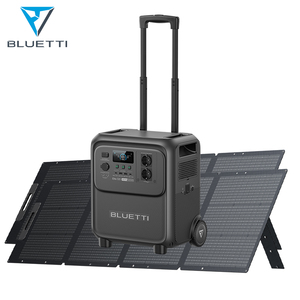
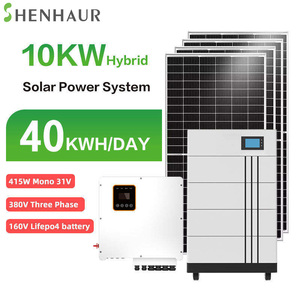
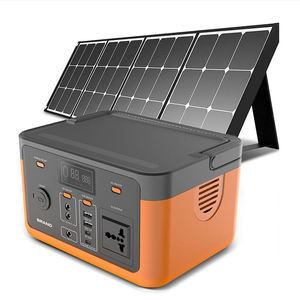
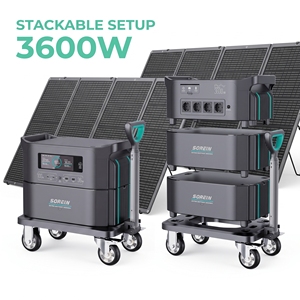
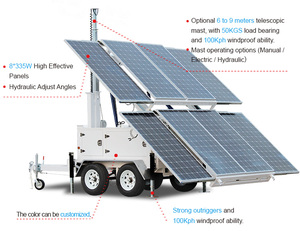
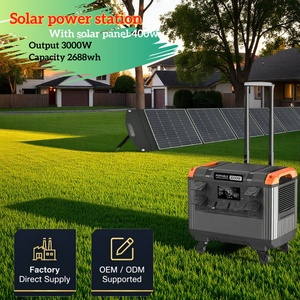
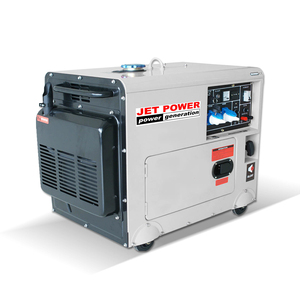
Combining British engineering standards established in Herefordshire since 2009 with scalable global manufacturing facilities. We deliver robust power electronics engineered for the most severe offshore, remote, and industrial climates on earth.
Our hybrid power control units and microgrid inverters undergo testing in survival wind speeds exceeding 27 m/s (60 mph) and high-salinity salt-fog marine environments. Designed with C5-M anti-corrosion protection and wide operating thermal thresholds (-25°C to +60°C).
We eliminate system failure risks by utilizing advanced ERA5 atmospheric reanalysis data blended with Global Wind Atlas and solar irradiance models. Systems are deliberately oversized for worst-month winter autonomy rather than deceitful annual averages.
Unlike simple traders, our in-house engineering team holds full Global Wind Organisation (GWO) offshore certifications. The team that designs your high-frequency inverter firmware is available to service platforms deployed 70+ km offshore.




In the contemporary energy transformation landscape, procurement specifiers are moving away from traditional grid-tied string inverters toward sophisticated Hybrid Energy Storage Inverters (HESI). A hybrid inverter serves as the central intelligent brain of a modern microgrid, orchestrating multi-directional power flows between variable renewable sources (PV array, wind turbines), chemical energy storage systems (BESS), local critical loads, and the utility grid or auxiliary diesel generators.
Unlike conventional solar inverters that strictly convert DC to AC, high-performance hybrid inverters employ bidirectional active front-end (AFE) topologies. This permits simultaneous MPPT solar harvest, battery charging via grid/genset, real-time reactive power compensation (VAR support), and seamless microgrid islanding switchover within milliseconds during utility blackout events.
When evaluating manufacturer factories for utility or C&I projects, selecting the appropriate conversion topology is critical to balance energy conversion efficiency with electrical safety standards:
| Technical Parameter | Low-Voltage (LV) Hybrid Inverters | High-Voltage (HV) Hybrid Inverters |
|---|---|---|
| Battery Bus Voltage Range | 40V DC – 60V DC (Nominal 48V) | 150V DC – 800V DC Stacked Voltage |
| Target Capacity Range | 3kW – 15kW (Residential & Light Commercial) | 30kW – 500kW+ (Utility & Industrial Microgrids) |
| Round-Trip Efficiency (RTE) | ~92% - 94% (Higher current thermal losses) | ~96.5% - 98.1% (Low current, minimal I²R copper loss) |
| Cabling & BOS Footprint | Requires thick copper cross-sections (e.g. 70mm²+) | Standard, cost-effective industrial cabling (e.g. 16mm²) |
| Grid-Forming / Islanding Capability | Standard Off-Grid & Back-up Modes | Advanced Virtual Synchronous Generator (VSG) Dynamics |
Leading tier-1 hybrid inverter manufacturing facilities are currently undergoing a technology transition from legacy Silicon (Si) IGBTs to Silicon Carbide (SiC) MOSFETs. SiC power devices operate at switching frequencies up to 5 to 10 times higher than traditional silicon components without thermal runaways. This technological advancement results in:
Global procurement directors and EPC specifiers must navigate dynamic market shifts, evolving grid codes, and technology integration demands. Key trends shaping commercial procurement strategy include:
As central thermal power plants decommission worldwide, transmission system operators (TSOs) increasingly mandate that commercial hybrid inverters act as Grid-Forming (GFM) assets rather than passive Grid-Following (GFL) units. Future procurement specs demand Virtual Synchronous Generator (VSG) control algorithms that inject synthetic inertia, regulate grid frequency (FFR - Fast Frequency Response), and execute autonomous black-start sequencing for microgrids without utility grid presence.
Procurement in 2026 demands more than hardware efficiency; buyers require inverters equipped with open-API Cloud EMS (Energy Management System) architectures. Modern hybrid inverters utilize edge computing algorithms that analyze real-time spot market electricity prices, weather forecasting data, and local load habits. The inverter autonomously switches between solar direct-consumption, peak-shaving, dynamic grid-export, and localized battery holding to optimize the return on investment (ROI).
To optimize Levelized Cost of Storage (LCOS), procurement strategies for commercial energy storage projects are standardizing around high-voltage DC battery bus systems (600V to 1000V DC). Higher bus voltages drastically reduce current density, allowing EPCs to use thinner copper conductors, reduce system enclosure footprint, and achieve total round-trip conversion efficiencies exceeding 98%.
Next-generation hybrid inverters are incorporating DC vehicle-to-home (V2H) and vehicle-to-grid (V2G) power stages under ISO 15118-20 communications. Enterprise fleet depots and residential compounds can utilize connected electric vehicle battery packs as auxiliary energy storage reserves during prolonged grid power outages.
The historical evolution of off-grid and hybrid solar technology highlights a massive transition in power density, thermal management, and firmware complexity:
Heavy iron-core copper transformers, manual generator transfer switches, external PWM charge controllers. Heavy weight (>50kg for 5kW), low power factor, and conversion efficiency below 85%.
Integrated MPPT solar charge controllers, MOSFET switching, basic LCD interface, transformerless topology. Efficiencies reached 93-95%, but units suffered from high switching noise, fan failure rates, and basic lead-acid BMS communication.
SiC MOSFETs, dual active bridge (DAB) architecture, native CAN/RS485 BMS integration with multi-brand LiFePO4 packs, <5ms UPS switchover, modular parallel scaling up to 15 units, dynamic frequency droop control.
As hybrid inverter power ratings scale beyond 50kW in compact footprints, operational thermal management dictates lifetime reliability (MTBF). Quality manufacturing factories utilize two primary cooling methodologies:
For mission-critical telemetry, data centers, and healthcare equipment, conventional transfer times of 20ms to 50ms cause equipment reboots. Advanced hybrid inverters feature static transfer switches (STS) utilizing high-speed SCR thyristors. Upon detection of utility grid voltage drop or frequency anomaly (<0.1 seconds), the STS isolates the grid and drives the inverter power stage in under 5ms, ensuring continuous sine wave phase continuity.
Expert engineering answers to clear common technical questions asked by commercial specifiers, EPC contractors, and global OEM/ODM importers.
When selecting a hybrid inverter manufacturer, enterprise B2B buyers must audit manufacturing protocols to guarantee long-term field reliability. A trusted manufacturing plant maintains rigorous Quality Assurance (QA) and Quality Control (QC) operational pipelines:
100% of internal driver and control PCBs undergo SMT automated placement followed by 3D Automated Optical Inspection and X-Ray analysis of BGA solder joints to prevent micro-fractures, dry joints, and bridge shorts.
Every hybrid inverter unit exiting assembly enters a dedicated thermal environmental chamber. Inverters undergo continuous 100% full-rated load burn-in testing for 8 to 24 hours at 50°C ambient temperatures to expose early component mortality before shipping.
Ensure your factory supplier complies with the following operational milestones before placing mass utility or OEM orders:
| Audit Phase | Testing Protocol | Acceptance Standard Benchmark |
|---|---|---|
| Component Qualification | Derating analysis of capacitors & SiC MOSFETs | Tier-1 global brand semiconductors (Infineon, STMicroelectronics, Cree) |
| High Voltage Insulation | Hi-Pot (Dielectric Withstand) Test & Ground Bond | AC 2000V / 1 min with leakage current <5mA without flashover |
| Environmental Stress | Thermal Cycling (-30°C to +70°C) & Humidity Spray | IEC 60068-2 standards without parameter drift or corrosion |
| Grid Grid-Sim Testing | Programmable AC Grid Simulator Volts/Freq Variations | Anti-islanding switchoff <10ms; Fault ride-through compliance |
Whether you require standard factory-direct hybrid solar generators, custom OEM firmware design, or scalable industrial microgrid power units, our engineering team is ready to deliver your exact power specification.