Designed & manufactured in Herefordshire, UK — shipping worldwide Mon–Thu 9–5 | Fri 9–4 | +44 (0)1981 241668

Discover our export-grade, field-tested off-grid power systems, portable generators, and industrial energy storage kits designed for extreme environmental durability.
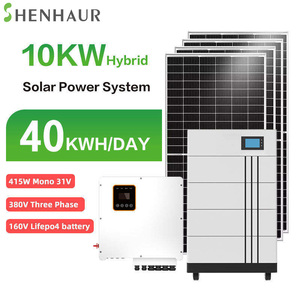
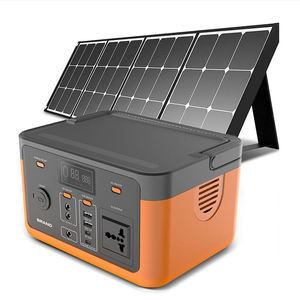
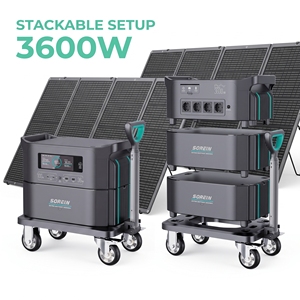
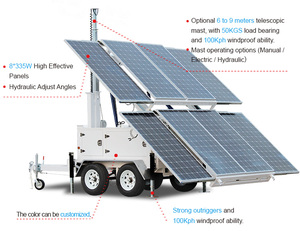
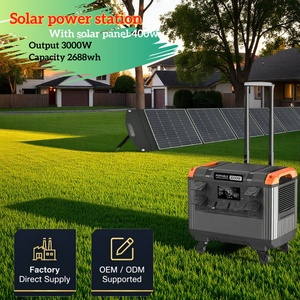
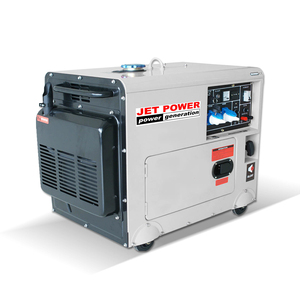
In an era defined by accelerating climate volatility, grid instability, and the rapid expansion of remote industrial infrastructure, dependable back-up power is no longer merely an operational safety net—it is a foundational prerequisite for enterprise continuity. As a premier backup power factory and global exporter, our engineering mandate centers on solving the critical challenge of continuous load availability under harsh, off-grid conditions.
Modern procurement strategies have fundamentally evolved from reactive emergency power generation toward integrated, hybrid microgrid frameworks. Traditional diesel generators, while historical staples, impose prohibitive operational expenses (OpEx) driven by refuelling logistics, noise pollution, maintenance overhead, and severe carbon penalties. Today's industrial specifiers demand intelligent, modular LiFePO4 battery energy storage systems (BESS), hybrid wind-solar generators, and mobile power stations capable of seamlessly orchestrating multi-source energy inputs.
“Information Gain in Renewable Power Engineering: System resilience is not defined by peak power output, but by worst-month energy autonomy, thermal tolerance of cell chemistries, and real-time remote telemetry integration.”
Understanding semantic market shifts is vital for engineering directors, procurement managers, and government contractors. Based on longitudinal empirical data across global deployments, we identify five primary vectors shaping next-generation off-grid procurement:
Lithium Iron Phosphate (LiFePO4) has officially superseded traditional NMC and SLA (Sealed Lead Acid) chemistries in industrial procurement. LFP offers unmatched thermal stability, non-combustible profiles, and 3x to 5x higher cycle endurance under deep discharge profiles.
Standalone solar arrays face severe winter yield drops. Procurement mandates now heavily favor hybrid generation—combining high-efficiency monocrystalline solar panels with micro-wind turbines and automatic fuel-cell back-ups to guarantee uninterrupted base load power.
Modern off-grid installations are deployed in remote, unstaffed locations. Systems must feature IoT-enabled Cerbo GX controllers, 4G/5G/Satellite cloud monitoring, and predictive failure analytics to minimize manual maintenance dispatches.
To assist enterprise specifiers in evaluating total cost of ownership (TCO) and system reliability, the following benchmark comparison outlines the technical and economic metrics across primary backup energy architectures:
| Engineering Metric | Traditional Diesel Genset | Pure Solar + LiFePO4 Station | Industrial Hybrid System (Solar + Wind + LFP) |
|---|---|---|---|
| Levelized Cost of Energy (LCOE) | High ($0.45 – $0.85/kWh) due to fuel | Low ($0.08 – $0.14/kWh) | Lowest ($0.06 – $0.11/kWh) long-term |
| Worst-Month Autonomy | Limited by fuel tank volume | 3 to 5 Days (Requires larger battery) | 7+ Days Continuous (Complementary wind/sun) |
| Maintenance Interval | 250 – 500 Running Hours | 50,000+ Hours (Filter/Dust checks) | 30,000+ Hours (Annual mechanical inspection) |
| Environmental & Thermal Limit | -10°C to +45°C (Cold-start issues) | -20°C to +55°C (BMS heater option) | -40°C to +65°C (Marine/Extreme grade) |
| Acoustic & Emission Profile | High Noise (70–95 dB), High CO2 | Silent (0 dB), Zero Direct Emissions | Ultra-Silent (<35 dB), Carbon Neutral |
| UPS Switching Response | 10 to 30 Seconds (Engine crank) | Pure Sine Wave < 10ms (Instantaneous) | Seamless Microgrid Controller (<5ms) |
As a fully integrated designer and direct manufacturer, our manufacturing plant in Pontrilas, Herefordshire operates under strict ISO-aligned quality management systems. Unlike white-label brokers, we control every node of the value chain—from structural enclosure sheet-metal fabrication to PCBA software programming and battery cell matching.
Every bespoke export project begins with high-resolution solar irradiance and wind velocity simulation using ERA5 reanalysis data blended with the Global Wind Atlas, preventing system under-sizing during winter solstices.
Our field service personnel hold Global Wind Organisation (GWO) safety certifications, enabling turnkey commissioning and maintenance on challenging offshore platforms, maritime buoys, and coastal telecommunication towers.
We engineer custom output voltages (12V/24V/48V DC, 110V/120V/230V/400V AC), bespoke enclosure IP ratings (IP65, IP66, IP67), marine-grade C5-M anti-corrosion coatings, and client-branded chassis designs.
Our backup power systems and energy storage units comply with major international export safety standards, including UN38.3 (Lithium Battery Transportation Safety), CE, IEC 62619 (Industrial Lithium Cells), RoHS, UL1973, and ISO9001 quality management guidelines. Enclosures are IP65 to IP67 ingress-rated for severe environmental defense.
For sub-zero deployments, we integrate automated internal thermal management systems—such as self-heating LiFePO4 battery pads powered by early solar harvest—preventing lithium plating during low-temperature charging. In high-heat regions, active climate control and forced-air convection heat-sinks ensure operating cell temperatures remain within the optimal <45°C boundary.
Yes. As a direct original equipment manufacturer, we offer comprehensive OEM/ODM services. This includes customized exterior chassis colors, custom silk-screen branding, custom AC socket configurations (US, EU, UK, AU, Universal), modified BMS firmware thresholds, and targeted battery capacity scaling from 300Wh up to multi-megawatt containerized BESS systems.
Our Tier-1 LiFePO4 cells deliver over 6,000 complete charge/discharge cycles at 80% Depth of Discharge (DoD) before reaching 80% remaining capacity. Under standard daily cycle profiles, this translates to a functional operational service life exceeding 12 to 15 years, drastically outperforming traditional lead-acid or standard NMC chemistry options.
We maintain certified dangerous goods (DG) packaging and export shipping protocols. All battery products are shipped with UN38.3 test summaries, MSDS documentation, and full ocean/air transport approvals. Our global logistics desk manages FOB, CIF, DDP, and DAP terms directly to client job-sites across Europe, North America, Africa, Australia, and Asia.
Whether you require turn-key portable power stations, custom mobile solar trailers, or enterprise hybrid microgrids for remote infrastructure—our engineering team is ready to evaluate your load specifications.