
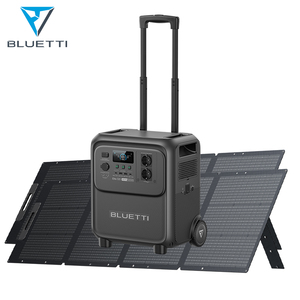
Export-Grade Fleet Catalogue
Commercial Off-Grid & Mobile Solar Power Station Range
Direct factory sourcing options featuring Tier-1 LiFePO4 chemistry, pure sine wave inversion, fast MPPT solar charging, and modular high-voltage expansions.
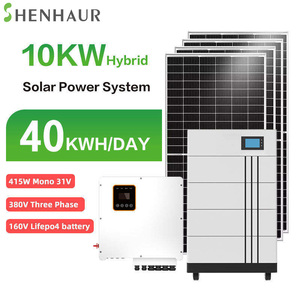
SHENHAUR Hot Selling Complete Kit Solar Energy With Battery Off Grid 5kw 10kw Solar System 10 Kw Hybrid Solar System Home Power
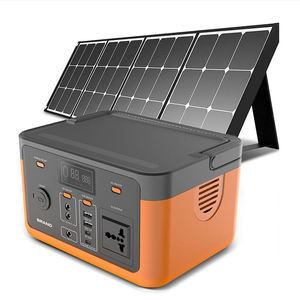
Best Selling 300W 500W 1500W 2400W 3000W Solar Energy Storage Generator Lifepo4 Battery Portable Power Station for Home Outdoor
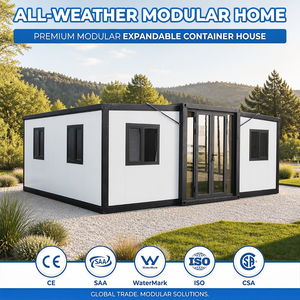
20ft Two Bedroom Prefabricated Granny Flat Ready To Move In Modular Home Expandable Container House with Off-Grid Solar System
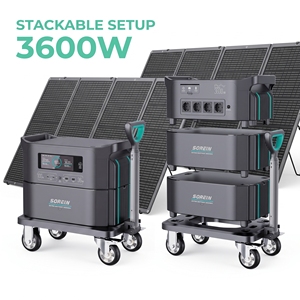
Sorein Portable Power Station 3000W 3600W 4000W 5KW All in One 3KW 2KW Solar Generator with Solar Panels Integration
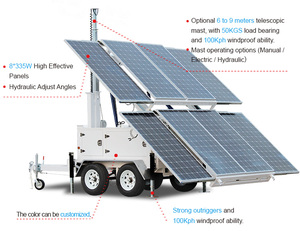
4KW 5KW Mobile Solar Power Bank High Mast Solar Powered Trailer Solar Generator for Construction & Emergency Deployment
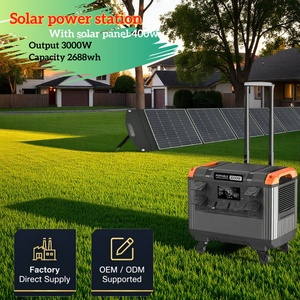
OTHC-T30 Factory Direct Supply OEM/ODM Customized LiFePO4 Large Capacity UPS Portable Power Station Solar Generator Fast Charge
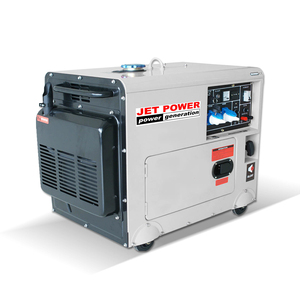
Portable Single Three Phase Hot Sale Small Silent Diesel Generators 10kva 10kw With Best Price Dual Fuel Solar Hybrid System
Enterprise Procurement Insights
Navigating the Global Off-Grid Transition: China’s Manufacturing Advantage
As global grid volatility rises and remote industrial operations demand zero-downtime resilience, selecting a reliable China solar generator supplier is a pivotal strategic decision for B2B distributors, EPC contractors, and OEM brand partners.
6,000+
Deep Cycles @ 80% DoD (LiFePO4)
99.5%
MPPT Solar Controller Efficiency
< 10 ms
UPS Grade Auto-Switching
7 Continents
Extreme Climate Field Deployment
The global off-grid energy storage market has shifted dramatically from legacy lead-acid baselines to high-density Lithium Iron Phosphate (LiFePO4) integrated solar generators. China manufactures over 80% of the world’s lithium cell capacity and controls the most robust vertical supply chain—from raw material refining to advanced BMS (Battery Management System) SMT lines.
Procuring directly from a tier-1 Chinese exporter provides international buyers with unmatched Information Gain regarding hardware customized for diverse regulatory domains (UL 1741, CE, UN38.3, IEC 62619). Whether your portfolio mandates ultra-portable 300W–3000W units for outdoor backup, heavy-duty 4KW–5KW mobile high-mast light trailers for construction sites, or complete 10kW hybrid microgrids integrated into 20ft modular container housing, working with an established engineering supplier guarantees structural longevity and optimal Levelized Cost of Storage (LCOS).
Engineering Whitepaper
Architectural Benchmarks: Cell Chemistry, Inverters, & Power Electronics
A granular technical comparison for procurement officers specifying high-reliability power systems for extreme environmental conditions.
LiFePO4 Chemistry Supremacy
Lithium Iron Phosphate (LFP) delivers thermal stability up to 500°C without risk of thermal runaway, making it the non-negotiable standard for high-capacity solar generators.
- 6,000+ lifecycle expectation vs 500 cycles in NCM
- Zero Cobalt dependency for sustainable ESG compliance
- Built-in active balancing Smart BMS modules
- Consistent voltage discharge curve under high C-rates
Pure Sine Wave Inverters
Enterprise solar power stations integrate bi-directional pure sine wave inverters with Total Harmonic Distortion (THD) strictly controlled under 3%.
- Instantaneous surge power up to 200% rated capacity
- Seamless < 10ms UPS transfer for telecom and medical loads
- Dual AC voltage output versatility (110V/120V & 220V/230V)
- High conversion efficiency reaching up to 94.5%
High-Voltage MPPT Solar Array Tracking
Maximum Power Point Tracking algorithms continuously lock onto optimal voltage-current curves even during turbulent cloud coverage and partial shading.
- 99.5% dynamic tracking efficiency rating
- Wide PV input voltage window (12V to 500V DC)
- Dual PV input channels for independent solar arrays
- Integrated over-voltage, reverse polarity & lightning protection
Comprehensive Technology Matrix: LiFePO4 vs. NCM in B2B Solar Generators
| Technical Parameter | LiFePO4 Solar Generators (Our Standard) | Conventional NCM / Ternary Lithium Units | Legacy Lead-Acid / AGM Battery Banks |
|---|---|---|---|
| Cycle Life (80% Depth of Discharge) | 6,000+ Cycles (15+ Years daily use) | 500 – 1,000 Cycles (2–3 Years) | 300 – 500 Cycles (< 2 Years) |
| Thermal Runaway Temperature | Extreme Stability: > 500°C | Moderate Risk: ~ 210°C | Venting Risk: Hydrogen Gas Release |
| Round-Trip Energy Efficiency | 95% – 98% Efficiency | 90% – 92% Efficiency | 70% – 80% Efficiency |
| Levelized Cost of Storage (LCOS) | Lowest ($0.04 - $0.06 per kWh cycled) | Moderate ($0.15 - $0.22 per kWh cycled) | Highest ($0.30+ per kWh cycled) |
| Operating Temperature Window | -20°C to +60°C (With heated cell option) | -10°C to +45°C | 0°C to +30°C (Capacity drops steeply) |
| BMS Protection & Telemetry | Smart CANbus/RS485/Bluetooth IoT Monitoring | Basic Hardware Board Monitoring | None (Requires manual hydrometer checks) |
Strategic Sourcing Roadmap
Future Procurement Trends in Solar Generator Technology (2025–2030)
Key technological convergences transforming off-grid equipment specification, microgrid modularity, and international B2B tender requirements.
Trend 01
Modular Expandability & High-Voltage Stacking
B2B purchasers are moving away from fixed-capacity power stations toward modular plug-and-play battery expansions. By combining high-voltage stackable battery towers (such as 51.2V 100Ah modules), commercial systems can dynamically scale from 5kWh residential backup to 50kWh+ microgrids without re-engineering the primary inverter setup.
Trend 02
IoT Cloud Telemetry & AI Fleet Management
Modern off-grid deployment demands remote visibility. Leading Chinese exporters now pre-integrate 4G/5G SIM modules, CANbus protocols, and Victron Cerbo GX compatible telemetry. System operators can monitor cell voltages, state of charge (SoC), ambient temperatures, and fault codes remotely via web dashboards, reducing field maintenance site visits by up to 70%.
Trend 03
Hybrid Diesel-Solar Microgrid Integration
For mission-critical installations (such as remote mining camps, telecommunications base stations, and high-mast construction lights), single-source solar energy is supplemented by automated generator controls. Hybrid generators automatically signal diesel gen-sets to ignite only when solar generation drops and battery SoC hits critical thresholds (e.g., 15%), reducing fuel burn by over 80%.
Trend 04
Modular Infrastructure & Prefabricated Housing
As seen in modern expanding container homes and mobile trailers, solar generators are no longer standalone boxes—they are seamlessly embedded into structural envelopes. Factory pre-wiring 20ft expandable container houses and trailer chassis with integrated roof-mounted solar arrays drastically slashes field setup time down to under one hour.
ESG Compliance & European Union Battery Directive Readiness
With the implementation of EU Regulation 2023/1542 and global carbon passport mandates, international importers must verify supply chain transparency. Our manufacturing facilities strictly implement ethical mineral sourcing, ISO 14001 environmental management, and full digital carbon footprint tracking for all exported LiFePO4 battery packs.
Send an Inquiry
Why Partner With Us
Tier-1 OEM/ODM Manufacturing & Engineering Strengths
Combining rigorous British engineering standards with China's high-efficiency industrial manufacturing base to deliver uncompromised off-grid reliability.
Full In-House R&D & Customization
From custom metal housing dimensions and IP65 weatherproof seals to bespoke PCB layout design and custom AC voltage configurations (110V, 220V, 240V, 380V 3-Phase), our engineering team tailors power stations directly to your target market specifications.
Severe Environment Validation
All power generator designs undergo rigorous stress testing: salt-mist anti-corrosion coating validation for marine offshore installations, vibration resistance for off-road trailers, and extreme heat thermal chamber cycles (-20°C to 60°C).
Global Logistics & DG Class 9 Shipping
Lithium battery transport demands specialized Dangerous Goods handling. We provide UN38.3 test reports, MSDS certifications, and marine drop-test documentation required for seamless ocean and air cargo customs clearance worldwide.
Technical FAQ
Frequently Asked Questions by Commercial Buyers & Specifiers
Direct technical clarity on warranty, custom branding, sizing calculations, and global deployment compliance.
Q1. How do I accurately size a solar generator system for continuous industrial load?
System sizing requires calculating the total watt-hour (Wh) demand per 24-hour cycle and applying safety coefficients for seasonal solar irradiance drops. Multiply continuous load (Watts) by required run hours, then divide by battery depth of discharge (0.8 for LiFePO4) and inverter conversion efficiency (0.9). Our engineering team utilizes ERA5 weather reanalysis and Global Wind/Solar Atlas data to provide free site-specific simulations.
Q2. What OEM/ODM customization options are supported for export orders?
We provide end-to-end white-label branding, including custom silk-screened metal casing colors, private-label LCD/APP graphic interfaces, specialized AC socket panel cutouts (US, EU, UK, AU, Universal), custom packaging cartons, and engineered firmware configurations for specific solar input voltage windows.
Q3. How do solar generators maintain performance in freezing winter temperatures?
Standard lithium batteries suffer charging restrictions below 0°C. For arctic or northern winter deployments, we engineer solar generators with integrated self-heating BMS pads. The system utilizes incoming PV energy to warm internal battery cells to +5°C prior to initiating charge current, ensuring zero cell degradation down to -30°C.
Q4. What is the typical Minimum Order Quantity (MOQ) and production lead time?
For standard portable power station catalog models, sample orders (1–5 units) ship within 7 working days. OEM custom mass production runs typically carry an MOQ of 50–100 units with a standard factory lead time of 25–30 days, including comprehensive burn-in aging tests.
Q5. What warranty terms and after-sales support mechanisms are provided?
All enterprise LiFePO4 solar generators carry a standard 5-year factory warranty (extendable to 10 years). We supply replacement modular power boards, plug-and-play BMS units, and secondary spare parts kits alongside comprehensive video diagnostic guides and live engineer consultation.
Q6. Can these systems be tied to grid power or legacy diesel generators?
Yes. Our hybrid solar systems and high-capacity portable generators feature multi-source input priority management. You can configure the system to prioritize solar array power, seamlessly failing over to grid or auto-starting a connected diesel generator when battery capacity reaches user-defined thresholds.
Ready to Partner with China's Premier Solar Generator Manufacturer?
Request a direct factory quote, order technical sample units, or schedule a engineering consultation with our off-grid power specialists today.