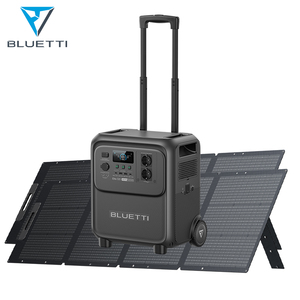
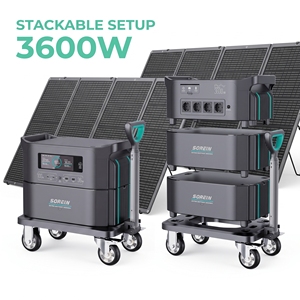
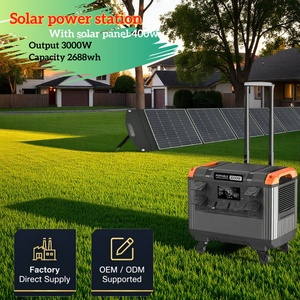
BLUETTI 3200Wh Solar Generator Pure Sine Wave Station
- Continuous Output: 1800W Peak Surge
- Output Voltage: 120V / 230V Dual-Switch
- Harmonic Distortion: THD < 2.5%

Certified off-grid power stations, industrial hybrid inverters, and deployment-ready solar generator kits engineered for severe climate resilience and low THD performance.
An authoritative technical analysis of pulse-width modulation (PWM) topologies, semiconductor advancements, surge impedance control, and global B2B procurement standards.
In modern industrial, telecommunications, and off-grid infrastructure, power conversion efficiency is no longer measured solely by DC-to-AC power throughput. As sensitive microelectronics, inductive industrial loads, and high-frequency communication rigs proliferate, the quality of the alternating current waveform has become the primary operational benchmark. Pure Sine Wave Inverters—engineered to synthesize continuous sinusoidal voltage waveforms with minimal total harmonic distortion—represent the critical link between direct current storage mediums (such as LiFePO4, AGM, and fuel cells) and sensitive AC infrastructure.
Specifying pure sine wave inverter suppliers requires a rigorous technical audit spanning semiconductor architecture, thermal mitigation strategies, dynamic step-load response, and compliance with stringent electromagnetic compatibility (EMC) regulations. This guide establishes the benchmark parameters for international specifiers, EPC contractors, and procurement executives evaluating the world's leading sine wave inverter manufacturers and exporters.
Core Engineering Insight: Modified sine wave inverters introduce harmonic frequencies (specifically the 3rd, 5th, and 7th harmonics) that cause eddy current losses, acoustic hum, and up to 30% thermal derating in electric motors. Leading industrial procurement mandates pure sine wave topologies featuring THD < 3% for general loads and THD < 2% for precision telecommunications and medical hardware.
The global inverter market comprises Tier-1 industrial manufacturers specializing in utility-scale hybrid topologies, portable emergency storage units, and specialized extreme-environment power converters. Below is an evaluation of the leading global suppliers based on technical topology, surge headroom, dynamic voltage regulation, and field compliance.
| Manufacturer / Brand | Primary Topology Focus | Typical THD Spec | Peak Efficiency | Key B2B Differentiator |
|---|---|---|---|---|
| Leading Edge Power (UK) | Extreme Off-Grid Hybrid / Wind-Solar | < 1.8% Pure Sinusoidal | 97.8% (SiC High-Freq) | GWO Certified Built in Herefordshire for severe environments |
| BLUETTI (Global) | Integrated LFP Portable & Micro-Grid | < 2.5% Pure Sinusoidal | 95.5% (High Frequency) | High energy density, modular LiFePO4 expansion packs |
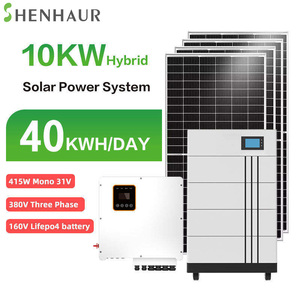
| Shenhaur Electric | Commercial Hybrid & Off-Grid Kits | < 3.0% Pure Sinusoidal | 96.2% (Transformerless) | Turnkey 5kW-10kW home and commercial package exports |
| Victron Energy (EU) | Maritime & Industrial Low-Frequency | < 2.0% Pure Sinusoidal | 96.5% (Toroidal Isolation) | Massive surge capabilities for heavy inductive motor starting |
| Schneider Electric | Utility & Telecom Hybrid UPS | < 1.5% Pure Sinusoidal | 97.1% (Galvanic Isolated) | Enterprise firmware, SNMP monitoring, dual-grid sync |
| Sorein Power Tech | All-In-One High-Voltage MPPT Inverters | < 2.8% Pure Sinusoidal | 97.0% (HF Transformer) | Wide DC input range (120V-450V DC), cost-effective OEM |
| SMA Solar Technology | Grid-Tied & Large Off-Grid Hybrids | < 1.0% Pure Sinusoidal | 98.4% (GaN Semiconductor) | Utility-grade grid-forming capabilities and reactive power control |
| SMA-OTHC Solutions | Industrial UPS & Rapid Charge Systems | < 2.0% Pure Sinusoidal | 96.8% (Bi-Directional) | Sub-10ms automatic transfer switch for zero-downtime IT loads |
| Studer Innotec | High-Precision Off-Grid Telemetry | < 1.5% Pure Sinusoidal | 97.5% (Toroidal Core) | Swiss engineering, ultra-low standby self-consumption (<2W) |
| Growatt New Energy | Residential & Light Commercial Hybrid | < 3.0% Pure Sinusoidal | 97.2% (HF Topology) | Extensive export distribution network and cloud IoT platform |
The power electronics landscape is undergoing a fundamental structural transition driven by advancements in wide-bandgap (WBG) semiconductors, artificial intelligence at the edge, and dynamic grid-forming control algorithms. B2B specifiers must anticipate these four core technological shifts when planning multi-year equipment procurement:
Traditional Silicon (Si) IGBT-based switching circuits are rapidly being superseded by Silicon Carbide (SiC) and Gallium Nitride (GaN) MOSFETs. Operating at switching frequencies exceeding 100 kHz, WBG devices dramatically reduce passive magnetic component size (transformers and inductors) while increasing overall inverter efficiency past 98.5%. This shift results in a 40% reduction in thermal dissipation and significantly smaller enclosure footprints.
As conventional synchronous generators (fossil fuel plants) are phased out, off-grid and hybrid inverters must supply synthetic inertia to stabilize micro-grids. Grid-forming pure sine wave inverters emulate the voltage source characteristics of physical turbines, maintaining system frequency and amplitude independently of utility reference signals. This capability is paramount for islanded telecommunications hubs and remote industrial compounds.
Modern sine inverters are evolving from simple unidirectional converters into hub-and-spoke energy routers. Multi-input topologies accommodate DC solar PV arrays, micro wind turbines, high-voltage battery banks, and vehicle-to-grid (V2G) bidirectional AC chargers within a single enclosed power conversion unit, eliminating external power converters and reducing system transmission losses.
Integration of IoT edge controllers allows inverters to perform real-time internal resistance modeling, capacitor thermal stress forecasting, and predictive fault isolation. Systems automatically transmit early-warning telemetry to operational hubs before a component fails—drastically reducing un-planned maintenance dispatch costs in offshore and arctic installations.
Procuring industrial sine inverters on a commercial scale requires evaluating total lifecycle cost of ownership (TCO) rather than capital expenditure (CAPEX) alone. Global procurement departments are adopting three strategic sourcing models:
Leading enterprise buyers no longer purchase off-the-shelf inverters based on nameplate kW ratings alone. Systems must be engineered against localized climate reanalysis datasets. Utilizing ERA5 satellite atmospheric data combined with the Global Wind Atlas, inverter continuous ratings and thermal derating slopes are matched to historical ambient extremes (e.g., performance at 50°C desert solar facilities or -40°C arctic telemetry outposts).
Mission-critical sites (such as national rail signalling, offshore wind farm telemetry, and subsea cable landing stations) are standardizing on rack-mounted modular inverter arrays. In the event of a power stage anomaly, individual 1kW-3kW inverter modules can be hot-swapped by non-specialist technicians without dropping the connected critical load or opening high-voltage bus bars.
With massive investment in coastal and offshore infrastructure, exporters are mandated to certify inverter enclosures to IEC 60068-2-52 (Salt Mist Cyclic Testing) and IP66 sealing standards. Internal PCBA (Printed Circuit Board Assemblies) must undergo conformal acrylic or silicone coating to prevent conductive salt-crust short-circuiting and tin-whisker growth.
Since 2009, Leading Edge Power has engineered, manufactured, and supported turnkey off-grid power systems, custom pure sine wave solutions, and extreme-environment hybrid arrays from our workshop in Herefordshire, United Kingdom. Deployed across all seven continents—from North Sea offshore platforms to Antarctic research stations—our engineering ethos centers on zero-downtime reliability.
All control panels, micro wind turbines, charge regulation systems, and IP enclosures are assembled and load-tested in Pontrilas, UK.
Our design engineers are Global Wind Organisation (GWO) certified for offshore deployment, ensuring direct engineering oversight on complex installations.
We size battery storage, solar input, and inverter capacity using localized climate reanalysis data to guarantee year-round operational autonomy.
Clear answers to crucial engineering, regulatory, and logistics queries encountered during commercial equipment specification.