Designed & manufactured in Herefordshire, UK — shipping worldwide Mon–Thu 9–5 | Fri 9–4 | +44 (0)1981 241668

Explore factory-direct off-grid power stations, hybrid storage systems, and mobile power trailers engineered for extreme environments.
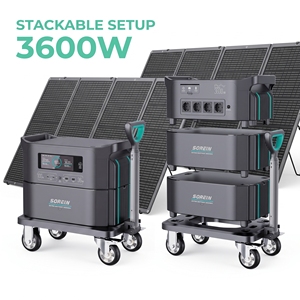
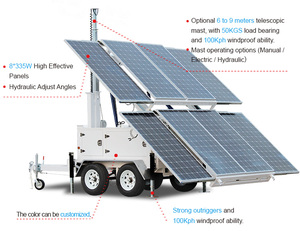
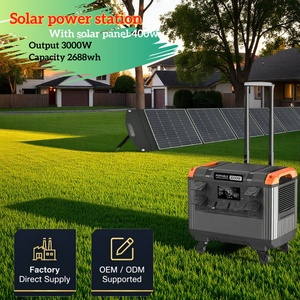
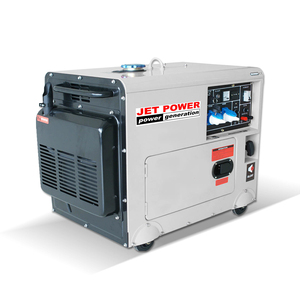
As global commercial and industrial (C&I) infrastructure encounters heightened grid instability, escalating peak-demand tariffs, and stringent ESG decarbonization mandates, the deployment of resilient, autonomous microgrids has shifted from an elective sustainability project to a mission-critical operational safeguard. A modern microgrid is defined as a localized, self-contained energy system comprising distributed energy resources (DERs)—including solar photovoltaics, micro wind turbines, battery energy storage systems (BESS), thermal generators, and fuel cells—capable of operating both in grid-tied synchronicity and complete off-grid "islanding" isolation.
Selecting the ideal microgrid manufacturer requires a rigorous evaluation of hardware integration capabilities, Energy Management System (EMS) software control algorithms, power electronics thermal endurance, and verified field performance under severe climatic loads. This procurement white paper examines the top 10 global microgrid manufacturers and original equipment manufacturer (OEM) factories, delivering technical transparency, architectural comparisons, and strategic sourcing insights for engineering directors, procurement managers, and utility integrators.
A comparative technical audit of market-leading microgrid OEMs across hardware, software control, and extreme-environment readiness.
| Manufacturer / OEM | HQ Location | Core System Specialization | Key Strengths & Technologies | Best Sourcing Application |
|---|---|---|---|---|
| 1. Leading Edge Power | Herefordshire, UK | Off-grid Hybrid Wind/Solar & Methanol Fuel-Cells | ERA5 site resource modeling, 27m/s storm durability, GWO certified offshore deployment | Offshore Telecom, Telemetry, Remote Infrastructure |
| 2. Schneider Electric | Rueil-Malmaison, France | EcoStruxure Microgrid Advisor & C&I Switchgear | Advanced predictive EMS software, seamless grid-tied to islanding transfer switchgear | Large C&I Campuses, Hospitals, Data Centers |
| 3. Siemens Energy | Munich, Germany | Spectrum Power Microgrid Management & Turbines | High-voltage utility integration, complex multi-vector energy optimization algorithms | Utility-Scale Distribution, Island Power Grids |
| 4. Tesla Energy | Texas, USA | Megapack / Powerpack BESS & Autonomous Control | High energy density LiFePO4 systems, Machine-learning Autobidder optimization | Grid-scale Storage, Peak Shaving, Utility Support |
| 5. ABB Microgrids | Zurich, Switzerland | MGS100 & e-mesh Energy Control Solutions | Modular containerized builds, robust fault current management, high frequency response | Mining Operations, Remote Microgrids, Ports |
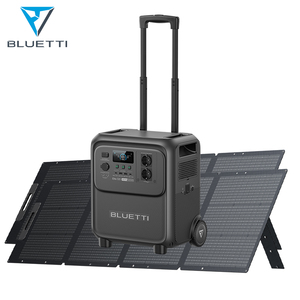
| 6. Bluetti Tech | Shenzhen, China | Modular High-Capacity LFP Energy Storage Systems | Scalable power station architecture, rapid deployment plug-and-play BESS units | Rapid Field Deployment, Emergency Power, Mobile Hubs |
| 7. Caterpillar Energy Solutions | Illinois, USA | Cat Microgrid Master Controller & Genset Hybrids | Seamless integration of high-horsepower diesel generators with solar photovoltaic arrays | Heavy Industrial Sites, Remote Quarry & Construction |
| 8. Eaton Corporation | Dublin, Ireland | Power Xpert Microgrid Controller & UPS Storage | Sub-cycle fault isolation, resilient commercial electrical distribution, cybersec-certified | Mission-Critical Infrastructure, Defense Installations |
| 9. General Electric (GE Vernova) | Massachusetts, USA | GridIQ Microgrid Controller & Hybrid Storage | Dynamic grid stability modeling, seamless Black Start capabilities for blacked-out networks | Municipal Utilities, Regional Co-ops, Large Manufacturing |
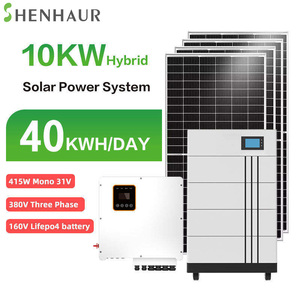
| 10. Shenhaur Renewable Tech | Guangdong, China | Off-Grid Hybrid Solar & LiFePO4 Systems (5kW-50kW) | High-volume OEM/ODM manufacturing, cost-effective hybrid inverter-battery integration | Commercial Solar Kits, Rural Electrification |
Modern commercial microgrids rely on four core technical pillars to achieve uninterrupted power supply, maximize localized generation, and guarantee asset longevity.
The EMS serves as the brain of the microgrid. Utilizing machine learning, real-time meteorological forecasting, and dynamic tariff monitoring, modern controllers execute instantaneous load-shedding and generation dispatch decisions in <16 milliseconds.
Lithium Iron Phosphate (LiFePO4) chemistry has surpassed traditional AGM/Lead-Acid configurations in mainstream C&I microgrids due to superior cycle life (>6000 cycles at 80% DoD), enhanced thermal stability, and higher volumetric energy density.
Relying solely on solar PV often leads to winter energy deficits. Leading microgrid factories integrate complementary horizontal-axis wind turbines (HAWT) or vertical-axis wind turbines (VAWT) to provide nighttime and seasonal generation equilibrium.
When total power grid failure occurs, microgrids must possess independent "Black Start" capability—re-energizing local transformers and busbars without relying on external voltage references.
Procurement directors and system specifiers must account for several multi-year market shifts when selecting microgrid manufacturing partners:
Enterprise customers are increasingly avoiding capital expenditure (CAPEX) models in favor of operational expenditure (OPEX) Power Purchase Agreements (PPAs) and EaaS contracts, transferring technology obsolescence and maintenance risks to microgrid developers.
To eliminate reliance on backup diesel generators during extended polar nights or multi-day storm events, manufacturers are integrating automated direct-methanol and proton-exchange membrane (PEM) hydrogen fuel cells into hybrid solar-wind enclosures.
Edge computing nodes integrated into remote control units (such as Victron Cerbo GX or proprietary IoT hardware) enable real-time state-of-charge (SoC) diagnostics, automatic fault reporting, and remote firmware flashing over low-bandwidth satellite links (e.g., Starlink).
When operating infrastructure in severe, un-serviced environments—from offshore wind farms in the North Sea to remote telemetry stations across high-altitude mountain passes—off-the-shelf microgrid packages often experience rapid degradation. Grounded in British engineering precision since 2009, leading off-grid systems incorporate specialized design philosophies:
Rather than sizing generation based on annual solar or wind averages, site-specific sizing models utilize ERA5 atmospheric reanalysis blended with Global Wind Atlas data. Systems are engineered specifically to overcome the worst meteorological month of the year.
Offshore-rated horizontal and vertical axis wind turbines feature marine-grade anodized coatings, stainless fasteners, and sealed bearings capable of surviving continuous storm speeds exceeding 27 m/s (60 mph).
System integrity is backed by engineers holding Global Wind Organisation (GWO) offshore certifications, ensuring that the team designing the microgrid architecture is directly involved in commissioning and lifetime maintenance up to 72 km offshore.
Expert technical answers addressing common procurement, sizing, safety, and integration inquiries.
Autonomy calculations combine the site's 24-hour continuous baseline load profile (measured in Watts or kilowatts) with local historical solar peak sun hours (PSH) and wind velocity data. Standard industrial off-grid systems incorporate a minimum of 3 to 7 days of total battery storage autonomy (without renewable input) to withstand extended low-generation periods. For safety-critical assets, an automated fuel cell or diesel backup generator is integrated to prevent deep battery discharge.
Grid-Tied Microgrids operate in parallel with the main utility grid, supplementing power to reduce bills but shutting down during grid blackouts for line-worker safety. Off-Grid Microgrids are completely standalone systems designed without utility connection, relying entirely on localized renewables, batteries, and gensets. Islandable Microgrids offer the best of both: operating connected to the grid under normal conditions, but automatically disconnecting (islanding) within milliseconds during grid failure to power local loads independently.
Lithium Iron Phosphate (LiFePO4) offers superior thermal and chemical stability compared to Nickel Manganese Cobalt (NMC), virtually eliminating the risk of thermal runaway. Compared to Absorbent Glass Mat (AGM) lead-acid batteries, LiFePO4 provides 4x to 6x longer cycle life (typically 4,000–6,000 deep cycles), allows 90-100% Depth of Discharge (DoD) without degradation, recharges significantly faster, and reduces overall cabinet weight by up to 60%.
Solar and wind generation profiles are inherently complementary. Solar PV peaks during daylight hours and summer months, whereas wind generation is frequently strongest at night, during dark storm fronts, and throughout winter months. Integrating micro wind turbines dampens diurnal generation variance, drastically reduces the total battery storage capacity required to maintain year-round power, and ensures higher microgrid system availability.
Tier-1 microgrid systems must conform to key international electrical and safety standards including: IEEE 1547 (Interconnection Standards for Distributed Energy Resources), UL 1741 SA/SB (Inverters, Converters, and Controllers for Interconnection), IEC 62890 (Microgrid Engineering & Management), NFPA 855 (Standard for the Installation of Stationary Energy Storage Systems), and ISO 9001 quality manufacturing protocols.
Submit your site coordinates and daily power profile to receive a tailored ERA5 resource assessment, single-line diagram, and complete system quotation from certified microgrid engineers.