Designed & manufactured in Herefordshire, UK — shipping worldwide Mon–Thu 9–5 | Fri 9–4 | +44 (0)1981 241668

Continuous autonomous operations for Unmanned Aerial Vehicles (UAVs) require mission-critical power generation, robust thermal management, and reliable battery charging systems. Below are eight core power station modules and modular enclosure assemblies specifically configured for remote Beyond Visual Line of Sight (BVLOS) drone docking stations, telemetry hubs, and industrial off-grid deployments.
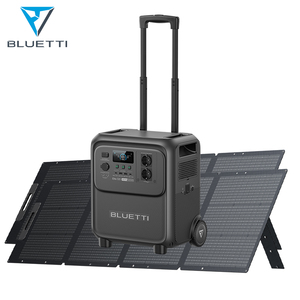
High-density LiFePO4 battery architecture designed for immediate field energization of small-to-medium UAV nesting boxes. Supports 120V/230V dual AC outputs and direct high-amperage solar MPPT input.
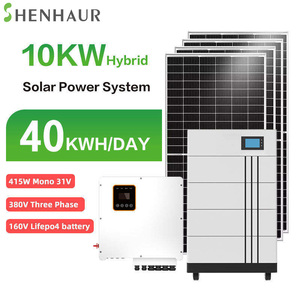
Complete turnkey solar power array with modular rack-mounted LiFePO4 battery banks. Engineered to maintain continuous 24/7 power loads for multi-bay autonomous drone swapping stations.
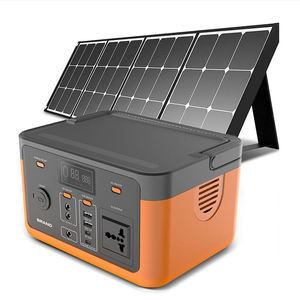
Modular power conversion unit featuring ultra-fast recharge capabilities. Ideal for lightweight perimeter monitoring nests, remote weather telemetry, and field maintenance units.
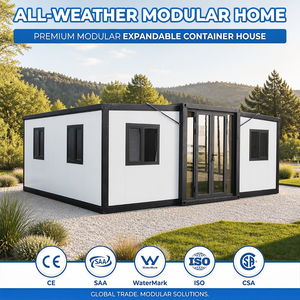
Heavy-duty prefabricated ISO modular container housing designed for housing large drone docks, command telemetry servers, climate control HVAC units, and central battery banks.
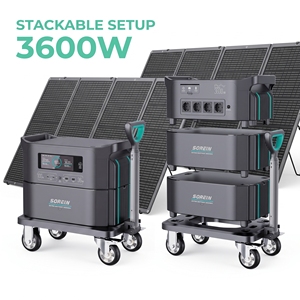
Integrated power control center combining dual-channel MPPT solar charging, AC bypass, and pure sine inverter output. Direct plug-and-play operation for enterprise drone hangars.
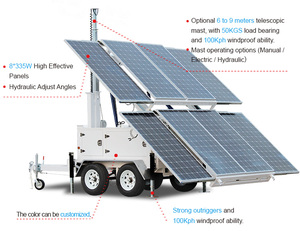
Towable high-capacity solar trailer with automated tilt adjustment and integrated communications mast. Built for rapidly deploying autonomous drone nesting hubs in temporary survey zones.
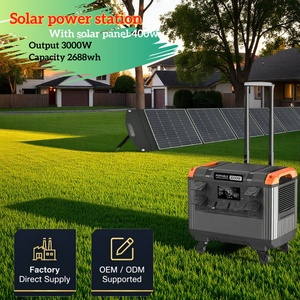
Uninterruptible Power Supply (UPS) power engine featuring ultra-fast dynamic recharging. Protects sensitive drone flight control telecommunication servers against power sag.
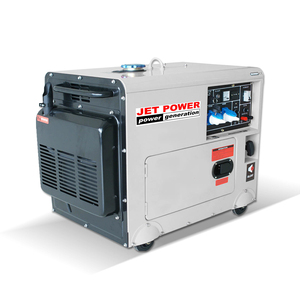
Ultra-quiet auxiliary backup engine with ATS automatic start capability. Serves as the tertiary layer of power security for high-demand, low-solar winter conditions in remote regions.
The global transition toward fully autonomous drone operations—specifically Beyond Visual Line of Sight (BVLOS) missions—has accelerated demand for automated charging hangars, robotic battery-swapping nests, and weatherproof docking stations. Enterprise buyers across defense, linear infrastructure inspection (highways, railways, power lines), offshore wind generation, and border security require highly resilient dock hardware paired with guaranteed field power generation.
Selecting the optimal drone docking OEM requires evaluating mechanical ingress protection (IP ratings), thermal management systems (heating/cooling cycles), payload handling mechanisms, charge controller interfaces, and operational power demands. Below is the definitive evaluation of the world's leading drone station manufacturers and their core technical profiles.
| Manufacturer / Ecosystem | Primary Architecture | Peak Dock Load | Operating Temp Range | Optimal Off-Grid Power Sizing |
|---|---|---|---|---|
| DJI Dock Series (Dock 2 / Matrice) | Rapid Contact Charging / Fixed Base | 1000W - 1500W (Fast Charge) | -35°C to +50°C (HVAC active) | 1.5kW Solar Array + 5kWh LiFePO4 Base |
| Percepto Air Max / Air Mobile | Automated Payload & Battery Swapping | 800W Base / 2000W Peak | -20°C to +55°C | Hybrid Micro-Wind + 3.2kW Solar Array |
| Skydio Dock / Dock for X2 | Compact Enclosure / Dynamic Alignment | 400W Base / 800W Peak | -10°C to +45°C | 800W Portable Solar Power Station |
| Airobotics (Ondas Autonomous Systems) | Heavy Industrial Swapping / Ruggedized Shelter | 2500W Peak Swapping Load | -20°C to +50°C | 5kW Hybrid Microgrid + Generator Backup |
| Hextronics Universal Nests | Robotic Swapping / Multi-UAV Compatible | 600W Average / 1200W Peak | -15°C to +45°C | 2.4kW Solar + Deep Cycle AGM / Fuel Cell |
| Leading Edge Power (Custom Nests) | Turnkey Micro-Wind & Solar Off-Grid Energization | Scalable (5W to 500W Cont.) | -40°C to +60°C (Storm Rated) | Integrated LE-v150 Turbines + Monocrystalline PV |
| Foxconn Autonomous Drone Nest | High-Throughput Telecom Hub Nest | 1800W Operational Load | -20°C to +50°C | 10kW Containerized Off-Grid System |
| Easy Aerial Smart Nests | Military-Grade Tethered & Free-Flight Docks | 700W Base / 1500W Charge | -30°C to +50°C | 4kW Mobile Solar Trailer Base |
| Guangzhou HiveBotics Systems | Ultra-Dense Urban & Agriculture Nesting | 900W Fast Contact Charge | -10°C to +45°C | 3.2kWh Portable Power Unit + Foldable PV |
| Heisha Tech (D-NEST Architecture) | Open-Source OEM Charging Pads & Canopy | 500W - 1200W Adaptable | -20°C to +45°C | 3kW Integrated Inverter & LiFePO4 Array |
While docking hardware capabilities continue to advance, the single greatest failure point for remote UAV operations remains power availability. A drone nest installed along a pipeline, forestry zone, or coastal radar station lacks grid access. To prevent mission blackout, engineers must analyze duty cycles, idle power consumption, environmental HVAC draw, and dynamic charging bursts.
The autonomous drone charging infrastructure market is undergoing rapid technological convergence. Procurement specialists and system integrators must align their specifications with four macro engineering trends:
Relying on solar panels alone creates winter energy deficits during cloudy high-latitude periods. The industry is moving toward Micro-Wind + Solar + Methanol Fuel Cell tri-generation systems. Vertical-axis and horizontal-axis wind turbines harvest power through night and winter storms, keeping drone nest heating elements active without draining primary storage.
LiPo flight batteries cannot accept high-amperage charge currents below 5°C or above 45°C without severe degradation or thermal runaway risks. Modern stations incorporate localized micro-climate HVAC units that consume 300W to 800W of continuous idle power. Battery management software dynamically balances solar input to pre-condition batteries before recharging.
Deploying service technicians to remote offshore or alpine sites incurs huge OPEX costs. Next-generation power management hubs integrate Victron Cerbo GX or custom CAN-bus controller boards, broadcasting state-of-charge (SoC), individual cell voltages, fuel cell liquid levels, and micro-climate metrics via satellite or LTE networks in real time.
Specifying an enterprise drone nest energization system requires calculating **duty cycles** rather than nominal power ratings. A dock may consume only 30W while resting in standby mode, but as soon as a drone lands, the internal climate control, automated canopy motors, and high-amperage contact chargers create a instantaneous spike of 1,200W to 2,500W.
To deliver 7.56 kWh/day with a 99.99% operational uptime SLA in challenging latitudes, system architects utilize atmospheric reanalysis tools (such as ERA5 blended with the Global Wind Atlas). Sizing calculations must base solar panel watt-peak (Wp) capacity on the worst solar radiation month of the year (December/January in the Northern Hemisphere)—not annual averages.
With an engineering tradition rooted in Herefordshire, United Kingdom since 2009, Leading Edge Power designs, manufactures, and supports off-grid wind, solar, hybrid, and fuel-cell energization systems deployed across all 7 continents. From North Sea offshore wind farm substations (operating 72 km offshore in 27 m/s storm conditions) to polar research telemetry stations, our hardware is built for zero-tolerance environments.
Every small wind turbine, charge control panel, and custom IP-rated enclosure is assembled, tested, and certified in the UK to stringent quality standards.
Our engineering support staff hold Global Wind Organisation (GWO) offshore certifications, allowing us to install and service equipment on deep-water platforms and harsh terrain.
We provide full project lifecycle support: from initial ERA5 resource modeling and CAD enclosure design to UK factory acceptance testing and global remote telemetry setup.
A typical DJI Dock 2 setup requires approximately 50W to 100W of continuous power for standby telemetry and climate control, plus up to 1,000W during active flight recharging cycles. In temperate climates, a minimum configuration consists of a 1.2kWp to 1.8kWp monocrystalline solar array paired with a 5kWh to 8kWh LiFePO4 energy storage system to ensure 3 to 5 days of battery autonomy during poor weather.
Solar generation drops significantly during winter months, exactly when low temperatures trigger automated internal nest heaters. Micro-wind turbines (such as the LE-v150 Storm) generate steady electrical current overnight and during severe weather fronts, preventing severe battery discharge and preserving battery cycle life.
Industrial off-grid power systems utilize marine-grade anodized aluminum, stainless steel fasteners (A4/316 grade), specialized anti-corrosion coatings, and sealed IP66 electrical junction boxes. Wind turbines feature electromagnetic braking to survive continuous winds exceeding 27 m/s (60 mph).
Yes. Turnkey systems feature remote telemetry modules broadcasting data via LTE or Satellite (MQTT / Modbus protocol). Network administrators receive real-time alerts for battery State-of-Charge (SoC), ambient enclosure temperature, charging current, and fault diagnostics, eliminating unnecessary maintenance trips.
For mission-critical defense or infrastructure nests, a Direct Methanol Fuel Cell (EFOY) or automated silent diesel generator can be integrated as a tertiary backup layer. The system automatically triggers auxiliary charging when battery voltage drops below a preset threshold.
Contact our senior off-grid energy engineers today. Provide your site coordinates and drone dock model—we will perform a tailored site resource calculation and system design.