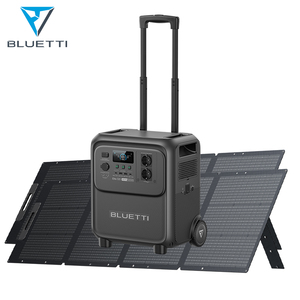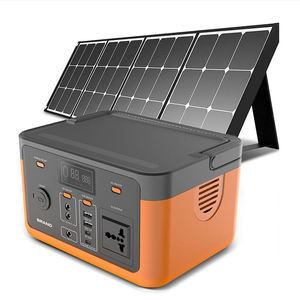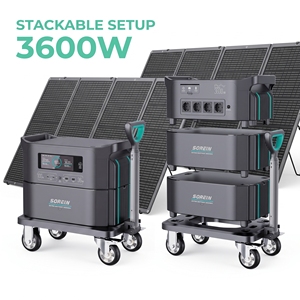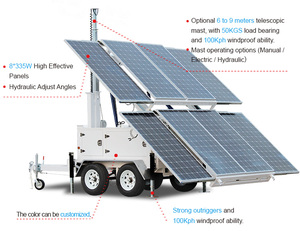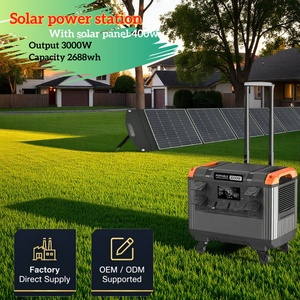
BLUETTI 3200Wh Solar Generator & Telecom Power Station
- 3200Wh LiFePO4 Battery Bank (3,500+ Cycles)
- 1800W Pure Sine Wave Output (120V/230V)
- Integrated MPPT Solar Controller Input
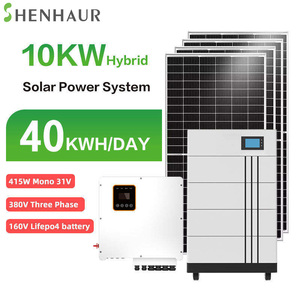
Engineered for continuous 24/7 continuous duty cycles in severe arctic, desert, and offshore marine environments. Fully customizable OEM/ODM hardware configurations.
In the era of global 5G rollouts, Edge Computing, and remote IoT connectivity, telecom tower power availability determines total network SLA reliability. Our OEM/ODM factories engineer customized power ecosystems designed to drastically reduce operational expenditure (OPEX) while securing 99.999% uptime ("five-nines").
A Telecom Power System provides stabilized direct current (DC, typically -48V DC or 24V DC) or alternating current (AC) to Base Transceiver Stations (BTS), microwave backhauls, fiber nodes, and satellite terminals. Unlike standard off-grid home setups, commercial telecom power requires strict galvanic isolation, high-efficiency MPPT tracking, multi-tier battery management systems (BMS), remote SNMP management, and rapid hybrid auto-start capabilities to survive in severe un-gridded geographic coordinates.
How our custom OEM/ODM solutions solve the core pain points of traditional off-grid telecom infrastructure.
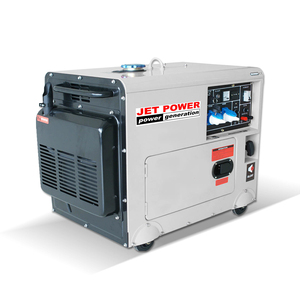
Seamlessly integrates solar photovoltaic arrays, micro wind turbines, and smart automated diesel generators or fuel cells. Advanced MPPT algorithm logic ensures renewable power is prioritized 100% of the time, engaging secondary power sources only during multi-day storm anomalies.
Deploying advanced Lithium Iron Phosphate (LiFePO4) chemistry engineered for extended cycle life (3,500 to 6,000 cycles at 80% DoD). Features built-in thermal management, active balancing, and zero-risk cell construction, operating across extreme temperatures from -20°C to +60°C.
Every custom power enclosure includes cloud-connected remote telemetry cards. Network Operation Centers (NOCs) monitor battery State-of-Charge (SoC), individual cell voltages, ambient temperature, real-time load current, and fuel reserves via encrypted MQTT and SNMP protocols.
| Engineering Feature | Standard Consumer Power Units | Industrial OEM/ODM Telecom Systems |
|---|---|---|
| Battery Autonomy & Chemistry | Standard Li-ion or AGM (500-1000 cycles) | LiFePO4 Deep-Cycle (3500-6000+ cycles) |
| Operational Temperature Range | 0°C to 40°C (Unregulated) | -35°C to +65°C (Climate-Controlled Enclosures) |
| Remote Network Monitoring | Basic Bluetooth / Local App | SNMPv3, Modbus RTU, MQTT Cloud NOC Telemetry |
| UPS Switching Latency | 10ms - 20ms (Potential Equipment Reboot) | 0ms Zero-Transfer Continuous Online Architecture |
| Ingress & Corrosion Protection | IP20 - IP44 Standard Plastic Body | IP65 / NEMA 4X Marine-Grade Stainless / Aluminum |
| Customization (OEM/ODM Capability) | Fixed Off-the-Shelf Specifications | 100% Tailored Voltage, Form Factor, Wiring & Firmware |
Key technological and market shifts reshaping how telecommunication tower operators and EPC contractors procure remote energy infrastructure.
Global carriers are mandated to reduce carbon footprints. The procurement shift from legacy diesel-only generators to Solar-Wind-Battery Hybrid Systems reduces generator runtime by 70% to 95%, cutting site delivery visits and fuel logistics costs exponentially.
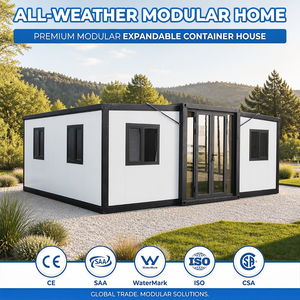
Operators are moving away from brick-and-mortar tower equipment rooms toward prefabricated, Expandable Equipment Containers. Integrating battery racks, rectifiers, solar charge controllers, and HVAC systems directly at the factory cuts on-site installation time from weeks to hours.
For extreme winter locations where solar yield drops near zero, procurement managers are specifying zero-emission Methanol Fuel Cells as backup generators. Concurrently, emerging solid-state battery technology is being trialed for ultra-high energy density requirements.
While premium industrial LiFePO4 hybrid setups require a 15–20% higher initial Capital Expenditure (CAPEX) compared to lead-acid diesel systems, the Operational Expenditure (OPEX) savings yield a complete payback within 14 to 22 months of continuous field deployment.
Leveraging state-of-the-art British and international engineering standards to deliver custom-built, field-tested power enclosures worldwide.
ISO 9001 and ISO 14001 certified manufacturing facilities. Every unit undergoes automated thermal chamber testing, full electrical load burn-in, and vibration stress analysis before export authorization.
Our in-house firmware and electrical engineering teams design custom PCB boards, custom chassis dimensions, specific brand labeling, and custom communication gateways to meet your RF network specs.
Deployed across 7 continents — from extreme North Sea wind platforms to African desert microcells. Our technicians hold Global Wind Organisation (GWO) offshore certifications for complex site support.
Comprehensive technical clarity on specifying, ordering, and deploying off-grid OEM/ODM telecom power systems.
The global telecommunication standard is nominal -48V DC (operating between -40.5V DC to -57V DC). However, our OEM/ODM custom facilities build systems configured for positive ground (+24V DC), pure sine wave AC (110V/220V/230V), or dual AC/DC bus outputs based on your specific Base Transceiver Station (BTS) or microwave radio gear requirements.
Battery autonomy is calculated based on the site's continuous watt-hour consumption during the worst solar radiation month of the year. We cross-reference historical meteorological data (ERA5 reanalysis blended with the Global Wind Atlas) with your load profile. Typically, standard deployments are sized for 3 to 7 days of complete autonomy without any renewable input or generator fallback.
Yes. OEM/ODM marine-spec units utilize IP66 / NEMA 4X grade stainless steel or anodized marine aluminum enclosures with C5-M anti-corrosion coatings. Turbines and solar mountings feature sealed stainless fasteners, salt-fog resistant gaskets, and conformal-coated internal circuit boards proven in offshore North Sea platforms.
Because we support both pilot prototype deployments and full network rollouts, our MOQ varies: for large containerized hubs or high-capacity hybrid trailers, the MOQ is 1 unit. For customized small power packs or specific telemetry box enclosures, MOQ typically starts at 5 to 10 units.
Integrated SNMPv3 / MQTT management boards broadcast real-time metrics (State of Charge, power output, temperature, intrusion alerts) directly to your NOC dashboard. Automated threshold alerts flag degraded cells or low fuel levels days before a site reaches critical low-voltage disconnect (LVD), allowing scheduled preventive maintenance instead of costly emergency dispatch.
Speak directly with our senior power systems engineering team. Share your site coordinates, load profiles, or project tender specifications for an honest, data-driven feasibility analysis and factory quote.