Designed & manufactured in Herefordshire, UK — shipping worldwide Mon–Thu 9–5 | Fri 9–4 | +44 (0)1981 241668

Explore our standard and turnkey OEM/ODM off-grid systems, microgrid stations, containerized energy storage units, and heavy-duty generators built to rigorous international engineering standards.
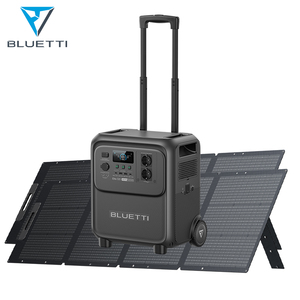
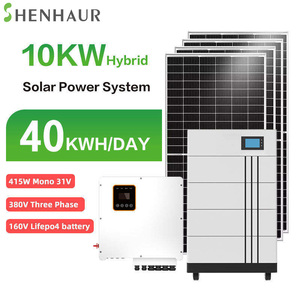
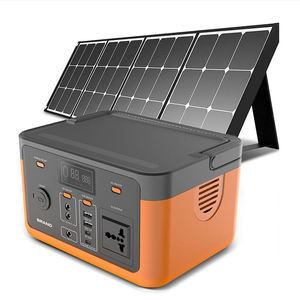
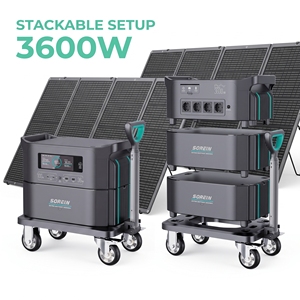
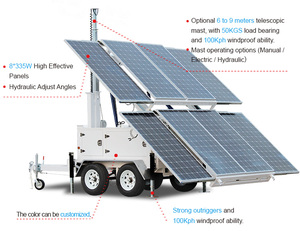
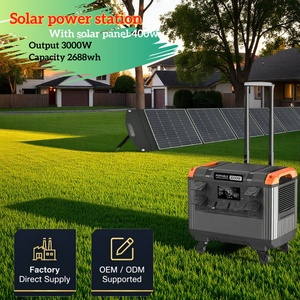
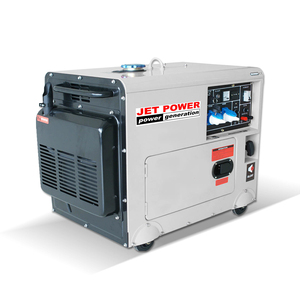
Since 2009, our engineering team in Herefordshire, United Kingdom, has designed, manufactured, and deployed custom off-grid power systems across all seven continents—from extreme sub-zero telemetry stations to harsh offshore wind environments in the North Sea.
We assemble, program, and stress-test micro-wind turbines, solar charge controllers, LiFePO4 battery modules, and weatherproof control enclosures within our UK facility under ISO-aligned quality management.
Our field service personnel hold Global Wind Organisation (GWO) certifications, guaranteeing that the engineers who design your custom off-grid power hardware possess the offshore qualifications to support remote infrastructure.
We eliminate design guesswork by analyzing site-specific GPS coordinates against ERA5 reanalysis weather data and Global Wind Atlas databases to guarantee continuous winter load autonomy.
The global transition toward decentralized, resilient energy systems has reshaped the requirements for industrial off-grid power generation. B2B buyers, procurement executives, and system integrators are no longer looking for standalone diesel generators or basic solar installations; today’s industrial projects demand highly reliable, zero-maintenance hybrid power solutions capable of operating in extreme isolation without human intervention.
As telecom networks transition to 5G infrastructure, environmental telemetry stations expand into remote marine environments, and autonomous drone docking ports require continuous off-grid recharging, OEM/ODM manufacturers must deliver turnkey, custom-engineered energy platforms built around four macro procurement trends:
Relying on a single energy source creates vulnerability. Modern industrial off-grid specifications mandate multi-source hybrid architecture blending horizontal/vertical micro wind turbines, high-density monocrystalline solar arrays, deep-cycle LiFePO4 or AGM storage, and automated backup generators or methanol fuel cells.
Procurement managers now prioritize remote monitoring platforms equipped with IoT cellular or Starlink satellite connections. Real-time visibility into state of charge (SoC), individual cell voltage, thermal performance, and fuel levels reduces costly emergency site visits by up to 85%.
Legacy lead-acid and standard Lithium-ion batteries are being phased out in favor of Lithium Iron Phosphate (LiFePO4). With operational lifespans exceeding 3,500 to 6,000 deep cycles, superior thermal stability, and non-combustible characteristics, LiFePO4 represents the global standard for industrial microgrids.
From construction site security systems to emergency disaster recovery hubs, end-users require skid-mounted or towable trailer systems that non-specialist crews can deploy in under one hour without heavy machinery or onsite wiring.
Achieving total reliability in off-grid power engineering requires strict adherence to technical parameters. When evaluating an OEM/ODM supplier, enterprise procurement officers should verify the following architectural and structural benchmarks:
System failure in off-grid applications almost exclusively occurs during winter months when solar irradiance drops to its annual minimum. Superior OEM design dictates that generation and battery capacity be calculated using worst-month historical data (December/January in the Northern Hemisphere) rather than annual averages. Systems engineered by Leading Edge Power incorporate minimum 3 to 7 days of full battery autonomy, paired with dynamic load shedding functionality to protect critical primary telemetry circuits during extended storm events.
Whether deployed on offshore wind platforms in the German North Sea or high-altitude mountain monitoring stations, off-grid equipment faces severe environmental degradation. Industrial OEM manufacturing must incorporate ASTM B117 salt-spray resistant powder coatings, 316 stainless steel hardware, hermetically sealed IP67 electrical enclosures, and internal thermal management systems capable of maintaining battery discharge performance across temperature ranges from -30°C to +60°C.
The integration of advanced Maximum Power Point Tracking (MPPT) controllers with conversion efficiencies exceeding 99.5% ensures maximum harvesting of available solar and wind power under low light or partial shade conditions. Furthermore, dual-source hybrid controllers automatically manage wind turbine braking during extreme gale-force conditions (>27 m/s) while routing excess kinetic energy into dynamic dump loads to protect the battery bank from overcharging damage.
How we translate site environmental data and load requirements into turnkey, field-proven off-grid systems.
We break down continuous baseline wattage, peak surge loads, duty cycles, and input site coordinates for ERA5 weather data modeling.
Engineers select optimal generation ratios (Wind/Solar/Fuel Cell), battery sizing, structural mounting frames, and enclosure footprints.
Components are fabricated, wired, programmed, and subjected to rigorous multi-point electrical and environmental load simulation.
Turnkey systems are delivered worldwide with custom branding, full technical documentation, and live IoT cloud monitoring configuration.
Key technical and commercial queries addressed by our chief power systems engineers.
To deliver an accurate design, we require: (1) Continuous power consumption in Watts or kWh/day, (2) Peak load wattage, (3) Geographic deployment coordinates (for solar/wind irradiance analysis), (4) Desired battery autonomy days, and (5) Specific physical constraints or IP rating requirements.
Our hybrid architectures incorporate deep-cycle LiFePO4 or AGM battery storage sized for 3 to 7 full days of zero-generation operation. For critical infrastructure, systems can integrate an automated EFOY methanol fuel cell or diesel backup generator that automatically fires up when battery state-of-charge drops below a set threshold.
Yes. Models such as our LE-v150 Storm vertical axis wind turbine are engineered specifically for extreme environments, rated to withstand sustained winds exceeding 27 m/s (60 mph). Construction incorporates anodized aluminum, 316 marine-grade stainless fasteners, and sealed double-bearing systems.
We offer comprehensive white-label and customized production including: custom enclosure dimensions and RAL powder coat colors, private label metal plating, custom wiring harness layouts, tailored MPPT charging profiles, and customized cloud telemetry interface branding.
Every system can be integrated with Victron Cerbo GX monitoring units or proprietary IoT gateways that transmit system diagnostics—such as PV power input, battery health, load usage, and ambient temperature—over 4G/LTE, LoRaWAN, or satellite links directly to your desktop or mobile platform.
All custom OEM/ODM systems manufactured in our UK facility comply with relevant international standards including CE, UKCA, ISO 9001 quality compliance, UN 38.3 lithium transport safety, and IP65/IP67 ingress protection specifications.
Consult with our engineering team today to receive a complete energy resource assessment, custom sizing report, and factory-direct OEM proposal tailored to your application.