Designed & manufactured in Herefordshire, UK — shipping worldwide Mon–Thu 9–5 | Fri 9–4 | +44 (0)1981 241668

Precision-engineered hybrid power stations, mobile trailers, and deep-cycle LiFePO4 battery storage units designed to guarantee 100% operational uptime for meteorological Doppler LiDARs, optical remote sensors, and offshore telecommunications.
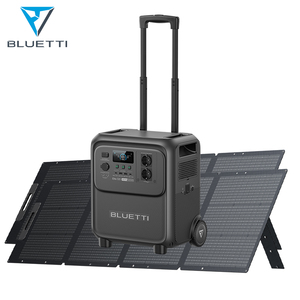
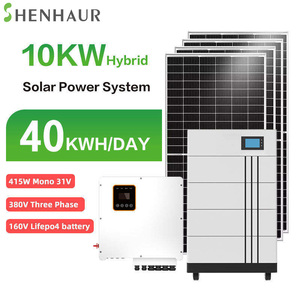
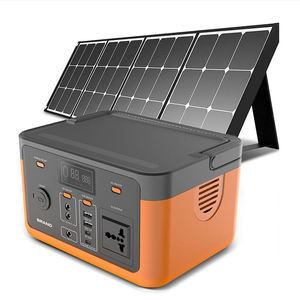
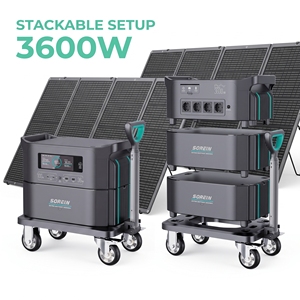
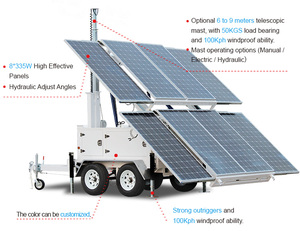
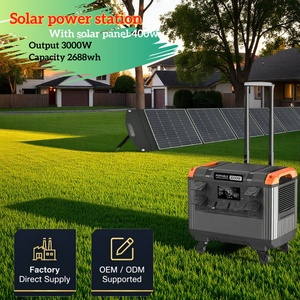
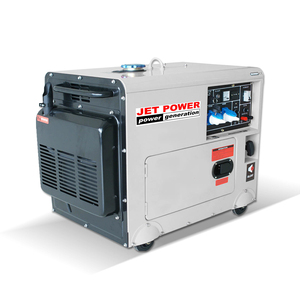
Unlocking continuous, zero-downtime performance for Doppler Wind LiDAR, Profiling Radiometers, and Remote Sensing Stations in the Most Demanding Marine, Alpine, and Desert Environments.
LIDAR (Light Detection and Ranging) systems and Doppler wind profilers have become mandatory assets for offshore wind resource assessment, airport wake-vortex monitoring, and meteorology. However, operating Doppler LiDAR systems off-grid introduces extreme energy challenges. Unlike standard telemetry, a commercial Doppler LiDAR consumes a continuous baseline power load ranging from 100 Watts to over 600 Watts depending on internal laser heating, optical head rotation, and real-time processing requirements.
When deployed on remote mountain ridges, offshore platforms, or un-electrified coastal sites, power loss leads to critical data gaps, invalidating multi-million-dollar wind farm feasibility assessments. Traditional diesel generator solutions require frequent, expensive maintenance visits and introduce carbon contamination. As an established OEM/ODM LiDAR Power Supplier & Exporter, our engineering division designs, manufactures, and integrates fully autonomous microgrid platforms combining high-efficiency solar arrays, micro wind turbines, custom MPPT control units, and deep-cycle battery chemistry.
Information Gain Insights: Our field data indicates that integrating horizontal or vertical micro wind turbines alongside monocrystalline PV arrays reduces necessary battery storage capacity by 42% in high-latitude winter months compared to solar-only platforms.
Standard commercial off-the-shelf (COTS) power stations frequently fail in remote LiDAR deployments due to thermal throttling, moisture ingress, and ineffective low-temperature charging algorithms. Our bespoke OEM/ODM manufacturing framework addresses these failure modes through rigorous hardware customization:
Building upon over 15 years of engineering excellence, our power architectures are designed, tested, and deployed across all seven continents—from offshore wind farms in the North Sea to remote Antarctic research stations.
All custom control panels, charge controllers, hybrid enclosures, and structural mounts are designed, assembled, and quality-tested in state-of-the-art facilities aligned with ISO standards, guaranteeing complete lifecycle repairability and parts availability.
Our specialized engineering technicians hold Global Wind Organisation (GWO) certification. The engineers who design your custom LiDAR power station are certified to install and service platforms up to 70km offshore in severe marine conditions.
Every power platform is sized using historical ERA5 reanalysis weather data blended with Global Wind Atlas datasets for your precise GPS coordinates, guaranteeing 3 to 7 days of full battery autonomy during the worst winter month.
Featuring anodized marine-grade aluminum, 316 stainless steel fasteners, and anti-corrosive powder coatings. Systems are field-proven to survive sustained wind speeds exceeding 27 m/s (60 mph) and salt-laden air.
With comprehensive UN38.3, CE, MSDS, and ISO certifications, our logistically compliant power modules are shipped efficiently by air, sea, and land to tier-one contractors, utilities, and telecom operators worldwide.
Gain live remote visibility of state-of-charge, power generation, load usage, internal temperatures, and fuel reserve levels via a centralized cloud dashboard, receiving intelligent threshold alerts before any blackout risk occurs.
How international energy companies, offshore developers, and environmental monitoring agencies are transforming their off-grid sourcing criteria to meet strict net-zero goals and zero-downtime demands.
Procurement teams are shifting away from standalone solar or diesel platforms toward hybrid tri-fuel configurations (Solar + Wind + Fuel Cell/AGS). Combining monocrystalline PV arrays with micro wind turbines and automated methanol fuel cells guarantees continuous coverage during prolonged atmospheric stagnation events without human intervention.
While deep-cycle AGM batteries remain popular for extreme sub-zero static deployments, modern B2B tenders increasingly demand customized OEM LiFePO4 (Lithium Iron Phosphate) power banks fitted with internal heating blankets. LFP offers over 4,000 charge cycles, an 80% reduction in transport weight, and superior volumetric power density.
Future-proof procurement specifications now explicitly mandate cloud-connected telemetry interfaces. System operators require real-time remote configuration capability, automated cell-balancing alerts, and predictive maintenance diagnostics transmitted directly via satellite links to avoid high-cost offshore vessel dispatches.
Key engineering innovations reshaping next-generation off-grid power stations, micro generators, and remote sensing telemetry platforms.
To reduce field commissioning time from days to under two hours, R&D engineering is focusing on fully integrated containerized skids and mobile trailer systems. Folding solar panel wings, pre-wired internal inverter racks, and quick-connect weather-proof sockets enable non-specialist field crews to commission full 5KW platforms rapidly.
Next-generation OEM power controllers utilize machine learning algorithms to evaluate weather forecast telemetry. By anticipating multi-day low-irradiance conditions, the controller can dynamically power down auxiliary optical heaters or secondary communications modules while preserving continuous power to the primary Doppler LiDAR unit.
Development in vertical-axis (VAWT) and horizontal-axis (HAWT) micro turbines emphasizes startup wind speeds as low as 1.5 m/s. Enhanced magnetic levitation bearings and carbon-fiber composite blades allow wind generators to generate trickle-charge power even in light breeze conditions.
The integration of Direct Methanol Fuel Cells (DMFC) as an automatic back-up generator eliminates diesel exhaust contamination, which can interfere with optical LiDAR lens clarity and atmospheric backscatter readings in delicate environmental study zones.
Comparative engineering matrix evaluating conventional power sources against OEM/ODM Customized Hybrid LiDAR Power Stations.
| Evaluation Parameter | Diesel Generator Only | Solar PV Only | OEM/ODM Hybrid (Solar + Wind + LFP + Fuel Cell) |
|---|---|---|---|
| Power Reliability (Uptime) | 85.0% (High risk of engine stall) | 70.0% (Fails during dark winter) | 99.99% Continuous Operational Uptime |
| Maintenance Interval | Every 250 - 500 Hours | Annual Visual Inspection | 24+ Months Extended Service Intervals |
| Operational Temperature Range | -10°C to +45°C | -20°C to +50°C | -40°C to +60°C (Insulated & Heated) |
| Refuelling / O&M Costs | Extremely High (Helicopter/Vessel) | Zero Fuel Cost | Ultra-Low (Automated Micro Backup) |
| Remote Telemetry & Control | Basic Engine Alarm | Basic MPPT Volt Meter | Full Satellite Dashboard & Modbus/Canbus API |
| Environmental Contamination | High Risk (Oil & Exhaust) | Zero Emissions | 100% Eco-Compliant for Delicate Biomes |
Answers to key technical questions asked by system integrators, specifiers, and procurement officers when sourcing OEM/ODM off-grid LiDAR power stations.
Send us your site coordinates and LiDAR equipment load profiles. Our senior application engineers will model your meteorological resource data and provide a bespoke engineering quote within 24 hours.