Designed & manufactured in Herefordshire, UK — shipping worldwide Mon–Thu 9–5 | Fri 9–4 | +44 (0)1981 241668

Engineered for high-C-rate fast charging, extreme site autonomy, and seamless integration with commercial UAV nesting docks.
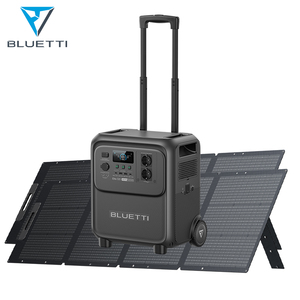
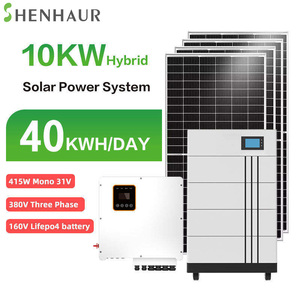
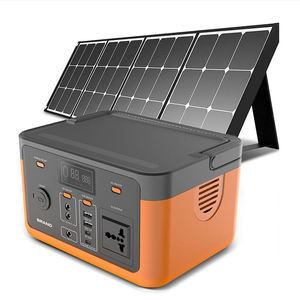
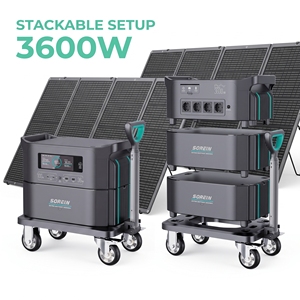
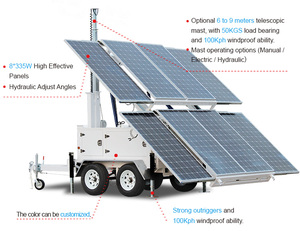
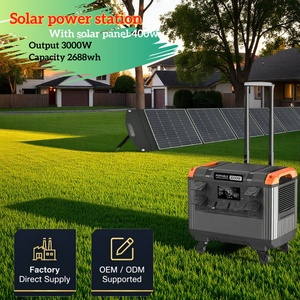
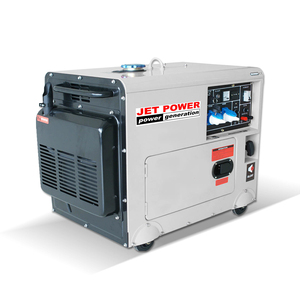
A comprehensive architectural breakdown of high-density charging systems optimized for commercial drone fleets, autonomous nesting stations, and off-grid remote telemetry assets.
Modern industrial UAV operations—ranging from aerial LiDAR mapping to agricultural spraying—demand ultra-fast turnaround times. Our bespoke OEM chargers utilize Silicon Carbide (SiC) and Gallium Nitride (GaN) power switching transistors to achieve charge currents up to 50A per channel.
By implementing adaptive Constant Current/Constant Voltage (CC/CV) algorithms with dynamic internal resistance measuring, our system recharges 6S to 14S LiPo and LiFePO4 battery packs to 90% capacity in under 25 minutes without inducing excessive thermal stress.
For operations located beyond grid infrastructure—such as offshore wind turbine inspection or border security—power supply continuous reliability is non-negotiable. Our off-grid drone charging platforms combine MPPT solar charge controllers, small horizontal/vertical axis wind turbines, and deep-cycle battery banks.
Using ERA5 meteorological reanalysis blended with site-specific microclimate data, we size localized power arrays to maintain 100% drone docking availability through extended dark, low-wind winter conditions.
"Drone-in-a-Box" (DIB) systems require seamless electrical, physical, and communications protocol handshake between the ground enclosure and the flight controller. We supply engineered ODM internal charging modules supporting contacts-based sliding pads, magnetic inductive coupling, and mechanized pack-swapping assemblies.
Every custom charging module features isolated CAN-bus, SMBus, and RS485 telemetry passing battery cell state-of-health (SoH), temperature profiles, and cycle counts directly to central cloud control platforms.
Key market vectors shaping global enterprise specifications for uncrewed aerial system ground support equipment (GSE).
As enterprise drone manufacturers transition from legacy LiPo chemistries to high-energy-density solid-state and silicon-anode cells, charging infrastructure must evolve. Solid-state packs feature unique charging curves and stricter upper-voltage limits per cell to prevent dendritic growth.
Procurement teams are actively phasing out single-chemistry legacy chargers in favor of OEM customizable software-defined chargers. Our next-generation power units feature programmable firmware capable of switching charging algorithms dynamically based on incoming NFC or CAN identification tags embedded within flight batteries.
Deploying permanent grid connections to remote survey zones or utility corridors often incurs massive civil engineering costs and regulatory delays. Enterprise buyers now prioritize turnkey, trailer-mounted, or drop-in containerized power platforms equipped with multi-source hybrid inputs.
The integration of ultra-silent backup generators, solar arrays, and high-capacity LiFePO4 buffer storage into unified power shelters allows operators to establish autonomous drone surveillance zones within hours rather than months, substantially lowering Capital Expenditure (CapEx).
Industrial charging stations are no longer treated as passive power supplies; they are critical connected nodes on enterprise IoT networks. European and North American procurement directives increasingly mandate stringent cybersecurity controls for ground support hardware.
Our ODM solutions integrate hardware security elements, encrypted firmware update pipelines (OTA), and cloud monitoring APIs. Global fleet managers can monitor charging thermal profiles, trigger remote emergency shutdowns, and log complete carbon-offset data for corporate ESG compliance.
Deploying autonomous drones in extreme arctic conditions (-30°C) or scorching desert environments (+50°C) introduces severe battery degradation risks during rapid charging. Lithium plating occurs when charging cold batteries, while heat buildup leads to catastrophic thermal runaway.
Global procurement standards now enforce pre-charge thermal conditioning. Our advanced chargers feature internal liquid-cooling loops and heating elements that automatically bring battery cells to an optimal 25°C window before delivering peak charging currents, preserving pack life up to 300% longer.
How cutting-edge power electronics, AI analytics, and renewable microgrids are driving the next decade of autonomous flight enablement.
Integrating machine learning models inside the charger's microcontroller allows real-time evaluation of electrochemical impedance spectroscopy (EIS). By analyzing micro-fluctuations in cell voltage response during initial current pulses, the charger detects internal degradation, micro-short circuits, and moisture ingress before catastrophic failure occurs in flight.
To eliminate mechanical wear and exposure to salt spray in harsh marine dock environments, high-frequency magnetic resonant charging is maturing rapidly. Operating at 85kHz-135kHz, our experimental wireless ODM modules deliver up to 1.5kW of power across a 50mm air gap with 92% system efficiency, completely sealing electrical contacts from environmental corrosion.
For mission-critical operations requiring 99.999% power availability without fossil-fuel dependence, hybrid renewable infrastructure is the gold standard. Integrating compact methanol or gaseous hydrogen fuel cells with solar generation provides continuous DC trickle power into buffer lithium banks, ensuring uninterrupted high-current charging year-round.
With decades of combined experience in high-reliability off-grid renewable energy systems, micro-wind turbines, and industrial power conversion, we provide complete end-to-end design, prototyping, certification, and volume manufacturing for drone charging solutions worldwide.
Direct technical answers for procurement managers, systems integrators, and engineering directors.
We offer total hardware and software customization. This includes custom input/output voltage profiles (supporting standard 6S, 12S, 14S, or specialized high-voltage solid-state packs), custom CAN-bus protocol implementation, tailored form-factor IP-rated enclosures, private-label branding, customized wiring harnesses, and integration with third-party automated dock mechanisms.
Our power engineers calculate energy autonomy using ERA5 satellite meteorological reanalysis combined with Global Wind Atlas datasets. Rather than sizing for annual averages, we size generation (solar panels + micro wind turbines) and buffer storage (deep-cycle LiFePO4 or AGM banks) for the worst-performing month of the year. For mission-critical sites, we integrate automated methanol or fuel-cell backup units.
Our high-power charging modules employ active thermal monitoring across individual cell channels using precise NTC thermistors. If internal pack temperatures exceed safe pre-set thresholds (typically >45°C), the charger automatically steps down current or engages auxiliary forced-air/chiller cooling systems until temperatures stabilize, preventing battery thermal runaway and extending cycle life.
All our manufacturing and assembly facilities align with ISO 9001, ISO 14001, and ISO 45001 quality standards. Specific product lines are certified under CE, FCC, UL 1741, UN 38.3 (battery transport safety), and IEC 62109. We manage full export documentation, UN hazardous materials packaging compliance, and customs clearance support for worldwide shipping.
Yes. Every OEM charger can be equipped with telemetry gateways supporting Cellular (4G/5G), Satellite (Starlink/Iridium), or Ethernet connectivity. Operators gain real-time visibility into State-of-Charge (SoC), State-of-Health (SoH), live current delivery, solar harvest rates, ambient temperature, and automated fault alerts directly via MQTT or REST API endpoints.
Initial engineering design and functional CAD/PCB prototypes are typically delivered within 4 to 6 weeks. Following client validation and field testing, full mass production runs take between 6 to 8 weeks depending on component sourcing requirements and enclosure customization levels. Expedited prototyping channels are available upon request.
Partner with a global leader in OEM/ODM industrial drone chargers, off-grid power stations, and custom battery management engineering. Speak directly with our senior power engineers today.