Designed & manufactured in Herefordshire, UK — shipping worldwide Mon–Thu 9–5 | Fri 9–4 | +44 (0)1981 241668

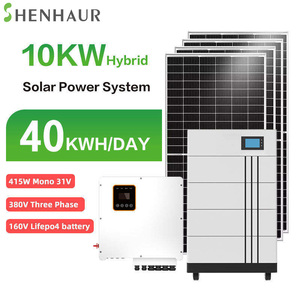
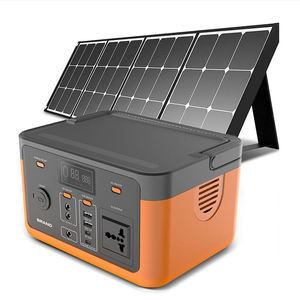
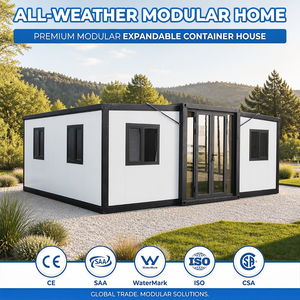

As a leading designer and exporter of off-grid energy architecture, our manufacturing matrix bridges precision UK-standard engineering with scalable global manufacturing facilities. Established with a core mandate to power critical remote infrastructure—ranging from offshore telemetry rigs in the North Sea to off-grid telecom hubs across Latin America—our custom polycrystalline photovoltaic modules represent the apex of economic viability, thermal resistance, and long-term mechanical resilience.
While standard consumer-grade monocrystalline panels chase theoretical peak efficiency under laboratory conditions, industrial EPC specifiers understand that real-world environments present harsh variables: high ambient temperatures, diffuse solar radiation, salt-spray oxidation, micro-vibrations, and extreme wind loads. Custom OEM polycrystalline silicon modules, manufactured with engineered ingot casting and multi-busbar (MBB) interconnectivity, exhibit superior thermal co-efficients and structural durability, making them the preferred architecture for remote industrial microgrids, hybrid power stations, and custom portable solar enclosures.
Unlike off-the-shelf standard dimensions, OEM contract manufacturing allows project engineers to specify exact voltage curves (Vmp/Voc), custom glass-to-backsheet thermal dissipation profiles, integrated anti-PID (Potential Induced Degradation) encasements, and specialized junction box ingress ratings (IP68) tailored precisely to external charge controllers and LiFePO4 energy storage systems.
Precision matching of Voc and Vmp parameters to optimize continuous charge efficiency in 12V, 24V, and 48V DC bus architectures without conversion losses.
100% full-luminescence electroluminescence testing prior to and following lamination to guarantee zero micro-cracks or inactive wafer segments.
IEC 61701 Level 6 compliance featuring anodized aluminum framing (≥15µm oxidation film) and salt-air corrosion resistant backsheets.
The photovoltaic industry has witnessed rapid technical iteration over the past decade. While market headlines frequently center around Mono-PERC and TOPCon cell structures, polycrystalline technology has quietly undergone significant metallurgical and optical transformations. Modern custom OEM polycrystalline panels utilize advanced cast-mono (HP-Poly / High-Performance Polycrystalline) silicon wafers, wet-chemical Black Silicon texturing, and multi-busbar cell layouts that drastically lower power loss resulting from shading and resistance.
Through directional solidification control and granular silicon seed optimization, contemporary polycrystalline ingots achieve significantly smaller grain boundaries and lower interstitial oxygen/carbon concentrations. This structural refine directly minimizes Light-Induced Degradation (LID) to under 1.5% during the first year of deployment, ensuring consistent long-term power generation in off-grid telecom and telemetry stations.
Traditional polycrystalline wafers suffered from high surface reflectivity due to randomized crystal orientation, which prevented standard acid etching from producing uniform light-trapping pyramids. The incorporation of reactive ion etching (RIE) nanoscale texturing—popularly termed Black Silicon—has reduced poly-panel surface reflectance to below 3%. This drastically improves morning and late-afternoon power harvesting, capturing low-angle diffuse light significantly better than untreated mono wafers.
A critical metric for global EPC buyers operating in desert or equatorial regions (such as the Middle East, Sub-Saharan Africa, and Northern Australia) is the Temperature Coefficient of Maximum Power (Pmax). While mono-crystalline modules lose significant output efficiency as cell temperatures exceed 25°C, engineered high-performance polycrystalline panels exhibit a flatter thermal degradation slope (typically -0.36%/°C compared to older mono variants at -0.42%/°C). Over an annual operating cycle in high-ambient environments, this translates into up to 4.8% higher total energy yield per watt peak installed.
| Performance Specification | Standard Polycrystalline | High-Performance OEM Poly (Cast-Mono) | Industrial Monocrystalline |
|---|---|---|---|
| Average Cell Efficiency | 17.5% - 18.5% | 19.8% - 20.8% | 21.5% - 22.8% |
| Temperature Co-efficient (Pmax) | -0.39% / °C | -0.35% / °C | -0.38% / °C |
| Diffuse / Low-Light Response | Moderate | High (Black Silicon RIE) | Moderate to High |
| First Year LID Degradation | < 2.5% | < 1.2% | < 1.5% - 2.0% |
| Mechanical Load (Front/Rear) | 5400 Pa / 2400 Pa | Up to 7200 Pa / 3600 Pa (Custom Frame) | 5400 Pa / 2400 Pa |
| Bos & Capital Cost per Watt | Lowest Baseline | Optimal Balance | Higher Initial CAPEX |
For procurement directors, system integrators, and foreign equipment exporters, securing reliable solar components requires navigating evolving international trade dynamics, carbon tariff mechanisms (such as the EU CBAM), and strict ESG sourcing requirements. The future of B2B photovoltaic procurement is transitioning away from standardized commodity panels toward high-reliability, custom-engineered OEM partnerships.
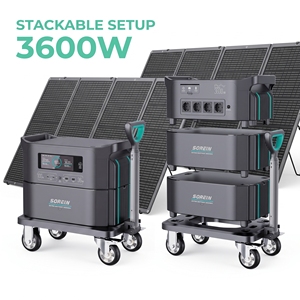
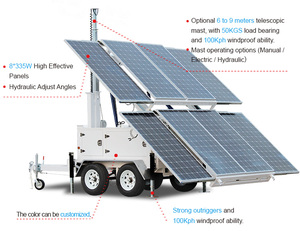
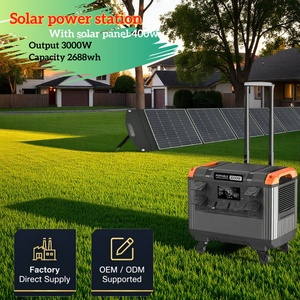
The global market for standalone solar panels is rapidly diminishing in favor of fully integrated renewable system packages. Modern buyers require custom panel dimensions that directly interface with portable LiFePO4 power stations, expandable containerized housing arrays, and mobile solar trailers. OEM manufacturers must possess structural engineering capabilities to supply customized framing, quick-connect IP68 cabling, and anti-vibration rubber gaskets that simplify field assembly.
Tier-1 international procurement mandates full transparency across the metallurgical supply chain. From quartz mining and polysilicon refining to ingot pulling, wafer slicing, and cell assembly, exporters must provide verified Documentation of Origin and ISO 14001 compliance. Custom OEM partners who maintain closed-loop quality tracking provide significant risk mitigation against trade embargos and customs detentions in Western markets.
With the global expansion of 5G telemetry networks, remote IoT environmental monitoring, and autonomous drone docking stations, demand for micro-sized (5W to 150W) high-durability polycrystalline panels is surging. These specialized applications cannot accommodate standard 2-meter commercial roof panels; they demand bespoke footprint dimensions, shatterproof tempered glass, integrated charge controllers, and customized mounting angles engineered for perpetual unattended operation.
Our manufacturing philosophy centers on delivering absolute reliability where grid power is nonexistent. By offering comprehensive original equipment manufacturing (OEM) and original design manufacturing (ODM) services, we empower system integrators to build robust products tailored to their precise operational parameters.
Bespoke panel lengths, widths, and thickness specs starting from micro-solar sensor panels up to full-scale 72-cell industrial modules.
Options for ultra-clear textured tempered glass, lightweight ETFE/PET flexible laminates, anti-soiling hydrophobic coatings, and high-PID EVA films.
Heavy-duty anodized aluminum frames in black, silver, or custom powder-coating with pre-drilled mounting holes, grounding lugs, and corner protectors.
Custom cable lengths, genuine MC4 or Deutsch industrial connectors, integrated Schottky bypass diodes, and IP67/IP68 potted junction boxes.
Our quality management system is certified under ISO 9001, ISO 14001, and ISO 45001. Every production batch undergoes rigorous accelerated life testing in humidity freeze chambers, salt mist exposure tanks, and dynamic mechanical load test rigs. This relentless focus on durability is why our products maintain operational uptime across offshore wind platforms, alpine monitoring stations, and industrial off-grid mobile arrays worldwide.
For fully custom glass/backsheet dimensions and specialized voltage configurations, our baseline MOQ typically starts at 500 units for small-form modules (<100W) or 100 kW total capacity for standard framing sizes. However, for prototyping and pilot engineering projects, we support initial sample production runs following technical drawing sign-off.
Engineered high-performance polycrystalline panels exhibit an optimized temperature co-efficient (Pmax as low as -0.35%/°C). In environments where surface cell temperatures regularly exceed 60°C (such as desert installations), polycrystalline modules suffer lower relative heat-induced efficiency drop-offs, yielding a highly stable levelized cost of energy (LCOE) per operating hour.
Our polycrystalline panel series are fully certified under IEC 61215 (Design Qualification & Type Approval) and IEC 61730 (Module Safety Qualification). Furthermore, for harsh marine and coastal deployments, our panels possess IEC 61701 Salt Mist Corrosion and IEC 62716 Ammonia Resistance certifications, complemented by CE, RoHS, and UL 1703 compliance documentation.
We back our custom industrial modules with a standard 12-year Limited Product Warranty covering materials and workmanship, alongside a 25-year Linear Power Output Warranty guaranteeing no less than 90% power output at Year 10 and no less than 80% power output at Year 25.
Yes. Every OEM junction box can be custom-configured with high-capacity Schottky barrier bypass diodes to minimize hot-spot formation and maintain string current flow even under partial physical shading from antenna masts, tree canopies, or structural frame overhangs.
Whether you require custom-dimension polycrystalline panels for off-grid telemetry, portable power equipment, or international utility-scale projects, our engineering team provides complete technical support from initial CAD modeling to final export delivery.