Designed & manufactured in Herefordshire, UK — shipping worldwide Mon–Thu 9–5 | Fri 9–4 | +44 (0)1981 241668

Direct OEM manufacturing of high-pressure liquid metering pumps, direct methanol fuel cell (DMFC) stacks, and heavy-duty reformer generators for continuous backup utility.
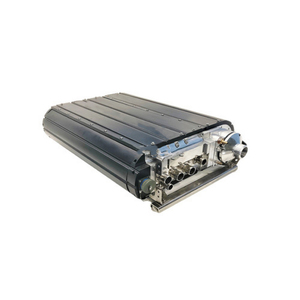
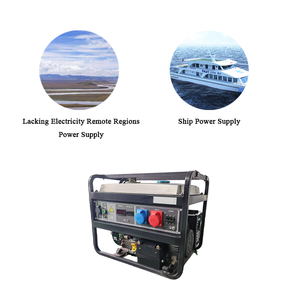
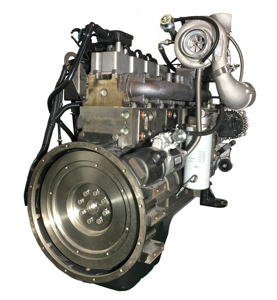
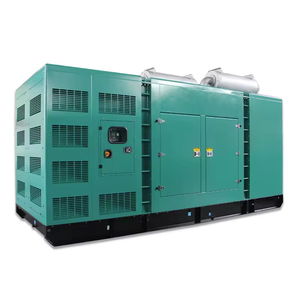
Transitioning from fossil-fuel baseline diesel generators to net-zero off-grid alternative systems through tailored OEM reforming and direct electrochemical conversion.
Liquid methanol ($CH_3OH$) offers a volumetric energy density of roughly 15.6 MJ/L, significantly outperforming gaseous hydrogen storage without requiring 700-bar high-pressure composite tanks or cryogenic cooling loops.
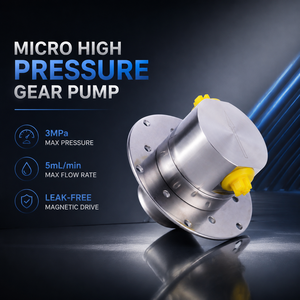
Precision micro-metering gear pumps engineered with high-coercivity magnetic couplings ensure leak-free liquid delivery under extreme 3.0 MPa pressures without mechanical shaft seal wear.
Built upon proven off-grid British OEM engineering standards, our methanol power systems are ruggedized for harsh marine-grade environments, remote telemetry nodes, and sub-zero climates.
Comprehensive comparative analysis of custom factory configuration tiers for continuous, prime, and emergency power applications.
| System Category / Product Tier | Rated Power Range | Fuel Conversion Tech | Operating Voltage | Primary Target Application |
|---|---|---|---|---|
| Micro-Metering Componentry | 0.5 kW – 5 kW Auxiliary | Magnetic Drive Gear Pump | 24V DC Brushless | Fuel Cell Reformer Feed & Dosing |
| Direct Methanol Vehicle APU | 5 kW – 30 kW Range Extender | High-Temp PEM / DMFC Stack | 48V – 400V DC Dynamic | EV Range Extension (600km Logistics) |
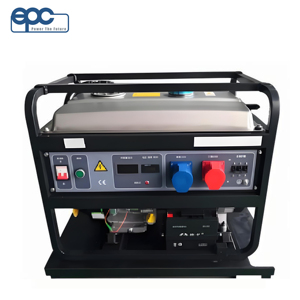
| Medium Renewable Genset | 15 kW – 18 kW Continuous | Integrated Steam Reformer | 220V / 240V AC Single Phase | Off-Grid Telecom & Remote Telemetry |
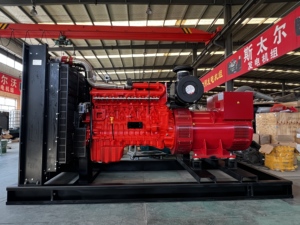
| Industrial Heavy Prime Power | 200 kW – 400 kW Base Load | 6-Cylinder Internal Combustion | 380V / 415V AC Three Phase | Mining, Construction & Data Centers |
Analyzing global supply chain evolution, clean energy compliance mandates, and Levelized Cost of Energy (LCOE) optimization for industrial buyers.
Corporate ESG imperatives and international carbon border adjustment mechanisms (CBAM) are compelling enterprise energy buyers to phase out fossil-derived fuels. Procurement trends demonstrate a rapid shift toward Green Methanol (e-methanol) produced via captured $CO_2$ and green hydrogen electrolysis.
By designing OEM engine systems and fuel cells with adaptive stoichiometric combustion and catalytic tolerance, our custom factory architectures seamlessly accept variable-purity bio-methanol inputs without compromising thermal efficiency or stack longevity.
While historic capital expenditure (CAPEX) for fuel cell systems exceeded traditional diesel gensets, operational expenditure (OPEX) calculations have fundamentally inverted. Extended maintenance cycles (from 500 hours on diesel engines to over 4,000 hours on methanol reforming systems) combined with zero particulate filter (DPF) regeneration overhead yield a favorable 5-year TCO trajectory.
Furthermore, avoiding fuel theft—a pervasive operational drain for remote telecom infrastructure running on diesel—saves fleet operators up to 18% in unbilled fuel losses annually.
Selecting the optimal electrochemical pathway based on continuous wattage demands, transient thermal response, and system footprint constraints.
DMFC systems convert liquid methanol directly into electrical energy without an intermediate gaseous reforming stage. Operating at low ambient temperatures ($60^\circ\text{C} - 80^\circ\text{C}$), DMFCs represent the optimal choice for silent, highly reliable low-wattage telemetry (5W to 500W constant loads).
Ideal for: Environmental sensors, maritime navigational buoys, and covert defense monitoring.
HT-PEM systems integrate an active thermal catalytic reformer that breaks down a $CH_3OH + H_2O$ liquid premix into hydrogen-rich synthesis gas. Operating between $160^\circ\text{C} - 200^\circ\text{C}$, these units handle medium to high base loads (5kW to 30kW) with thermal efficiency surpassing 45%.
Ideal for: Vehicle range extenders, remote microwave towers, and off-grid EV fast chargers.
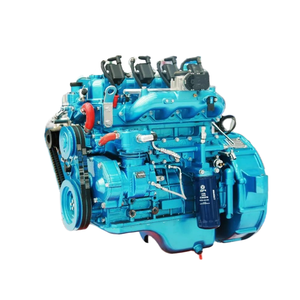
For megawatt-scale or multi-hundred-kilowatt continuous base loads (200kW to 400kW+), modified 6-cylinder heavy-duty engines utilize dedicated spark-ignition timing and anti-corrosive fuel injectors. These systems deliver massive industrial power at low CAPEX.
Ideal for: Industrial facilities, continuous factory backup, microgrid islanding, and heavy machinery.
Built upon robust UK-originated design methodologies and Pontrilas assembly rigor, our manufacturing facilities adhere strictly to ISO 9001 quality frameworks and ISO 14001 environmental management. Every custom methanol power system undergoes rigorous full-load burn-in testing, multi-axis vibration testing, and thermal imaging verification prior to international export.
Whether you require custom CANbus telemetry integration, custom-painted IP66 outdoor containment enclosures, or specialized GWO-certified offshore support, our engineering team directly co-develops solutions matching your precise duty cycle.
Consult an OEM Systems EngineerAddressing engineering, supply chain logistics, fuel blending, and operational durability for global B2B buyers.
A: Methanol is stored as a stable liquid under standard ambient temperature and pressure, eliminating the expensive thermal management required for lithium-ion storage or the 700-bar pressurization needed for compressed hydrogen gas. Compared to diesel, methanol burns clean with zero soot or particulate matter, eliminating catalyst clogging and significantly extending servicing intervals.
A: Yes. Our 3.0MPa micro metering gear pumps feature magnetic drive couplings that separate the 24V DC drive motor from the fluid chamber completely. Internal gears are constructed from high-grade PEEK polymer or SS316L stainless steel, with ceramic shafts preventing galvanic corrosion caused by raw methanol or water-mixture impurities.
A: Standard componentry (such as 24V gear pumps or standard 15kW generator sets) ships within 2 to 3 weeks. Custom OEM projects involving specialized voltage output configurations, remote telemetry protocols, or customized open-frame chassis typically range from 6 to 10 weeks from final P&ID sign-off.
A: Pure methanol has a freezing point of $-97.8^\circ\text{C}$. Our systems incorporate active thermal management loops that utilize exhaust heat to pre-heat the catalytic reforming reactor during startup, allowing cold-start operation down to $-40^\circ\text{C}$ without auxiliary grid heating.
A: All industrial generator sets and fuel cell systems come equipped with intelligent Victron Cerbo GX or custom PLC controllers supporting Modbus RTU/TCP, CANbus J1939, and SNMP. Users gain real-world web GUI access to monitor tank fuel levels, stack voltage degradation, load demands, and temperature profiles 24/7.
A: Absolutely. All units are engineered to meet CE, IEC 62282 fuel cell safety standards, and ATEX Zone 2 hazardous location directives where specified. Export packages include full factory inspection documentation, pressure test certificates, and international shipping documentation for hazardous material handling compliance.
Share your specific load profile, environment parameters, and volume targets with our senior application engineers to receive a optimized OEM technical proposal.
Contact Us