Designed & manufactured in Herefordshire, UK — shipping worldwide Mon–Thu 9–5 | Fri 9–4 | +44 (0)1981 241668

Explore our high-performance off-grid power solutions, heavy-duty solar generators, lithium power stations, and custom-engineered power trailers built for extreme environmental resilience.

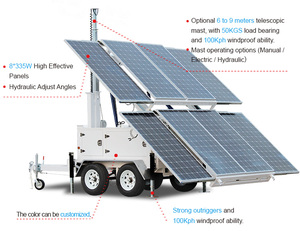
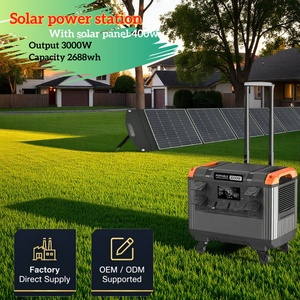
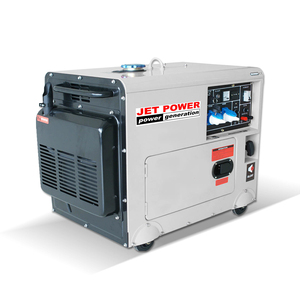
A comprehensive technical analysis of solar regulation topology, firmware customization, dynamic MPPT algorithms, and severe-environment manufacturing standards.
In modern off-grid energy storage systems, telecommunications towers, remote telemetry sites, and mobile utility platforms, charge controllers serve as the critical intelligence interface between renewable generation assets (solar arrays, wind turbines, hydro micro-turbines) and sensitive battery chemistries (LiFePO4, NMC, AGM, Gel). Selecting between Pulse Width Modulation (PWM) and Maximum Power Point Tracking (MPPT) is not merely a cost consideration—it dictates overall system yield, battery longevity, and thermal dissipation metrics under continuous duty cycles.
While PWM controllers act as an electronic switch connecting the solar array directly to the battery bank, forcing the solar panels to operate at the battery’s clamping voltage, industrial MPPT controllers utilize high-frequency synchronous buck-boost DC-DC converter topologies. By dynamically calculating the peak power voltage ($V_{mp}$) and current ($I_{mp}$) across shifting irradiance levels and ambient temperatures, high-performance OEM MPPT charge controllers consistently harvest up to 30% more usable energy compared to traditional PWM circuits.
As a specialized OEM manufacturer, our contract engineering teams customize power topologies to match specific OEM operating voltage windows—ranging from standard 12V/24V/48V systems up to custom 96V, 192V, and high-voltage DC bus architectures (300V-600V) required by industrial EV charging hubs and containerized microgrid solutions.

Standard commercial-grade charge controllers frequently fail when deployed in harsh marine, desert, or polar environments due to salt-spray corrosion, thermal throttling, and dielectric breakdown caused by condensation cycling. Our OEM charge controller manufacturing processes integrate military-grade conformal coatings (acrylic, silicone, or polyurethane resin), IP67/IP68 die-cast aluminum enclosures, and heavy-gauge solid copper busbars capable of enduring continuous vibration and rapid thermal expansion.
Following strict engineering protocols established across deployments on all 7 continents, our charge controller designs incorporate galvanic isolation between power stages and control intelligence. This prevents damaging ground loops and high-voltage transience from compromising sensitive communications equipment, telemetry sensors, and satellite terminals.
Battery chemistries have evolved beyond traditional flooded lead-acid architectures. Modern lithium iron phosphate (LiFePO4), lithium titanate (LTO), and emerging solid-state batteries require absolute precision in voltage threshold programming, thermal compensation, and balancing current control. OEM charge controller hardware engineered at our manufacturing facility features bespoke microcontrollers running proprietary C/C++ control loops.
Our OEM firmware development services provide global B2B clients with complete control over charging profile variables:
Compare our core OEM/ODM charge controller hardware platforms, customized to meet diverse industrial, marine, telecom, and commercial energy requirements.
| Specification Parameter | Telecom & IoT Series (OEM-S) | Industrial High-Power (OEM-H) | Severe Marine / Military (OEM-M) |
|---|---|---|---|
| Nominal System Voltages | 12V / 24V Auto-Select | 24V / 48V / 96V / 192V DC | 48V to 400V High-Voltage Bus |
| Max Charge Current Rating | 10A - 40A Continuous | 60A - 150A Modular | 100A - 300A Paralleled |
| Peak MPPT Efficiency | > 98.2% | > 99.4% (GaN Topology) | > 99.1% (SiC MOSFETs) |
| Operating Temperature Range | -35°C to +65°C | -40°C to +75°C | -50°C to +85°C Extreme |
| Communication Telemetry | RS-485 / Modbus RTU | CANbus 2.0B / Ethernet / SNMP | Dual Redundant CAN / 4G LTE IoT |
| Ingress Protection (IP Rating) | IP32 / IP54 Cabinet Mount | IP65 Heatsink Cooled | IP67/IP68 Hermetically Sealed |
| Compliance & Standards | CE, FCC Part 15B, RoHS | UL 1741, IEC 62109-1/2, IEEE 1547 | MIL-STD-810G, GWO Offshore Standard |
Combining decades of power electronics design expertise, rigorous British engineering principles, and high-throughput SMT manufacturing lines to deliver uncompromised reliability.
From initial circuit design, power component selection (FETs, inductors, microcontrollers), and thermal modeling to multi-layer PCB layout design—our engineering team executes 100% of product development in-house. This eliminates third-party licensing dependencies and guarantees long-term product lifecycle support.
Our ISO9001 and IATF16949 certified manufacturing facility operates high-speed automated Surface Mount Technology (SMT) assembly lines equipped with 3D Automated Optical Inspection (AOI), In-Circuit Testing (ICT), and 100% full-load burn-in testing chambers to ensure zero-defect shipment rates.
Modern microgrids require seamless data integration. We customize hardware interfaces supporting RS485, Modbus RTU/TCP, CANbus 2.0B, MQTT, and SNMP protocols, allowing integration into SCADA networks, remote telemetry monitoring tools, and enterprise cloud dashboards.
We streamline international market entry for our OEM partners by designing products from the schematic stage to comply with UL 1741, IEC 62109, CE, FCC, RoHS, and UN38.3 standards. Our internal laboratory performs pre-compliance testing for EMC, EMI, and safety.

For applications where solar input is supplemented by small horizontal or vertical axis wind turbines, standard solar charge controllers are insufficient. Wind turbines generate AC power requiring dynamic rectification, dump-load braking control, and over-speed protection algorithms to prevent mechanical breakdown during severe storms.
Our OEM hybrid charge controllers feature dual-input topology: an intelligent solar MPPT stage paired with an automated solid-state electronic braking system for wind generators. When battery banks reach 100% State of Charge (SOC) or wind speeds exceed maximum rated safety margins (such as sustained winds above 27 m/s), our controllers quietly divert surplus kinetic energy to solid-state dump loads, shielding the system from over-voltage damage.
Essential market intelligence for procurement officers, system integrators, and OEM brand directors navigating next-generation power electronics design.
The transition from silicon MOSFETs to Gallium Nitride (GaN) and Silicon Carbide (SiC) devices is transforming charge controller efficiency. Operating at significantly higher switching frequencies (200kHz+), GaN-based MPPT controllers reduce physical inductor sizes by up to 50% while pushing conversion efficiencies beyond 99.4%. Procurement teams must align with factories capable of advanced high-frequency PCB layout design.
Modern commercial energy contracts increasingly demand charge controllers equipped with on-board edge microprocessors. By processing historical weather data, load consumption patterns, and localized solar irradiance forecasts, AI-driven MPPT algorithms dynamically modulate battery charging parameters, prolonging battery pack lifespan by up to 40% and optimizing generator auto-start cycles.
As Vehicle-to-Grid (V2G) and Vehicle-to-Load (V2L) technologies become standard across commercial transport and mobile equipment, charge control manufacturing is shifting toward bidirectional topology design. Dual-stage converter circuits allow energy to flow seamlessly between solar PV inputs, high-voltage battery storage, and secondary AC/DC loads during emergency power restoration.
Clear, direct answers regarding custom NRE development, minimum order quantities, thermal design engineering, and warranty compliance.
Partner with an established tier-1 manufacturer. Contact our engineering team today to review your project specifications, request technical drawings, or schedule a factory tour.