Industrial-Grade Energy Storage Solutions, Deep-Cycle OPzV/VRLA Technology & OEM Global Procurement Guide
Factory-Direct Supply
Featured Industrial Off-Grid Power & Energy Systems
Direct from leading OEM/ODM manufacturing facilities. Engineered for extreme climate resilience, deep discharge autonomy, and continuous uninterrupted operation.
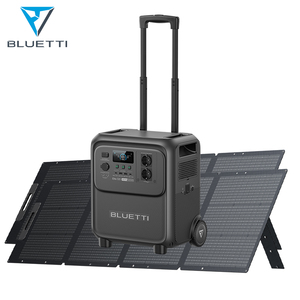
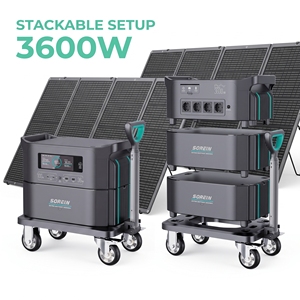
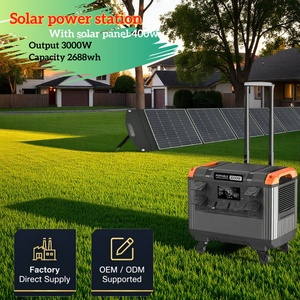
BLUETTI Large Capacity 3200 Wh Portable Power Station Supports Solar Charging 120V 230V Solar Generator 1800w Solar Power System
Capacity: 3200Wh Solar GeneratorOutput: 1800W (120V/230V Pure Sine)
State of China Wholesale Gel Battery Manufacturing & Export Market
An analytical procurement insight into silica gel electrochemistry, OEM factory quality assurance standards, and deep-cycle autonomy metrics for global B2B specifiers.
Thixotropic Nano-Silica Gel Matrix
Unlike standard flooded lead-acid or conventional AGM batteries, premium Chinese Gel battery factories utilize imported pyrogenic nano-silica (SiO2) to formulate a thixotropic gel electrolyte. This eliminates acid stratification, guarantees zero liquid leakage, and maintains uniform ion density across tall cell configurations.
OPzV Tubular Positive Plate Architecture
For mission-critical off-grid telecom, sub-station storage, and solar installations, Chinese exporters specialize in OPzV (Oberflächenoptimierte Platten Zelle Vertikal) tubular plates. Die-cast lead-calcium-tin grids enclosed in woven polyester gauntlets prevent active material shedding under intense daily cycling.
Thermal Runaway Immunity
The high thermal capacity of gel electrolytes acts as a heat sink. In desert regions (Middle East, North Africa, Australia), ambient temperatures exceeding 45°C cause traditional AGM batteries to dry out and suffer thermal runaway. Gel chemistry preserves electrolyte volume, preventing catastrophic thermal failure.
Comparative Engineering Analysis: Gel vs. AGM vs. LiFePO4 for Industrial Storage
Technical Metric
Gel Battery (Industrial OPzV/VRLA)
Standard AGM Battery
LiFePO4 Lithium Battery
Operating Temperature Envelope
-40°C to +65°C (Optimal for extreme outdoor)
-15°C to +45°C (High sensitivity to heat)
-10°C to +55°C (Requires heating BMS in freezing)
Deep Cycle Life (80% DoD)
1,200 – 1,800 Cycles (OPzV up to 3,000)
500 – 700 Cycles
3,500 – 6,000 Cycles
Initial Capital Expenditure (CapEx)
Moderate / Cost-Effective
Lowest
Highest Initial Investment
Thermal Runaway Risk
Extremely Low (High heat capacity matrix)
Moderate (Risk of cell dry-out)
Low (Protected by BMS)
Maintenance & Ventilation
100% Maintenance-Free, Sealed VRLA
Maintenance-Free, Sealed VRLA
Maintenance-Free, Electronic BMS mandatory
Partial State of Charge (PSoC) Resistance
High (Resists sulfation during solar dark days)
Low (Prone to irreversible sulfation)
Excellent (No memory or sulfation effect)
Procurement Intelligence
Future Sourcing Trends for Gel Battery Importers (2025–2030)
Navigating environmental ESG compliance, raw material cost fluctuations, and next-generation hybrid energy storage deployments.
1. Smart IoT & Telemetry Integration
Leading Chinese factories are embedding RFID chips and real-time internal resistance sensors within heavy-duty Gel battery blocks. Sourcing directors can now integrate automated cloud telemetry to track State of Charge (SoC), operational health, and ambient temperature remotely across distributed telecom tower sites, reducing physical maintenance trips by up to 70%.
2. Circular Economy & ESG Traceability
With strict EU Battery Directive updates and global ESG mandates, tier-1 Chinese manufacturers provide verified closed-loop lead recycling compliance. Over 98% of lead and plastics in industrial Gel batteries are fully recyclable, giving wholesale buyers a distinct sustainability score advantage over complex multi-element lithium recycling supply chains.
3. Cost per kWh Throughput Optimization
Procurement strategies have shifted from initial purchase price (CapEx) to levelized energy storage cost (LCOS). High-density silica gel batteries paired with optimized MPPT solar controllers offer an unbeatable LCOS for continuous base loads (5W to 500W) in remote telemetry and highway monitoring applications where lithium BMS failures cause unacceptable downtime.
4. Hybrid Microgrid Architectures
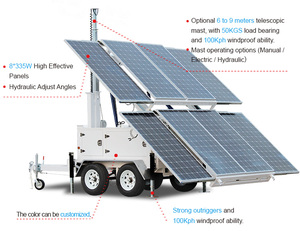
Future off-grid installations increasingly utilize hybrid topologies: LiFePO4 batteries handle fast daytime charge-discharge cycles, while deep-cycle OPzV Gel banks provide multi-day winter autonomy back-up. China OEM factories now supply integrated hybrid power trailers and pre-wired modular power cabinets engineered for dual-chemistry charge controllers.
Factory Audit Checklist
How to Evaluate & Audit China Gel Battery Exporters
Key quality indicators, automated production benchmarks, and laboratory testing protocols every international buyer must verify before issuing an L/C or PO.
1. Raw Lead Purity (99.994% Standard)
Substandard factories use secondary recycled lead with high bismuth and iron impurities, leading to high self-discharge rates. Premium Chinese manufacturers enforce ICP-OES spectroscopy testing to guarantee virgin lead ingot purity exceeding 99.994%, ensuring a shelf-life of up to 2 years without refresh charging.
2. Vacuum Gel Filling & Formation
Manual gel injection leaves air pockets, causing localized dry spots and plate corrosion. Verify that the factory utilizes automated computer-controlled vacuum filling lines followed by multi-stage temperature-controlled water bath formation to ensure 100% gel saturation across every cell separator.
3. International Certification Matrix
Ensure the supplier holds independent ISO9001, ISO14001, ISO45001, CE, UL1989, IEC 60896-21/22, and MH28026 test reports. For offshore or marine infrastructure deployment, certificates proving compliance with salt-mist corrosion resistance and vibration withstand ratings are essential.
Global Engineering Rigor
Why Leading Global Specifiers Partner With Us
Combining British engineering heritage and climate-resource modeling with high-capacity Chinese manufacturing excellence.
27 m/s Survival Wind Rating
Engineered and tested for extreme environments — from mountain telemetry posts to North Sea offshore wind farms operating 72 km from coastlines.
ERA5 Resource Sizing
We break down site load profiles hour-by-hour using ERA5 satellite reanalysis blended with Global Wind Atlas datasets for zero-downtime autonomy design.
GWO-Certified Support
Field technicians hold Global Wind Organisation (GWO) offshore certifications, ensuring the team that designs your system can service it anywhere on Earth.
Deployments on 7 Continents
Exporting robust off-grid wind, solar, gel battery, and hybrid trailer systems since 2009 — serving rail, highways, telecom, and polar research stations.
Procurement & Technical FAQ
Frequently Asked Questions by Industrial Sourcing Managers
Direct technical answers regarding factory MOQ, cycle life guarantees, shipping protocols, and custom OEM manufacturing capabilities.
Standard OEM production batches generally require an MOQ of 50 to 100 units for large monobloc batteries (12V 100Ah – 250Ah) or 1 pallet for 2V OPzV cells. Custom casing colors, branded silk-screening, and specific terminal configurations are available for container-load orders (20ft FCL ~ 24–28 Metric Tons). Typical production lead time is 15 to 25 days post-deposit, with full MSDS, UN38.3, and non-dangerous goods transport certificates provided for sea freight.
Gel batteries excel in deep discharge recovery due to the physical immobilization of the electrolyte within the silica gel matrix. When discharged to 80% Depth of Discharge (DoD), a high-grade Gel battery delivers 1,200 to 1,800 life cycles, whereas a standard AGM battery decays after 500 to 700 cycles. Furthermore, Gel batteries resist grid corrosion and sulfation when left in a Partial State of Charge (PSoC), making them significantly superior for off-grid solar systems during extended cloudy weather.
Yes. Leading factories offer turnkey OEM/ODM capabilities, including flame-retardant ABS cases (UL94-V0 rated), custom recessed front terminals for standard 19-inch/23-inch telecom racks, integrated handle reinforcements, and embedded copper-insert terminals (M6/M8). Customized private labeling, carton designs, and pallet packaging engineered for rough logistics routes are standard services for international distributors.
Standard industrial 12V Gel batteries come with a 2 to 3-year factory warranty, while 2V OPzV tubular gel series carry a 3 to 5-year full replacement warranty with a design float life of 15 to 20 years at 25°C. Quality assurance includes 100% internal resistance sorting, micro-leakage pressure testing, and automated capacity discharge verification before packaging.
Because sealed VRLA Gel batteries are classified as non-spillable power sources (meeting Special Provision A67 under IATA/ICAO and IMDG code compliance), they can be shipped as non-hazardous cargo if properly certified. Exporters must secure terminal insulating caps, shrink-wrap pallet loads, enforce heavy-duty fumigated wooden crates, and ensure container weight compliance (avoiding axle load violations due to dense lead mass).
Battery sizing requires multiplying the continuous hourly watt-load by 24 hours to obtain daily Wh demand, factoring in system nominal voltage (12V/24V/48V), inverter efficiency (~90%), temperature derating factors (if operating below 20°C), and a target maximum Depth of Discharge of 50–70% to extend life. For example, a 125W continuous load (3,000 Wh/day) with 3 days of winter autonomy requires approximately 18,000 Wh of gross storage—equivalent to 8 x 12V 200Ah Gel batteries wired in series-parallel.