Designed & manufactured in Herefordshire, UK — shipping worldwide Mon–Thu 9–5 | Fri 9–4 | +44 (0)1981 241668

Explore our premium lineup of high-precision MPPT wind turbine controllers, off-grid charge management units, and digital anemometers manufactured for optimal energy yield and system protection.
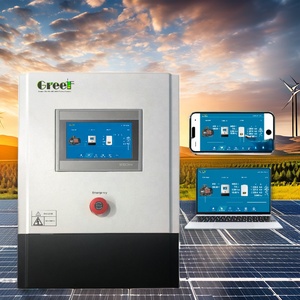

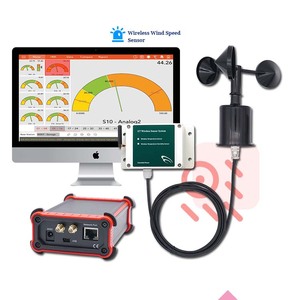
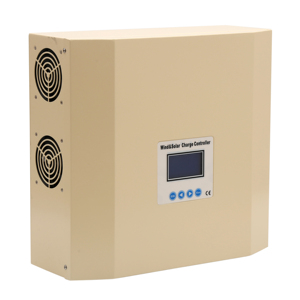
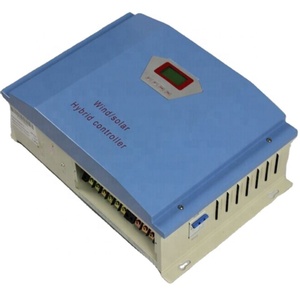
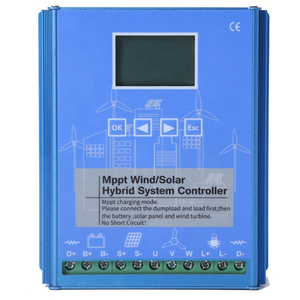
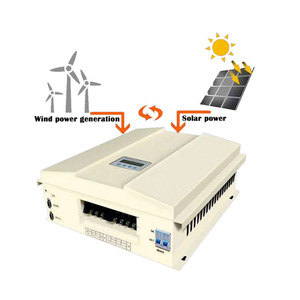
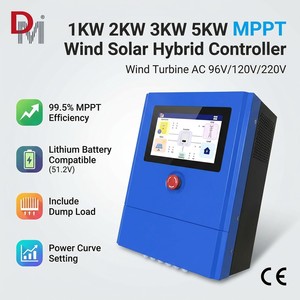
In modern renewable energy architectures, small-to-medium wind energy conversion systems (WECS) demand sophisticated control topologies to harvest non-linear kinetic energy efficiently while guaranteeing absolute survivability during aerodynamic surges. China's leading manufacturing sector has transitioned from legacy Pulse-Width Modulation (PWM) state machines to advanced digital signal processing (DSP)-driven Maximum Power Point Tracking (MPPT) architectures. As a master-tier manufacturer and exporter, our engineering methodology bridges rigorous power electronics design with real-world field endurance, satisfying ISO-aligned specifications and international grid-compliance standards.
The primary engineering objective of an industrial wind turbine controller is to optimize the power coefficient (Cp) across fluctuating wind velocity profiles while regulating the alternating current (AC) variable frequency output generated by permanent magnet synchronous generators (PMSG). Unlike photovoltaic (PV) arrays—which present stable, non-inertial current-voltage characteristics—wind turbines store substantial mechanical angular momentum. Consequently, power extraction algorithms must balance electrical load draw against rotor inertia to prevent aerodynamic stall or catastrophic rotor over-speed conditions.
Standard wind energy extraction relies on the governing aerodynamic power equation: P = 0.5 · ρ · A · Cp(λ, θ) · v³. Premium China-manufactured wind controllers execute real-time Tip Speed Ratio (TSR) and Perturb & Observe (P&O) hybrid algorithms. By dynamically adjusting the duty cycle of the synchronous boost converter, the system holds the power coefficient at its theoretical peak (Cp_max ≈ 0.45 to 0.48) even during severe turbulence intensity (>18%).
Selecting the optimal control paradigm requires analyzing the trade-offs between low-wind boost capabilities, thermal dissipation, component stress, and capital expenditure. Legacy PWM controllers operate by directly clamping the PMSG rectifier output to the battery bus voltage. While cost-effective for micro-turbines under 500W, PWM induces significant power mismatch under light breeze conditions (wind speeds between 2.5 m/s and 4.5 m/s) because the generator's open-circuit terminal voltage fails to exceed the battery's absorption threshold.
Conversely, our engineering framework employs high-frequency interleaved synchronous DC-DC boost topologies. When low-velocity wind rotates the turbine, generating an AC amplitude below the battery bus voltage, the MPPT controller boosts the rectified DC voltage to charge the storage array continuously. This elevates annual energy yield (AEY) by 25% to 40% in medium-wind regions.
| Performance Metric | Traditional PWM Controllers | Advanced DSP-MPPT Controllers | Grid-Tie Synchronous Controllers |
|---|---|---|---|
| Low Wind Boost Efficiency | Poor (< 35%) | Superior (> 92% Boost Tracking) | Active Inverter Synchronized |
| Cut-In Wind Speed Energy Capture | Requires V_gen > V_battery | Boosts from 2.5 m/s (V_gen < V_battery) | Determined by Grid Inverter V_min |
| Over-Speed Mitigation | Mechanical Furling / Hard Shorting | Stepless PWM Step-Down Dump Load | Dynamic Brake + Pitch Relay Control |
| Power Switch Topology | Standard Silicon MOSFETs | SiC / Low RDS(on) Synchronous FETs | High-Voltage IGBT / GaN Arrays |
| Communication Protocols | Basic Analog / RS232 | Modbus RTU / CANbus / MQTT IoT | Modbus TCP / SunSpec / SCADA |
A critical failure point in low-grade wind systems is uncontrolled rotor acceleration during full battery state-of-charge (SOC) conditions or grid outage events. When the load disconnects, electrical torque drops to zero instantly. Without dynamic braking, rotor RPM accelerates exponentially into destructive mechanical frequencies.
Our top-tier wind controllers integrate solid-state, step-less Pulse-Width Modulation dynamic dump load sub-systems. Utilizing heavy-duty aluminum ceramic brake resistor banks or external air-cooled dissipation elements, the micro-controller samples generator AC frequency and DC bus voltage at rates up to 20 kHz. If the bus voltage exceeds the threshold by 0.2V, the switch-mode controller modulates duty cycles within 15 milliseconds, injecting counter-electromotive force (counter-EMF) into the generator windings. This maintains smooth aerodynamic deceleration without damaging mechanical drive shafts or overheating internal copper stators.
Combines electronic PWM dump load braking, automated 3-phase AC shorting relays, and manual override switches for complete system safety.
Integrated Modbus RS485 and wireless cloud gateways stream RPM, voltage, current, heat-sink temperature, and historical yield logs in real time.
Conformal poly-urethane resin coating on internal PCBs safeguards sensitive logic components from salt-spray corrosion and 98% humidity environments.
Sourcing engineering specifications vary depending on whether the asset integrates into an autonomous micro-grid array or feeds power into a centralized AC utility grid.
Off-Grid Storage Architecture: In off-grid configurations (12V, 24V, 48V, 96V, 120V, and 220V DC banks), the wind controller acts primarily as an intelligent multi-stage battery charger. It manages bulk, absorption, equalization, and float phases to maximize battery health. Furthermore, modern controllers support customizable lithium iron phosphate (LiFePO4) Battery Management System (BMS) communications over CANbus. When the BMS triggers low-temperature protection or cell balancing modes, the wind controller adjusts charging limits instantly while diverting surplus wind energy to secondary heating elements or dump loads.
On-Grid Inverter Synchronization Architecture: On-grid wind power conversion operates at higher DC link voltages (ranging from 200V to 600V DC). The wind controller serves as the primary power conditioning unit, converting raw 3-phase variable AC into a stabilized high-voltage DC bus. This feed connects directly to grid-tie inverters. These units comply with strict grid-code mandates, including low-voltage ride-through (LVRT), total harmonic distortion (THD < 3%), and immediate anti-islanding disconnect compliance matching IEEE 1547 and IEC 62116 safety frameworks.
As industrial buyers examine supply chain metrics from Chinese manufacturers, several technological inflections are reshaping strategic procurement criteria:
Inheriting global manufacturing discipline, rigorous site resource modeling (ERA5 wind data + Global Wind Atlas), and ISO-certified quality assurance to deliver robust off-grid and grid-tied assets.
Engineered to survive extreme weather and sustained gale winds exceeding 27 m/s. All designs undergo wind tunnel simulation and heavy-duty structural testing to prevent high-wind mechanical collapse.
Manufactured following stringent quality controls suitable for deployment in challenging environments, including offshore wind platforms, coastal telemetry arrays, and high-altitude research installations.
From custom DC bus voltage programming and tailored dump-load housing to white-label enclosure design, our engineering team tailors power electronics to match exact project specifications.
Powered by high-speed 32-bit digital signal processors (DSP) executing thousands of control loop calculations per second, delivering zero lag during volatile wind gusts.
Every batch undergoes automated circuit testing, thermal endurance cycling under full load, high-voltage insulation tests, and strict quality control before global dispatch.
Remote diagnostics packages give engineering managers real-time cloud visibility of system performance, voltage curves, and ambient conditions from anywhere in the world.
Comprehensive answers to technical procurement questions specified by system integrators, electrical engineers, and global buyers.
Unlike solar MPPT controllers that sample non-inertial photovoltaic current-voltage curves, wind MPPT controllers must manage rotational mechanical inertia. Solar MPPT algorithms can sweep voltage curves rapidly; however, doing so on a wind turbine causes instantaneous mechanical loading, stalling the blades. Our wind controllers utilize high-speed sampling (10–20 kHz) combined with dynamic Tip Speed Ratio tracking. This allows the controller to adjust duty cycles gradually, harvesting energy from aerodynamic acceleration without triggering turbine stall or rotor over-speed.
When battery state-of-charge (SOC) reaches 100%, the controller transitions from bulk charging to float mode. The excess wind energy generated by the turbine is diverted automatically to an external PWM electronic dump load (resistors). The controller modulates the braking resistor duty cycle seamlessly to maintain generator speed within nominal limits. If wind velocities exceed extreme thresholds (e.g., >25 m/s), a heavy-duty 3-phase AC shorting relay activates, bringing the generator rotor to a complete electro-magnetic stop.
Yes. All of our industrial wind controllers (from 800W to 10KW+) feature fully programmable charging voltage profiles. Engineers can configure Bulk, Absorption, Float, and Cut-Off voltages tailored specifically for Lithium Iron Phosphate (LiFePO4), AGM, GEL, or flooded lead-acid chemistry. Furthermore, RS485 and CANbus protocols allow direct handshake communications with third-party Battery Management Systems (BMS).
Off-grid wind controllers are designed to match low-to-medium voltage battery banks (typically 12V, 24V, 48V, 96V, or 120V DC). Their internal converters step-down or boost rectified generator voltage to fit battery charging limits. On-grid wind controllers work at much higher voltage thresholds (typically 200V to 600V DC link) to interface efficiently with grid-tie inverters. On-grid controllers also require high-voltage braking circuits and strict compliance with grid-interconnection standards.
Industrial units designed for coastal or offshore installation feature IP65 to IP67 sealed aluminum housings. Internal circuit assemblies are subjected to multi-layer conformal polyurethane/silicone coating. This protective layer shields surface-mount components, trace lines, and terminal blocks against moisture ingress, salt-induced galvanic corrosion, and airborne industrial pollutants, ensuring operational lifespans exceeding 10 years.
Our technical controllers offer Modbus RTU (via RS485), CANbus, and optional ethernet Modbus TCP modules. These protocols integrate easily with SCADA setups, remote telemetry equipment, or web-based IoT platforms. Real-time diagnostic data includes 3-phase AC voltage/frequency, DC output current, heat-sink temperature, dump load active status, and daily energy totalization (kWh).
Whether you require standard off-grid MPPT controllers, bespoke 10KW grid-tied systems, or OEM production for severe marine environments, our application engineers are ready to support your technical specifications.
Send an Inquiry