Designed & manufactured in Herefordshire, UK — shipping worldwide Mon–Thu 9–5 | Fri 9–4 | +44 (0)1981 241668

Explore our flagship photovoltaic equipment, high-capacity Lifepo4 energy storage stations, hybrid off-grid packages, and mobile solar deployment trailers.
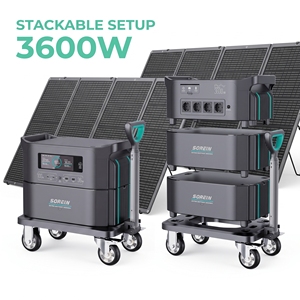
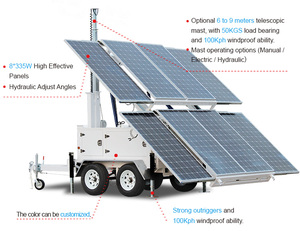
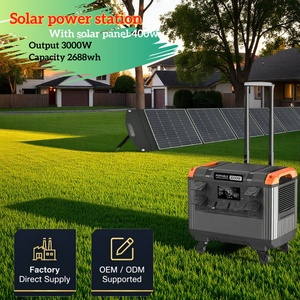
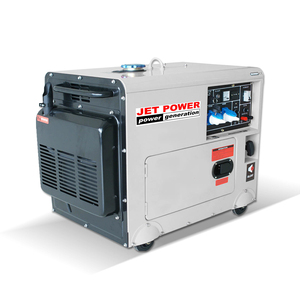
As the global energy landscape accelerates its transition toward decarbonization, utility-scale developers, commercial engineering procurement and construction (EPC) firms, and remote off-grid operators demand unprecedented levels of photothermal efficiency, structural durability, and levelized cost of electricity (LCOE) optimization. China has firmly established itself as the epicenter of global photovoltaic (PV) manufacturing innovation, producing over 80% of the world’s solar cell modules and silicon wafers. However, selecting a top-tier manufacturing partner requires going beyond nominal wattage figures to evaluate crystalline wafer quality, cell-architecture physics, encapsulation polymer integrity, and stringent quality assurance standards.
This industry whitepaper details the technological shifts transforming solar module manufacturing, key procurement considerations for international buyers, and how our advanced manufacturing lines bridge high-efficiency silicon solar cells with custom off-grid, hybrid microgrid, and extreme-environment energy deployments worldwide.
The commercial PV market has entered a pivotal transition phase. Legacy P-type Passivated Emitter and Rear Cell (PERC) technology, which dominated global module production for over a decade, has reached its practical shockley-queisser efficiency limit (around 23.2%). Leading Chinese solar module exporters have pivoted infrastructure investments toward N-type substrate technologies—primarily Tunnel Oxide Passivated Contact (TOPCon) and Heterojunction (HJT) architectures.
Utilizing 182mm (M10) and 210mm (G12) N-type wafers with multi-busbar (MBB) half-cell packing, achieving module power outputs exceeding 700W+ per panel.
Certified against PID resistance under 85°C/85% RH conditions for 96 hours, Salt Mist Level 6 corrosion, and heavy wind/snow loads (5400 Pa / 2400 Pa).
Seamlessly integrated with LiFePO4 battery banks, hybrid off-grid inverters, and cloud telemetry protocols (Cerbo GX / ERA5 wind-solar reanalysis).
To assist international specifiers and procurement teams, the table below provides a comprehensive engineering benchmark of current solar module manufacturing technologies available for bulk export:
| Parameter / Metric | P-Type PERC (Legacy) | N-Type TOPCon (Current Standard) | HJT (Heterojunction) |
|---|---|---|---|
| Mass Production Cell Efficiency | 23.0% – 23.5% | 24.8% – 25.5% | 25.2% – 26.0% |
| Temperature Coefficient (Pmax) | -0.35% / °C | -0.30% / °C | -0.26% / °C |
| Bifaciality Factor | 65% – 70% | 80% – 85% | 90% – 95% |
| First Year Power Degradation | ≤ 2.0% | ≤ 1.0% | ≤ 1.0% |
| Annual Linear Degradation (Y2-Y30) | -0.55% / year | -0.40% / year | -0.30% / year |
| Encapsulation Polymer Standard | EVA / EVA | POE / EPE Dual-Layer | POE (Polyolefin Elastomer) |
| 30-Year Retained Power Output | 84.8% | 87.4% | 88.8% |
As international supply chains evolve, global buyers are moving away from isolated module purchasing toward holistic, fully integrated energy system procurement. Key procurement trends shaping the 2025–2030 horizon include:
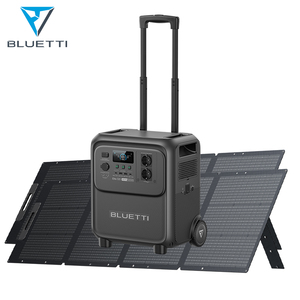
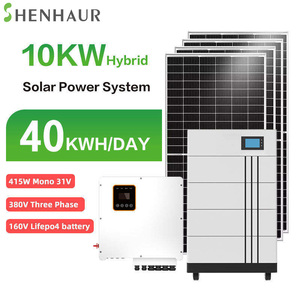
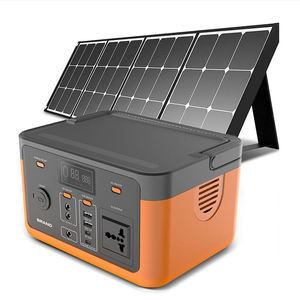
Grid instability and rising peak-tariff structures mean commercial projects increasingly require paired solar + battery energy storage systems (BESS). Chinese exporters with integrated manufacturing lines supply factory-matched LiFePO4 battery power stations (3kW to 10kW+) equipped with intelligent Maximum Power Point Tracking (MPPT) charge controllers, seamless UPS switching (< 10ms transfer time), and multi-voltage output vectors (120V / 230V / 400V split-phase & three-phase systems).
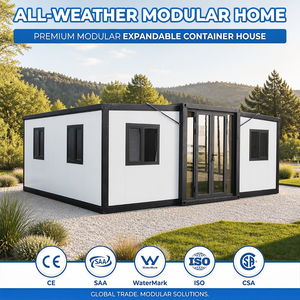
Infrastructure projects, mining compounds, telecoms tower construction, and agricultural telemetry require rapidly deployable green energy. Systems such as High-Mast Mobile Solar Trailers (4kW–5kW solar arrays with telescoping floodlights) and 20ft Prefabricated Expandable Modular Houses with Roof PV arrays represent the next generation of turnkey export goods. They eliminate on-site civil works and expensive electrical engineering overheads in remote regions.
International compliance mandates (such as the EU Corporate Sustainability Due Diligence Directive and US UFLPA guidelines) require tier-1 solar manufacturers to maintain full supply chain transparency. Top Chinese module exporters now provide raw polysilicon trace logs, digital product passports (DPPs), ISO 14064 carbon footprint verifications, and non-conflict material certifications for every production lot.
Our state-of-the-art manufacturing facility in China integrates Industry 4.0 automation with rigid European quality control standards. Engineered to meet the extreme demands of marine offshore telemetry, high-altitude wind-solar hybrid sites, and desert utility installations, our production methodology follows a zero-defect framework:
Expert answers regarding technical procurement, international shipping, warranty terms, and custom off-grid system sizing.
Our N-Type TOPCon and HJT solar modules undergo rigorous flash testing and 3x EL inspection prior to factory release. We provide a 12-year structural workmanship warranty alongside a 30-year linear power output guarantee. Power degradation is capped at ≤ 1.0% in Year 1 and ≤ 0.40% annually from Year 2 through Year 30, supported by third-party re-insurance policies for international project financing peace of mind.
Yes. Our modules carry IEC 61701 Level 6 Salt Mist Corrosion Certification and IEC 62716 Ammonia Resistance Certification. They feature heavy-anodized 6063-T6 aluminum frames, dual-glass encapsulation options, IP68-rated junction boxes, and fluoropolymer-coated backsheets designed specifically for coastal, offshore wind platform, marine telecom, and island microgrid environments.
We provide comprehensive OEM/ODM customization including custom battery capacities (LiFePO4 chemistry from 1kWh to 20kWh+), custom AC output voltage configurations (100V/110V/120V/230V/240V at 50Hz or 60Hz), customized exterior chassis branding, specialized input charging ports, and integrated IoT telemetry modules (GPS, Bluetooth, Wi-Fi, 4G cloud monitoring protocols).
Sizing is calculated based on peak load power, continuous 24-hour daily energy consumption (Wh), localized peak sun hours (using NASA/ERA5 solar irradiance database coordinates), and required days of battery autonomy (typically 3 to 5 days). Our engineering team performs full balance-of-system modeling to select the optimal combination of solar panel array wattage, MPPT controller capacity, and LiFePO4 storage capacity.
Standard lead time for containerized bulk module orders (20ft / 40ft HQ) is 15 to 25 days from contract deposit. Products are packed on reinforced vertical or horizontal wooden pallets with anti-vibration corner protectors and moisture-proof plastic wrapping to prevent freight damage. We handle FOB, CIF, DDP, and DAP terms with full customs declaration documentation.
Whether you require high-efficiency N-type solar modules, customized LiFePO4 battery power stations, mobile solar trailers, or complete off-grid system kits, our senior photovoltaic engineers are ready to assist your project specification.