Designed & manufactured in Herefordshire, UK — shipping worldwide Mon–Thu 9–5 | Fri 9–4 | +44 (0)1981 241668

Engineered for mission-critical telemetry, commercial microgrids, residential storage, and extreme climate deployment.
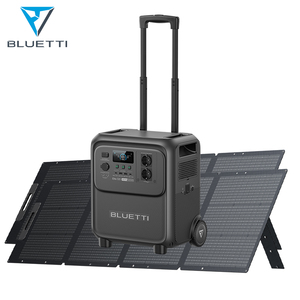
Heavy-duty 1800W pure sine wave inverter system supporting 120V/230V dual-voltage outputs, high-efficiency MPPT solar charging, and enterprise LiFePO4 battery integration.
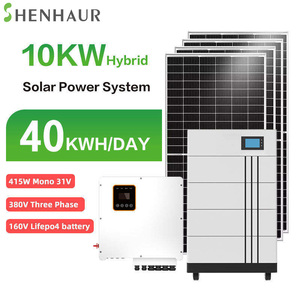
Complete B2B turnkey kit equipped with high-surge hybrid inverter capabilities, advanced lithium management, and seamless grid-tie/off-grid transfer switching for commercial use.
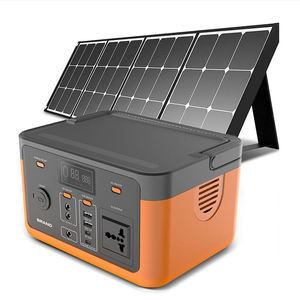
Multi-scenario portable power station series incorporating industrial-grade LiFePO4 battery banks, ultra-low harmonic distortion (<3% THD), and rapid solar input architecture.
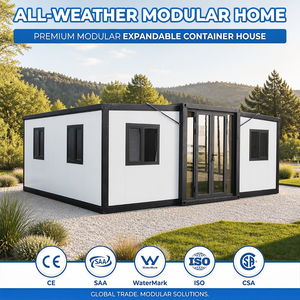
Expandable prefabricated granny flat / modular shelter fitted with centralized off-grid inverter panels, rooftop solar distribution, and emergency backup battery banks.
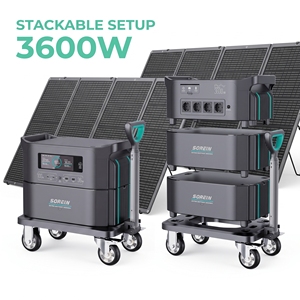
Fully integrated power storage system featuring high-capacity lithium iron phosphate cells, smart thermal management, and dynamic load balancing for harsh conditions.
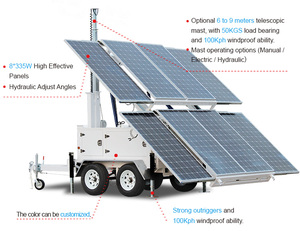
Heavy-duty mobile trailer system designed for remote mining, construction, and emergency responses. Features high-efficiency PV arrays and ruggedized IP65 inverters.
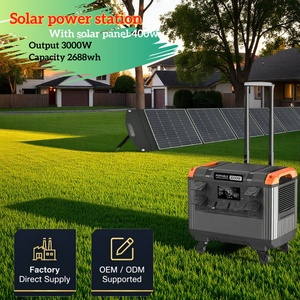
Customizable industrial UPS power station with millisecond-level transfer times, fast AC/Solar charging protocols, and modular battery scalability for telecom sites.
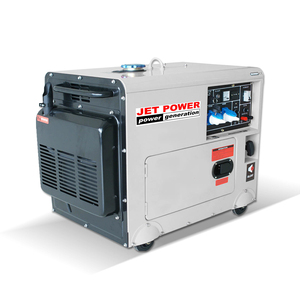
Single and three-phase soundproof diesel generator engineered to automatically auto-start and charge hybrid inverter battery banks during extended solar shortfalls.
The global off-grid energy sector is transitioning from basic stand-alone installations to smart, resilient, and multi-source microgrids. Modern industrial buyers demand higher efficiency, thermal tolerance, and edge IoT monitoring capabilities.
Next-generation off-grid inverters engineered by top Chinese OEMs are replacing traditional Silicon MOSFETs with Silicon Carbide (SiC) and Gallium Nitride (GaN) switching devices. This transition reduces switching losses by up to 45%, allowing compact thermal profiles and push peak inverter conversion efficiencies beyond 98.5%. Higher switching frequencies also dramatically shrink magnetics and transformer sizes.
Modern off-grid procurement is shifting rapidly from 12V/24V low-voltage systems toward high-voltage (HV) battery architectures ranging from 192V to over 600V DC. High-voltage DC coupling minimizes copper cabling losses over extended distances, improves system efficiency by eliminating multiple DC-AC-DC conversion steps, and facilitates direct grid-forming microgrids for remote industrial sites and telecommunication clusters.
Unattended infrastructure—such as offshore wind communications, remote rail telemetry, and isolated weather stations—cannot afford unexpected power outages. Leading manufacturers now build native IoT modems (4G/5G, LoRaWAN, and Starlink integration) directly into charge controllers and hybrid inverters. This provides real-time state of charge (SoC), thermal warning thresholds, and predictive battery degradation analytics.
Navigating direct factory sourcing, quality compliance, and customized OEM/ODM engineering partnerships in the renewable power domain.
Procurement managers are favoring fully pre-commissioned plug-and-play enclosures, trailers, and containers over fragmented components. Pre-wiring inverters, battery management systems, and solar charge controllers in verified factory settings eliminates field installation errors and slashes deployment labor costs by up to 65%.
Standard off-the-shelf inverters often fail to meet specific continuous load curves or localized grid codes. Sourcing trends prioritize tier-1 manufacturers capable of altering MPPT algorithms, customizing CAN-bus communication protocols for proprietary BMS brands, and tailoring enclosure ingress protection (IP65 to IP67) for marine or desert environments.
International buyers require transparent supply chains. Leading Chinese power supply manufacturers now offer verified carbon footprint tracking and supply chain documentation for LiFePO4 cells, ensuring compliance with European Union battery regulations, US Dodd-Frank conflict mineral rules, and stringent corporate sustainability standards.
Modern procurement contracts specify off-grid inverters that support simultaneous inputs from PV solar, small wind turbines, methanol fuel cells, and automated auxiliary diesel generators. Dynamic power routing ensures seamless auto-start signals whenever battery reserves dip below critical operating thresholds.
Use this evaluation framework when reviewing quotation parameters and factory specs from Chinese manufacturers.
| Evaluation Parameter | Basic Off-Grid Standard | Industrial High-Reliability Standard | Impact on Site Uptime |
|---|---|---|---|
| Waveform & THD | Modified or Pure Sine Wave (THD < 5%) | Pure Sine Wave (THD < 2% - 3%) | Prevents micro-stuttering, electrical noise, and overheating in sensitive communication, medical, and telemetry equipment. |
| Overload & Surge Capacity | 150% continuous rating for 2–5 seconds | 200% - 300% surge capacity for 10 seconds | Essential for starting inductive loads such as heavy water pumps, air compressors, and refrigeration compressors without triggering shutdown. |
| Transfer Switching Time | < 20 milliseconds | < 4 to 8 milliseconds (UPS Class) | Ensures zero power interruption for server stacks, Starlink terminals, and critical safety instrumentation. |
| MPPT Solar Efficiency | 95.0% static tracking | 99.5% dynamic tracking algorithm | Extracts maximum solar yield during low-irradiance winter months, cloudy days, or partial shading scenarios. |
| Operating Temp Range | -10°C to +45°C (standard cooling) | -35°C to +65°C (convection / smart fan control) | Guarantees rated continuous output in harsh environments ranging from sub-zero polar research sites to desert solar farms. |
Combining rigorous British and European design standards with cost-efficient, scalable high-volume Chinese manufacturing facilities.
Our off-grid systems and hybrid wind/solar inverter solutions are deployed across all seven continents. Operating reliably 72 km offshore in the salt-laden atmospheric conditions of the North Sea to severe high-altitude alpine posts, our hardware uses marine-grade powder-coated enclosures, conformal-coated PCB boards, and anti-corrosive fasteners engineered to withstand sustained winds up to 27 m/s (60 mph).
We eliminate system sizing guesswork. Before committing to factory manufacturing, our engineering team models your specific site coordinates using ERA5 meteorological reanalysis data combined with the Global Solar & Wind Atlas. Systems are sized intentionally for worst-case winter solar conditions rather than annual averages, guaranteeing 3 to 7 days of continuous battery autonomy.
Every off-grid inverter, control panel, and LiFePO4 storage module undergoes 100% factory burn-in testing, high-voltage insulation breakdown testing, and functional load profiling under thermal stress. Our support engineers maintain direct continuity from pre-sale sizing analysis to global remote firmware updates and field maintenance advice.
Essential technical and logistical answers for international specifiers, EPC contractors, and distributors.
Surge capacity must be calculated based on the highest inductive motor or transformer startup load in your system. Electric motors, water pumps, and refrigeration compressors typically draw 3x to 7x their rated continuous operating wattage for 500 to 2000 milliseconds upon starting. Ensure your chosen inverter explicitly specifies a peak overload rating capable of supporting this cumulative surge without triggering an instant low-voltage or over-current shutdown.
Traditional AGM deep-cycle batteries offer 500 to 800 charge cycles at 50% Depth of Discharge (DoD), yielding an operational lifetime of 3 to 5 years under moderate temperatures. In contrast, Lithium Iron Phosphate (LiFePO4) chemistry delivers 3,500 to 6,000+ cycles at 80% to 90% DoD, providing a 10 to 15-year operational service life. LiFePO4 also maintains stable voltage outputs across discharge curves and supports faster solar charge acceptance without sulfation damage.
Yes. Premium industrial off-grid inverters include programmable dry contact relay outputs. When solar generation is insufficient and battery state of charge (SoC) drops below a configurable threshold (e.g., 20% SoC), the inverter closes the dry contact to signal an automatic generator start (AGS). Once the generator runs and recharges the battery bank to a safe level (e.g., 85% SoC), the inverter automatically opens the relay to shut down the auxiliary engine.
Standard B2B manufacturing contracts typically cover 3 to 5 years of replacement warranty for inverter hardware and up to 10 years for LiFePO4 energy storage modules. Top Chinese suppliers provide replacement PCB control boards, cooling fan assemblies, and plug-in power modules directly in initial shipping containers, allowing local maintenance technicians to resolve minor field issues immediately without long customs clearance delays.
Pure sine wave inverters replicate smooth sinusoidal AC utility power with total harmonic distortion (THD) controlled under 3%. Low-quality modified sine wave inverters produce blocky square-wave step outputs that cause severe harmonic heating in inductive transformers, audible hum in audio/communications equipment, high bit-error rates in digital data telemetry, and potential permanent damage to delicate microcontrollers.
OEM/ODM customization spans multiple structural and electrical parameters: custom DC voltage input ranges (24V, 48V, 96V, 192V, or high-voltage 384V DC), custom brand screen layouts, localized AC voltage and frequency outputs (100V, 110V, 120V, 220V, 230V, 240V at 50/60Hz), custom CAN/RS485 BMS communications protocols, and specialized NEMA 4X or IP65 outdoor enclosure designs.
Consult with our senior application engineers. Submit your load profile, site location coordinates, and operational parameters for a comprehensive system sizing calculation and direct factory pricing quote.
Get Catalog