Designed & manufactured in Herefordshire, UK — shipping worldwide Mon–Thu 9–5 | Fri 9–4 | +44 (0)1981 241668

Engineered for maximum yield, severe weather autonomy, and industrial reliability across global infrastructure applications.
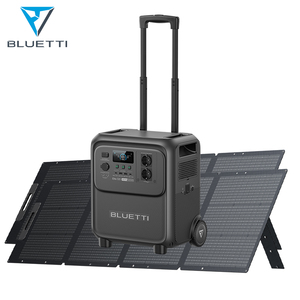
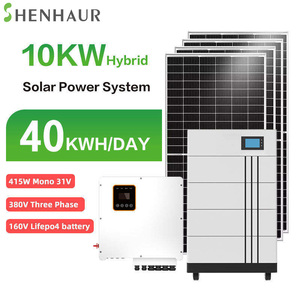
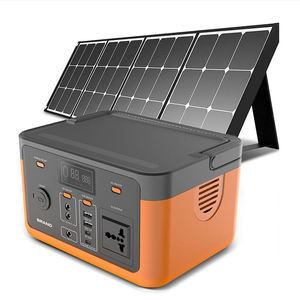
The global energy transition relies fundamentally on the rapid advancement and massive scaling of silicon photovoltaic (PV) technology. China manufactures over 80% of the world’s monocrystalline solar wafers, cells, and finished module assemblies. Procurement teams, EPC contractors, and system integrators seeking high-yield photovoltaics must navigate an ecosystem defined by rapid technical iteration—moving from legacy P-type PERC (Passivated Emitter and Rear Cell) technology to advanced N-Type TOPCon (Tunnel Oxide Passivated Contact) and HJT (Heterojunction Technology) architectures.
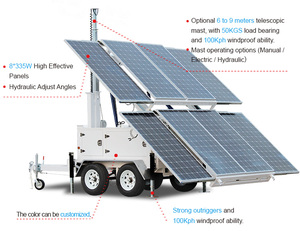
Modern Chinese manufacturing facilities employ continuous Czochralski (CZ) crystal growth processes, ultra-thin diamond wire slicing, and advanced inline optical inspection systems to produce high-purity monocrystalline ingots. By controlling silicon wafer quality at the atomic level, top-tier Chinese factories achieve extremely low oxygen contents and minimal structural defects, enabling solar cells to achieve operational efficiencies exceeding 25%. When integrated into robust balance-of-system (BOS) configurations—including off-grid hybrid power stations, mobile solar trailers, and telemetry monitoring units—these monocrystalline arrays deliver unparalleled levelized cost of energy (LCOE).
Featuring a ultra-thin tunnel oxide layer paired with doped polycrystalline silicon, TOPCon modules offer superior low-light response, lower degradation (LID/LeTID), and a superior temperature coefficient of -0.30%/°C.
Double-glass monocrystalline designs capture reflected light on the rear side, boosting total power generation by up to 10% to 30% depending on ground albedo (sand, snow, concrete, or gravel).
Utilizing POE (Polyolefin Elastomer) encapsulation and dual-glass construction, modules resist Potential Induced Degradation (PID), salt mist exposure, and ammonia corrosion in marine and agricultural sites.
Building reliable solar energy solutions requires more than high module conversion efficiency—it demands comprehensive system engineering. As an international manufacturer with core R&D origins rooted in heavy-duty British engineering and state-of-the-art Chinese production lines, our technical team has designed and delivered robust off-grid wind, solar, and hybrid power architecture since 2009. Our systems power remote telecommunications, offshore wind farm telemetry, rail signaling, and autonomous infrastructure across all seven continents.
Whether powering Starlink satellite hubs in remote rural not-spots, LiDAR wind measurement stations on wind-swept Scottish highlands, or critical safety radio systems 72 km offshore in the German North Sea, our monocrystalline solar integrated units are engineered to perform without grid support. Tested to withstand sustained survival wind speeds exceeding 27 m/s (60 mph), our systems combine deep-cycle LiFePO4 or AGM battery storage with optional automatic fuel-cell backup and 24/7 telemetry monitoring.
When selecting a supplier from top Chinese manufacturers, technical buyers must evaluate the entire Bill of Materials (BOM). Premium monocrystalline panels incorporate 3.2mm high-transmittance anti-reflective tempered glass, anodized aluminum alloy frames capable of withstanding 5400 Pa snow loads and 2400 Pa wind loads, and IP68-rated junction boxes equipped with bypass diodes to prevent hot-spot heating during partial shading.
To assist procurement engineers and project developers in selecting the correct cell technology for their operational environment, the matrix below outlines key technical metrics comparing P-Type PERC, N-Type TOPCon, and Heterojunction (HJT) monocrystalline panels:
| Performance Metric | P-Type PERC | N-Type TOPCon | Heterojunction (HJT) |
|---|---|---|---|
| Mass Production Cell Efficiency | 23.2% - 23.6% | 24.8% - 25.6% | 25.2% - 26.0% |
| Temperature Coefficient (Pmax) | -0.35% / °C | -0.30% / °C | -0.26% / °C |
| Bifaciality Factor | 65% - 70% | 80% - 85% | 85% - 95% |
| First-Year Power Degradation | ≤ 2.0% | ≤ 1.0% | ≤ 1.0% |
| Annual Linear Degradation (Y2-Y30) | 0.55% / Year | 0.40% / Year | 0.32% / Year |
| Ideal Application Scenarios | Standard rooftop & utility projects | High-temperature, limited space & commercial utility | Extreme environments, maximum yield off-grid sites |
The global solar manufacturing supply chain is undergoing structural shifts driven by material efficiency, decarbonization policies, and intelligence integration. B2B buyers should account for the following five key procurement trends:
Partnering directly with a Chinese factory requires rigorous verification protocols to ensure structural integrity and long-term electrical output. Premium OEM/ODM production lines adhere to stringent internal and third-party inspection steps:
100% double EL testing (before and after lamination) to detect invisible micro-cracks, finger defects, or dark spots that cause long-term power loss.
Power output binning performed under Standard Test Conditions (STC: 1000 W/m², 25°C, AM 1.5G) utilizing Class AAA solar simulators to guarantee positive power tolerance (0 to +5W).
Modules undergo rigorous testing per IEC 61215/61730, including Thermal Cycling (TC200), Damp Heat (DH1000), and Humidity Freeze (HF10) tests to ensure 25 to 30-year operational lifespans.
Direct technical answers to common queries raised by international buyers and project specifiers.
Whether specifying high-efficiency monocrystalline solar panels for bulk commercial distribution, custom off-grid power trailers, or remote infrastructure telemetry systems, our engineering team provides direct OEM/ODM technical support.