Designed & manufactured in Herefordshire, UK — shipping worldwide Mon–Thu 9–5 | Fri 9–4 | +44 (0)1981 241668

Explore our certified lithium-ion and LiFePO4 battery pack series manufactured for global OEM/ODM applications.
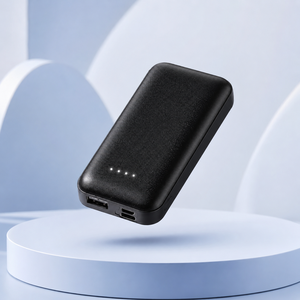
Modular compact backup battery pack engineered with tool-less cell replacement capability, integrated PCM protection, and low self-discharge rates.
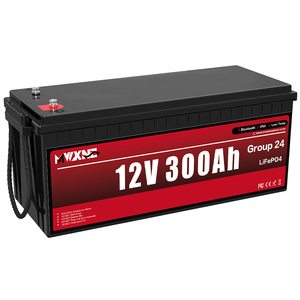
Heavy-duty metal casing lithium iron phosphate battery featuring real-time Bluetooth BMS monitoring, 4000+ deep cycle lifetime, and 5-year warranty.
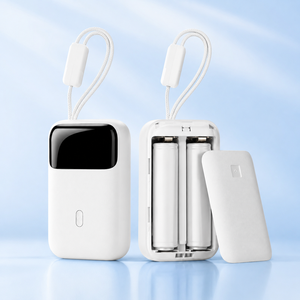
High-efficiency portable power supply with built-in charging cables, LED coulomb-meter display, and PD3.0/QC4+ bi-directional quick charge support.
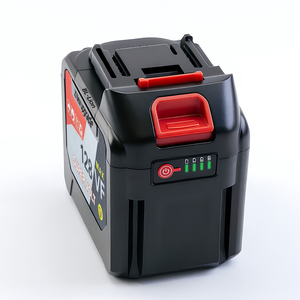
Rugged replacement pack built with premium high-discharge 18650 cells, thermal sensing protection, and vibration-resistant nickel busbar welding.
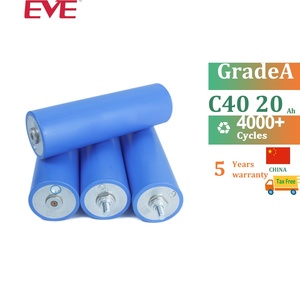
Factory-matched LFP cells designed for DIY custom 12V, 24V, and 48V solar energy storage systems and industrial battery pack integration.
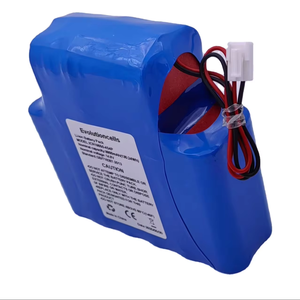
Industrial-grade lithium-ion battery pack engineered specifically for high-intensity HE4 stage lighting, telemetry equipment, and event power systems.
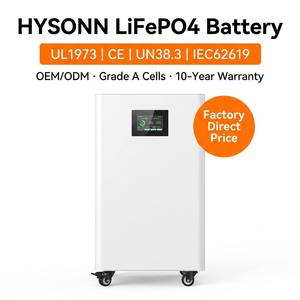
Wall-mounted LiFePO4 residential solar storage module with integrated CANbus/RS485 smart BMS, compatible with mainstream hybrid inverters worldwide.
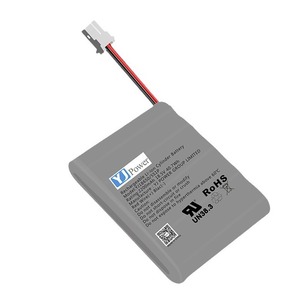
Precision-balanced rechargeable lithium-ion battery pack certified under UN38.3 for smart home robotics, medical equipment, and consumer electronics.
Selecting a reliable China battery pack manufacturer requires assessing engineering transparency, cell chemistry consistency, and strict process controls. As an OEM/ODM market leader, our assembly operations adhere strictly to ISO 9001:2015 quality management systems and ISO 14001 environmental protocols.
Every custom battery pack produced within our facilities undergoes rigorous automated cell-matching procedures. Utilizing high-precision testing hardware, cell sorting parameters ensure internal resistance (IR) variations are constrained within ≤0.5mΩ and open-circuit voltage (OCV) deltas remain under ≤2mV. This eliminates cell imbalance early, maximizing battery pack operational life and preventing premature thermal degradation.
A comparative engineering evaluation to help B2B buyers match battery pack chemistry to specific application demands.
| Battery Chemistry | Nominal Voltage | Gravimetric Energy Density | Cycle Life (80% DoD) | Thermal Runaway Limit | Optimal Industrial Use Cases |
|---|---|---|---|---|---|
| LiFePO4 (Lithium Iron Phosphate) | 3.2V / cell | 160 – 190 Wh/kg | 3,500 – 6,000+ Cycles | ~270°C (Exothermic Safety) | Solar ESS, RVs, Telecom Backup, AGVs, Commercial Energy Wall |
| NCM / NMC (Nickel Cobalt Manganese) | 3.6V – 3.7V / cell | 220 – 270 Wh/kg | 1,200 – 2,000 Cycles | ~210°C | Cordless Power Tools, Electric Vehicles, High-Density Portable Devices |
| LTO (Lithium Titanate Oxide) | 2.3V / cell | 80 – 110 Wh/kg | 15,000 – 20,000+ Cycles | > 300°C (Ultra-Stable) | Extreme Temperature Systems (-40°C to 65°C), Heavy Grid Regulation |
| Sodium-Ion (Na-Ion Next-Gen) | 3.0V – 3.1V / cell | 130 – 160 Wh/kg | 2,000 – 4,000 Cycles | ~260°C | Low-Cost Micro-Mobility, Standard Temperature Off-Grid Storage |
Key technological shifts reshaping global lithium battery supply chains, design integration, and safety engineering.
Eliminating intermediate modular housings allows Cell-to-Pack (CTP 3.0) architectures to boost volumetric utilization efficiency from 40% to over 65%. This significantly lowers dead weight and enhances overall gravimetric energy density.
Modern battery pack systems incorporate IoT-enabled Smart BMS hardware. Utilizing predictive algorithms, cloud-connected monitoring stations track state of charge (SoC), state of health (SoH), and internal temperature deltas in real-time.
Automated manufacturing scaling across Chinese supply hubs has driven total cost of ownership (TCO) down. High cycle life LiFePO4 configurations achieve levelized energy storage costs below $0.03/kWh over total lifecycle operations.
To meet zero thermal runaway propagation standards (UL 9540A), custom packs integrate nano-porous aerogel insulation pads and flame-retardant epoxy structural adhesives between individual prismatic or cylindrical cells.
Integrated PTC heating films managed by internal BMS firmware allow battery packs to safely initiate fast charging under sub-zero polar temperatures down to -30°C without risking lithium plating on the graphite anode.
Advanced tab-less 21700 and 4680 cell design configurations deliver continuous discharge C-rates up to 30C, empowering demanding medical devices, industrial robots, and high-torque cordless power tools.
For international procurement managers, engineering directors, and OEM importers, sourcing custom battery packs from China requires evaluating more than just nominal price per kilowatt-hour. Ensuring long-term supply chain resilience demands structured oversight across key technical pillars:
1. Cell Traceability & Grade-A Certification: Require suppliers to furnish original cell manufacturer grading reports (from tier-1 cell producers such as EVE, CATL, BYD, or CALB). Ensure every cell barcode can be scanned to trace manufacturing batch origin, initial capacity test data, and internal resistance logs.
2. BMS Firmware & Protocol Customization: In industrial applications such as telecommunications, off-grid microgrids, or heavy robotics, your battery pack must communicate smoothly with existing inverter platforms (e.g., Victron, SMA, Growatt, Deye). Verify that the battery manufacturer provides customizable CANbus/RS485 baud rates and custom register mapping.
3. Dangerous Goods (DG) Logistics & Packaging Compliance: All lithium battery packs exceeding 100Wh are classified under UN 3480 / UN 3481 Class 9 Dangerous Goods for international sea and air shipping. A competent China battery supplier must supply certified UN-rated cardboard or wooden crate packaging, UN38.3 test summary reports, and valid MSDS and Safety Transport Certificates prior to vessel dispatch.
In-depth answers to critical engineering, safety, and supply chain queries from B2B purchasers.
Passive balancing bleeds off excess energy from higher-voltage cells as waste heat through resistive loads during the final charging stage (typically at 50mA to 200mA balance currents). Active balancing transfers charge from higher-energy cells to lower-energy cells using capacitive or inductive energy transfer (at currents up to 1A to 5A). Active balancing is essential for large-capacity energy storage systems (>100Ah) to maximize usable pack capacity and extend service life.
LiFePO4 battery packs exhibit outstanding thermal stability at high temperatures (up to 60°C without structural degradation) but require heating pads for charging below 0°C to avoid lithium dendrite formation. NCM chemistries maintain better discharge capacity under sub-zero conditions (-20°C), but have a lower thermal runaway threshold (~210°C) compared to LiFePO4 (~270°C), requiring more complex thermal management in elevated temperature environments.
Primary international compliance standards include UN38.3 (mandatory for transport safety), IEC 62133-2 (safety requirements for portable sealed secondary cells/packs), UL 1973 (for stationary energy storage systems), UL 2271 (for light EV batteries), and CE / RoHS markings. Additionally, marine or off-grid solar packs may require IP65 or IP67 ingress protection rating certifications.
Custom OEM/ODM development typically takes 2 to 3 weeks for preliminary engineering design and 3D enclosure modeling. Prototyping and initial sample fabrication take 3 to 4 weeks, while formal UN38.3 and IEC certification testing takes 4 to 6 weeks. Non-Recurring Engineering (NRE) tooling costs vary depending on whether custom plastic injection molds or sheet metal enclosures are specified.
Cell sorting ensures that every individual cell connected in series or parallel exhibits identical internal resistance and open-circuit voltage characteristics. Unsorted cells cause weak cells to hit low-voltage cut-offs prematurely during discharge and overcharge cut-offs during charging. Proper automated cell matching ensures balanced aging across all cells, preserving full pack capacity over a 10-year service life.
Need custom voltage, tailored capacity configurations, or custom Smart BMS protocols? Connect directly with our battery engineering team for instant technical consultation and RFQ estimates.