Designed & manufactured in Herefordshire, UK — shipping worldwide Mon–Thu 9–5 | Fri 9–4 | +44 (0)1981 241668

Explore our elite portfolio of industrial deep-cycle AGM batteries, mobile hybrid generators, and turnkey off-grid power infrastructure deployed in extreme global environments.
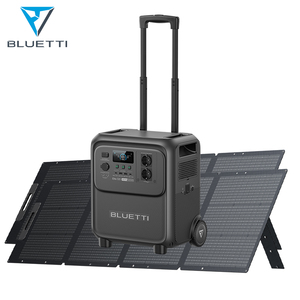
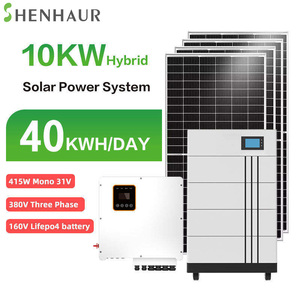
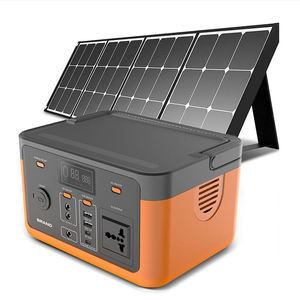
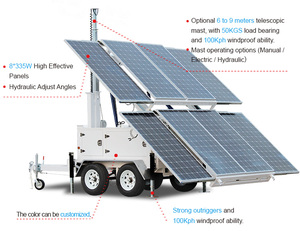
Absorbent Glass Mat (AGM) lead-acid battery technology remains the benchmark for industrial power reliability, deep-cycle resilience, and cost-effective energy density across safety-critical infrastructure. As a leading China AGM battery manufacturer, our automated production facilities implement advanced electrochemical engineering principles to eliminate acid stratification, reduce plate sulfation, and deliver zero-maintenance valve-regulated operation.
The operational core of high-performance VRLA AGM batteries lies in the enclosed closed-loop Oxygen Recombination Cycle. During overcharge conditions, oxygen generated at the positive plate ($2H_2O \rightarrow O_2 + 4H^+ + 4e^-$) migrates through the ultra-fine micro-porous glass fiber separators directly to the negative plate. Here, it reacts chemically with lead ($2Pb + O_2 \rightarrow 2PbO$) and sulfuric acid electrolyte ($2PbO + 2H_2SO_4 \rightarrow 2PbSO_4 + 2H_2O$), undergoing reduction back to water.
This internal recombination efficiency—exceeding 99.9% under optimal float conditions—eliminates water loss, removing the need for electrolyte topping during the battery's service life while preventing hazardous corrosive fumes from venting into sensitive telecom cabinets or off-grid enclosures.
Standard lead-acid batteries utilize antimony alloys that induce high self-discharge rates and water electrolysis. Our advanced Chinese manufacturing lines employ high-purity virgin lead (99.994%) alloyed with precise ratios of Calcium, Tin, and Aluminum:
| Storage Parameter | High-Density Industrial AGM | Standard Gel (VRLA) | Flooded Lead-Acid | LiFePO4 (Lithium) |
|---|---|---|---|---|
| Initial Capital Expenditure (CapEx) | Moderate (Optimal ROI) | Moderate to High | Low | High (2.5x AGM Base) |
| Thermal Stability & Safety | Extreme (No Thermal Runaway) | High | Moderate (Venting Risk) | Requires Complex BMS |
| Sub-Zero Charge Acceptance (-20°C) | Excellent (>85% Efficiency) | Moderate | Poor (Freezing Risk) | Requires Active Heating |
| Maintenance & Gas Venting | Zero Maintenance / Sealed | Zero Maintenance / Sealed | Regular Watering Required | Zero Maintenance |
| Recyclability & Circular Economy | 99.2% Closed-Loop Recyclable | 98.5% Recyclable | 97.0% Recyclable | Complex Recycling (<25%) |
How China's premier AGM OEM/ODM factories are adapting energy storage technologies to meet global industrial decarbonization challenges.
Integrating activated carbon into the negative plate cathode significantly retards negative plate sulfation under rapid charge-discharge conditions. Lead-carbon AGM batteries deliver 3,000+ cycles at 50% DOD, bridging the gap between AGM affordability and lithium cycle longevity.
Modern telecom and solar-wind hybrid installations combine heavy-duty AGM banks with smart MPPT controllers and fuel-cell back-ups. AGM provides immediate surge currents for high inductive loads while stabilizing grid voltage transients.
Enclosures rated UL94-V0 prevent external spark ignition. Specialized synthetic glass fiber separators withstand high pressure and mechanical vibration in offshore wind platforms, heavy rail, and mobile solar trailers.
Global procurement teams specifying batteries for telecommunications (5G towers), uninterruptible power supplies (UPS), marine navigation, microgrids, and remote telemetry are evolving their vendor qualification criteria. Sourcing directly from top-tier Chinese AGM battery factories offers distinct structural advantages in 2025 and beyond:
Environmental, Social, and Governance (ESG) mandates now dictate supply chain selection. Lead-acid chemistry represents the single most successfully recycled commercial battery standard on earth, achieving a 99.2% recycling rate in closed-loop manufacturing ecosystems. OEM procurement strategies are prioritizing suppliers with ISO 14001 environmental management and zero-wastewater discharge lead recovery systems.
While lithium energy storage dominated media headlines, engineering procurement teams are rediscovering the TCO efficiency of AGM in harsh thermal zones (-30°C to +50°C). Unlike Lithium Iron Phosphate (LiFePO4) batteries which require costly thermal management (heating blankets below freezing, HVAC units in desert heat), heavy-duty deep-cycle AGM batteries operate reliably across wide ambient spans without parasitic BMS energy loads.
Modern enterprise AGM battery procurement demands built-in telemetry access. Facilities rely on integrated conductance sensors and wireless battery monitoring systems (BMS) that stream individual cell internal resistance (IR), string voltage, and float temperature to central dashboards—enabling predictive maintenance before site outages occur.
Refined over decades of direct engineering support and global export operation, our manufacturing standard integrates rigorous quality oversight with customized production flexibility.
Technical and commercial clarity for engineering directors, procurement managers, and systems integrators.
Need custom OEM/ODM solutions, bulk project pricing, or engineering support for your off-grid energy storage deployments?
Get Catalog