Designed & manufactured in Herefordshire, UK — shipping worldwide Mon–Thu 9–5 | Fri 9–4 | +44 (0)1981 241668

High-reliability off-grid power equipment designed for heavy-duty construction, mining, remote telecom, and emergency response operations.
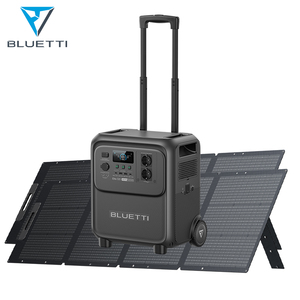
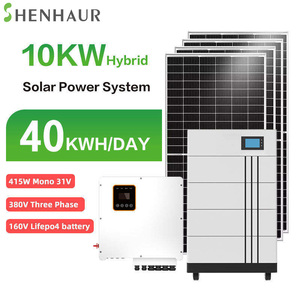
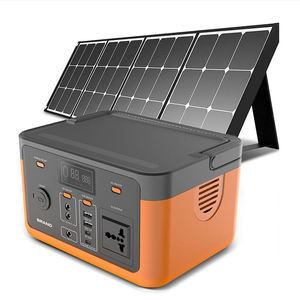
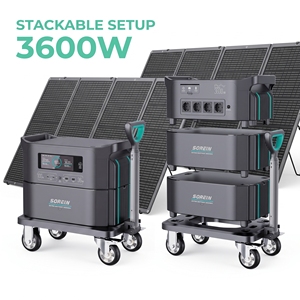
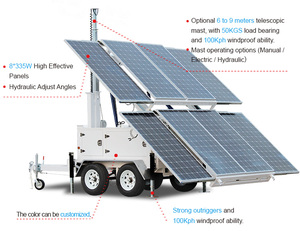
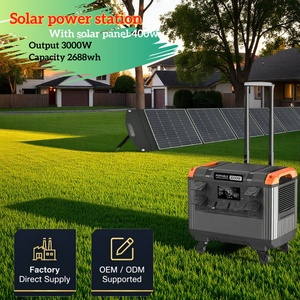
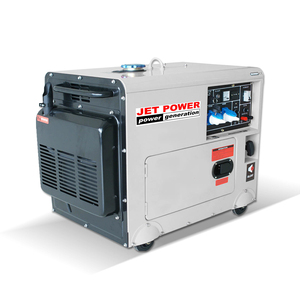
The global transition away from fossil-fuel-dependent diesel generators has accelerated the adoption of mobile solar trailers, off-grid energy storage systems, and hybrid portable power banks across industrial sectors. As engineering, procurement, and construction (EPC) firms, telecommunications operators, and mining conglomerates seek long-term operational resilience, China has emerged as the premier manufacturing hub for heavy-duty solar mobile units. Chinese OEMs and manufacturing plants combine massive scale, supply chain integration for LiFePO4 (Lithium Iron Phosphate) battery chemistry, and sophisticated structural fabrication to deliver turnkey mobile energy platforms worldwide.
This whitepaper provides an exhaustive analysis of technical specifications, engineering methodologies, manufacturing quality controls, and strategic procurement frameworks. By examining structural integrity, solar conversion efficiencies, telemetry integrations, and Total Cost of Ownership (TCO), B2B buyers can effectively evaluate Tier-1 Chinese solar trailer suppliers to maximize return on investment (ROI) in demanding field environments.
Deploying high-efficiency monocrystalline PERC and N-Type TOPCon panels mounted on expandable hydraulic sliding frames to maximize photon absorption per square meter.
Integrated automotive-grade LFP cell packs offering 4,000 to 6,000 deep discharge cycles, managed by advanced thermal-runaway prevention BMS electronics.
Real-time system monitoring over cellular 4G/5G or Starlink satellite links, enabling remote diagnostics, automated MPPT tuning, and predictive maintenance alerts.
A true commercial-grade mobile solar generator is significantly more than solar panels mounted on a utility chassis. It represents an integrated electrical and mechanical power station capable of surviving highway transport at speed, severe salt-spray marine exposure, extreme thermal fluctuations (-20°C to +55°C), and sustained wind loads exceeding 27 m/s (60 mph).
Leading Chinese factories utilize hot-dip galvanized structural Q235/Q355 steel frames for trailer chassis, compliant with international DOT, EU Type Approval, and ADR road safety standards. Structural welding undergoes non-destructive testing (NDT), while all exterior sheet metal receives electrophoretic priming followed by heavy-duty powder coating (C4 to C5 corrosive environment grade). Hydraulic telescopic masts are engineered with multi-stage locking mechanisms to prevent mechanical failure during high wind shear events.
Modern mobile solar power trailers utilize foldable, dual-axis adjustable, or slide-out panel arrangements. By integrating high-efficiency monocrystalline solar panels with conversion efficiency rates surpassing 22.5%, maximum power output is harvested in restricted spatial footprints. Industrial MPPT (Maximum Power Point Tracking) charge controllers maintain tracking efficiencies above 99%, rapidly converting photovoltaic voltage into stable direct current (DC) for battery bank storage.
"In-house engineering control over structural, electrical, and firmware components separates basic assembly plants from true Tier-1 manufacturers. Sizing solar capacity against worst-case winter solar irradiance ensures 100% continuous operational uptime for mission-critical infrastructure."
The core energy storage medium specified by top Chinese factories is Lithium Iron Phosphate (LiFePO4) due to its exceptional thermal stability, non-combustible chemical footprint, and superior lifecycle economics compared to standard Lead-Acid AGM or Ternary NMC cells. Advanced Battery Management Systems (BMS) continuously monitor individual cell voltages, state of balance, ambient operating temperatures, and current draw, isolating individual strings dynamically if an anomaly is detected. Climate-controlled enclosure options (utilizing heat-sink insulation and smart HVAC micro-air-conditioners) prevent thermal throttling during continuous duty cycles in desert regions.
When selecting off-grid mobile power assets for multi-year operations, procurement teams must look beyond initial capital expenditure (CAPEX) to evaluate long-term operational expenditures (OPEX) and logistical friction.
| Evaluation Parameter | Pure Mobile Solar Trailer (PV + LiFePO4) | Hybrid Solar-Diesel Generator Unit | Traditional Diesel Generator (10 kVA) |
|---|---|---|---|
| Primary Energy Source | 100% Photovoltaic Solar Array | Photovoltaic Solar + Diesel Backup | Diesel Fuel Consumption |
| Fuel Refueling Logistics | Zero Fuel Logistics Required | Minimal (75%–90% Fuel Reduction) | Continuous Refueling Schedule |
| Maintenance Interval | Semi-Annual (Visual & Dusting) | 500 Hours (Generator Oil/Filters) | ={250 Hours (Intensive Engine Service)}|
| Acoustic & Noise Footprint | Silent Operation (0 dB) | Ultra-Low Noise (Occasional Run) | High Noise Output (65 - 85 dB) |
| Carbon Footprint / Emissions | Zero Direct Emissions (Net Zero) | Low Carbon Output | High CO2 & Particulate Matter |
| Estimated Asset Lifespan | 10 – 15 Years (Battery 4000+ Cycles) | 8 – 12 Years | 3 – 5 Years (Continuous Duty) |
The global market for mobile energy storage and solar power trailers is undergoing rapid evolutionary shifts driven by technological advancement and shifting geopolitical regulatory frameworks. Major global contractors, emergency management authorities, and telecom giants are incorporating the following trends into their technical tender requirements:
Buyers no longer accept off-the-shelf configurations. Leading Chinese manufacturers are providing modular chassis configurations where buyers can mix and match high-mast LED floodlights (100W to 2400W), PTZ thermal surveillance cameras, 4G/5G cellular repeater equipment, or off-grid water purification modules powered directly from the primary DC busbar.
Modern mobile trailers are increasingly equipped with smart microgrid controllers capable of paralleling multiple trailers together. If a mining camp or construction site demands a peak load of 50 kW, three 15 kW solar trailers can automatically pair their inverter outputs via CAN-bus communication, dynamically distributing load without human intervention.
Freight costs represent a substantial percentage of total procurement outlay. Top factories now design mobile trailers specifically to optimize shipping container packing density. Foldable drawbars, retractable solar panel wings, and drop-down lighting masts allow up to 8 to 12 fully assembled units to fit inside a single 40-foot High Cube (40HC) ocean shipping container, drastically lowering global shipping overhead per unit.
To overcome low solar irradiance during extended winter months or high-latitude installations, advanced OEM factories are integrating small-footprint horizontal and vertical-axis wind turbines onto standard solar trailer platforms. This hybrid capability provides 24-hour generation redundancy, utilizing wind power during night cycles when solar output drops to zero.
Looking toward the next decade, ongoing research and development within top-tier Chinese manufacturing complexes will focus on several breakthrough technologies:
Direct answers to technical, commercial, and logistical questions asked by international buyers and engineering teams.
Tier-1 factories subject mobile solar trailers to rigorous structural wind-tunnel simulations, vibration bench testing (simulating rough road conditions per MIL-STD-810G), and salt-spray corrosion chamber testing (ISO 9227). Masts and solar panel frames are engineered to withstand sustained winds of 27 m/s (approx. 60 mph) when fully extended and anchored with outrigger stabilizer legs.
To comply with international maritime (IMDG) and air transport (IATA) safety protocols, all integrated LiFePO4 battery storage units must possess certified UN38.3 test reports, Material Safety Data Sheets (MSDS), and UN packaging compliance. Furthermore, electrical components and complete systems are certified under CE, UL, RoHS, and IEC standards depending on the target destination market.
Standard model configurations typically feature a production turnaround time of 15 to 20 business days. For customized OEM orders—involving bespoke mast heights, specialized color powder coatings, brand labeling, custom inverter outputs (120V/230V/400V 3-Phase), or integrated satellite telematics—lead times range between 25 and 35 calendar days following engineering sign-off.
System designers engineer the battery autonomy bank to provide 3 to 7 days of continuous power output under zero solar irradiance conditions based on calculated continuous loads (e.g., 200W security load vs 2000W heavy equipment load). Additionally, hybrid configurations can be specified with smart auto-start diesel or propane back-up generators that engage automatically when battery State-of-Charge (SoC) drops below a preset threshold (e.g., 20%).
Yes. OEM units can be factory-fitted with remote telemetry modules (such as Victron Cerbo GX, SmartSolar controllers, or proprietary cloud gateways). Users receive real-time dashboard visibility over GPS coordinates, solar input wattage, battery state-of-charge, load power consumption, internal enclosure temperatures, and tamper alarm notifications via desktop web portals or mobile apps.
Comprehensive manufacturer warranties generally provide 25-year linear performance guarantees on solar panels, 5-year or 4,000-cycle warranties on LiFePO4 battery banks, 3 to 5 years on pure sine wave inverters/charge controllers, and 3 to 5 years on structural trailer chassis and mast assemblies. Replacement spare parts are shipped globally via express courier service.
Building a resilient, sustainable off-grid energy infrastructure requires a manufacturing partner capable of converting complex engineering specifications into field-proven reality. By leveraging advanced robotic manufacturing, rigorous quality control assurance (ISO 9001, ISO 14001, ISO 45001), and extensive supply chain integration, top Chinese OEM/ODM factories deliver world-class mobile power platforms at competitive total cost points.
Whether you require standard 4KW mobile solar lighting towers for highway construction, large-capacity 10KW/30kWh off-grid energy storage stations for remote telecom towers, or custom trailer-mounted hybrid microgrids, our manufacturing facilities provide end-to-end technical support from initial CAD sizing analysis to global delivery logistics.
Connect directly with our engineering sales team to receive detailed CAD drawings, factory-direct wholesale pricing, and custom configuration options tailored to your project requirements.