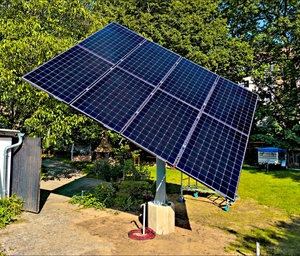
Most Efficient Double Axis Solar Tracker 500W Power System
Full 360° azimuth & elevation tracking for peak irradiation capture in off-grid & utility setups.

Engineered for maximum Astronomical Yield Gain (+25% to +45%), wind resiliency up to 27 m/s, and full compliance with IEC 62817 structural standards. Explore our core export catalog below.
Full 360° azimuth & elevation tracking for peak irradiation capture in off-grid & utility setups.
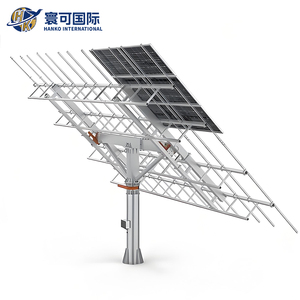
Dual-drive motor integration designed for commercial power stations demanding continuous alignment.
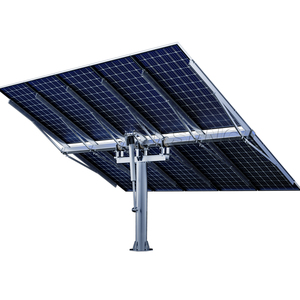
Optimized structural pile footprint lowering civil installation CAPEX by up to 18%.
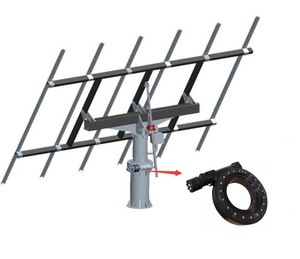
IP66-rated enclosed housing delivering heavy-duty rotational torque for tough climatic zones.
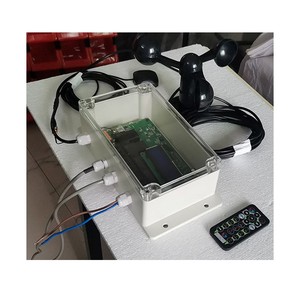
Automated GPS time-sync calibration capable of sustaining 0.85KN/m² snow loading conditions.
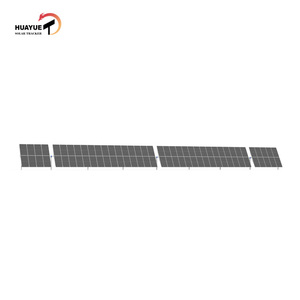
Utility-grade 1-Axis mounting architecture designed for 210mm large-format bifacial modules.
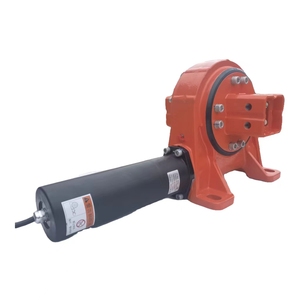
Complete mechanical kit optimized for minimal backlash and extended structural endurance.
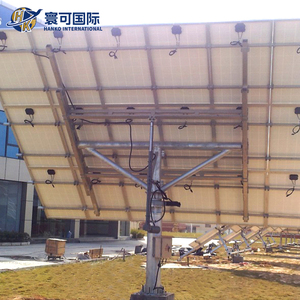
Reinforced structural steel framework integrated with dynamic wind-stow protection algorithms.
Decades of manufacturing precision, robust off-grid and utility-scale engineering, and rigorous testing for the world’s most hostile operating environments.
Engineered to withstand extreme environmental stress. Our solar trackers undergo severe wind tunnel testing up to 27 m/s (60 mph wind resistance) and snow load resilience up to 0.85 KN/m². Equipped with hot-dip galvanized coating (C4/C5 corrosion class), our structures thrive in coastal, marine, and extreme desert environments.
Unlike simple structural suppliers, our in-house electronic workshops design controller hardware, smart SCADA integration packages, and closed-loop GPS tracking algorithms. Every control enclosure meets IP66 waterproof ratings, guaranteeing zero component failure in remote telemetry and power stations.
All solar tracking mounting assemblies, slewing drives, and DC motors strictly follow ISO 9001 quality management procedures and IEC 62817 international tracking standards. Our supply chain guarantees complete traceability, making projects bankable for global financial institutions.
An authoritative analysis of structural shifts, AI smart tracking algorithms, and aerodynamic stability shaping global solar exports.
The global solar energy landscape has experienced a fundamental shift toward high-power modules exceeding 600W+ (built on 210mm and 182mm silicon wafers). As a premier China Best Solar Tracker Exporter, engineering developments must adapt to the increased surface area and mechanical loads of these large-format panels.
Single-axis solar trackers configured in 1-in-Portrait (1P) and 2-in-Portrait (2P) layouts are dominating utility-scale procurement. The integration of bifacial photovoltaic modules with tracking technology yields an additional 15% to 30% power gain compared to mono-facial fixed-tilt arrays. By capturing diffuse albedo light reflected from the ground on the rear side while continuously aligning the front face with direct beam irradiation, modern tracking systems maximize Levelized Cost of Energy (LCOE) reduction.
Legacy solar trackers operated strictly on astronomical algorithms, calculating solar movement purely by geographic coordinates and time. However, non-flat terrain and overcast sky conditions cause shading between adjacent tracker rows and severe power losses.
Next-generation solar tracker exporters from China now integrate 3D terrain-following algorithms and real-time diffuse cloud sensing. Smart backtracking continuously adjusts row angles on uneven land to eliminate panel-on-panel shadows, while diffuse light optimization flattens tracker angles during heavy cloud cover to harvest maximum ambient sky radiation.
As tracker rows become longer to accommodate massive solar arrays, structural dynamic response to wind becomes critical. High wind speeds generate torsional galloping and vortex shedding, which can inflict catastrophic structural failure on rigid solar tracking frames.
Leading Chinese exporters have pioneered advanced aerodynamic wind-stow mechanisms. By integrating mechanical shock absorbers (dampers) and high-torque slewing drives, trackers can rapidly lock into high-pressure stow angles (typically 0° to 30°) within minutes of sensor wind detection, safeguarding multi-million-dollar solar farms against severe storm events.
Modern utility-scale solar farms span thousands of hectares, making structural trenching and control cabling prohibitively expensive. Leading-edge solar trackers now utilize self-powered DC controllers operating directly off a micro-PV panel with integrated lithium iron phosphate (LiFePO4) battery backup.
Coupled with wireless LoRaWAN or Zigbee mesh networks, every tracker row communicates autonomously with the central SCADA master station. This eliminates miles of control wiring, simplifies field commissioning, and reduces system installation labor by over 30%.
How utility developers, EPC contractors, and IPPs optimize CAPEX, risk mitigation, and long-term project bankability.
Historically, procurement managers evaluated solar mounting structures purely on initial steel tonnage costs ($/W). Today, global buyers recognize that solar trackers contribute up to 15-25% higher total energy yield compared to fixed structures. Strategic EPC procurement focuses on 25-year structural durability, low operational maintenance (OPEX), and high ROI, prioritizing slewing drive precision over cheap static steel.
Financing utility solar projects requires strict compliance with international standards. Global buyers preferentially select verified Chinese solar tracker exporters holding independent engineering audits from third-party bodies such as DNV, Black & Veatch, TUV Rheinland, and UL certifications. Certified performance data ensures project debt financing approval from international banks.
With prime flat land becoming scarce, solar construction is moving to sloped hillsides, desert dunes, and salt-laden coastal zones. Procurement trends heavily favor modular tracker designs featuring flexible cardan joints, wide slope tolerance (up to 20% N-S slope adaptation), and marine-grade anti-corrosion treatments (such as Zinc-Aluminum-Magnesium alloy coatings).
Detailed engineering and export answers for utility project specifiers, EPC contractors, and international distributors.
Single-axis solar trackers rotate east to west on a single axis, typically yielding a 15% to 25% increase in annual power generation compared to fixed-tilt installations. Dual-axis trackers track the sun across both azimuth (east-west) and elevation (altitude) axes, delivering a 35% to 45% power gain. Dual-axis systems are ideal for high-latitude regions, concentrated photovoltaics (CPV), off-grid telecommunications, and high-value agricultural solar installations, whereas single-axis systems are preferred for utility-scale solar farms due to lower initial CAPEX.
Our solar tracking systems are engineered according to strict boundary-layer wind tunnel test data. They feature integrated anemometers connected to automated intelligent controllers. When wind speeds exceed safe operational limits (typically 17-20 m/s), the controller executes an automated wind-stow protocol, driving the solar tables to a flat horizontal or optimized aerodynamic tilt position (0° to 30°) within 60 seconds. High-torque enclosed slewing drives (such as our 7-inch SE7 series) hold structural rigidity against sustained wind loads up to 27 m/s (60 mph) and heavy snow loads up to 0.85 KN/m².
Yes. All our single-axis and dual-axis solar trackers are custom-configured to support ultra-high-power 500W, 600W, and 700W+ bifacial modules. Our structural purlins and mounting clamps feature special unshaded rear-side clearance to ensure that rear-reflected albedo light hits the back of the solar cells without torque-tube shadow obstruction, maximizing bifacial energy yield gains.
Our smart tracking controllers operate on a self-powered auxiliary DC setup. Each tracker row is equipped with a small, dedicated auxiliary solar panel combined with an industrial-grade LiFePO4 battery storage pack. This guarantees that even if the primary grid or power plant AC supply experiences a complete blackout, every solar tracker retains full power autonomy to execute emergency wind-stow or maintenance operations for up to 7 consecutive days.
All structural steel posts, torque tubes, and purlins undergo hot-dip galvanization conforming to ISO 1461 standards, offering a minimum zinc coating thickness of 65µm to 85µm (suitable for C4 environmental classes). For extreme marine, island, or highly corrosive soil environments, we supply advanced Zinc-Aluminum-Magnesium (ZAM) coated steel structural members, providing self-healing edge corrosion resistance and a design life exceeding 25 to 30 years.
Our slewing drives utilize enclosed worm-gear housings (IP66 rated) that seal out dust, sand, and water ingress. They are factory-lubricated with synthetic long-life lithium grease. Under standard operational conditions, routine maintenance requires grease replenishment only once every 3 to 5 years. Controller firmware supports remote SCADA diagnostic monitoring, allowing operations and maintenance (O&M) teams to detect mechanical strain or power anomalies in real time from a central monitoring dashboard.
As a seasoned China solar tracker exporter, we offer complete end-to-end logistics under FOB, CIF, or DDP terms. Structural components are pre-assembled into optimized high-cube container packs to lower freight costs and prevent shipping damage. We provide full civil foundation engineering drawings, assembly video documentation, drive-controller wiring schematics, and remote or on-site engineering supervision during field installation and commissioning.
Send our senior solar tracker engineering team your site coordinates, target module specifications, and wind load criteria. We will generate a customized structural layout, astronomical yield simulation, and commercial export quotation within 24 hours.