CE Certified Power Station Manufacturers & Exporter
Engineering Industrial-Grade Off-Grid Solar Generators, LiFePO4 Battery Systems & OEM/ODM Energy Storage Solutions for Global B2B Infrastructure & Commercial Buyers
Factory-Direct Procurement
CE Certified Off-Grid Energy Systems & Portable Generators
Explore our certified range of high-capacity portable power stations, hybrid solar generators, industrial backup kits, and mobile power infrastructure engineered for harsh operational environments worldwide.
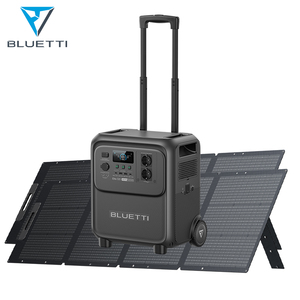
BLUETTI Large Capacity 3200Wh Portable Power Station 1800W Solar Generator
High-density 3200Wh energy storage featuring dual 120V/230V pure sine wave output. Built for heavy-duty field operation, remote emergency backup, and rapid MPPT solar charging.
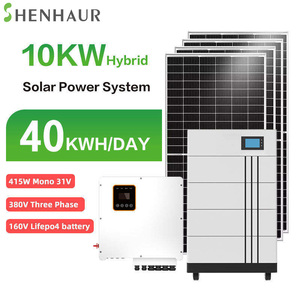
SHENHAUR Off-Grid 5kW / 10kW Complete Hybrid Solar System Kit
Integrated B2B turnkey solar energy kit configured with high-cycle LiFePO4 battery storage, smart hybrid inverter, and automated grid-switching capability for telecom & residential applications.
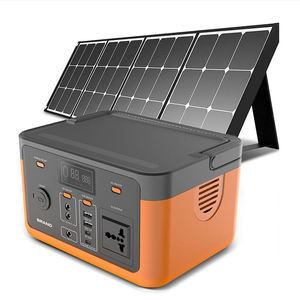
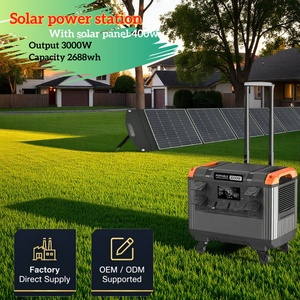
Modular 300W - 3000W LiFePO4 Portable Power Station & Solar Generator
Scalable multi-power unit range tailored for commercial outdoor deployments, medical field units, and emergency power backup. Features 3500+ lifecycle ultra-safe LiFePO4 cells.
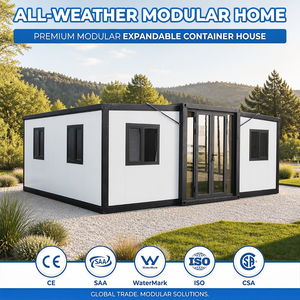
20ft Expandable Prefabricated Modular Container Power & Living Unit
Self-contained off-grid microgrid shelter housing integrated solar storage systems, climate control, and rapid deployment capabilities for remote mining, research, and disaster relief.
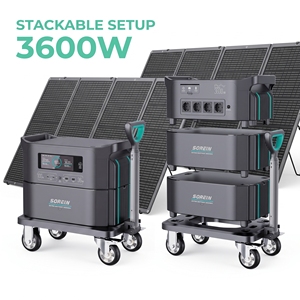
Sorein All-in-One 2kW - 5kW Commercial Portable Solar Generator Station
Industrial-grade power plant integrating pure sine wave inverter technology, dual MPPT solar inputs, and intelligent BMS protection for heavy equipment and mobile telecom nodes.
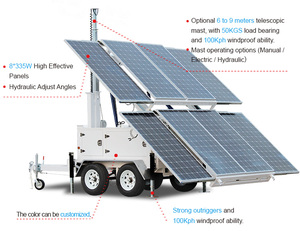
4kW / 5kW Mobile Solar High-Mast Trailer & Off-Grid Generator Station
Towable off-grid energy mobile station equipped with hydraulic mast lighting, heavy-duty solar array, and high-capacity battery bank for civil construction and highway security.
OTHC-T30 Factory OEM/ODM LiFePO4 UPS Portable Power Station
Customizable OEM/ODM uninterrupted power supply (UPS) station supporting zero-ms transfer times, dual AC fast-charging, and modular expansion packs for enterprise data backup.
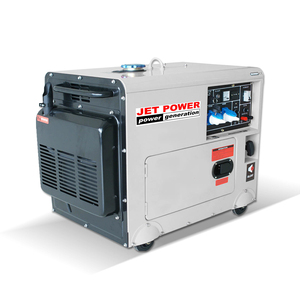
Silent 10kVA / 10kW Single & Three-Phase Backup Diesel Generator
Ultra-quiet soundproof enclosure diesel generator engineered for continuous base-load utility support, emergency industrial backup, and hybrid energy integration.
100%
CE Compliant Standards
15+
Years Manufacturing Excellence
7
Continents Deployed
3500+
LiFePO4 Battery Cycles
Engineering Rigor & Global Compliance
Why Enterprise Procurement Leaders Trust Our CE Certified Systems
Combining European engineering standards with vertically integrated manufacturing capacity to deliver mission-critical off-grid power systems across extreme operational climates.
Full CE & International Certification
Our power stations strictly comply with European Union directives: Low Voltage Directive (LVD 2014/35/EU), Electromagnetic Compatibility Directive (EMC 2014/30/EU), and RoHS 2.0. Every unit undergoes rigorous UN38.3 vibration, thermal shock, and safety testing to guarantee seamless customs clearance and market insertion in Europe, North America, and Australia.
Automotive-Grade LiFePO4 Chemistry
We utilize high-stability Lithium Iron Phosphate (LiFePO4) prismatic cells engineered for 3,500+ deep discharge cycles to 80% DOD. Unlike traditional ternary lithium ion cells, our chemistry exhibits superior thermal stability up to 500°C, eliminating thermal runaway risks while lowering long-term Total Cost of Ownership (TCO).
Intelligent Smart BMS & Telemetry
Proprietary Battery Management Systems (BMS) offer hardware and software layer protections against over-voltage, short-circuits, over-current, and temperature variance. Integrated IoT modules enable real-time cloud monitoring via RS485/CAN-Bus protocols for remote telemetry, load balancing, and predictive maintenance.
Extreme Climate & Offshore Engineering
Derived from field-proven engineering in the North Sea and extreme polar zones, our systems feature marine-grade anti-corrosion coatings, IP65/IP67 rated weatherproofing, and dynamic thermal control designed to operate flawlessly between -20°C and +55°C.
OEM / ODM B2B Customization
As an established original manufacturer, we offer full turn-key customization. From tailored voltage profiles (12V, 24V, 48V, up to 400V high-voltage storage), custom AC socket configurations (EU/UK/US/AU), branded housing, and specific solar MPPT charge specs to private label packaging.
Global Supply Chain & Export Reach
Exporting to over 80 countries with full Dangerous Goods (DG Class 9) shipping documentation, sea freight MSDS clearance, and air transport certification. We back our global logistics with dedicated technical support and regional service centers.
Industry Whitepaper & Procurement Benchmark
The Technical Evolution of CE Certified Portable Power Stations in Global B2B Markets
The global off-grid energy storage market is experiencing a structural paradigm shift driven by accelerated decarbonization mandates, grid instability, and the rapid expansion of remote industrial operations. As commercial enterprises, government infrastructure contractors, and telecom operators phase out legacy fuel-powered generators, demand has surged for CE certified portable power stations and hybrid energy storage systems (ESS).
In international B2B procurement, CE certification is far more than a regulatory checkbox—it serves as a fundamental benchmark for electromagnetic compliance, operational safety, and structural integrity. Modern industrial specifications require high-wattage power stations to deliver low Total Harmonic Distortion (THD < 3%), rapid microsecond uninterruptible power supply (UPS) switching, and extreme resilience against voltage spikes and environmental stressors.
Key B2B Power Station Procurement Trends (2025–2030)
Analysis of procurement data across European and North American commercial sectors highlights four overarching technology adoption trends:
Transition to High-Voltage & Solid-State Chemistry Architecture: Traditional 12V/24V power station topographies are being superseded by 48V nominal and high-voltage DC bus systems. This design drastically reduces internal $I^2R$ resistive heating losses, improves inverter efficiency to over 95%, and facilitates seamless scaling up to multi-megawatt commercial microgrids. Furthermore, next-generation semi-solid state LiFePO4 cells are setting new benchmarks in gravimetric energy density ($>220\text{ Wh/kg}$).
Hybrid Multi-Source Generation & High-Efficiency MPPT: Enterprise buyers are increasingly specifying multi-input charging platforms capable of harvesting energy concurrently from ultra-high-efficiency monocrystalline solar arrays, micro wind turbines, AC grid connections, and auxiliary fuel cells. Advanced Maximum Power Point Tracking (MPPT) algorithms with dynamic tracking efficiency above 99.5% enable continuous operation even under partial shading or adverse weather conditions.
Granular ESG Auditability & Full Lifecycle Tracking: Under strict European Union regulations, such as the EU Battery Regulation, commercial importers and distributors must ensure complete supply chain traceability. Certified power station manufacturers must provide documented carbon footprint assessments, ethically sourced raw materials (conflict-free cobalt and nickel-free LiFePO4), and end-of-life battery recyclability schemes.
AI-Driven Energy Management Systems (EMS) & Cloud Telemetry: Industrial power stations are evolving into edge-computing smart grid nodes. Integrated cloud management platforms utilize machine learning to analyze historical weather forecasts, local tariff structures, and real-time load demand to automatically optimize battery charge/discharge cycles, maximizing financial ROI and operational uptime.
Product R&D and Manufacturing Advancement Vectors
To meet the stringent standards of international buyers, tier-1 power station manufacturers are focusing R&D efforts on key structural and electronic innovations:
Bidirectional Inverter Topologies: By eliminating traditional bulky transformer components in favor of high-frequency GaN (Gallium Nitride) and SiC (Silicon Carbide) power MOSFETs, modern power stations achieve ultra-compact form factors with bidirectional charging capabilities. This allows the unit to charge from zero to 80% capacity in under 60 minutes directly from AC power without external bulky power adapters.
Comprehensive Thermal Management & Flame-Retardant Packaging: Battery modules are housed within V-0 rating flame-retardant enclosures with specialized phase-change material (PCM) layers and active variable-speed liquid/air cooling ducts. This prevents localized heat accumulation and ensures stable discharge performance across extended temperature spectrums (-30°C to +60°C).
Dual-Layer Isolation BMS Architecture: Modern CE-compliant BMS circuits incorporate secondary hardware protection ICs operating independently from main software microcontrollers. This redundant safety layer ensures immediate hardware-level disconnect within milliseconds in the event of over-current, short-circuit, or over-temperature conditions.
Procurement Guidance
Frequently Asked Questions (FAQ) for B2B Importers & Enterprise Buyers
Detailed technical, regulatory, and logistics answers to assist procurement managers and engineering teams in evaluating off-grid power solutions.
What specific testing standards are required for CE Certification on Portable Power Stations?
CE certification for portable power stations requires compliance with multiple directive standards:
EMC Directive (2014/30/EU) including EN IEC 61000-6-1/3 for electromagnetic immunity and emissions;
Low Voltage Directive (2014/35/EU) under EN 62368-1 or EN 62040-1 for electrical shock and insulation safety; and
RoHS Directive (2011/65/EU) restricting hazardous substances. Additionally, battery packs must possess UN38.3 transport safety certification and IEC 62619 industrial cell compliance.
How does LiFePO4 compare against NCM/NCA lithium chemistry for industrial power stations?
LiFePO4 (Lithium Iron Phosphate) offers significant advantages for industrial applications: exceptional safety with high thermal runaway resistance (up to 500°C vs 210°C for NCM), dramatically longer lifecycle (3,500 to 6,000 cycles at 80% DOD compared to 500–1,000 cycles for standard lithium), and zero reliance on hazardous cobalt. While NCM has slightly higher energy density, LiFePO4 delivers vastly superior Total Cost of Ownership (TCO) and operational reliability.
What is the difference between Pure Sine Wave and Modified Sine Wave inverters in field applications?
All our CE certified power stations utilize 100% Pure Sine Wave inverters with Total Harmonic Distortion (THD) below 3%. Pure sine wave power accurately mirrors grid AC utility electricity, which is vital for sensitive electronics, medical gear, telecom transceivers, and inductive motor loads. Modified sine wave inverters produce electrical noise, cause excessive heating in motors, and risk damaging sensitive commercial equipment.
Can your power stations be seamlessly customized via OEM/ODM for specific voltage and branding specs?
Yes. As a primary manufacturer, we provide comprehensive OEM/ODM services. We customize battery capacities (Wh/kWh), inverter continuous and surge rating outputs (W/kW), AC outlet types (EU, UK, US, AU, Universal), custom exterior tooling, private branding, app UI integration, and custom firmware parameters for MPPT charging profiles to meet your precise target market demands.
How are high-capacity power stations classified and handled for international freight export?
Power stations containing lithium batteries exceeding 100Wh are classified as Class 9 Dangerous Goods (UN3481 for equipment containing batteries, or UN3480 for standalone batteries). We provide complete export documentation including MSDS reports, UN38.3 summary test reports, Drop Test reports, and Safety Transport Certificates for seamless maritime (IMDG) and air (IATA) transport worldwide.
What thermal protection mechanisms are embedded to ensure safe operation in hot or freezing climates?
Our systems feature multi-point NTC temperature sensors monitored continuously by the intelligent BMS. If internal cell temperatures drop below 0°C during solar or grid charging, built-in low-temperature heating elements automatically pre-warm the battery cells before initiating charge current to prevent lithium plating. In high heat environments ($>45^\circ\text{C}$), dynamic variable-speed cooling fans activate to maintain optimal thermodynamic balance.
Partner with a Premier CE Certified Power Station Manufacturer
Require custom OEM/ODM solutions, wholesale volume pricing, or detailed engineering technical specifications? Contact our engineering design team today to discuss your project requirements.