Designed & manufactured in Herefordshire, UK — shipping worldwide Mon–Thu 9–5 | Fri 9–4 | +44 (0)1981 241668

Engineered for low cut-in thresholds, continuous duty cycles, remote cloud telemetry, and total energy independence.
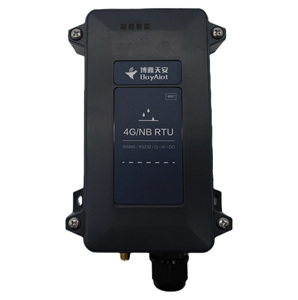
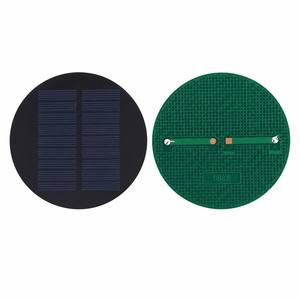
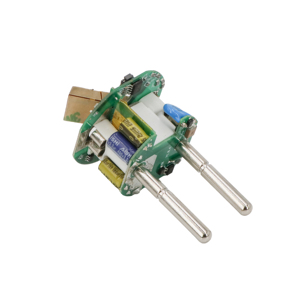
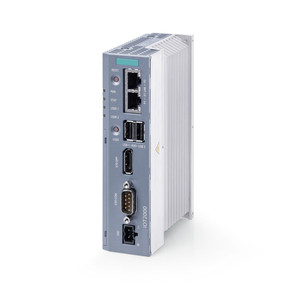
In the rapidly evolving ecosystem of Industrial Internet of Things (IIoT), remote telemetry, and edge computing, power supply failure equals communication darkouts. Whether powering offshore wind telemetry in the German North Sea, structural health sensors along high-speed rail lines, or autonomous agricultural monitoring networks, standard commercial power supplies consistently fail under environmental stress, voltage ripple, and erratic load profiles.
As a leading CE Certified IoT Power Manufacturer, our design engineering team builds off-grid wind, micro-solar, hybrid fuel cell, and uninterruptible smart power units designed explicitly to overcome harsh environmental variables. By combining high-density LiFePO4 energy storage with heavy-copper heat dissipating PCBs (such as our 3 oz copper aluminum-base substrates), we achieve thermal stability and continuous operation even in sub-zero polar research stations or high-humidity tropical deployments.
Integrating low cut-in horizontal/vertical wind generators with custom PET PERC monocrystalline solar panels. Sized to maintain positive charge balance even during low-irradiance winter months.
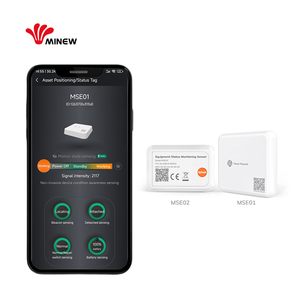
Embedded IoT gateways featuring RS485/Modbus, BLE, and cellular NB-IoT/5G RedCap interfaces to stream Real-time State of Charge (SoC), voltage stability, and ambient temperature alerts.
Full compliance with EN 61000-6-2 (Industrial Immunity), EN 55032 Class B (Electromagnetic Interference), and EN 62368-1 electrical safety standards for zero noise interference with sensitive telemetry sensors.
When evaluating OEM suppliers for large-scale enterprise deployments, understanding technical metrics like MTBF, burst load response, and copper layer thickness is vital for calculating total cost of ownership (TCO).
| Architecture Class | Typical Application | Input Source Voltage | Energy Storage Tech | CE Certification Standard | Expected Service Life |
|---|---|---|---|---|---|
| Micro Smart Sensor Solar Module | Agricultural IoT, Soil Moisture, Valve Control | 4.5V / 1W PET Solar Panel | Ultra-Capacitor / LTO | EN 61000-6-3, RoHS | 7 - 10 Years Zero Maint. |
| IIoT Sense Gateway Power Box | High-Density Medical & Industrial Sensing | DC 5V - 20V / 24V AC | Internal LiFePO4 Pack | CE EN 62368-1, RED 2014/53/EU | > 50,000 hrs MTBF |
| Heavy-Duty Power Module (2500W) | Smart Grid Substation & Automation | 90V - 264V AC / 48V DC | High-Current Aluminum Base (3oz Cu) | CE, EMC Class B, IEC 60950 | 12+ Years Continuous |
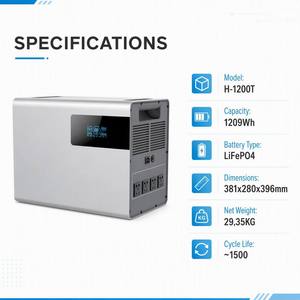
| Hybrid Pure Sine Solar Generator | Remote Telecom, Emergency Mobile Backup | 100V - 240V AC / MPPT Solar | 1209Wh Grade-A LiFePO4 | CE, UN38.3, MSDS, FCC | 3,500+ Life Cycles (to 80%) |
As enterprise networks scale from hundreds to tens of thousands of edge nodes, procurement officers and systems integrators are drastically altering their sourcing criteria for power equipment.
Legacy sealed lead-acid (SLA) and AGM batteries are rapidly being phased out due to low cycle lifespans (300-500 cycles) and poor performance in high operating temperatures. Modern enterprise tenders mandate high-grade LiFePO4 cells delivering upwards of 3,500 to 6,000 cycles, integrated with active Battery Management Systems (BMS) that prevent thermal runaway and cell degradation.
An IoT power supply can no longer operate as a passive "dumb" transformer. Procurement criteria now demand intelligent gateways—such as our open-source MQTT-supported BOY-S504-IOT unit—that deliver telemetry directly into AWS IoT Core, Azure IoT Hub, or local SCADA platforms. This allows predictive maintenance teams to replace aging batteries weeks before a catastrophic field outage occurs.
With diverse sensor arrays drawing mixed voltages (3.3V microcontrollers, 5V telemetry modems, 12V RS485 loops, and 24V industrial relays), demand has surged for customizable aluminum-base PCB modules with multi-channel LDO regulation, ultra-low ripple noise (<30mVp-p), and robust ESD protection.
Engineered, assembled, and tested to rigorous European safety standards, backed by global on-site and remote engineering teams.
Every product series undergoes extensive electromagnetic compatibility (EMC) and low voltage directive (LVD) verification. We provide full CE test reports, DOC declarations, and RoHS/REACH compliance documentation for seamless customs clearance and regulatory approval.
From custom small-dimension PET PERC solar panels to IP67 industrial gateway enclosures and bespoke 3 oz copper PCB layers, our engineering team designs solutions tailormade to your specific physical footprint and electrical load profile.
We blend historical ERA5 meteorological reanalysis data with the Global Wind Atlas to size off-grid wind and solar arrays specifically for your target coordinates, guaranteeing continuous winter power autonomy.
For marine, offshore wind farm, and coastal energy installations, our field support technicians hold Global Wind Organisation (GWO) safety certifications, guaranteeing professional installation and lifetime maintenance support.
Clear engineering answers to complex procurement, compliance, and integration questions.
Our power supplies and IoT gateways comply with the Low Voltage Directive (LVD 2014/35/EU) under standard EN 62368-1 (Audio/video, information and communication technology equipment), and Electromagnetic Compatibility Directive (EMC 2014/30/EU) under EN 55032 and EN 55035. Wireless and gateway modules additionally comply with the Radio Equipment Directive (RED 2014/53/EU).
Standard Lithium-ion batteries cannot safely charge below 0°C. Our cold-climate industrial power boxes utilize internal thermal heating pads powered by incoming solar/wind generation, controlled by an intelligent BMS. This ensures battery cell temperature rises above 2°C before charging current is engaged, preserving cell integrity down to -40°C environment temperatures.
Yes. As an OEM/ODM manufacturer, we offer full design-to-production customization. We provide tailored aluminum substrates (up to 3 oz copper thickness), custom PET PERC solar panel dimensions (e.g., 4.5V / 1W miniature forms), specialized multi-pin M12 industrial connectors, and custom IP67/IP68 weather-proof junction boxes tailored to your brand identity.
Our intelligent gateways (such as the BOY-S504-IOT series) natively support open-source MQTT platforms, TLS 1.3 encrypted data transmission, Modbus RTU/TCP, RS485, SNMP, and HTTP REST APIs. They integrate effortlessly into standard industrial platforms including AWS IoT, Azure, ThingsBoard, and Victron Cerbo GX monitoring environments.
Standard catalog units and evaluation kits are typically dispatched within 3-5 business days. Custom OEM prototypes (involving PCB layout adjustments or custom solar dimensioning) require 2 to 3 weeks for engineering review and prototype fabrication. Volume batch production cycles run between 4 to 6 weeks, complete with 100% burn-in testing and CE batch certificates.
Connect directly with our engineering team to review load profiles, request CE documentation, or order custom OEM evaluation samples.